Chapter 1
The sacred forest of pine and wild mugwort
Chapter 2
The scholar's garden of quiet elegance
Chapter 3
Rituals of purification and temple incense
Chapter 4
The courtly scent pouch of the Joseon dynasty
Ch 1 · The sacred forest of pine and wild mugwort
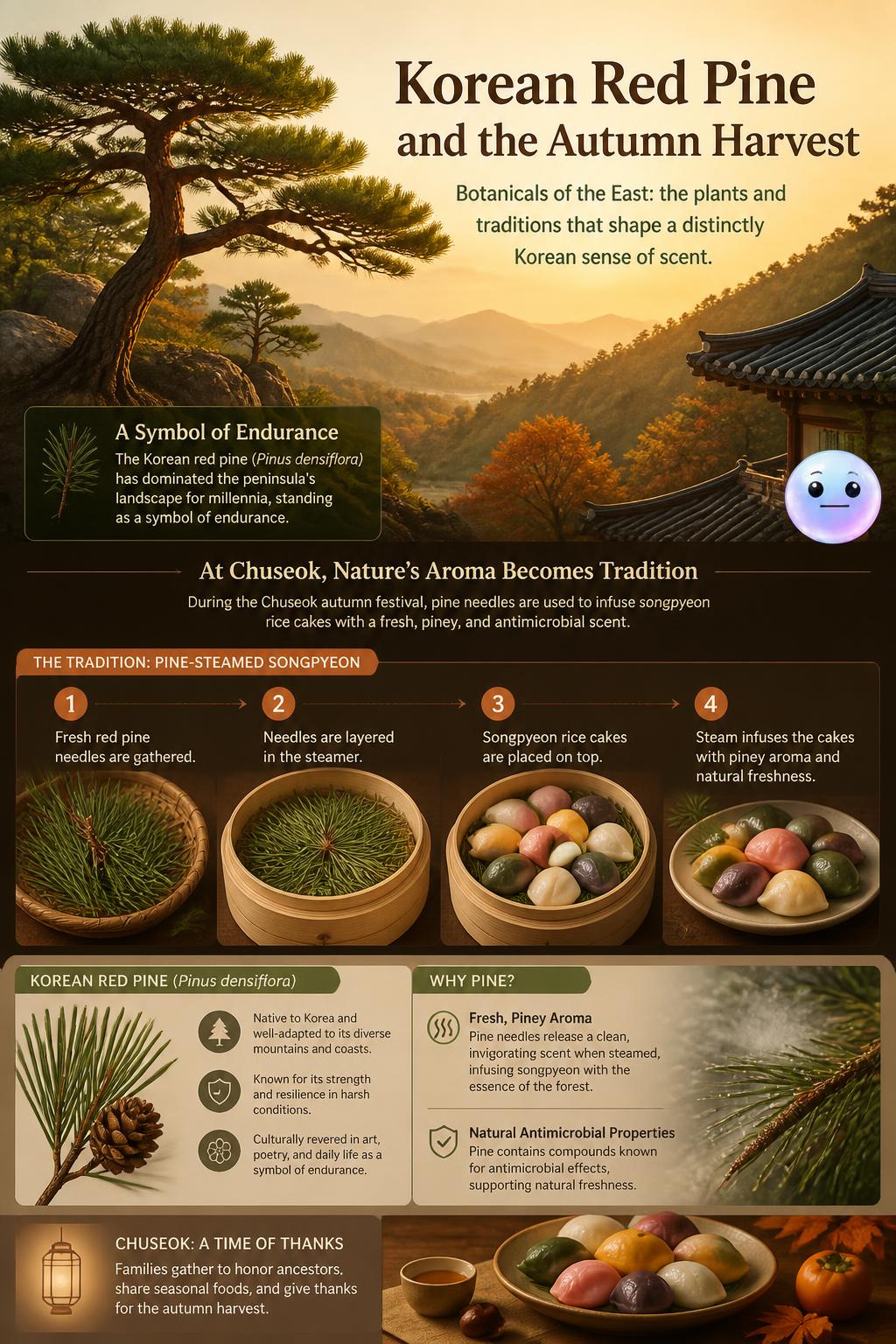
elorea During Chuseok, Koreans steam songpyeon rice cakes over Pinus densiflora needles, blending an ancient symbol of endurance with fresh, antimicrobial scent.
Quiz
Why are Korean red pine needles traditionally used when steaming songpyeon rice cakes?
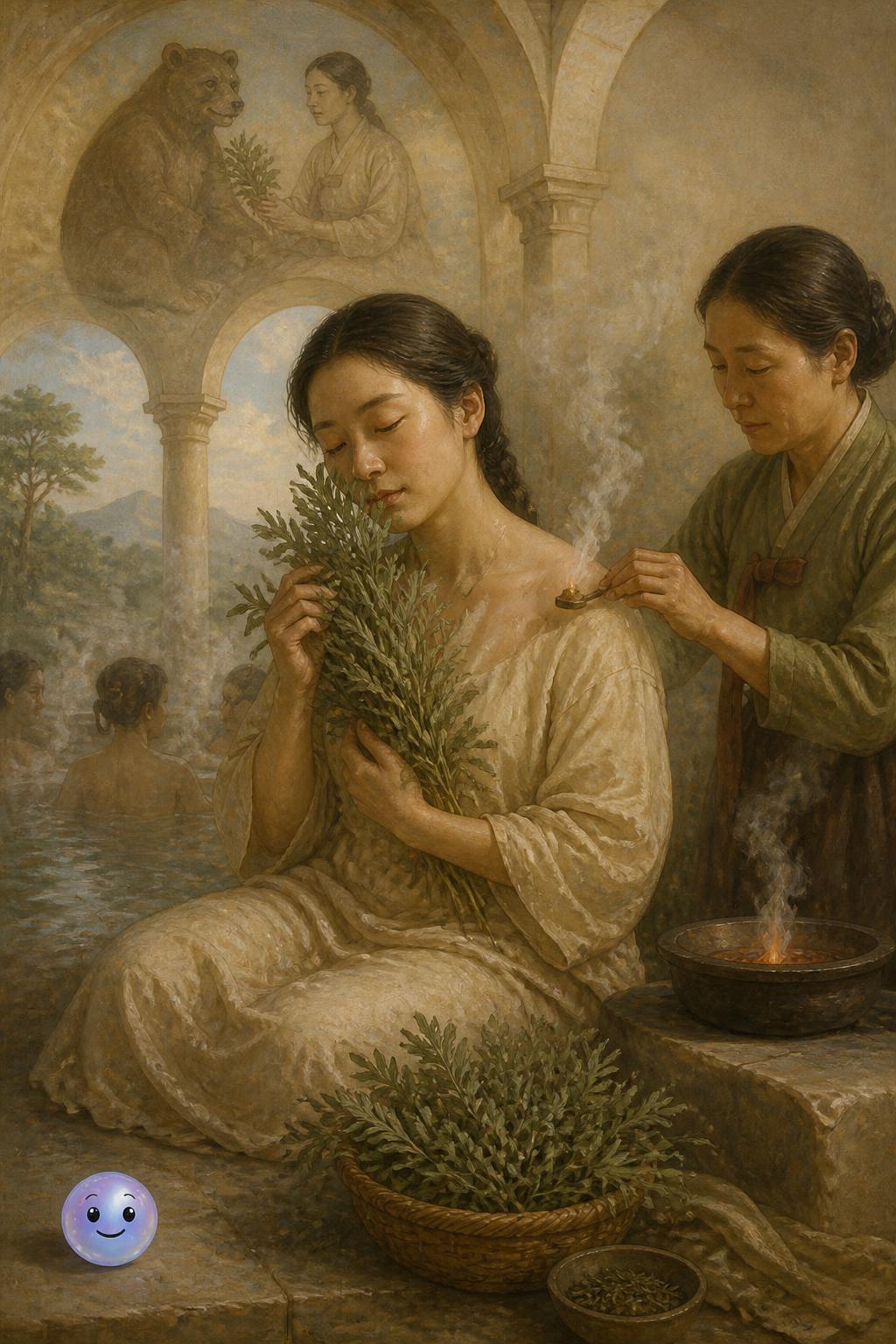
elorea Traditional Korean bathhouses diffuse this smoky, bittersweet herb to stimulate healthy circulation.
Quiz
In the Korean foundation myth of Gojoseon, which animal ate mugwort and garlic to transform into a human woman?
Quiz
What is the primary wellness purpose of burning dried mugwort in traditional Korean moxibustion?
Fun Fact
Mugwort bath: In traditional Korean bathhouses, hot tubs are often infused with dried mugwort to soothe tired muscles and release a deeply relaxing, herbal aroma.
Quiz
Which Korean city is globally famous as the historic center of ginseng cultivation and hosts an annual ginseng festival?
Glossary
mugwort (noun)
An aromatic plant of the daisy family, typically having dark green leaves with silvery-white undersides. In Korean mythology, a bear became human after eating this sacred herb during a cave trial.
An aromatic plant of the daisy family, typically having dark green leaves with silvery-white undersides. In Korean mythology, a bear became human after eating this sacred herb during a cave trial.
elorea Korean Chopi Wild Peppercorn
Before the chili came, we loved that citrus bite! (Tingling so bright, yeah!)
Quiz
How does the scent and taste profile of Korean sancho differ from typical black pepper?