Chapter 1
The sacred forest of pine and wild mugwort
Chapter 2
The scholar's garden of quiet elegance
Chapter 3
Rituals of purification and temple incense
Chapter 4
The courtly scent pouch of the Joseon dynasty
Ch 3 · Rituals of purification and temple incense
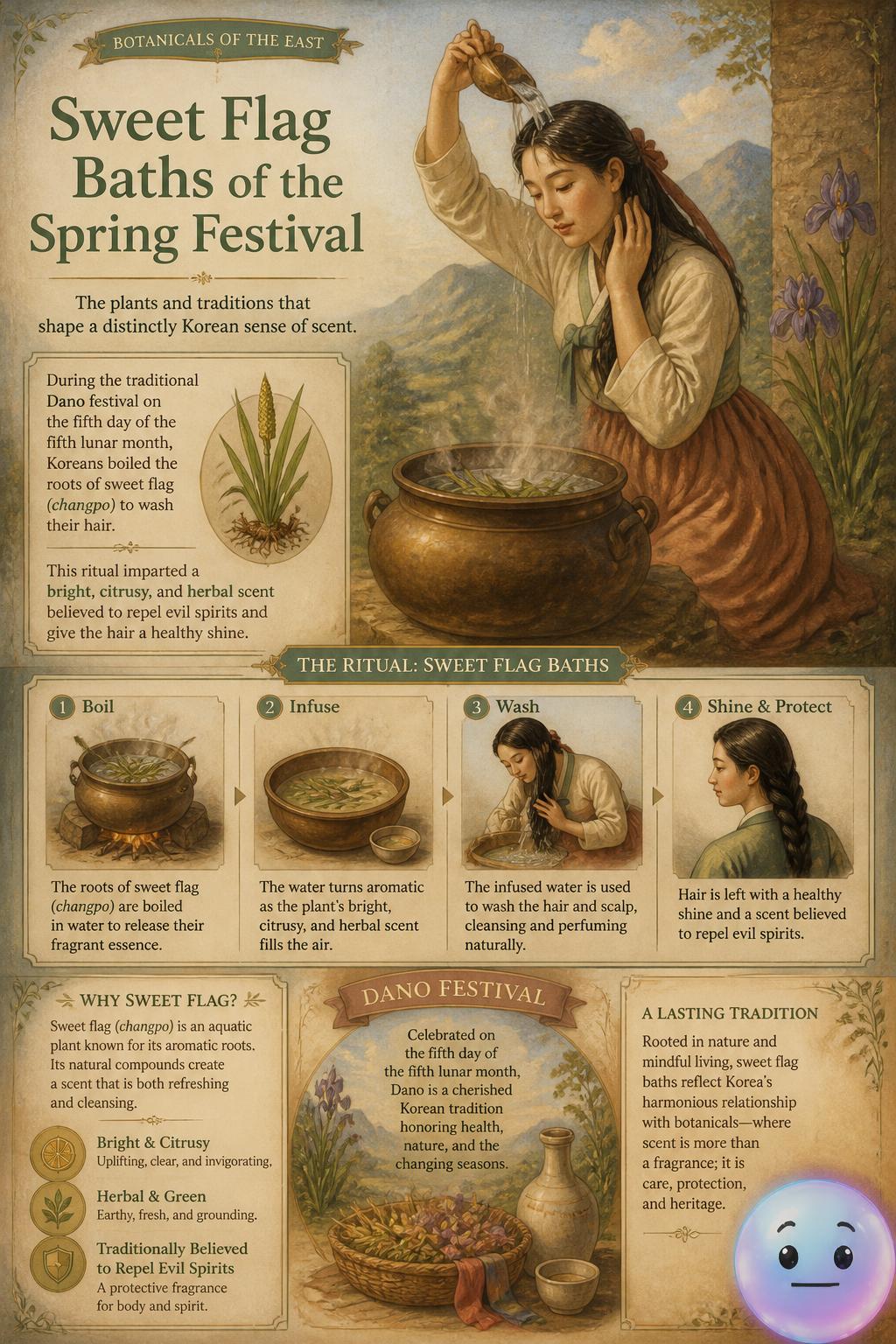
elorea On the fifth day of the fifth lunar month, Koreans washed hair with citrusy changpo root water for shine and protection.
Quiz
During which traditional Korean spring festival do people wash their hair in sweet flag (changpo) water?
Quiz
What part of the sweet flag (changpo) plant is primarily used to extract its fragrant oils and make the scented wash?
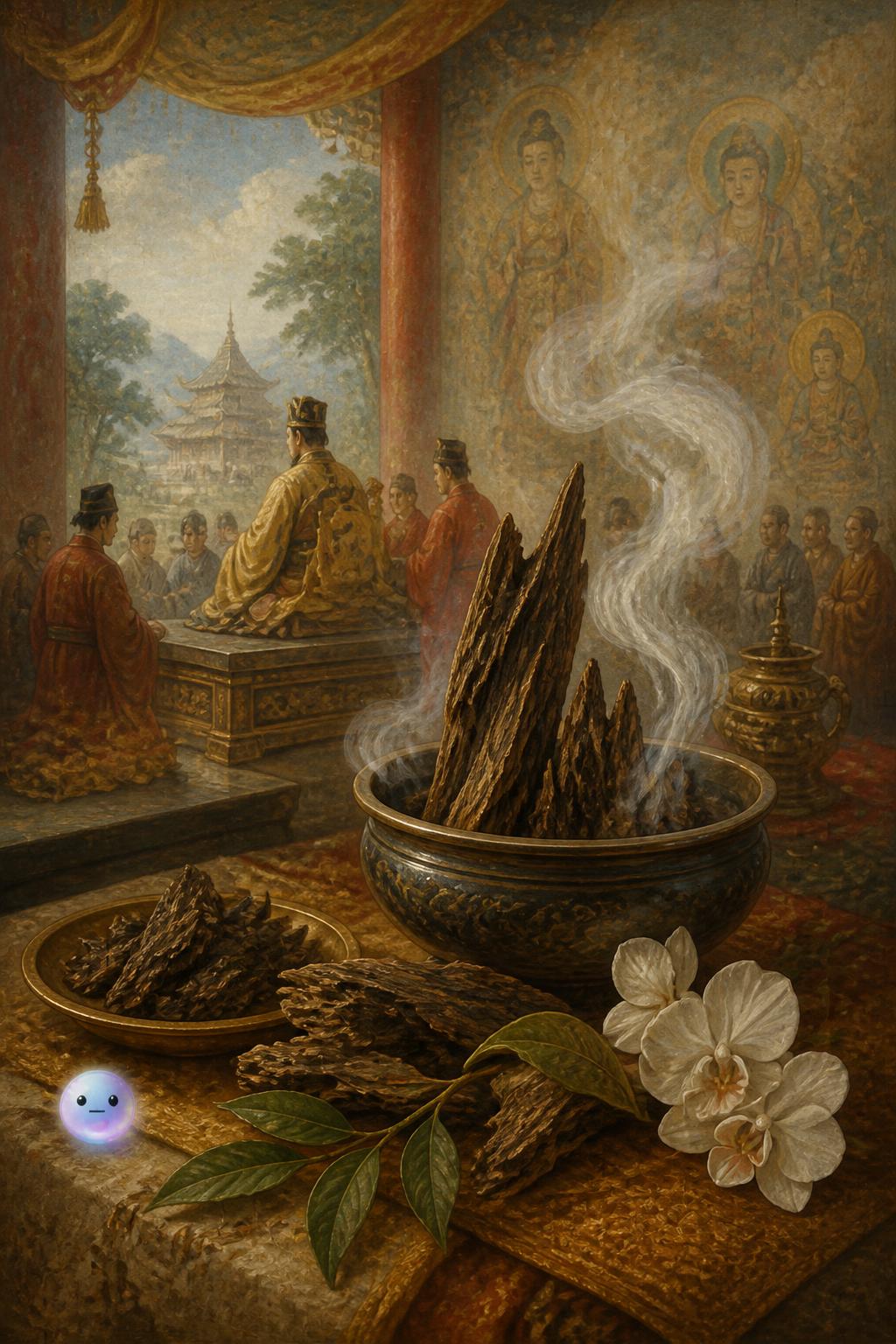
elorea Korean royalty burned this imported Southeast Asian wood during sacred temple ceremonies.
Quiz
Why is the rare incense wood known as chimhyang called 'sinking incense' in Korean?
Fun Fact
Ancient hair wash: Washing hair with sweet flag water during Dano wasn't just for scent; it made the hair so glossy and strong that it resisted splitting.
Quiz
How is traditional Korean lotus flower tea (yeonkkot-cha) typically prepared for guests?
Glossary
incense (noun)
An aromatic substance that is burned to produce a sweet-smelling smoke. Korean Buddhist temples have burned this aromatic material for cleansing rituals since the fourth century.
An aromatic substance that is burned to produce a sweet-smelling smoke. Korean Buddhist temples have burned this aromatic material for cleansing rituals since the fourth century.
Quiz
Why does the seokhyang juniper wood develop such an exceptionally concentrated and rich fragrance?
Quiz
On which remote volcanic island off the east coast of Korea does the rare seokhyang juniper grow?