
The architecture of joy
Touch, sound, and the science of play
Memory, nostalgia, and the taste of happiness

museumoficecream Sensory designers use giant everyday objects to trigger childlike awe.

museumoficecream Arrange colors, textures, and sounds to discover the science of why silly spaces trigger joy.
museumoficecream The Architecture of Joy
Through sensory science and sprinkles so bright, This playground of pink is engineered for delight!
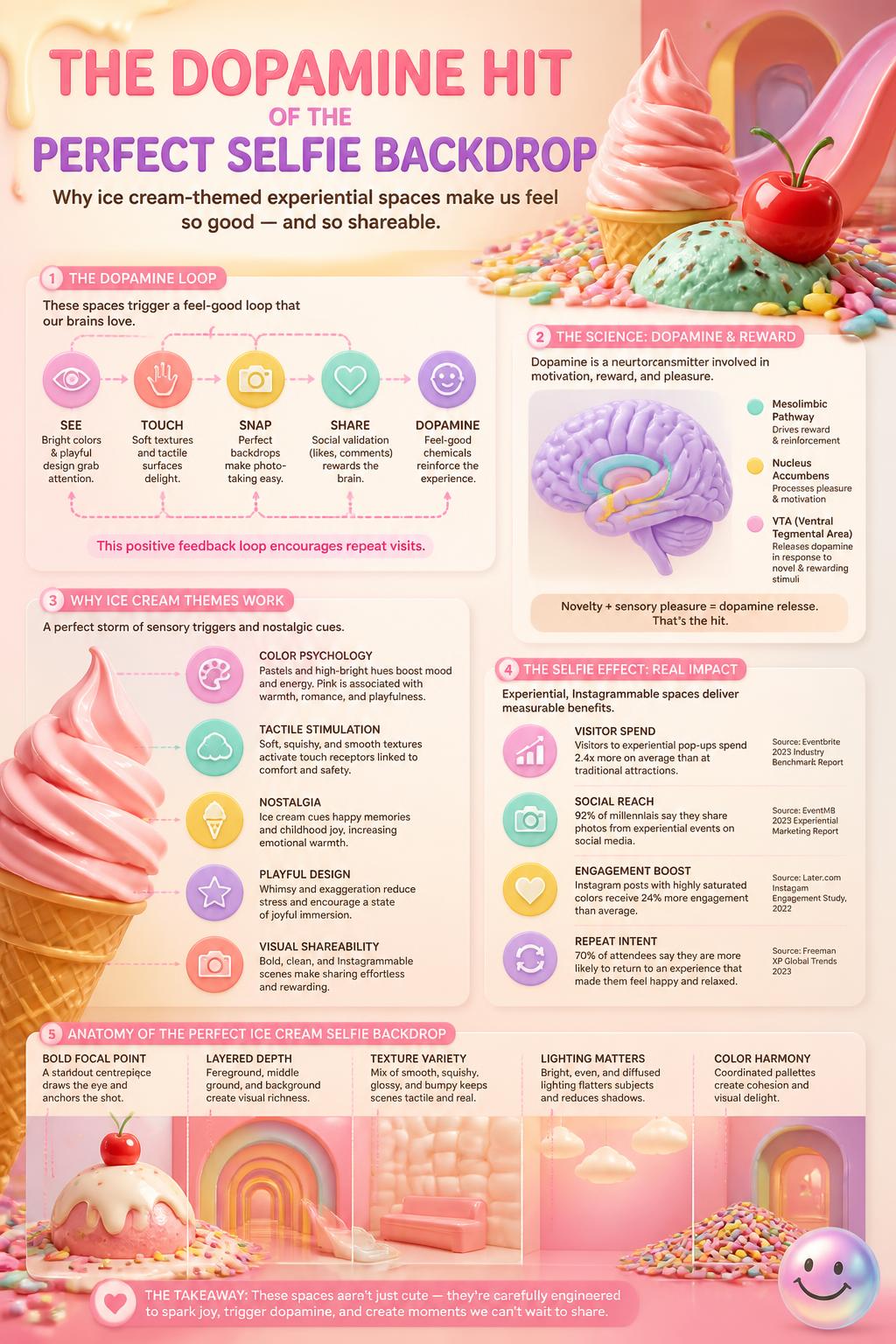
museumoficecream Spaces designed for social media capitalize on our brain's desire for visual novelty and social validation.
Pink power: A specific shade of pink called Baker-Miller Pink was shown in 1979 to temporarily reduce muscle strength and calm aggressive behavior in prisoners.
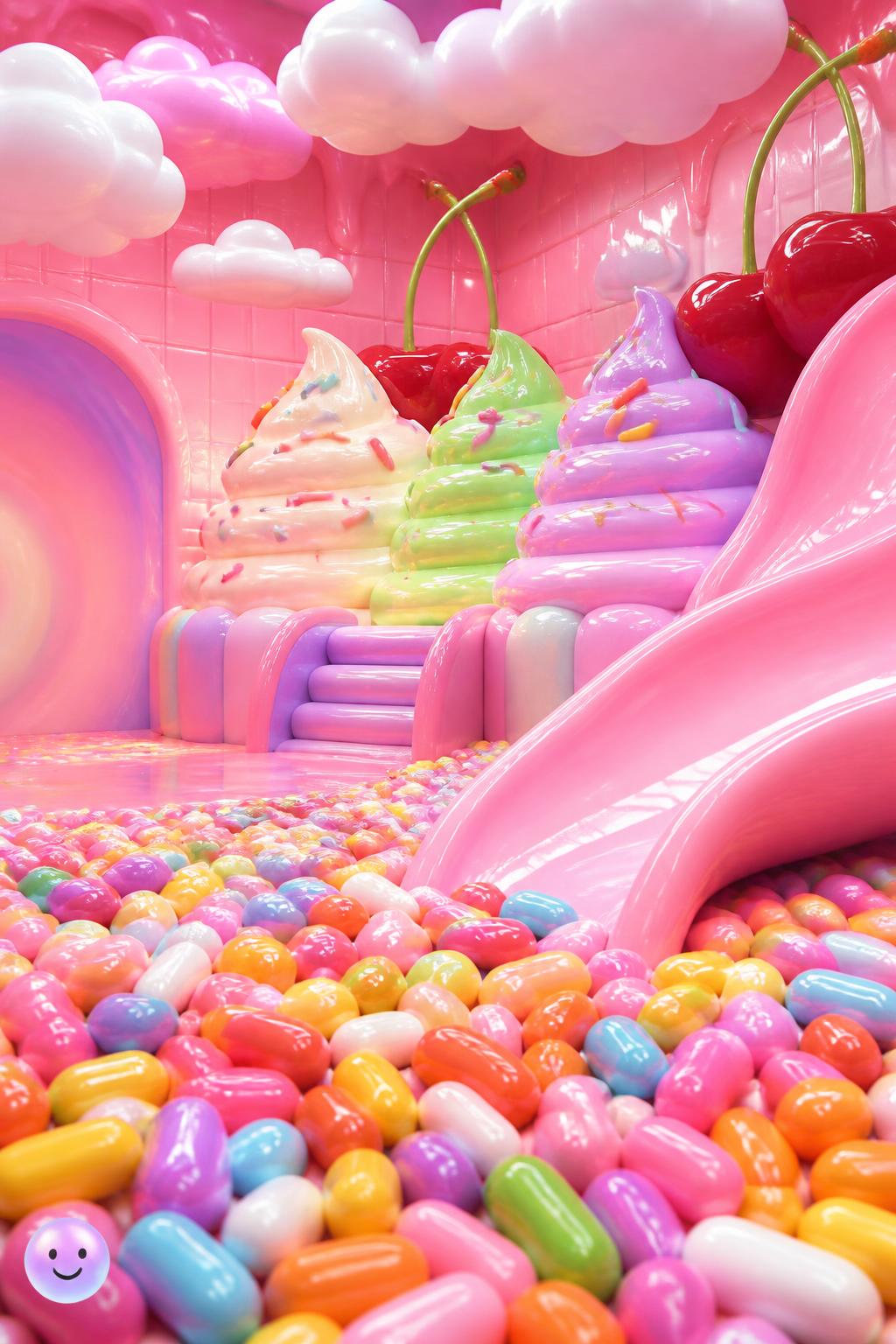
museumoficecream Oversized physical environments trigger childlike wonder by physically altering our spatial perception and sense of scale.
A design approach that purposefully engages multiple human senses to evoke specific emotional responses. Co-founders Maryellis Bunn and Manish Vora applied this technique when building their New York exhibition in 2016.
Which hormone, responsible for trust and social bonding, is released during shared playful activities?
What does taking and sharing photos of positive experiences do, according to a 2017 study?
What is the design technique of making everyday objects giant-sized to inspire wonder called?
How does experiencing awe affect the human body physically, according to psychological studies?
What did researcher Alexander Schauss discover about Baker-Miller Pink in 1979?
What traditional museum rule do modern experiential spaces intentionally break to reduce social anxiety?
According to a 2007 Harvard Medical School study, which brain region is activated by sharp angles?