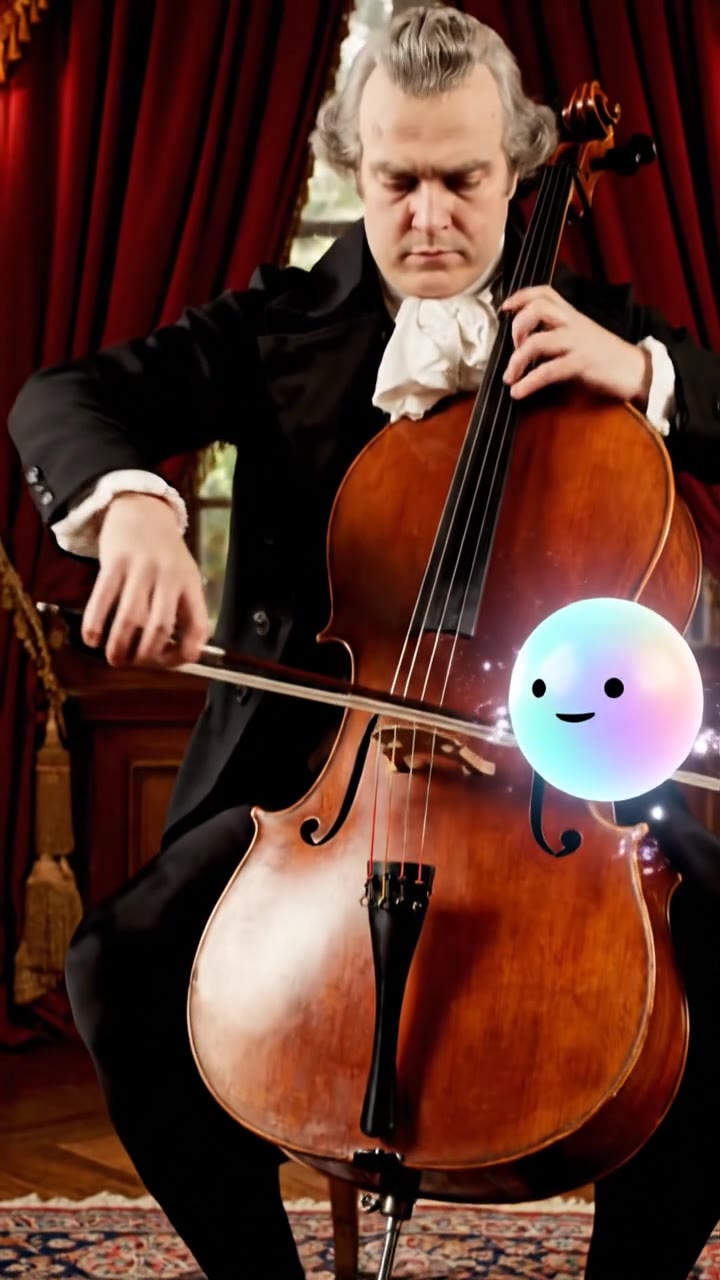
The endpin breakthrough
For centuries, cellists held the heavy instrument tightly between their calves, which restricted movement. Around 1840, Belgian cellist Adrien-François Servais popularized the endpin, a metal spike that anchors the cello to the floor. This simple addition relieved physical strain, allowing musicians to play more complex, virtuosic music.
The physics of the perfect vibration
The voice of the orchestra
From Baroque backrooms to modern carbon
Global icons and legendary moments
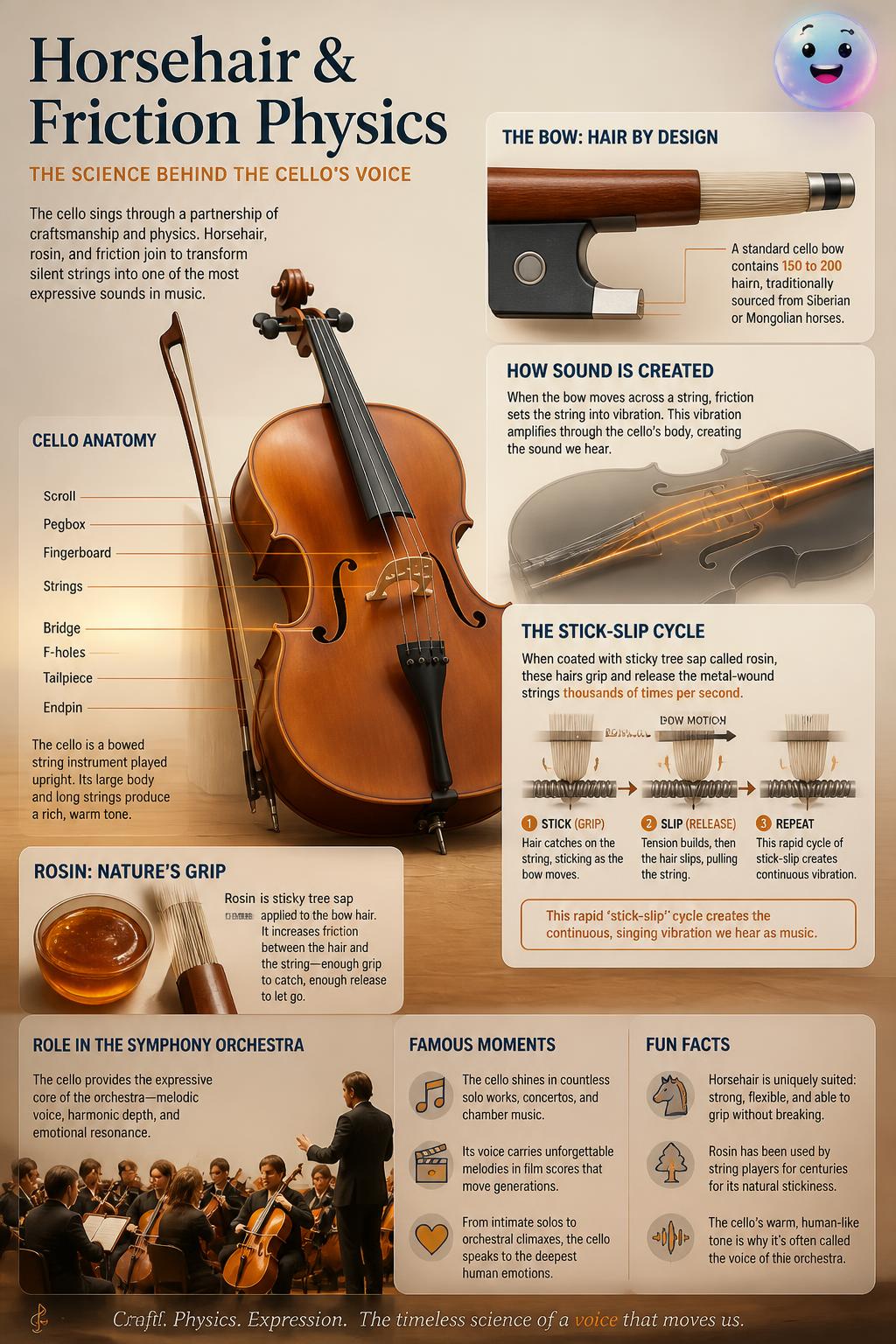
maestro Coated in sticky tree rosin, Mongolian horsehairs grip and release cello strings thousands of times per second. This rapid stick-slip cycle creates the continuous vibrations of a musical note.
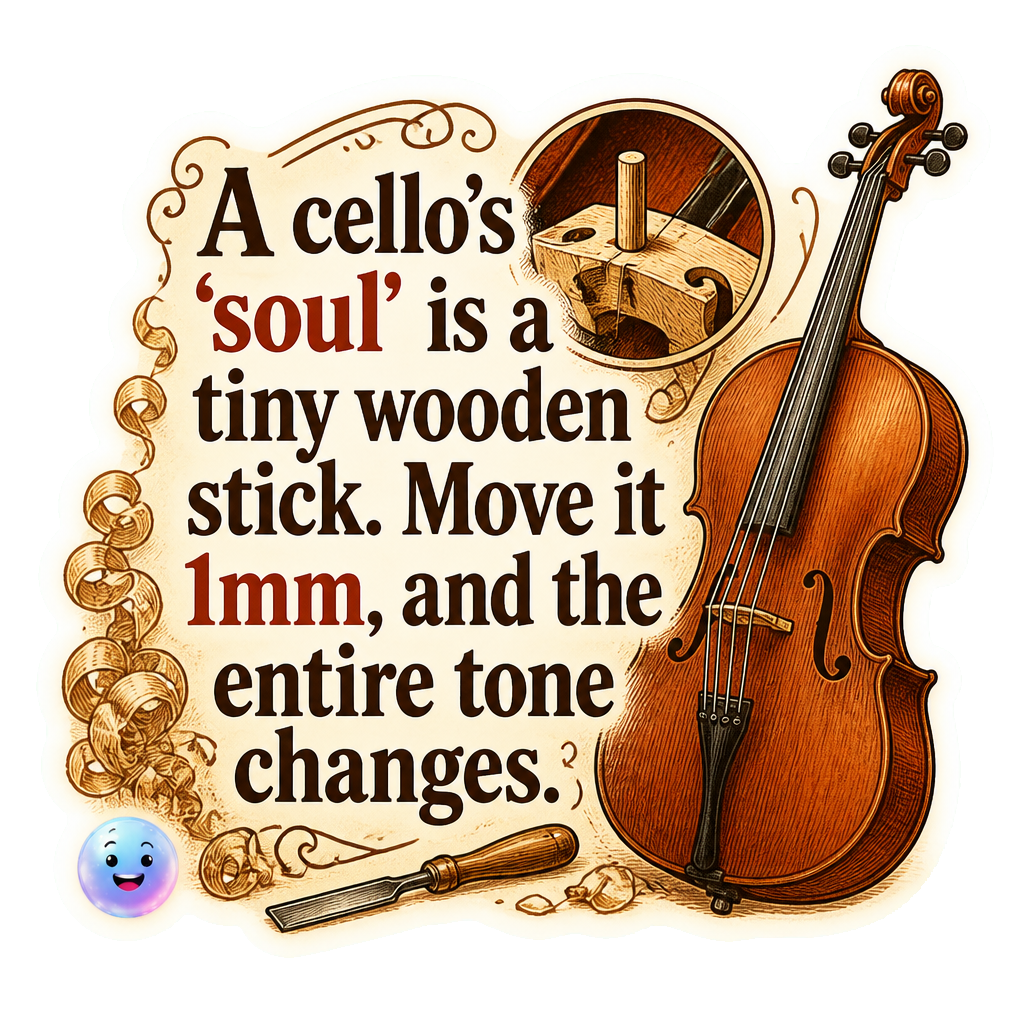
maestro A small spruce cylinder wedged behind the bridge transmits vibrations through the instrument. Moving this piece just one millimeter completely changes the cello's entire sound.
maestro Seventeenth-century Italian luthiers carved cellos with soft spruce tops to project high frequencies and hard maple backs to reflect low tones. This pairing creates a warm, resonant sound.
maestro Before 1840, cellists squeezed the heavy instrument between their legs. Belgian cellist Adrien-François Servais popularized the floor spike, freeing musicians to play much faster, more complex music.

maestro Drag the bow to play famous melodies and learn how the cello's unique sound works.
maestro Cello Resonance Physics
Move the air, Move the air, The wood turns the string's wave into sound.
Cello varnish secret: Some historians believe classical Italian luthiers mixed crushed gemstones, like amber and jasper, into their varnish to give cellos a unique, shimmering look.
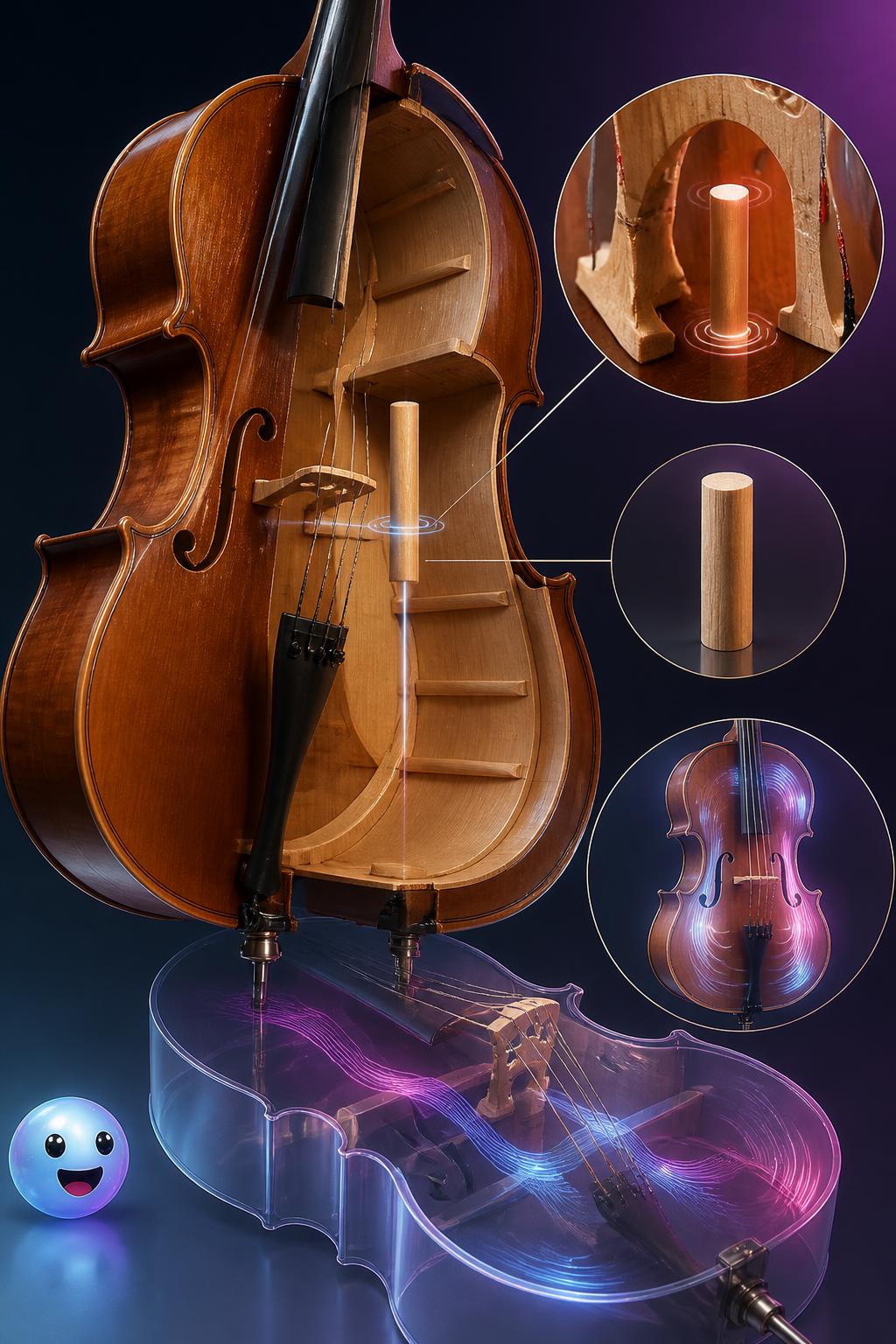
maestro An isometric technical render shows the small spruce soundpost inside a cello body.
An unpleasant, howling sound produced by a stringed instrument when a played note matches the body's natural resonant frequency. In 1916, physicist C. V. Raman first explained this acoustic phenomenon on the cello.
In standard cello playing, which hand is responsible for pressing the strings against the fingerboard?