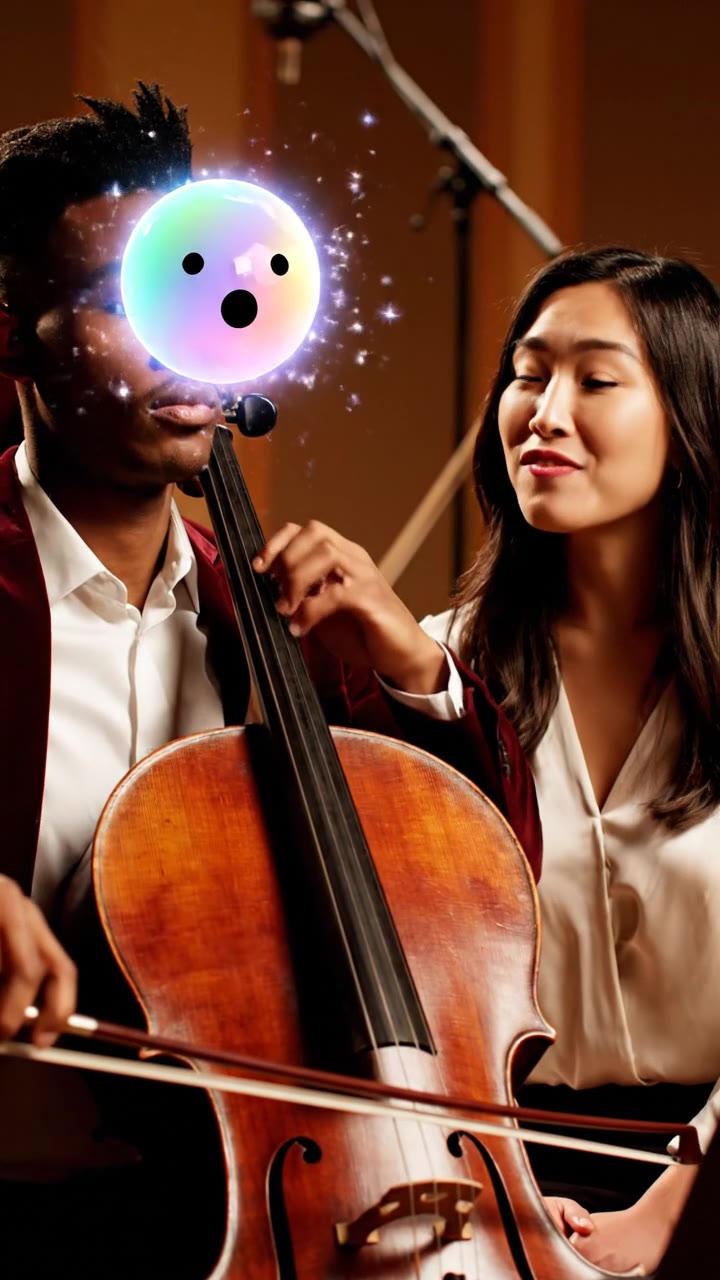
Cello Singing in the Human Range
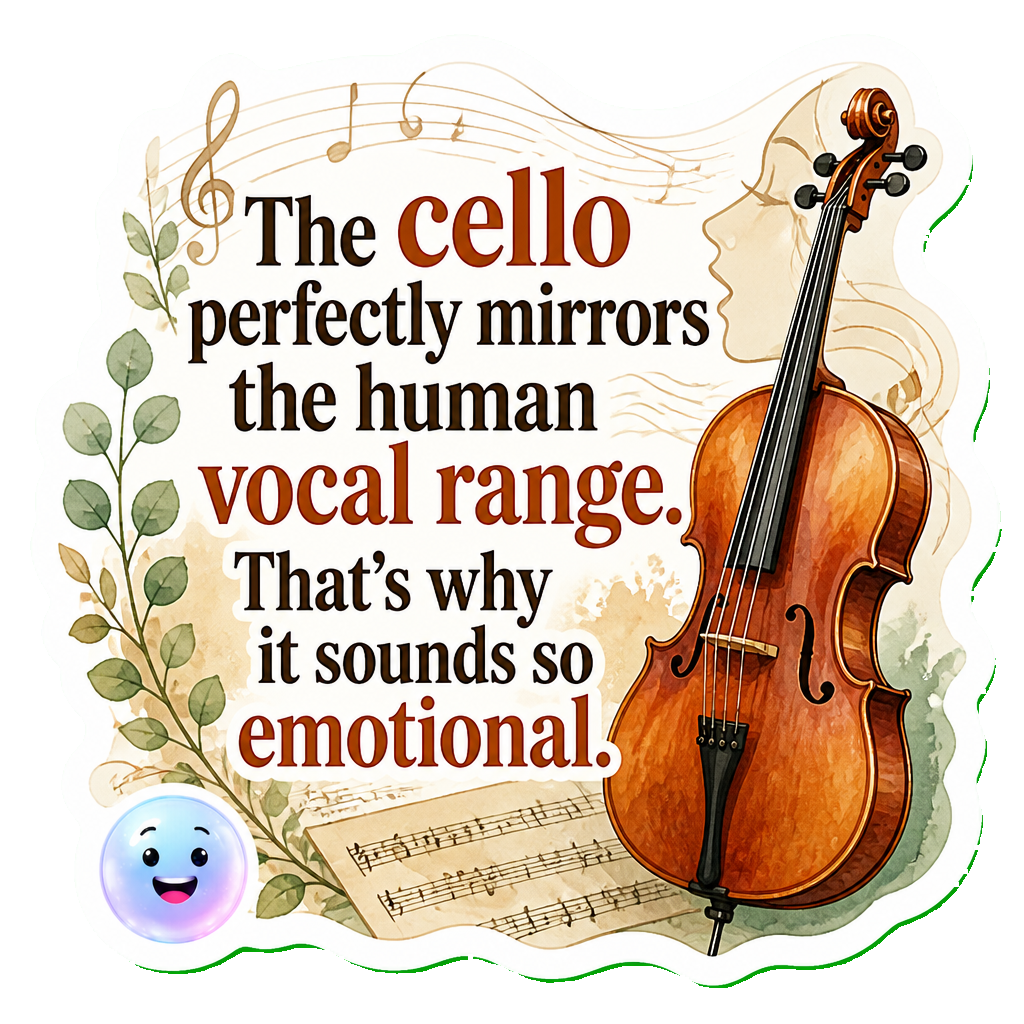
The cello's pitch range spans from C2 (about 65 Hertz) to over A5 (880 Hertz), perfectly mirroring the human bass, baritone, tenor, and soprano vocal registers. Because humans are evolutionarily tuned to listen to vocal frequencies, we find the cello's sound uniquely emotional and familiar. This acoustic overlap explains why it often plays lyrical solos.
The physics of the perfect vibration
The voice of the orchestra
From Baroque backrooms to modern carbon
Global icons and legendary moments
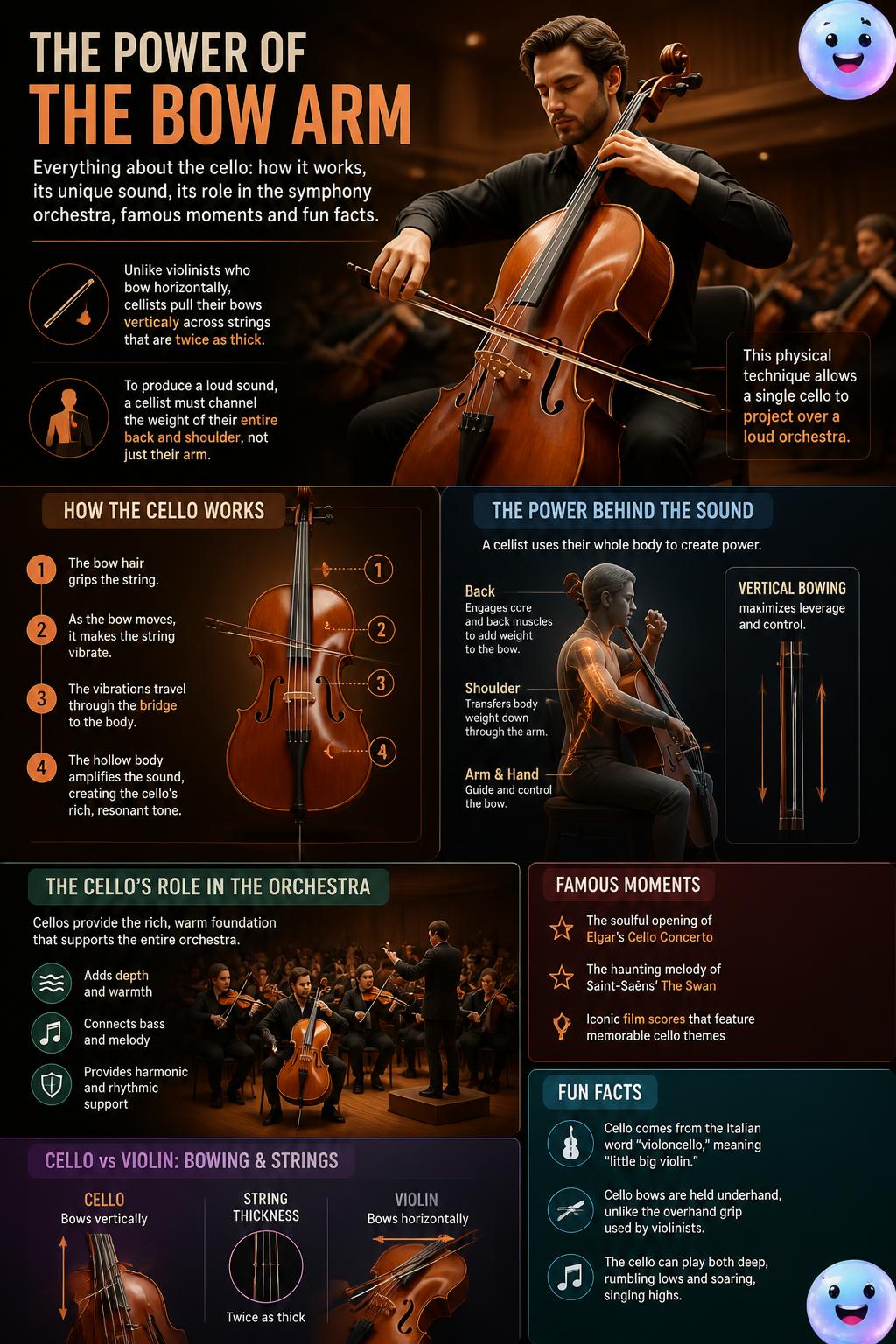
maestro Cellists pull vertically across thick strings using back and shoulder weight. This intense technique allows a single cello to project over a loud orchestra.
maestro Ten to twelve cellists sit at the front right of the stage. They blend deep double bass rhythms with warm viola harmonies to glue the string section together.
maestro Matching bass to soprano registers, the cello plays notes from C2 to A5. Our brains evolved to favor these exact frequencies, making cello solos sound deeply emotional.
maestro Lightly touching a string at exact fractional points blocks the main note. This technique isolates the glassy overtones Maurice Ravel used for magical orchestral atmospheres.
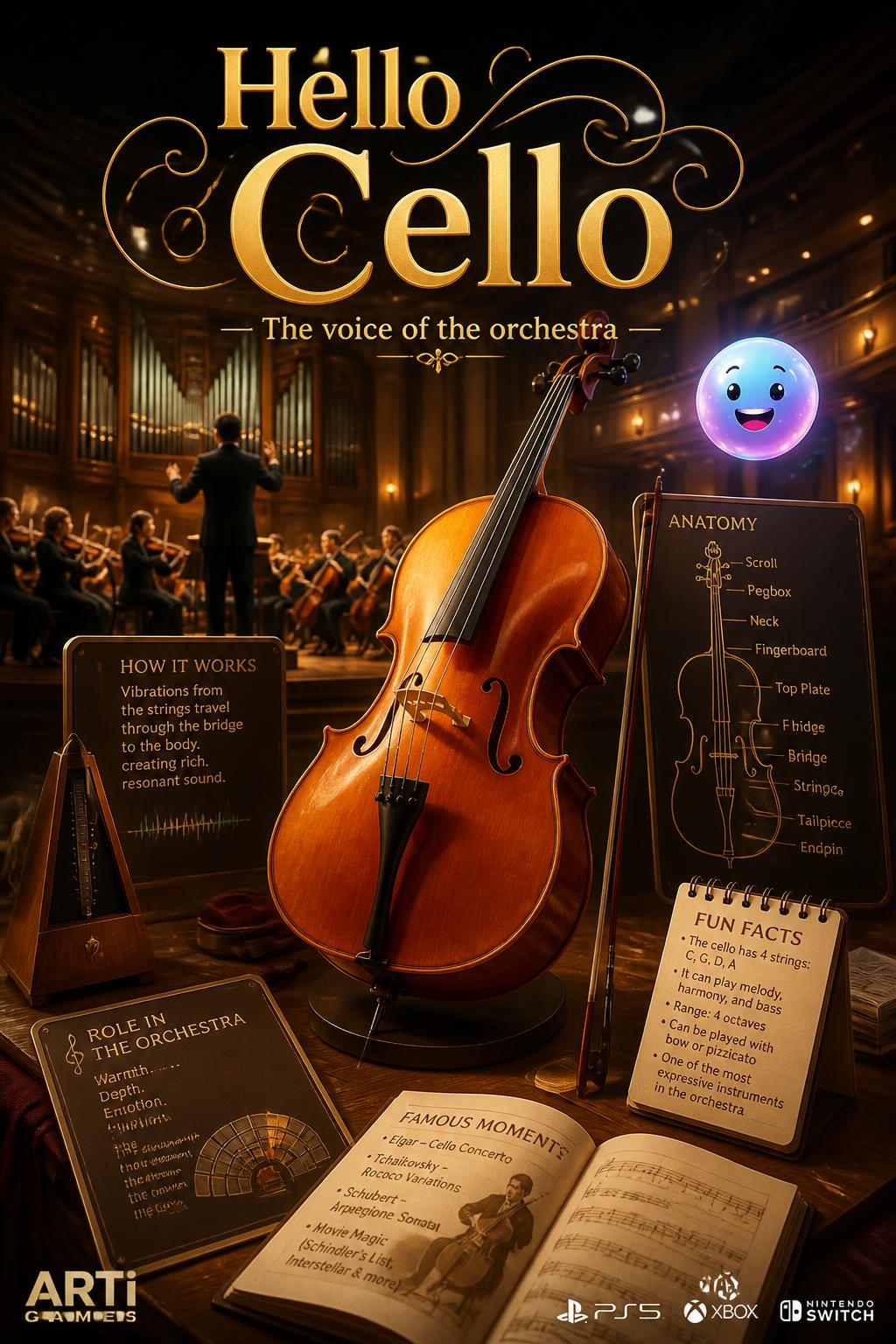
maestro Drag the bow across the strings to learn how the cello creates its rich sound.
maestro Voice of the Orchestra
From a deep rumbly bass to soprano so high, I'm a one-cello choir singing under the sky!
Space-traveling cello: In 1977, NASA launched the Voyager Golden Record into space, featuring a recording of legendary cellist Pablo Casals playing a traditional Catalan folk song.
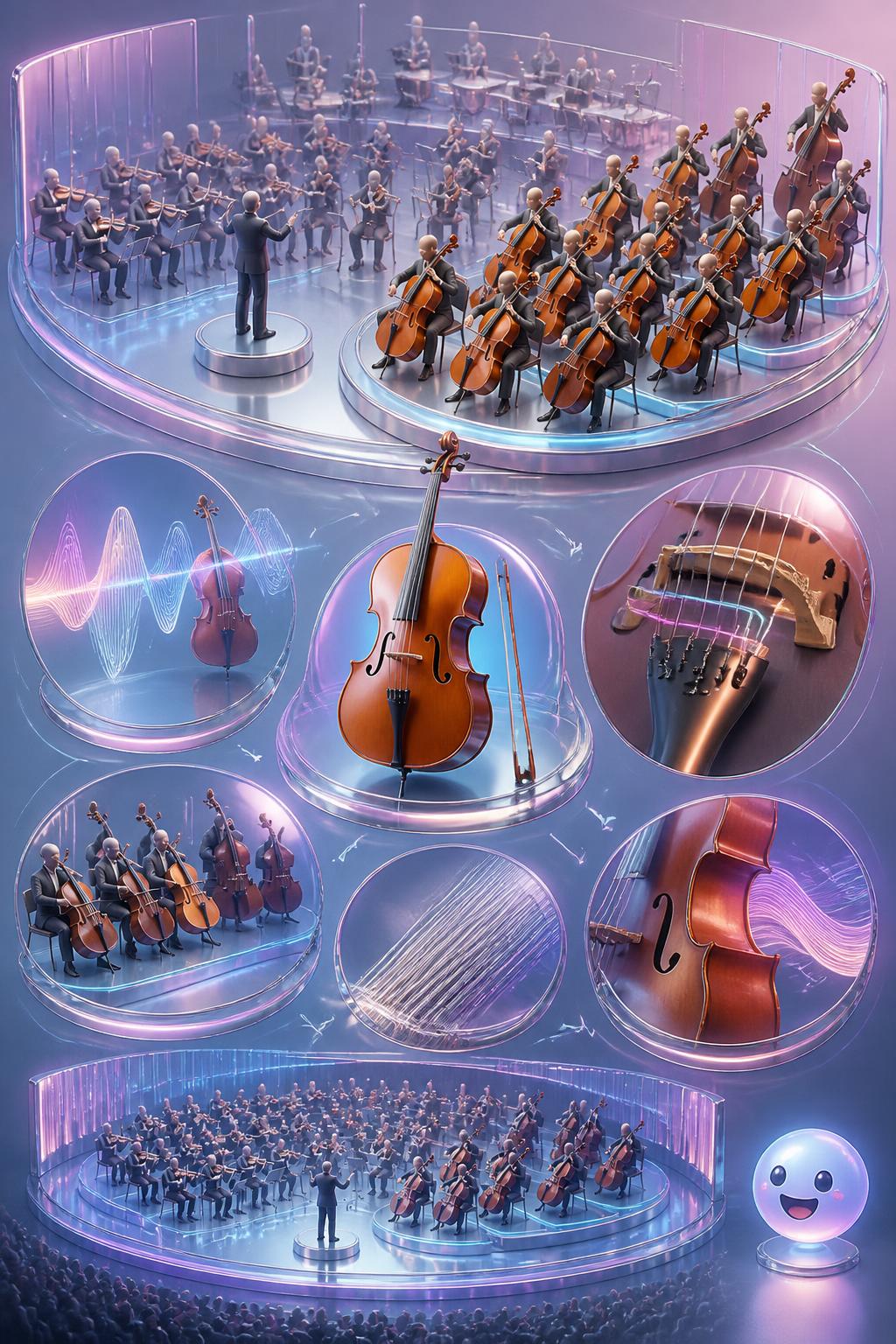
A large, four-stringed musical instrument of the violin family, played with a bow by a seated performer. Modern symphony orchestras typically feature eight to twelve cellos positioned to the right of the conductor.
Where is the cello section typically seated in a standard modern symphony orchestra?
What ethereal sound is produced when a cellist lightly touches a string instead of pressing it flat?