
What is the traditional title for a craftsman who builds and repairs
What is the traditional title for a craftsman who builds and repairs cellos?
The physics of the perfect vibration
The voice of the orchestra
From Baroque backrooms to modern carbon
Global icons and legendary moments
maestro Cellists demonstrate how World War I steel strings replaced quiet sheep-gut strings to fill massive concert halls. Today, musicians only use gut strings for historical Baroque performances.
maestro Master luthier Antonio Stradivari built the Duport cello in 1707 using a revolutionary B-form shape. This historic blueprint still dictates the exact measurements of modern cellos for perfect sound.
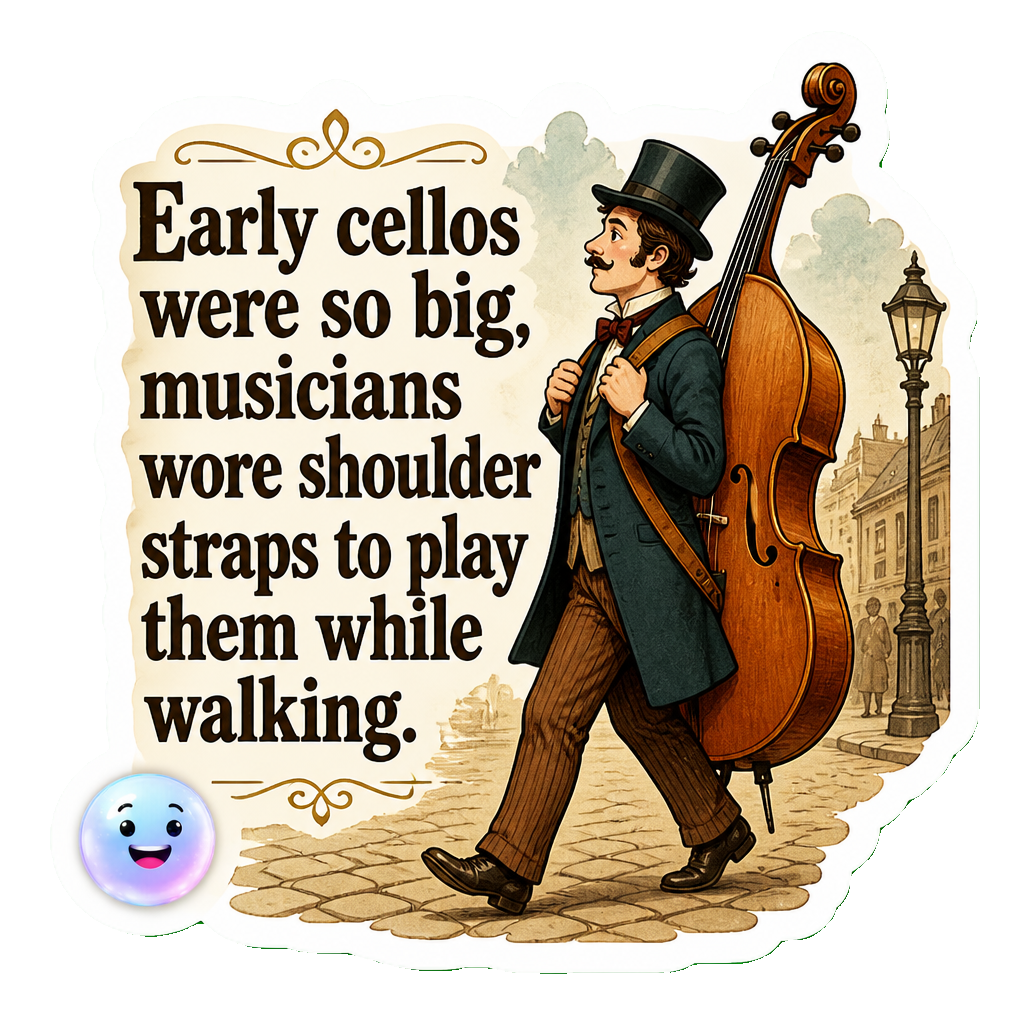
maestro During 1500s religious processions, musicians strapped giant bass violins to their shoulders. In 1660, wire-wound strings invented in Bologna, Italy, shrunk the instrument to its modern cello size.
maestro Traditional wooden cellos easily crack in extreme weather. Since the late 1990s, makers craft indestructible carbon fiber instruments that sound like wood for outdoor concert tours.

maestro Place the cello in the orchestra to discover its powerful role in the symphony.
maestro Carbon Fiber Cellos
Crafted like a sailboat hull, this carbon shell won't warp or crack, it just plays.
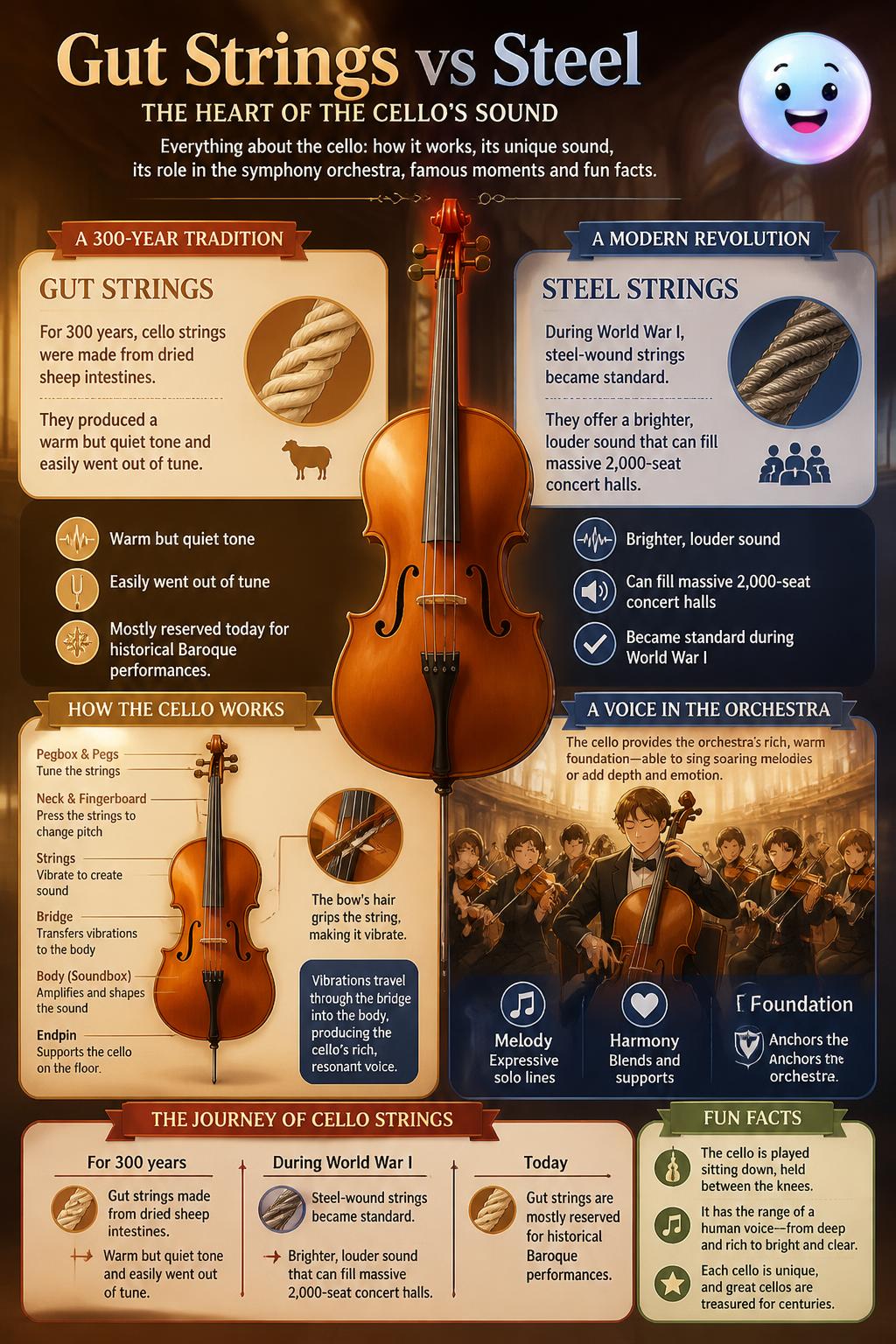
maestro Yellowish sheep-gut strings and silver steel strings run down the wooden cello neck.
The royal scratch: The world's oldest surviving cello, built by Andrea Amati in 1566, still bears the painted coat of arms of King Charles IX of France.
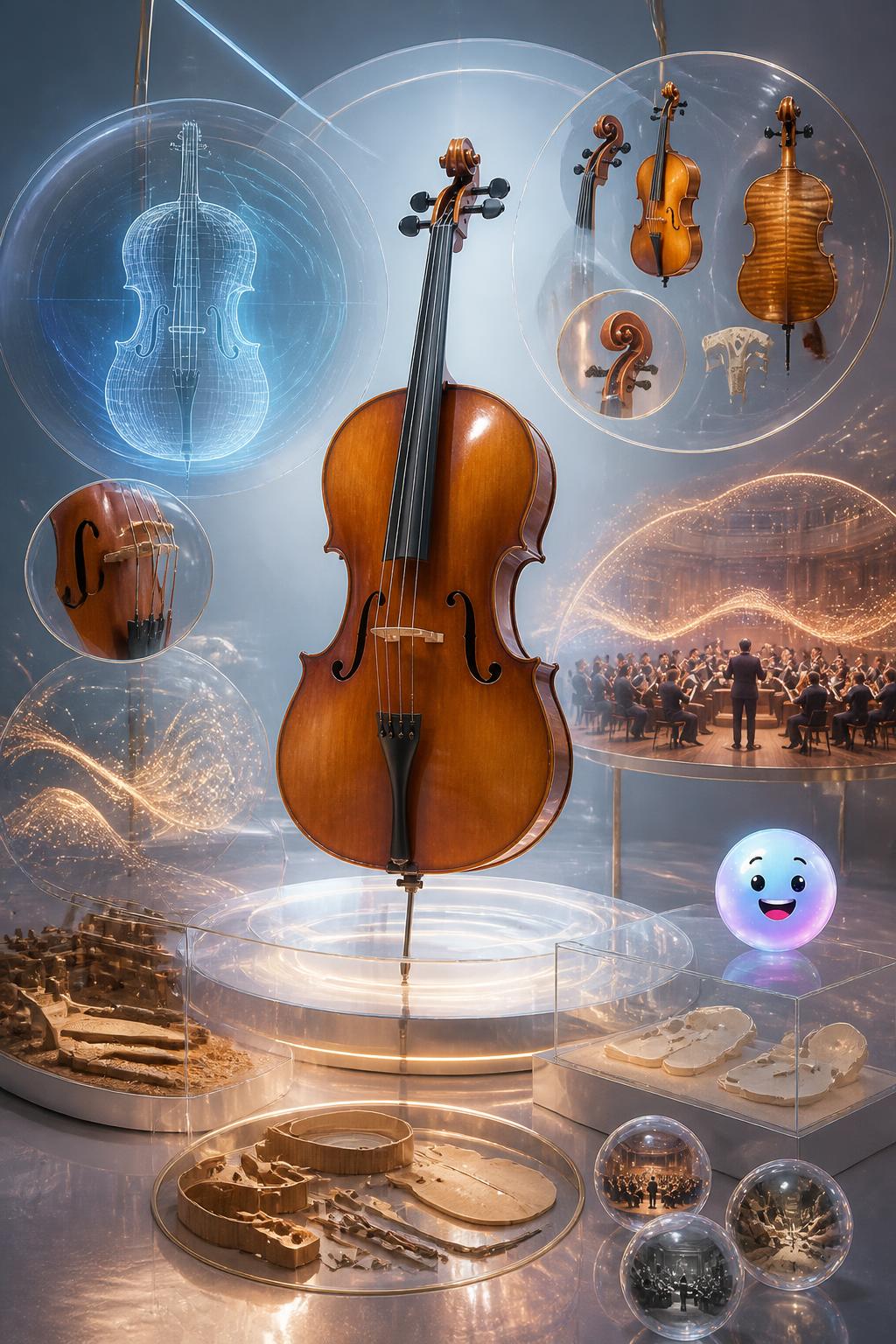
This strong, lightweight material consists of thin, strong filaments of carbon atoms. Luthiers use this material to construct resilient cellos first popularized by Luis and Clark in 2000.
During which major historical event did steel cello strings become the global standard?
What were historical cello strings traditionally made from before the 20th century?
What 1660 invention in Bologna, Italy, allowed luthiers to shrink the cello to its modern size?