
BETA

In 1864, William Sellers standardized US screw threads, which became the industrial norm. Changing to metric threads would have made existing replacement parts useless overnight.
hank Standardizing U.S. screw threads in 1864 meant switching to metric would make existing replacement parts useless.
hank US Customary Units
Factories built it all, Inch by foot and yard, Too costly now to switch, It's just too hard!
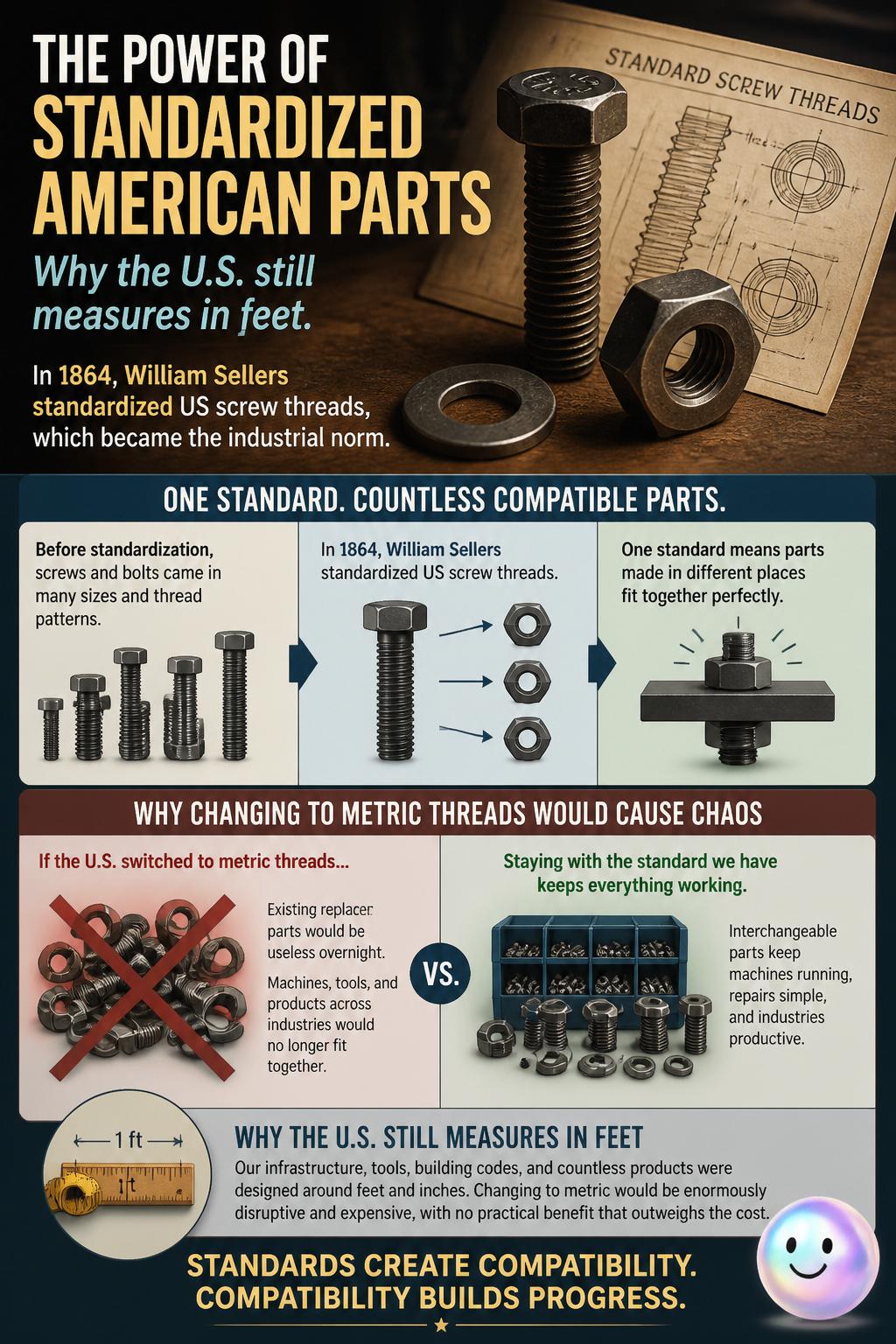
hank American industry thrived on standardized parts like screws and bolts, making any transition to metric highly disruptive to trade.
Secretly metric: Since 1893, the official definition of an American inch is mathematically based on the millimeter, meaning US units are just disguised metric units.

hank Switching to the metric system would require factories to undergo a incredibly expensive process of replacing or altering their machinery.
Which US physicist signed the 1893 order that redefined American units in terms of the metric system?
Who standardized US screw threads in 1864, solidifying the use of inches in manufacturing?
Why did big businesses strongly oppose switching to the metric system in the 19th century?
During which major historical era did US factories lock in their use of inches and feet?
Which government department historically took the lead in establishing standard US weights and measures?