Why August's Meteors Are Named After Perseus
Traveling at 30 kilometers per second, Earth slams directly into this particle stream. The collision occurs from mid-July to late August, peaking around August 11-13 when the debris cloud is densest.
The cosmic origin story
The radiant point illusion
The myth of the hero
Tears and science through time

sonia Discover why August's annual Perseid meteor shower is named after the constellation Perseus and how this cosmic collision occurs.
sonia Watch to learn the science behind why meteors glow so brightly in the night sky and how this relates to August's famous Perseid meteor shower.
sonia Watch to learn how Comet Swift-Tuttle creates the annual Perseid meteor shower and why we name these August meteors after the constellation Perseus.

sonia Play the active, playful Catch the Stars game and discover the cosmic origin story of why August's meteors are named after Perseus.
sonia Watch to discover the surprisingly tiny size of shooting stars and how these microscopic particles light up the night sky during the Perseid meteor shower.
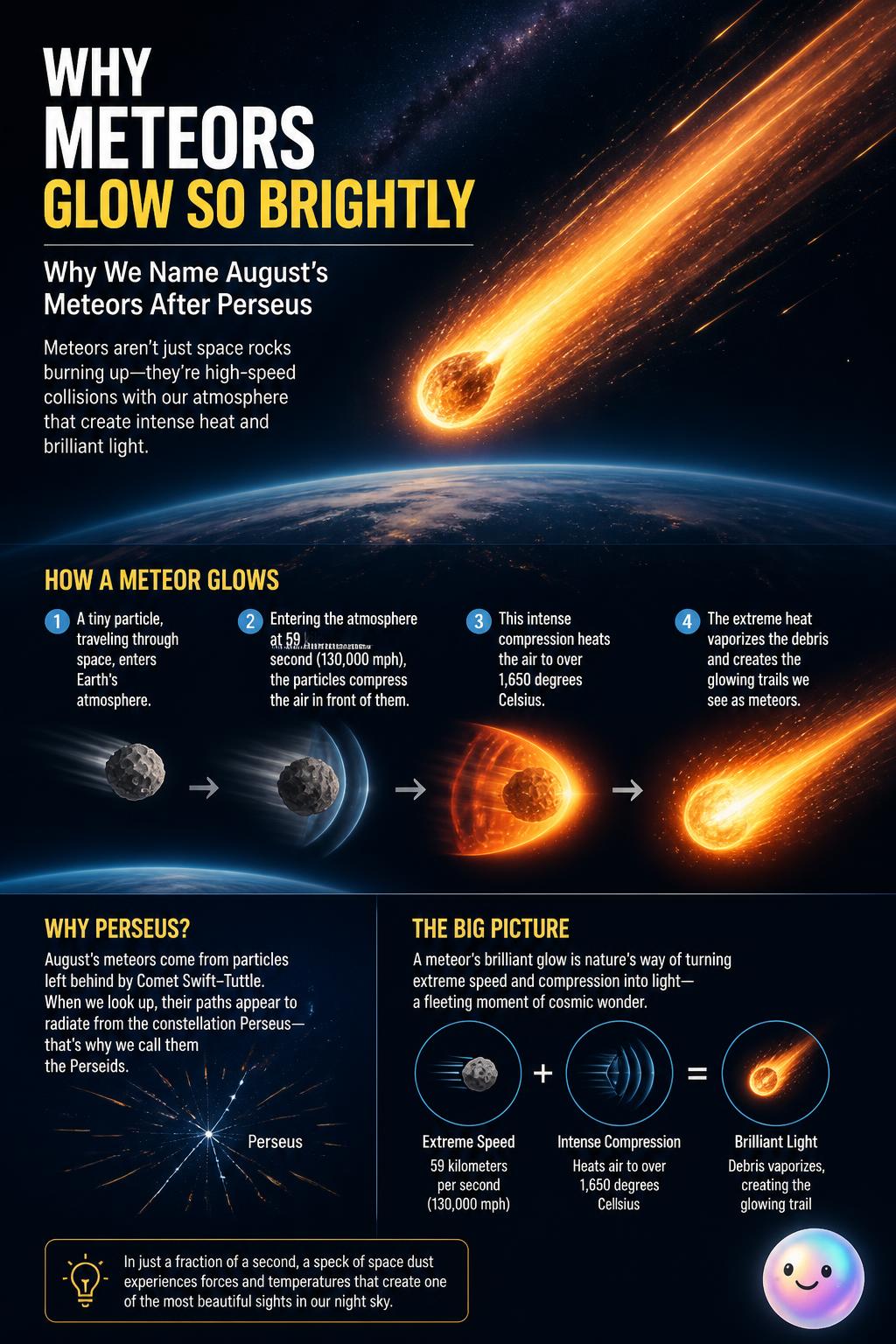
Space dust speed: Perseid meteors travel at 59 kilometers per second, fast enough to cross the United States in under 80 seconds.
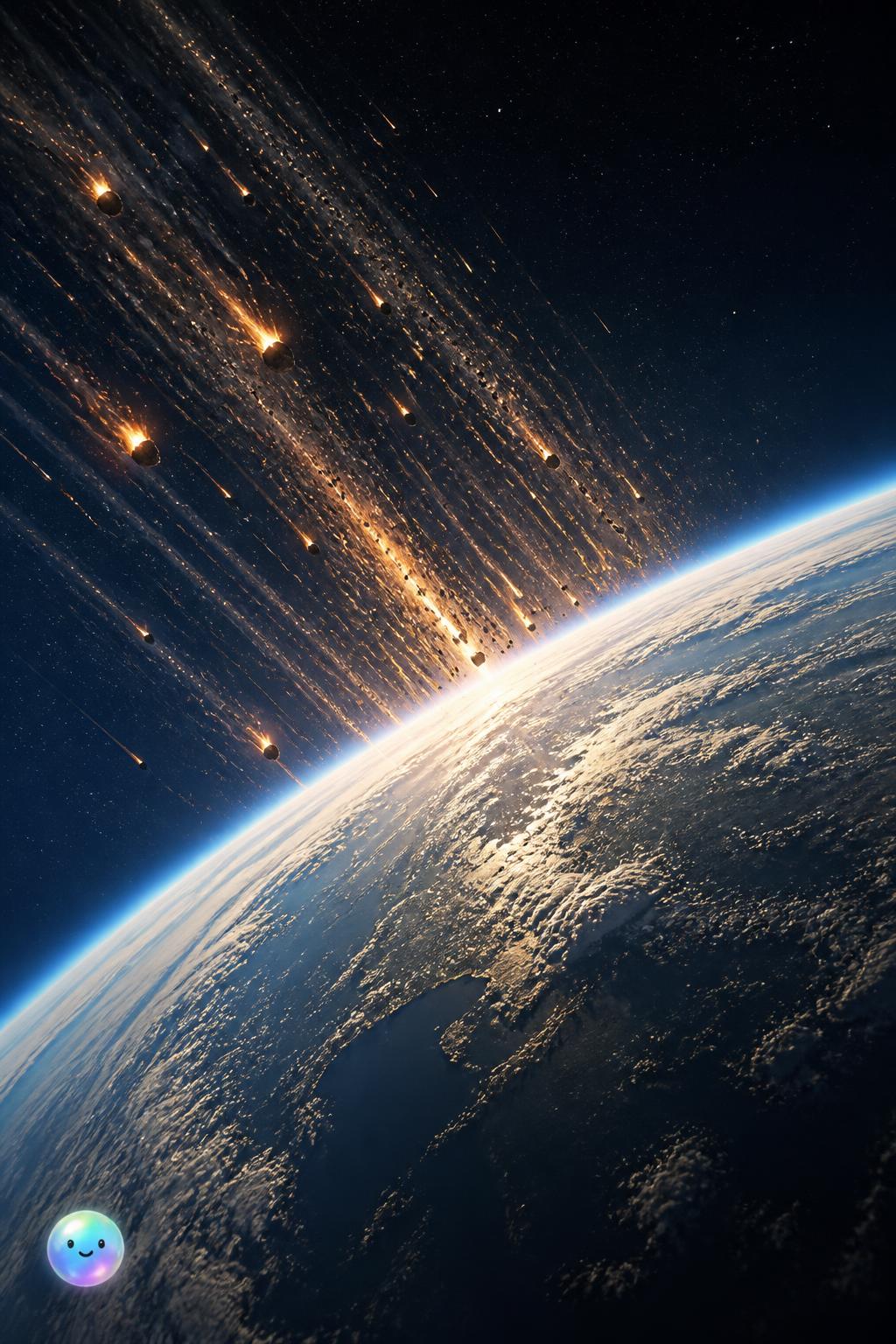
A celestial object of ice and dust that develops a glowing tail when near the sun. Debris from Comet Swift-Tuttle creates the spectacular annual shooting stars observed on Earth every August.
What is the typical size of a particle that produces a standard Perseid meteor streak?
Approximately how fast do Perseid meteor particles travel when they enter Earth's atmosphere?
In what year was Comet Swift-Tuttle discovered by astronomers Lewis Swift and Horace Tuttle?
What do astronomers call exceptionally bright meteors that are larger than typical dust grains?
What physical process causes Perseid meteoroids to glow as they enter the atmosphere?