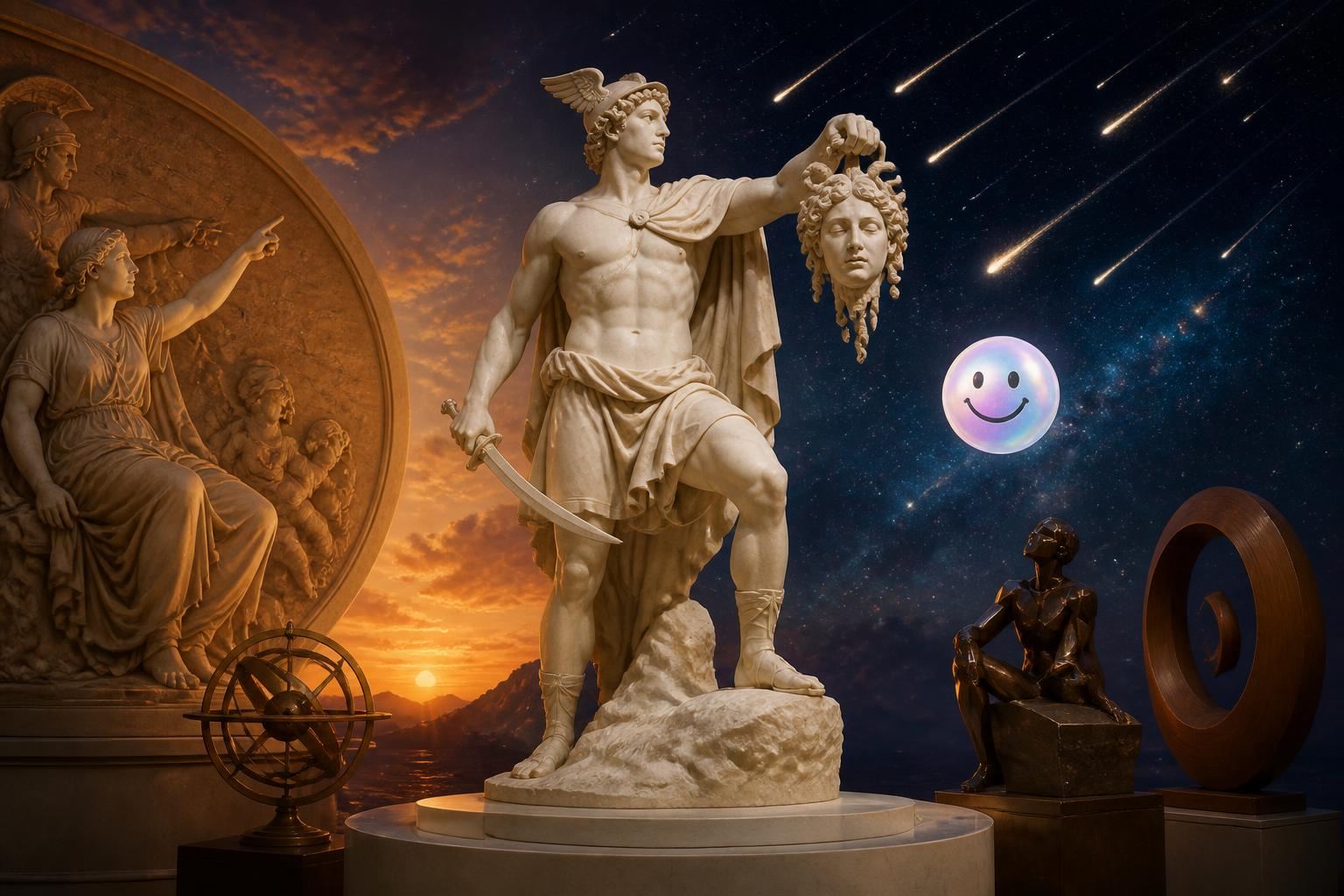
Which W-shaped constellation helps you find Perseus?
Can you identify the W-shaped constellation stargazers use to locate Perseus? Test your astronomy knowledge with this quick night sky quiz.
The cosmic origin story
The radiant point illusion
The myth of the hero
Tears and science through time

sonia Watch this video to easily locate the constellation Perseus in the night sky and learn why August's famous meteor showers are named after it.
sonia Watch to learn what a meteor radiant is and why August's famous meteor shower is named after the constellation Perseus.
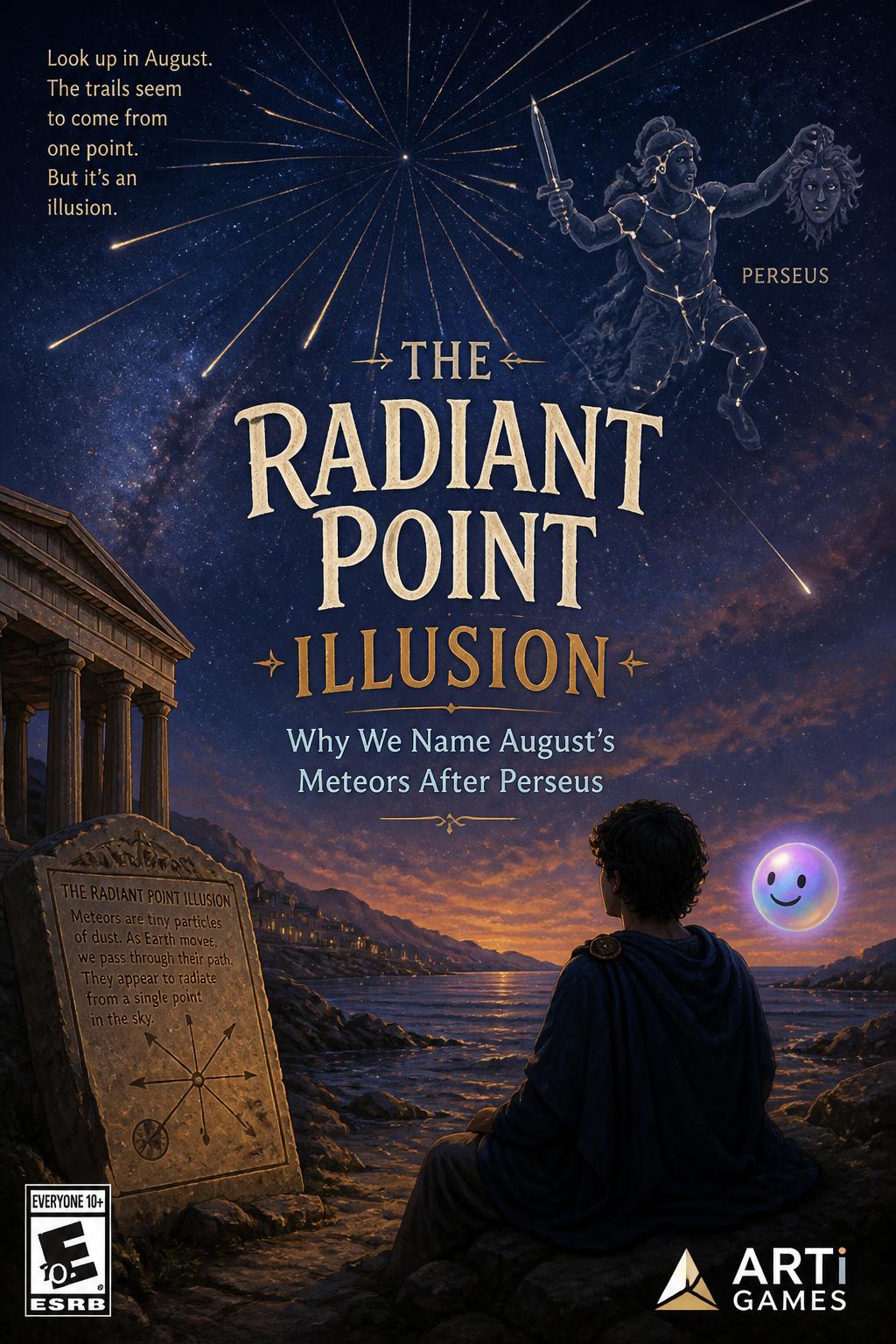
sonia Trace the meteor trails backward to discover why they seem to start in Perseus.
sonia The Radiant Point Illusion
We are moving through parallel lines in the night, but they seem to meet right in Perseus' light
sonia Understand the parallax and perspective effect and how it shapes our view of the Perseid meteor shower in August. Watch this quick video guide.
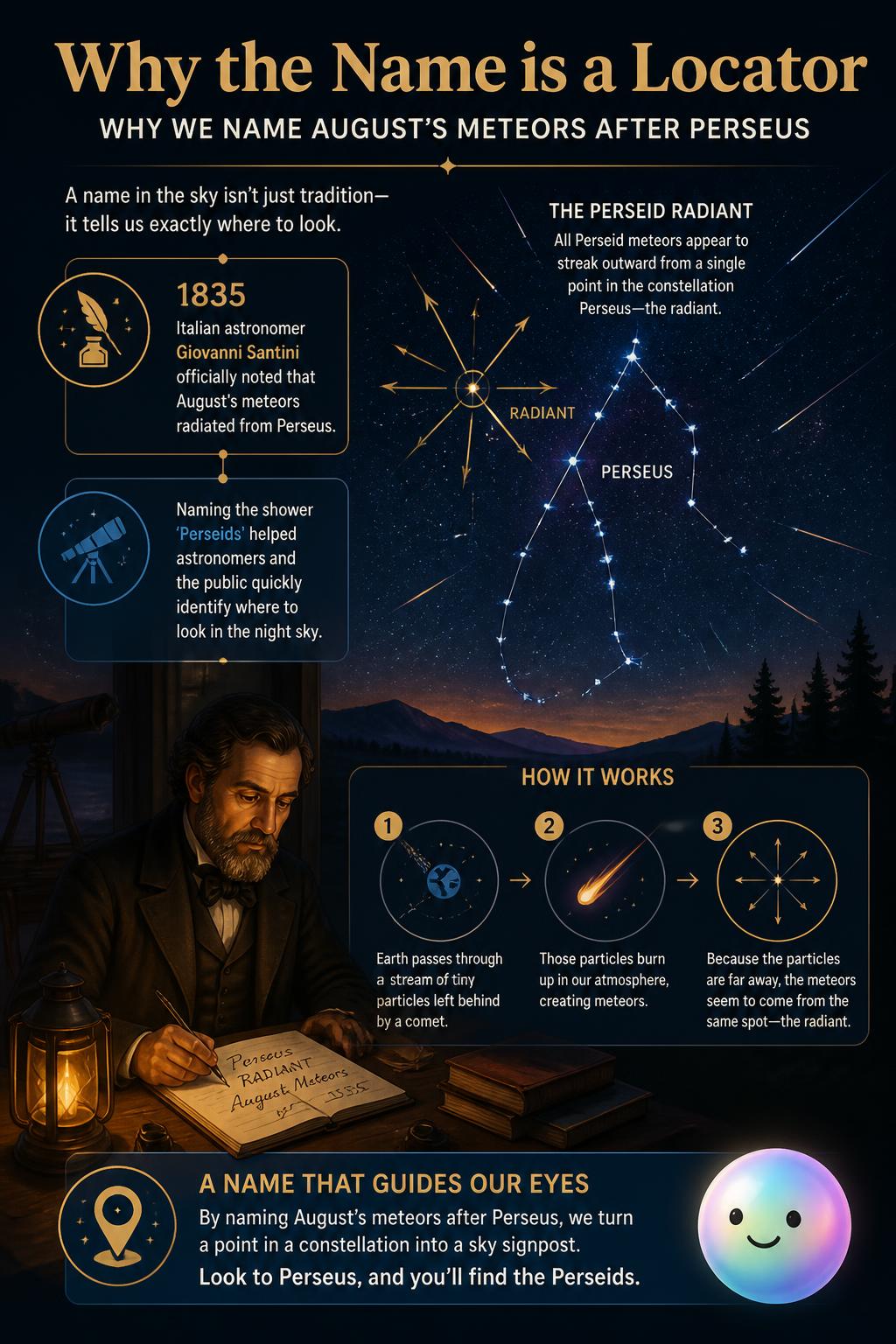
Radiant illusion: Just like driving through a snowstorm makes snowflakes seem to emerge from a single point, Earth's motion creates the meteor radiant.

sonia The Perseid radiant is located within the northern constellation named after the Greek hero Perseus.
The point in the sky from which a meteor shower appears to originate. This apparent origin lies in the constellation Perseus, giving the annual August meteor shower its name.
If a meteor shower had its radiant in the constellation Orion, what would it be named?
Which nearby, W-shaped constellation helps stargazers locate the constellation Perseus?
What term do astronomers use for the single point in the sky where meteors appear to originate?
In which direction should stargazers look to find the constellation Perseus rising after midnight in August?