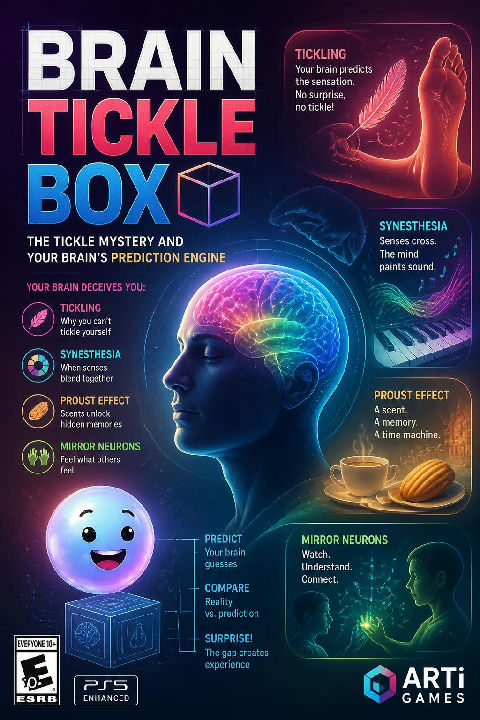
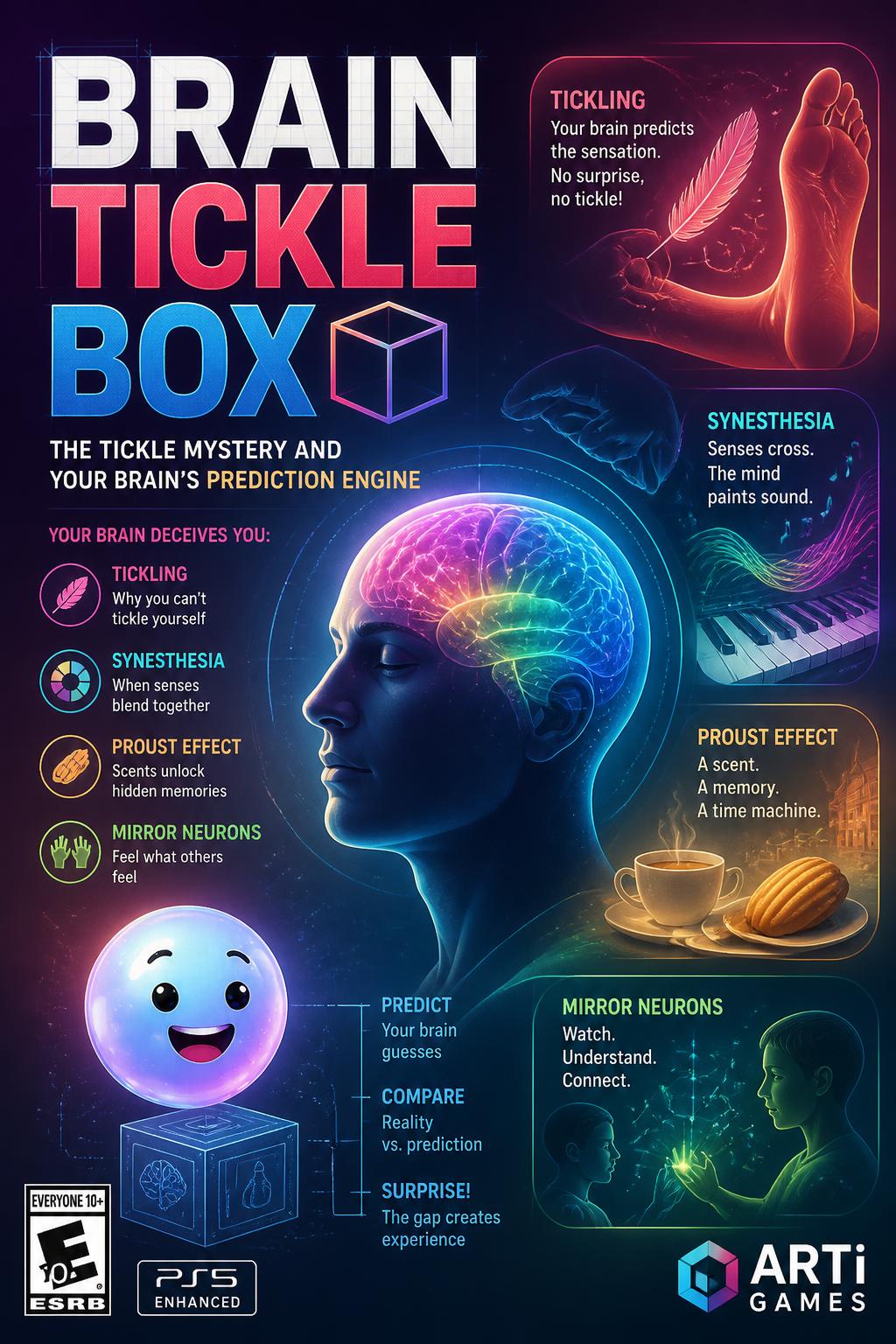
The tickle mystery and your brain's prediction engine
Synesthesia and the crossed wires of perception
The Proust effect and the scent-memory time machine
Mirror neurons and the invisible social web

mankai The Neurology of Tickling
The laughter is just a shield when the panic starts to rise.
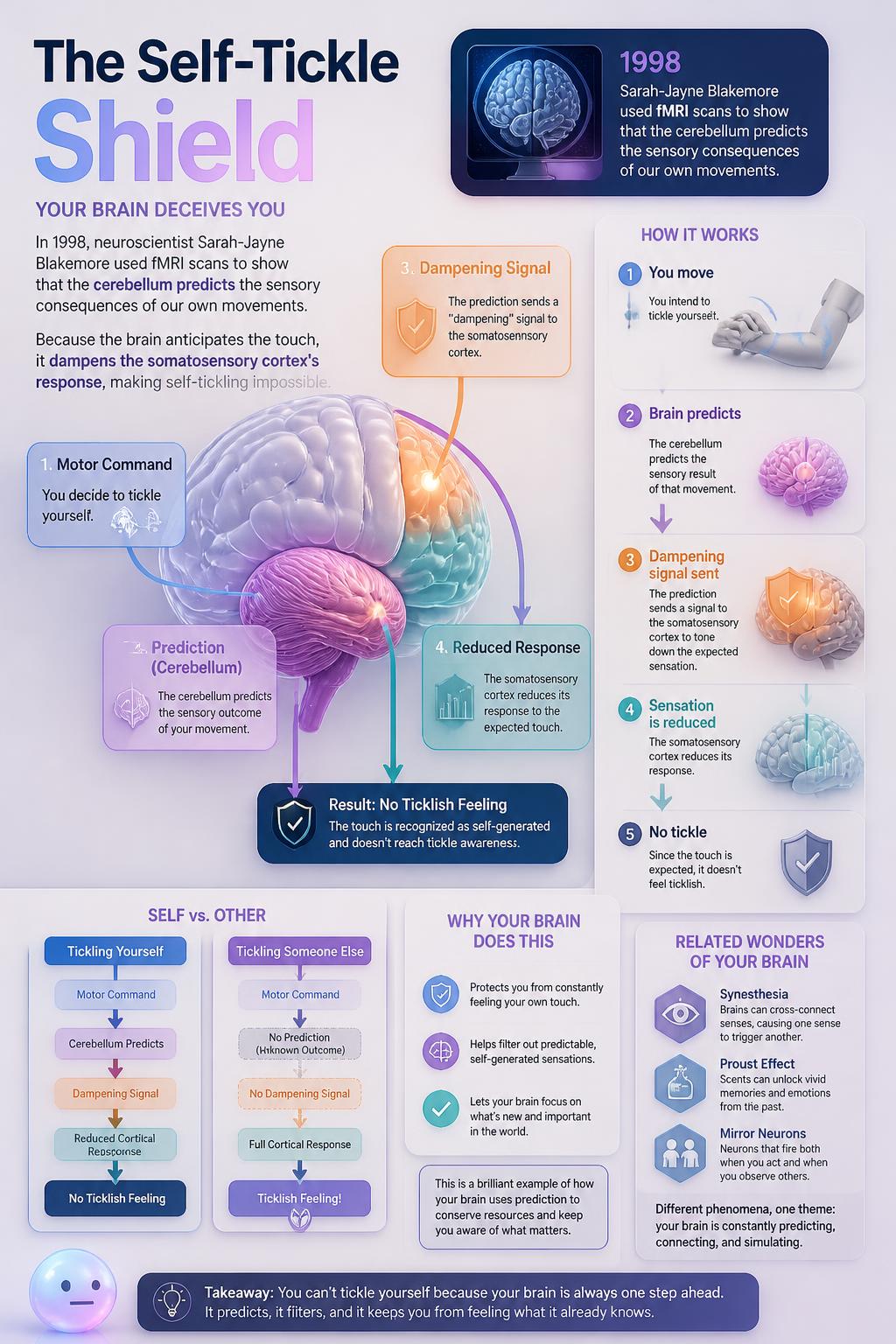
mankai fMRI scans reveal how the brain dampens the somatosensory cortex's response to anticipated movements, creating a self-tickle shield.
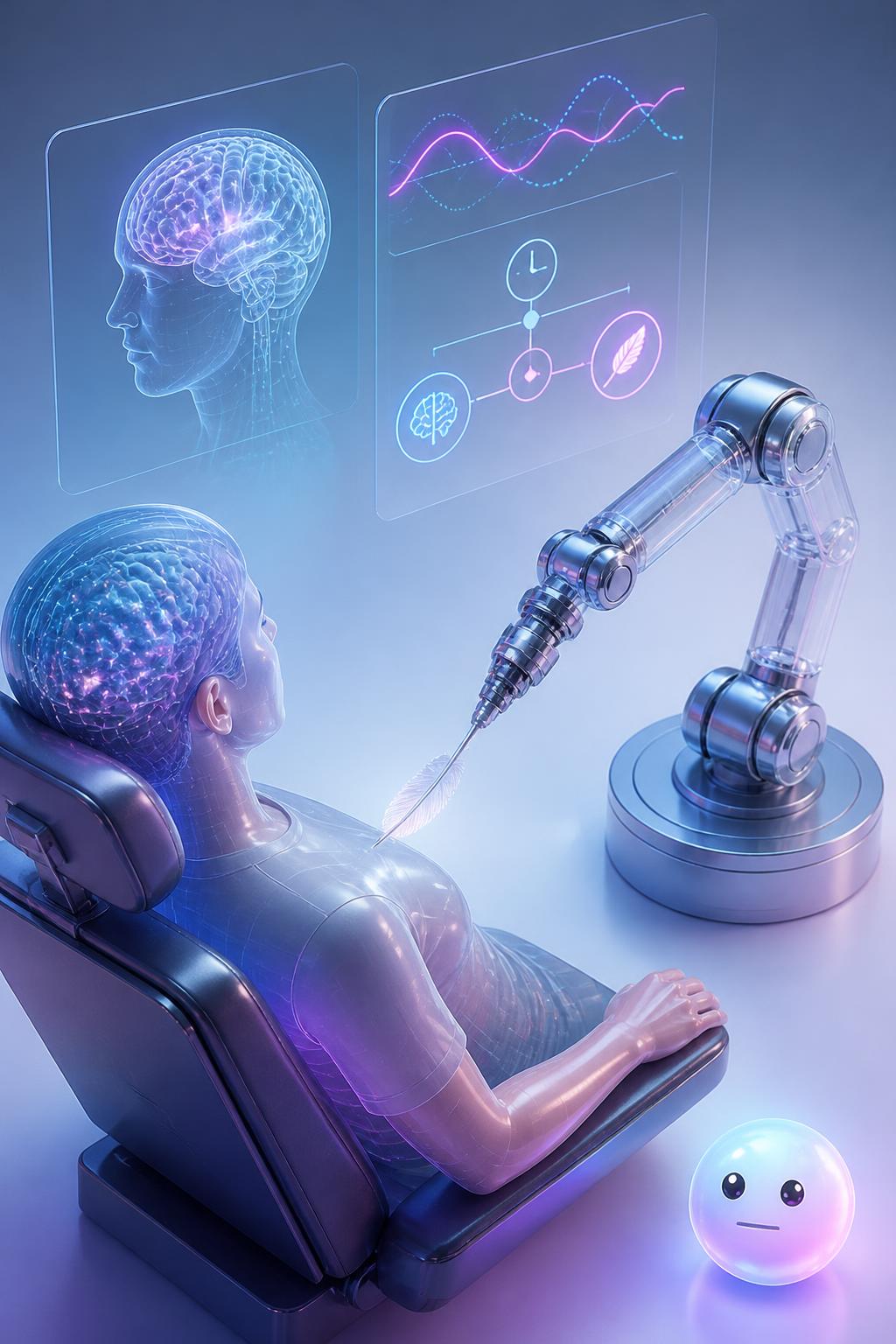
mankai University College London used robotic ticklers to reveal how the brain predicts touch.
Tickling rats: Scientific studies show that rats are highly ticklish, especially on their bellies, and emit high-frequency chirps at 50 kHz that represent rat laughter.
The part of the brain at the back of the skull that coordinates and regulates muscular activity. In 1999, researchers used a robotic interface to show how this region predicts self-generated touch.
Which brain region is primarily responsible for predicting the sensory outcomes of your own movements, preventing you from tickling yourself?
In Sarah-Jayne Blakemore's landmark 1998 study, what type of imaging technology was used to observe brain activity during tickling experiments?
How much of a time delay is needed in a robotic arm experiment for a person to successfully tickle themselves?
Which university hosted the landmark robotic tickling experiment that proved delays confuse the brain's sensory predictions?
What evolutionary purpose is most commonly associated with gargalesis, the deep, laughter-inducing type of tickling?
What term did psychologists coin in 1897 to describe the light, feather-like tickle sensation that does not cause laughter?
Which part of the brain controls the physical vocalization of laughter during tickling, independent of actual joy?