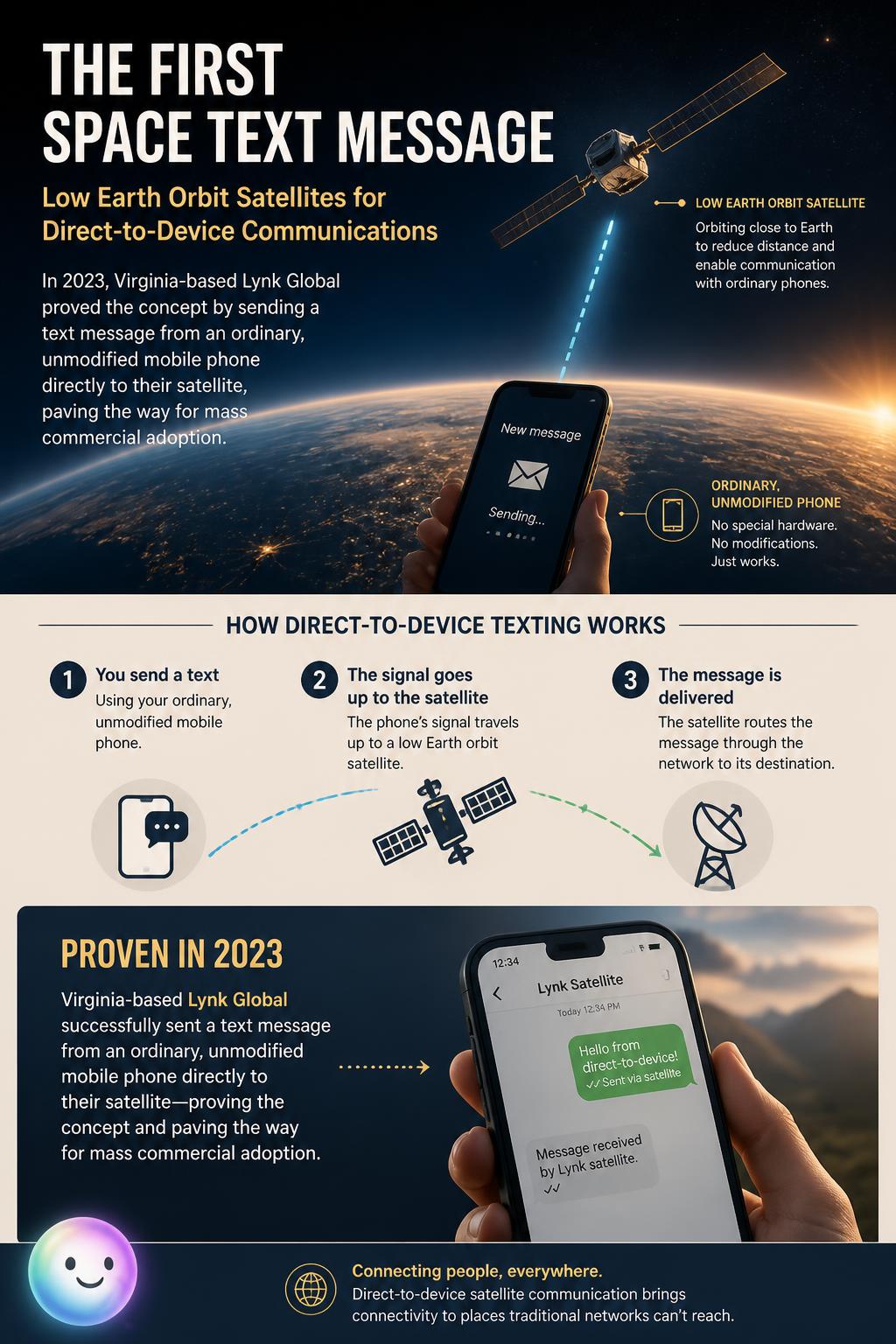
First Space Text Message: LEO Satellite D2D Infographic
In 2023, the first standard cellular text message was successfully routed through a satellite.
Space towers in the backyard
The standard phone revolution
The global race to connect
Bright skies and crowded orbits

sonia Virginia-based Lynk Global beamed a text from an unmodified cell phone directly to their satellite in 2023. This historic test paves the way for global mobile connection.
sonia Graphics demonstrate how modern D2D technology uses standard 4G chips to trick your phone into treating orbiting satellites like giant cell towers.
sonia This giant sixty-four-square-meter array acts like a massive ear in space. It unfolds to pick up and amplify extremely faint signals from ordinary cell phones on Earth.
sonia The Direct-to-Device Revolution
Out in the wild with zero bars on my screen, but my regular phone is linking straight to space!

sonia Aim satellite beams at phones to learn how space networks connect directly to your device.
sonia Orbiting transmitters use software-controlled beam steering to track thousands of moving smartphones simultaneously. This technique directs radio signals instantly without physically rotating the spacecraft.
sonia In 2023, the first standard cellular text message was successfully routed through a satellite.
Giant antennas: The BlueWalker 3 satellite unfolded a 693-square-foot antenna array in space, making it one of the brightest orbital objects.
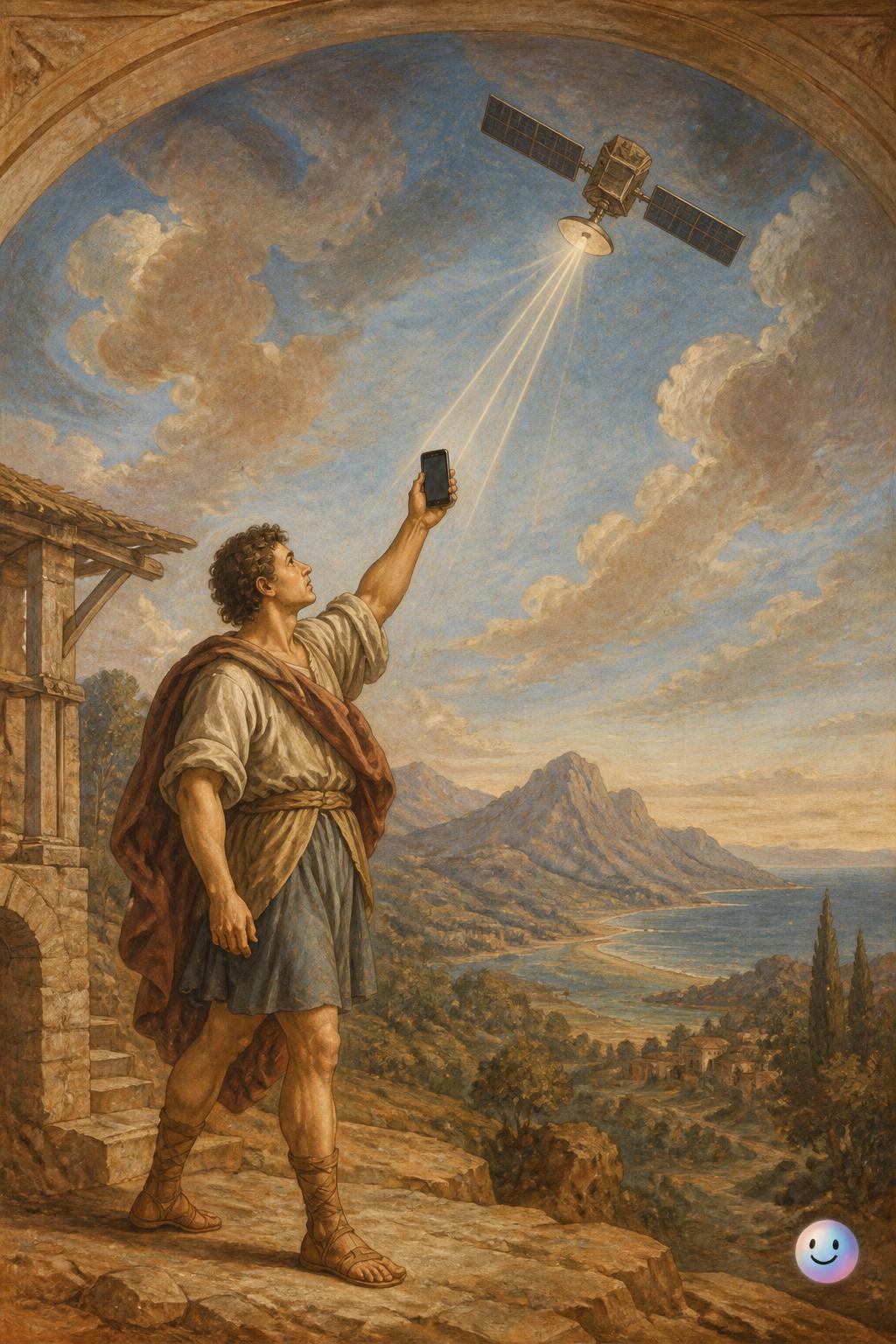
sonia Modern direct-to-device technology connects using standard LTE and 5G protocols without any modifications.
A mobile phone that performs many of the functions of a computer, typically having a touchscreen interface and internet access. In February 2020, Lynk sent the first satellite text message to an unmodified smartphone on Earth.
Which wireless standards allow unmodified smartphones to connect to modern D2D satellites?
What is the main physical limitation of a standard smartphone's antenna when talking to space?
What is the purpose of the massive 64-square-meter antenna on the BlueWalker 3 satellite?