
Quiz
To run large private AI models locally on modern consumer devices, silicon designers utilize unified memory breakthroughs. What major performance bottleneck does unified memory solve compared to traditional computer architectures?
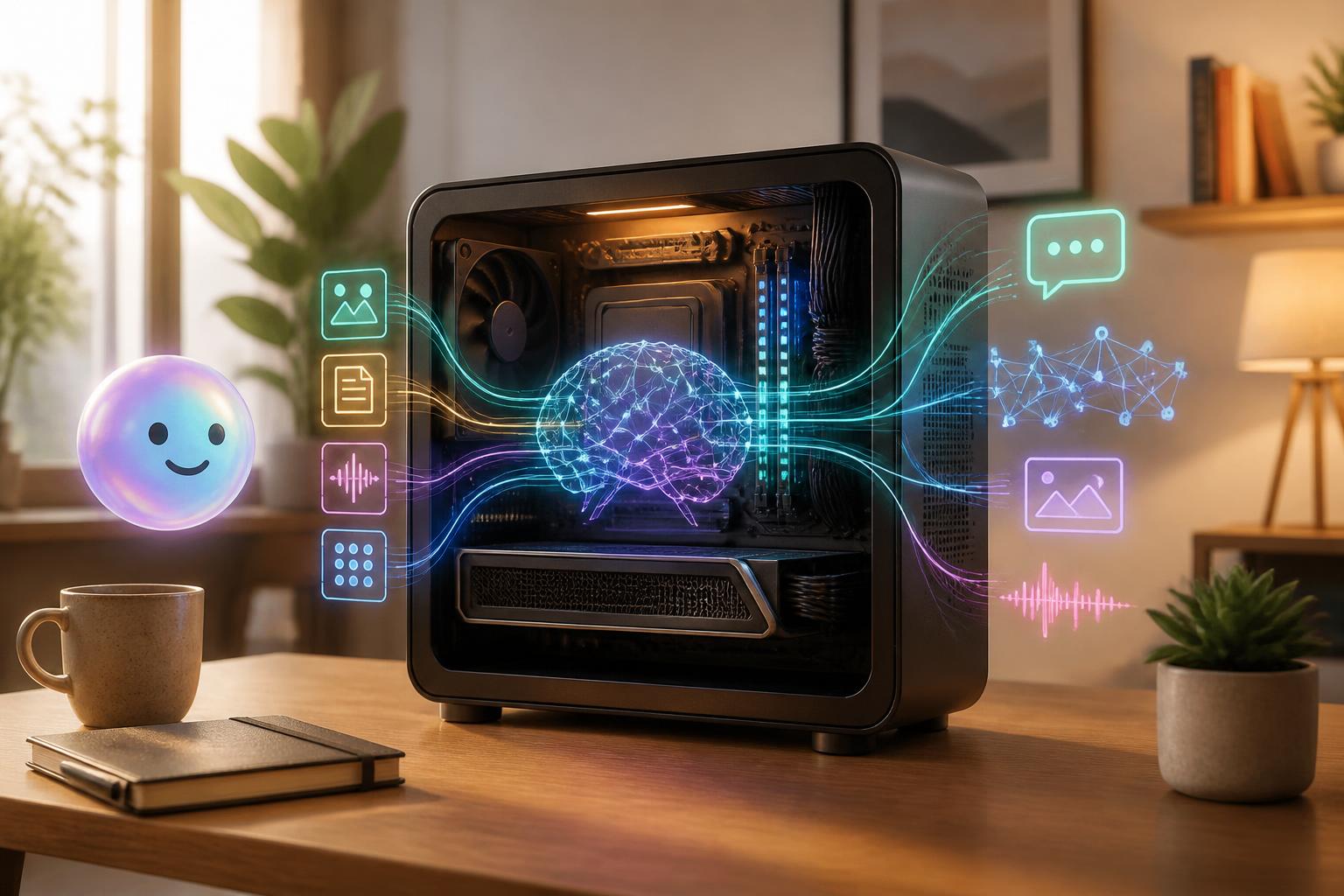
To run large private AI models locally on modern consumer devices, silicon designers utilize unified memory breakthroughs. What major performance bottleneck does unified memory solve compared to traditional computer architectures?
007skaty Neural Processing Units
A grid of tiny circuits multiplies the math all day, To run your local chatbot on a systolic array.
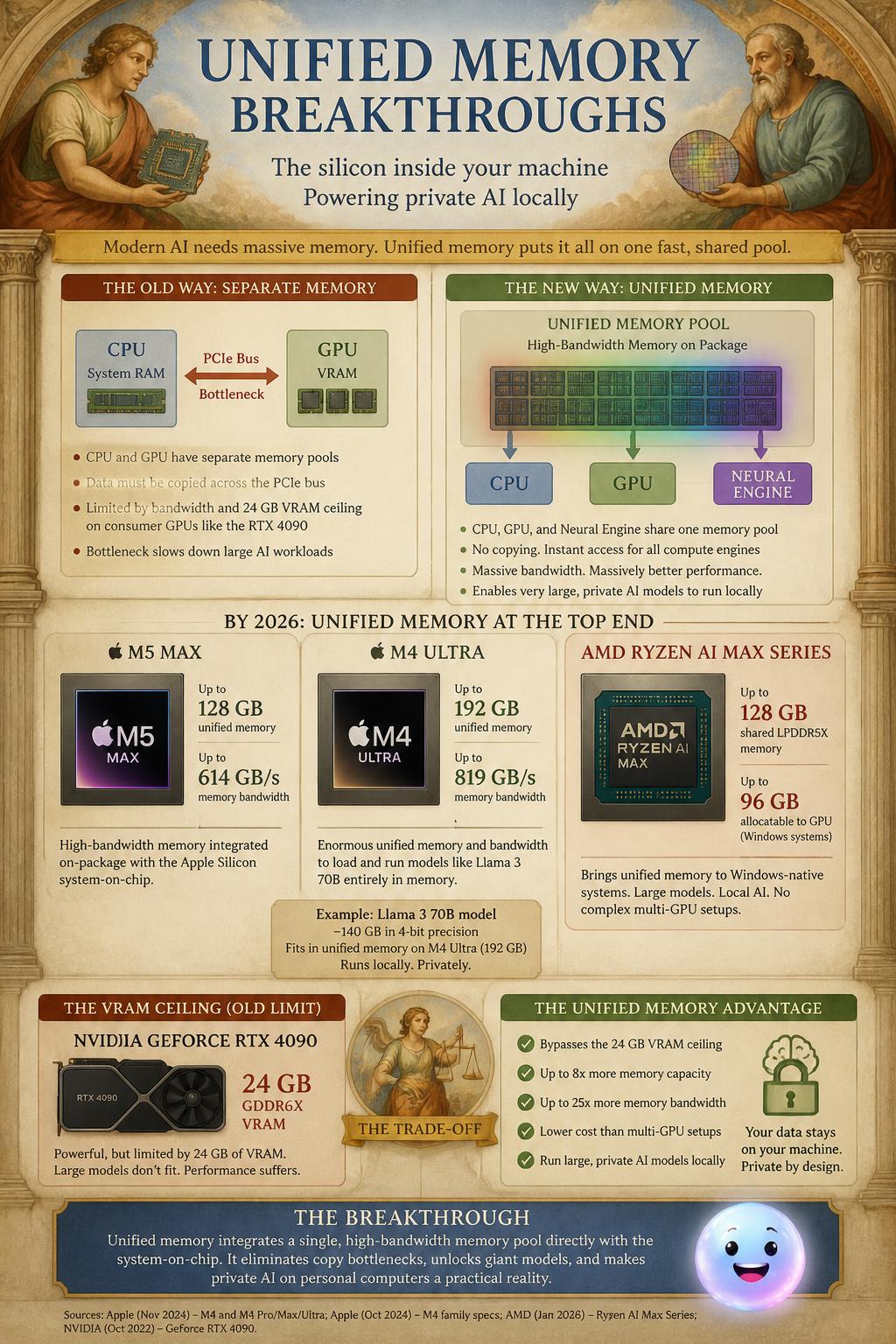
007skaty Unified memory breakthroughs eliminate system lag by allowing different processors to instantly access the exact same pool.
Rise of NPUs: This dedicated silicon runs private AI locally, performing trillions of operations per second using less power than a standard LED lightbulb.

How do unified memory breakthroughs in modern computer silicon benefit devices running private AI models locally?
007skaty Global Semiconductor Supply Chain
Dutch light prints, Taiwan silicon, your AI thinks!
In computers designed to run private AI models locally, how does the breakthrough of unified memory architecture on modern silicon chips improve performance?
007skaty Unified Memory Breakthroughs
Zero-copy, zero-copy, CPU and GPU share the exact same space.
In modern personal computers designed to run private AI models locally, what is the primary purpose of the specialized Neural Processing Unit (NPU)?
007skaty Global Chip Supply Chain
Seventy borders crossed / Twenty-five thousand miles / To run your machine
When setting up a computer to run a private AI model locally, why do graphics cards (GPUs) outshine standard central processing units (CPUs) at handling the workload?
In computers designed to run private AI models locally, how do breakthroughs in unified memory architecture on modern silicon chips solve a major performance bottleneck?
007skaty Neural Processing Unit
The silicon handles the AI math (oh yeah!) / Keeping it local on a low-power path (so quick!)
The silicon chips inside your computer that run private AI models locally require a highly complex global supply chain. While these advanced chips are often designed in the United States, they rely heavily on extreme ultraviolet (EUV) lithography machines—the only tools capable of printing their microscopic circuits—which are exclusively manufactured by a single company in which country?