
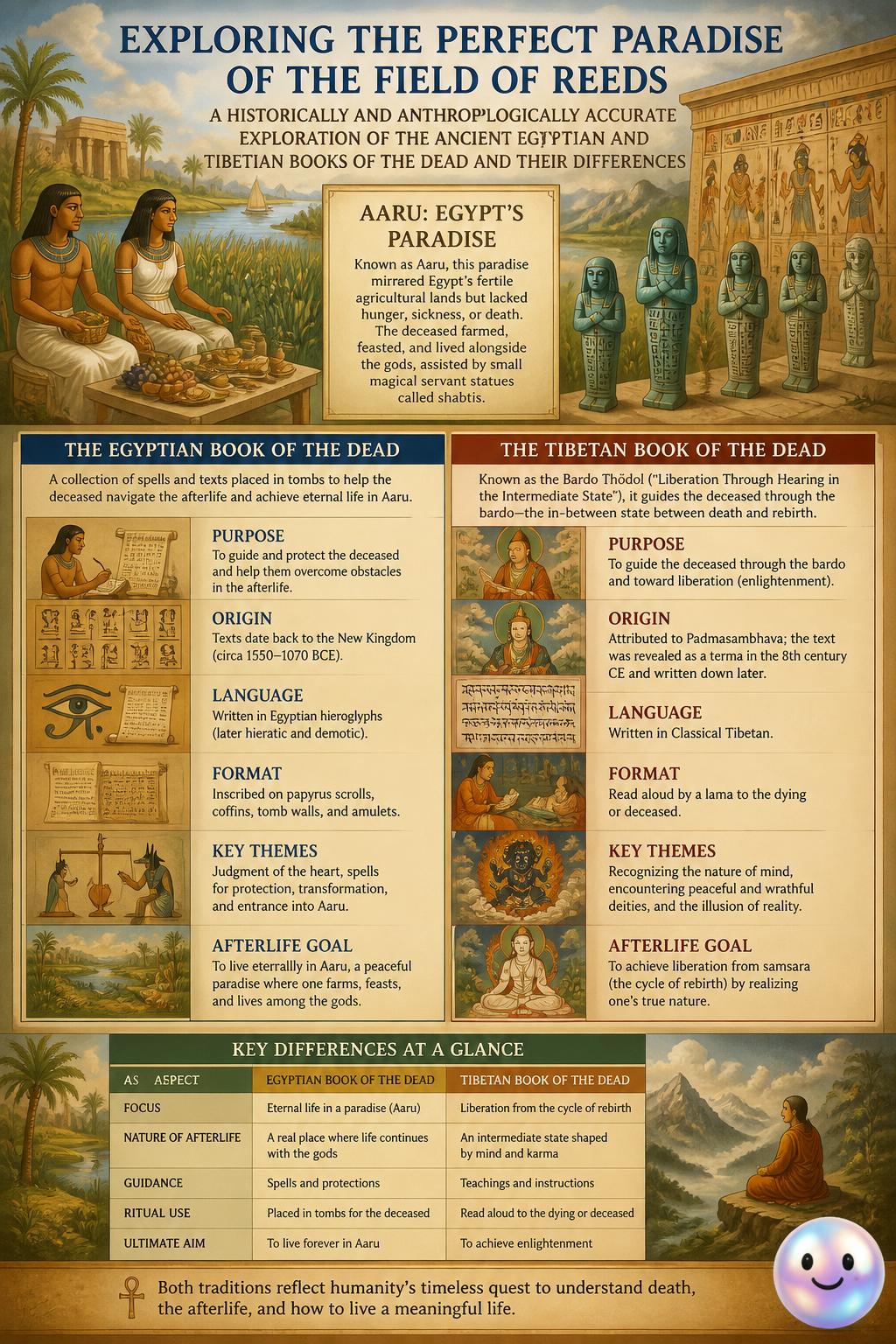
A Historically And Anthropologically Accurate Explanation Of And Exploration Into The Ancient Egyptian And Tibetian Books Of The Dead And Their Differences
2 imagenes, 8 preguntas, 1 definicion, 1 dato, 4 videos, 1 encuesta sobre A Historically And Anthropologically Accurate Explanation Of And Exploration Into The Ancient Egyptian And Tibetian Books Of The Dead And Their Differences en ARTi.
Proyectos relacionados
Imágenes
renaissanceman The ultimate goal for Egyptians was Aaru, a perfect, celestial version of the Nile Delta where life continued without pain.
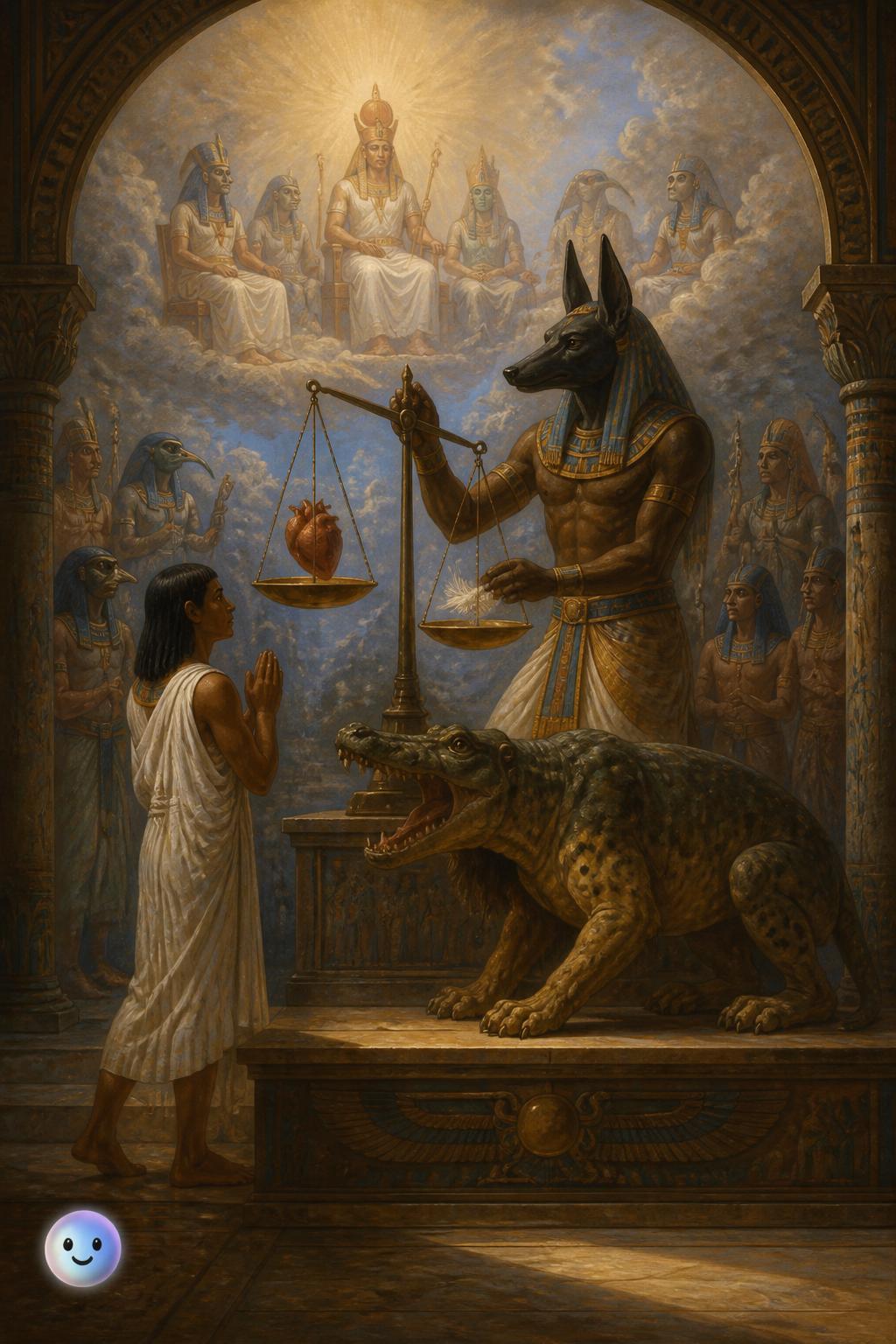
renaissanceman Anubis weighed the deceased's heart against Ma'at's feather of truth to determine if they deserved eternal life.
Fun Facts
Fun Fact
Egyptian shabti dolls: Wealthy Egyptians placed miniature clay statues called shabtis in tombs so the statues would magically do any hard labor required in the afterlife.
Quizzes
Quiz
Which organ did ancient Egyptians believe held a person's soul and was weighed during judgment?
Quiz
What was the name of the Egyptian paradise that resembled a perfect, pain-free Nile Delta?
Quiz
In Egyptian mythology, what monster devoured the hearts of those who failed the final judgment?
Quiz
Which famous scribe commissioned the 78-foot-long illustrated papyrus scroll discovered in 1888?
Quiz
Who was the green-skinned Egyptian god of the underworld and judge of the dead?
Glosario
Glossary
aaru (noun)
The heavenly paradise in ancient Egyptian mythology where virtuous souls dwell in eternal peace. In the Book of the Dead, souls crossed dangerous underworld obstacles to reach Osiris's celestial realm.
The heavenly paradise in ancient Egyptian mythology where virtuous souls dwell in eternal peace. In the Book of the Dead, souls crossed dangerous underworld obstacles to reach Osiris's celestial realm.