
A Scientifically And Biologically Accurate Explanation Of Why Our Memories Can Be So Inaccurate And Unreliable Sometimes And Why Assuming That They Are Accurate All The Time Can Be Very Dangerous
2 imagenes, 8 preguntas, 1 definicion, 1 dato, 1 video, 1 encuesta sobre A Scientifically And Biologically Accurate Explanation Of Why Our Memories Can Be So Inaccurate And Unreliable Sometimes And Why Assuming That They Are Accurate All The Time Can Be Very Dangerous en ARTi.
Proyectos relacionados
Imágenes
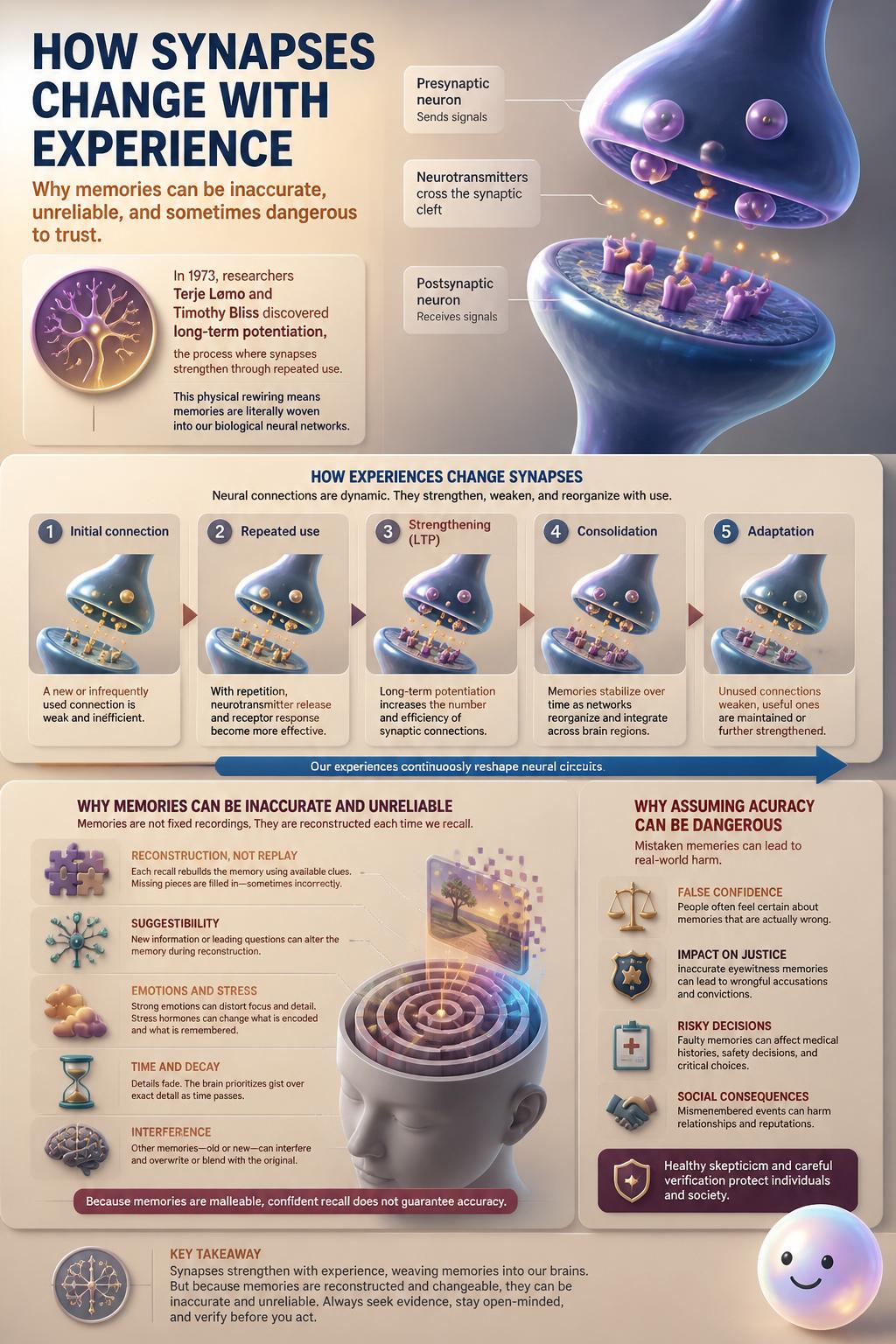
renaissanceman Memories are stored physically as altered connections between brain cells called neurons.
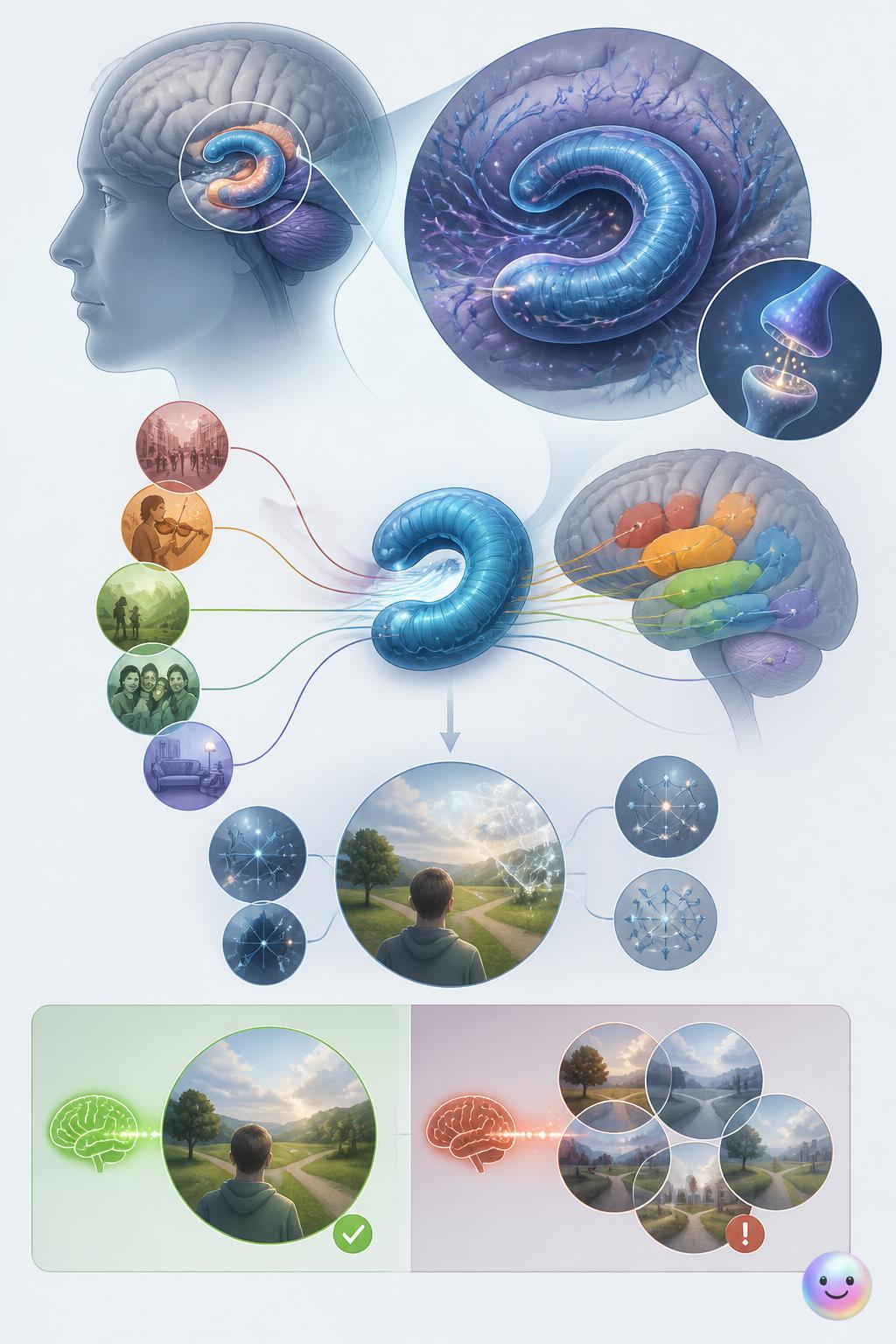
renaissanceman This tiny, seahorse-shaped brain structure acts as the ultimate routing switch for memory.
Fun Facts
Fun Fact
Synapse count: The human brain contains roughly 100 trillion synapses, allowing us to store an estimated 2.5 petabytes of data, equivalent to three million hours of television.
Quizzes
Quiz
How does the brain's memory retrieval differ from a computer playing a video file?
Quiz
What is the biological process called where connections between neurons strengthen through repeated use?
Quiz
Which patient's 1953 surgery helped scientists discover that the hippocampus forms new memories?
Quiz
Which chemical messenger is most directly involved in strengthening synapses during learning?
Quiz
Where in the brain are long-term memories ultimately stored after being processed?
Quiz
What is the term for the brain's ability to physically change and reorganize itself throughout life?
Quiz
What shape is the hippocampus, the brain area crucial for memory, named after?
Quiz
What happens to a memory when it is recalled, according to the theory of reconsolidation?
Glosario
Glossary
hippocampus (noun)
A complex brain structure located in the temporal lobe that is highly involved in learning and memory. In 1953, surgeon William Scoville removed this structure from Henry Molaison, proving its necessity for memory formation.
A complex brain structure located in the temporal lobe that is highly involved in learning and memory. In 1953, surgeon William Scoville removed this structure from Henry Molaison, proving its necessity for memory formation.