
How Bread Rises The Tiny Living World Inside Your Dough
2 imagenes, 8 preguntas, 1 definicion, 1 dato, 4 videos, 1 encuesta sobre How Bread Rises The Tiny Living World Inside Your Dough en ARTi.
Proyectos relacionados
Imágenes
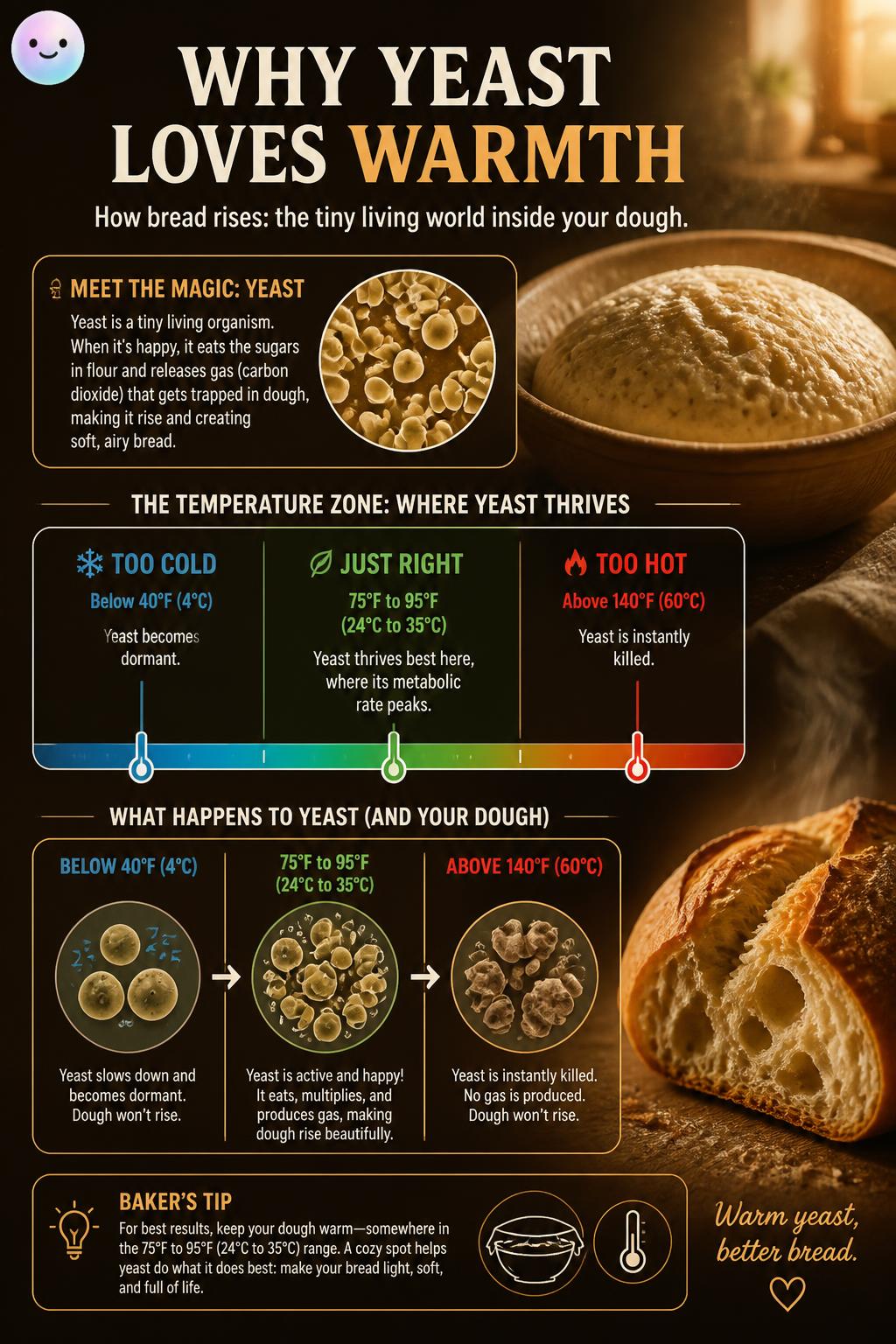
alicecooks Temperature acts as a biological thermostat for yeast, controlling how fast it eats, multiplies, or whether it survives at all.
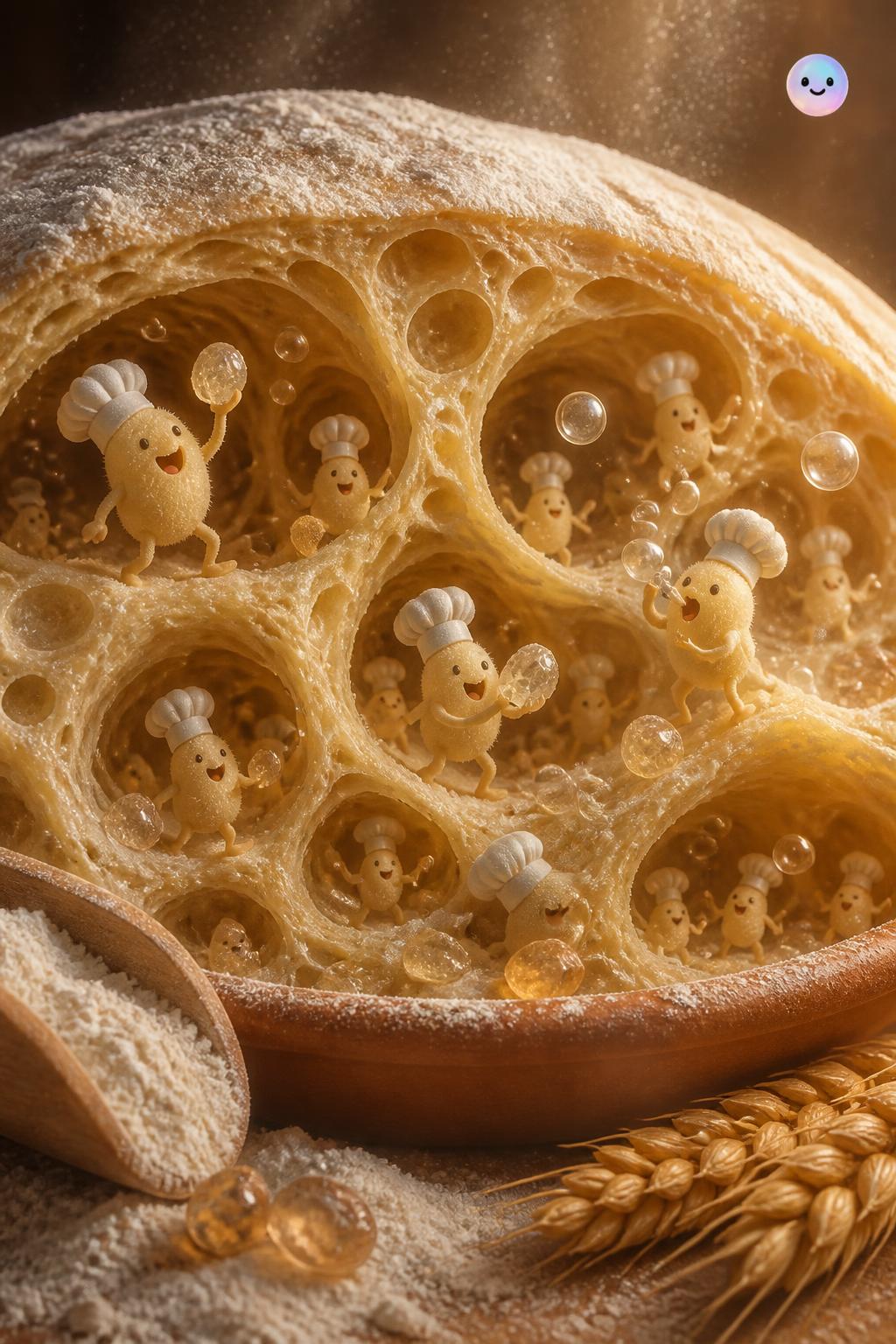
alicecooks Yeast consumes sugars present in flour, converting them into carbon dioxide gas and alcohol through a biological process called fermentation.
Fun Facts
Fun Fact
Yeast's ancient genome: Yeast was the first single-celled eukaryote to have its entire DNA sequenced by scientists in 1996.
Quizzes
Quiz
What liquid byproduct does yeast produce alongside carbon dioxide during the fermentation of bread dough?
Quiz
Which gas does baker's yeast release that causes bread dough to inflate and rise?
Quiz
How does active dry yeast react when placed in ice-cold water below 40 degrees Fahrenheit?
Quiz
What is the primary food source that yeast consumes within flour to fuel fermentation?
Quiz
Which scientific instrument is required to see an individual yeast cell clearly?
Quiz
How many individual yeast cells are roughly estimated to live in a single one-gram packet of active dry yeast?
Quiz
What type of organism is Saccharomyces cerevisiae, the standard yeast used in bread baking?
Quiz
At what approximate temperature does baker's yeast die, halting the fermentation process entirely?
Glosario
Glossary
yeast (noun)
A microscopic, single-celled fungus capable of converting sugar into alcohol and carbon dioxide. In 1857, Louis Pasteur proved that this living organism is responsible for fermenting bread dough.
A microscopic, single-celled fungus capable of converting sugar into alcohol and carbon dioxide. In 1857, Louis Pasteur proved that this living organism is responsible for fermenting bread dough.