
Pareidolia Audio Pareidolia Apophenia And Other Psychological Phenomena That Show How Our Brain Seeks Patterns And Narratives Where There Are None
2 imagenes, 8 preguntas, 1 definicion, 1 dato, 4 videos, 1 encuesta sobre Pareidolia Audio Pareidolia Apophenia And Other Psychological Phenomena That Show How Our Brain Seeks Patterns And Narratives Where There Are None en ARTi.
Proyectos relacionados
Imágenes
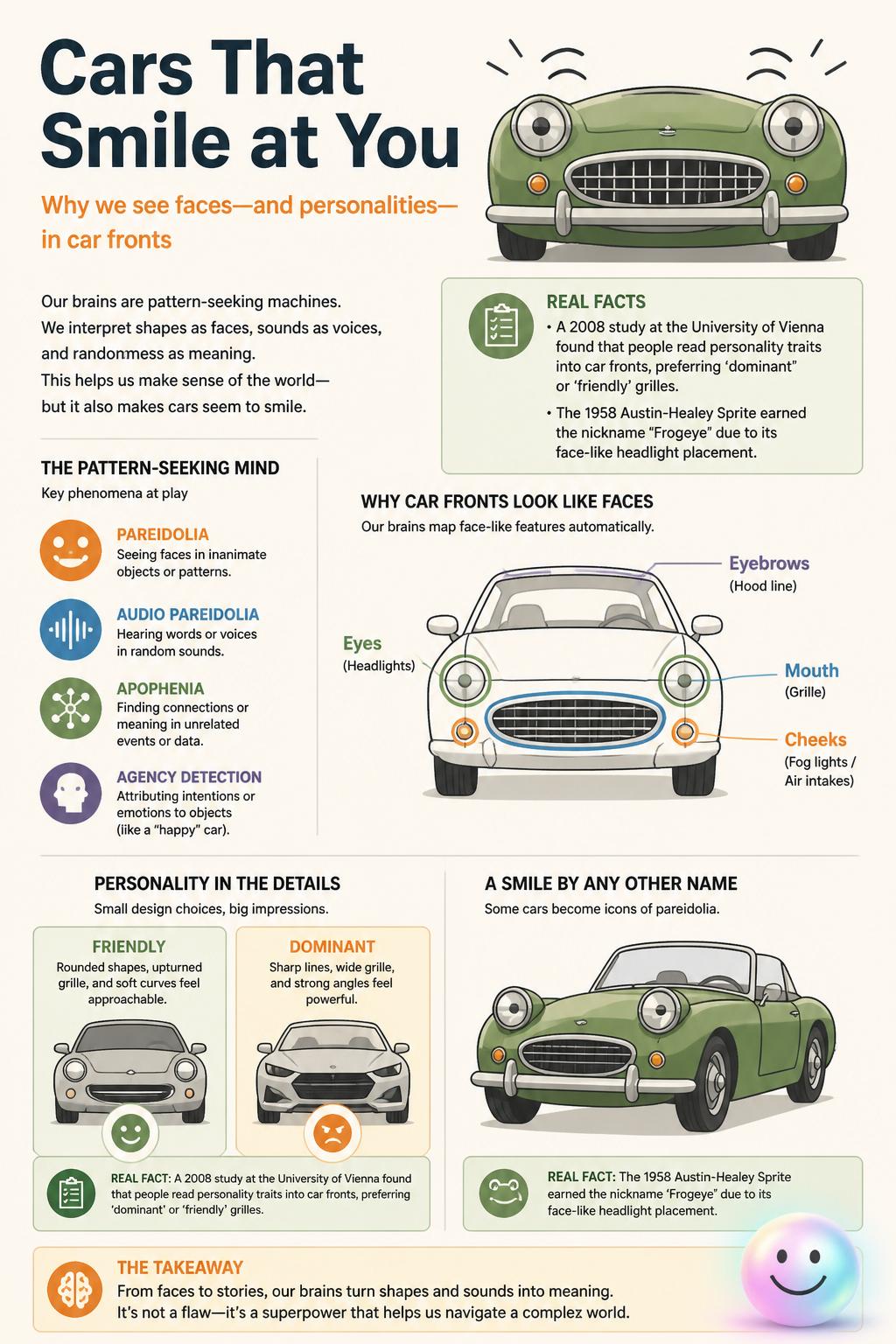
renaissanceman Car designers intentionally shape headlights and grilles to look like human faces to evoke specific emotional responses.
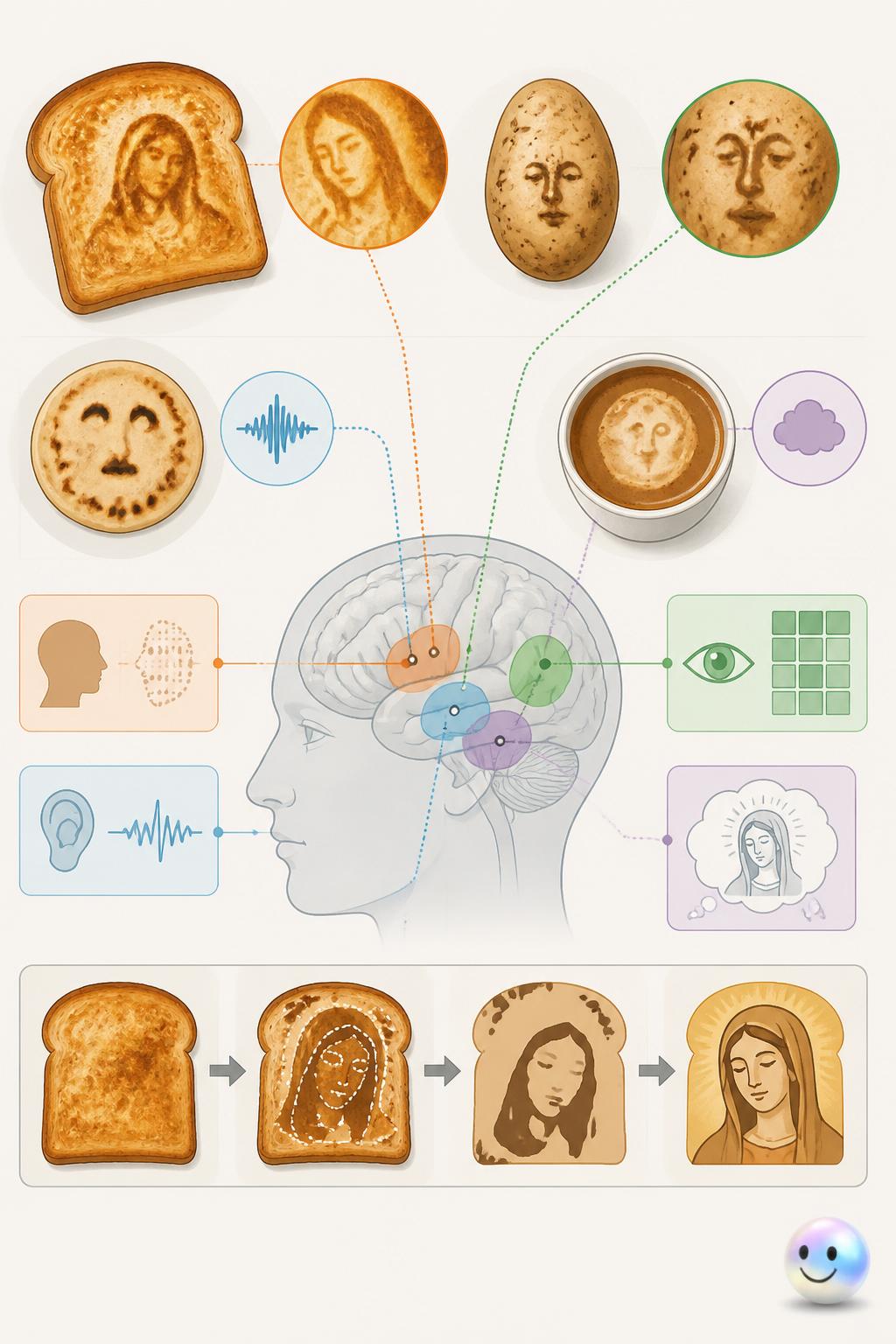
renaissanceman People frequently perceive images of religious figures like Jesus or the Virgin Mary in ordinary toast and tortillas.
Fun Facts
Fun Fact
Face on Mars: The famous Martian hill is actually about two kilometers long and looks completely normal from different angles.
Quizzes
Quiz
What is the name of the specific brain region responsible for processing and recognizing faces?
Quiz
In 1976, which NASA spacecraft captured the famous 'Face on Mars' image in the Cydonia region?
Quiz
How fast does the human brain's fusiform face area detect a face-like pattern?
Quiz
The bright red bracts of the South American plant Psychotria elata are famous for resembling which human feature?
Quiz
When we see a 'face' in a wall outlet or the front of a car, what psychological phenomenon is occurring?
Quiz
What famous rock formation in New Hampshire, resembling a human profile, collapsed in May 2003?
Quiz
In 1994, a grilled cheese sandwich believed to show which religious figure sold for $28,000?
Quiz
Which classic 1958 British sports car was nicknamed 'Frogeye' due to its distinctive headlight placement?
Glosario
Glossary
pareidolia (noun)
The tendency to perceive a specific, often meaningful image in a random visual pattern. In 1976, NASA's Viking 1 spacecraft photographed a Martian hill that famously resembled a human face.
The tendency to perceive a specific, often meaningful image in a random visual pattern. In 1976, NASA's Viking 1 spacecraft photographed a Martian hill that famously resembled a human face.