
The Science Of Baking The Perfect Chocolate Chip Cookie
2 imagenes, 8 preguntas, 1 definicion, 1 dato, 4 videos, 1 encuesta sobre The Science Of Baking The Perfect Chocolate Chip Cookie en ARTi.
Proyectos relacionados
Imágenes
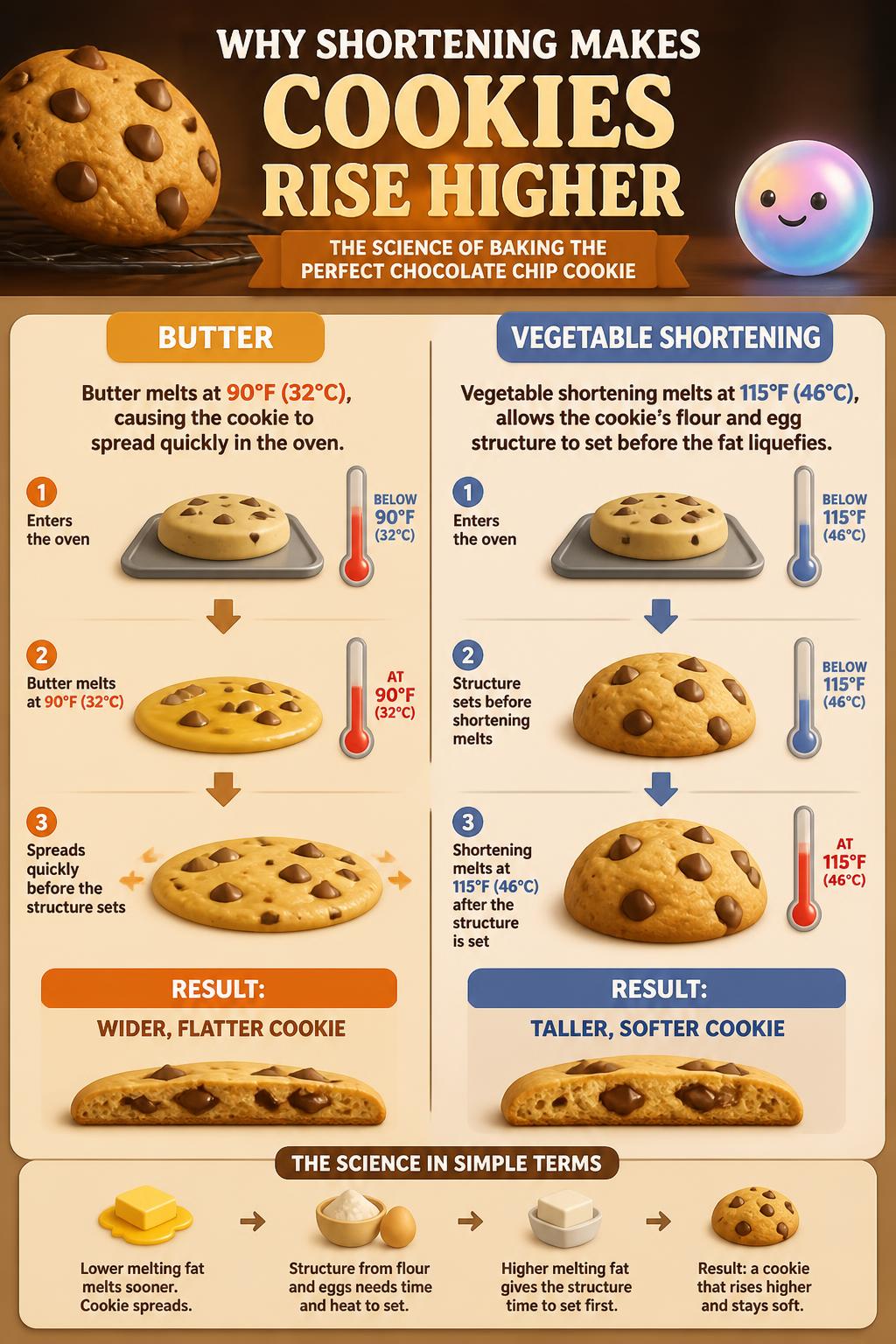
alicecooks Vegetable shortening has a higher melting point than butter, which prevents cookies from spreading too fast.
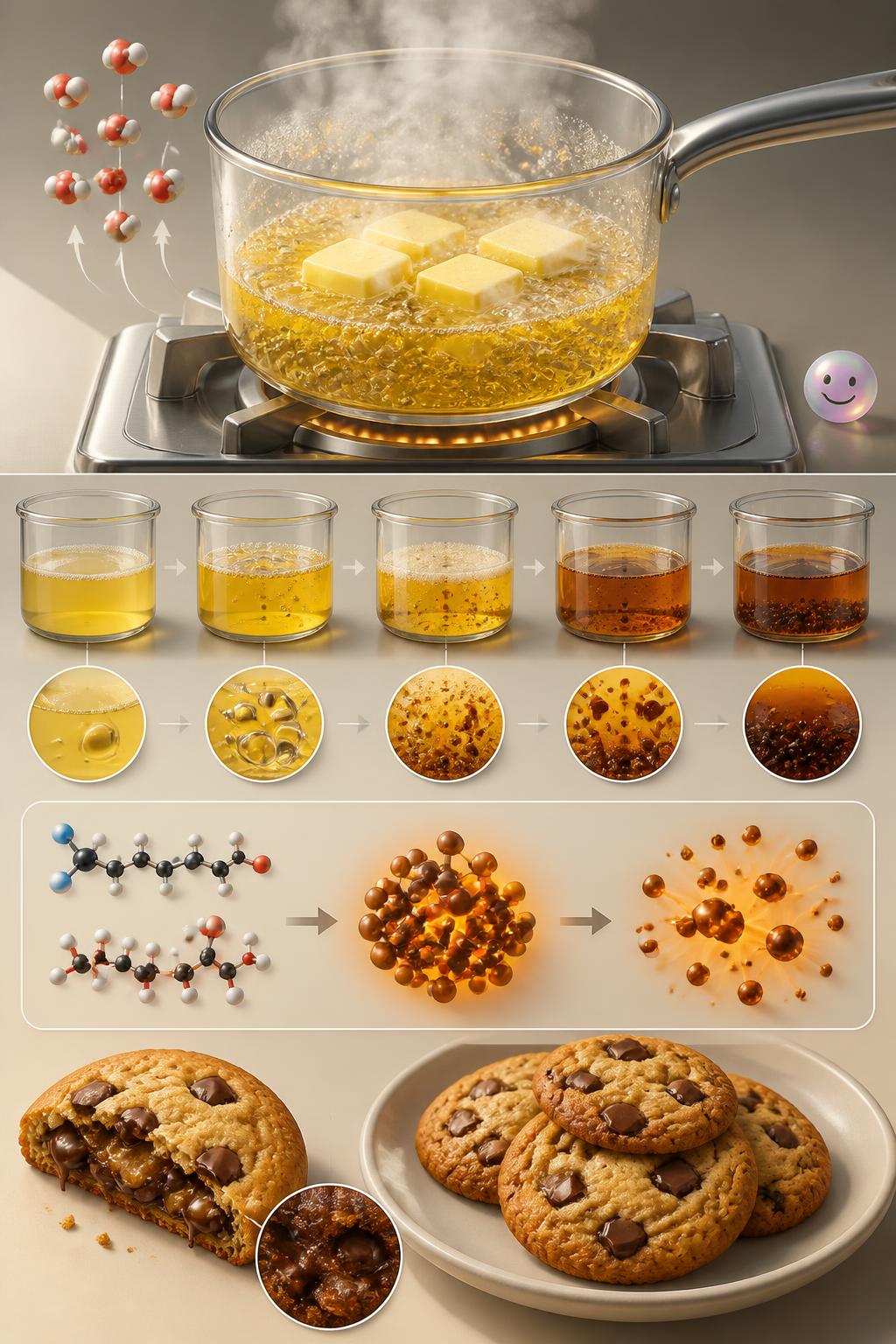
alicecooks Heating butter until the water evaporates toasts the milk solids, creating a rich, nutty aroma.
Fun Facts
Fun Fact
Cookie butter science: Brown butter cookies taste nuttier because water evaporation allows milk solids to toast at 250°F (121°C), undergoing the flavor-packed Maillard reaction.
Quizzes
Quiz
Why does vegetable shortening produce taller chocolate chip cookies than butter?
Quiz
What temperature is ideal for creaming butter and sugar to trap air pockets in chocolate chip cookie dough?
Quiz
What are the brown flecks that form at the bottom of the pan when making brown butter for cookie dough?
Quiz
Which component of an egg provides the structure and drying effect in a chocolate chip cookie?
Quiz
What emulsifying molecule in egg yolks helps combine the water and fat in cookie dough?
Quiz
What percentage of water is typically found in standard American butter used for cookie baking?
Quiz
Which chemical reaction occurs when milk solids in butter are heated to 250°F (121°C) to make brown butter for cookies?
Quiz
At what temperature does butter begin to melt in the oven, causing cookie dough to spread?
Glosario
Glossary
butter (noun)
A pale yellow edible fatty substance made by churning cream and used as a spread or in cooking. In 2013, Kenji López-Alt tested how changing this ingredient's temperature alters cookie texture and spread.
A pale yellow edible fatty substance made by churning cream and used as a spread or in cooking. In 2013, Kenji López-Alt tested how changing this ingredient's temperature alters cookie texture and spread.