
첼로 활에 바르는 물질로, 말총과 현 사이의 마찰력을 높여 소리를 잘 나게 돕는 것은 무엇일까요?
나무와 활이 만드는 소리의 과학
비올라 다 감바에서 현대의 첼로까지
교향악단과 실내악의 든든한 등대
역사상 가장 위대한 첼로의 순간들
경계를 허무는 현대의 첼로
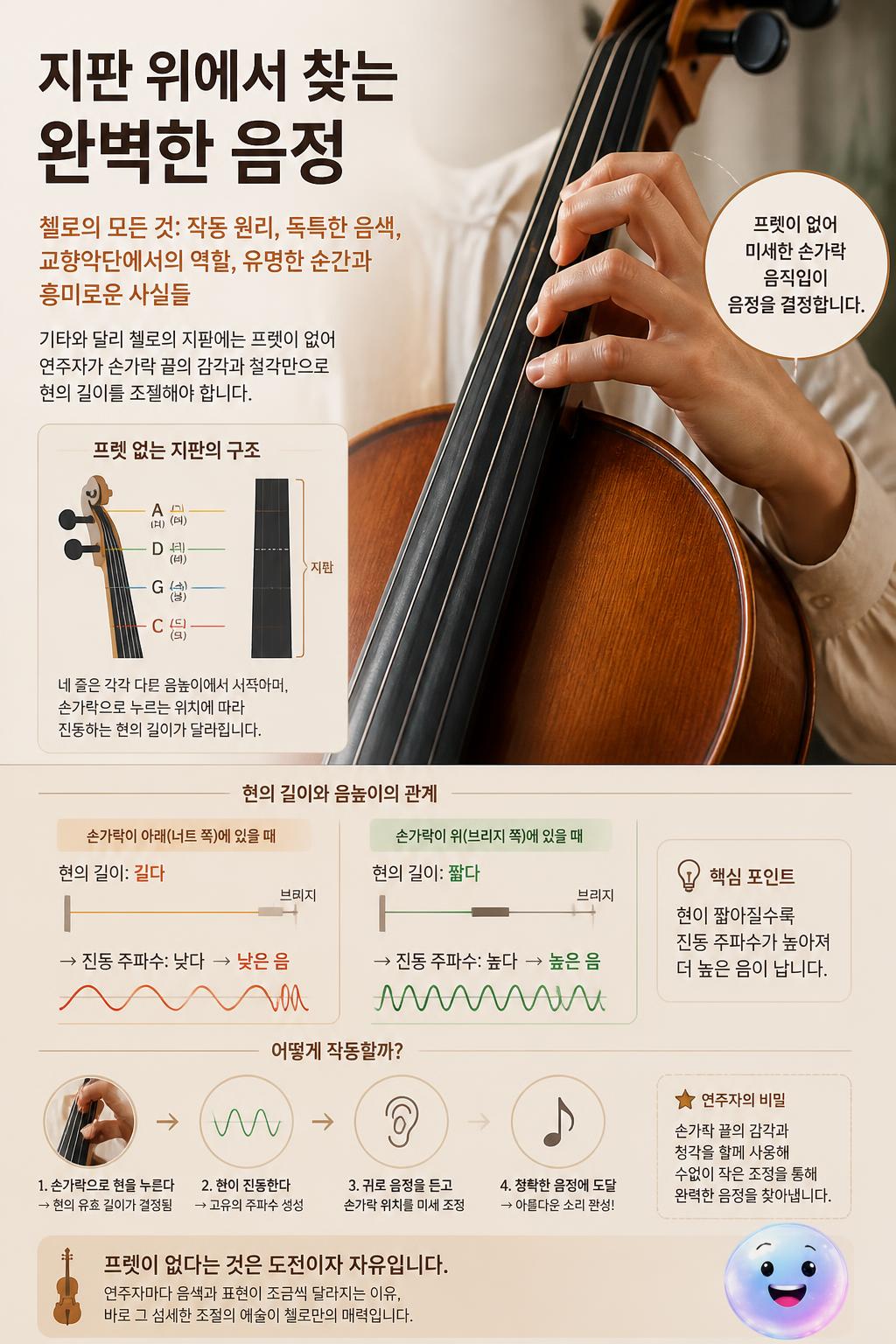
maestro Cellists guide their fingers across a smooth fingerboard using only touch and hearing. Shortening the vibrating string raises the frequency to create higher, precise musical notes.
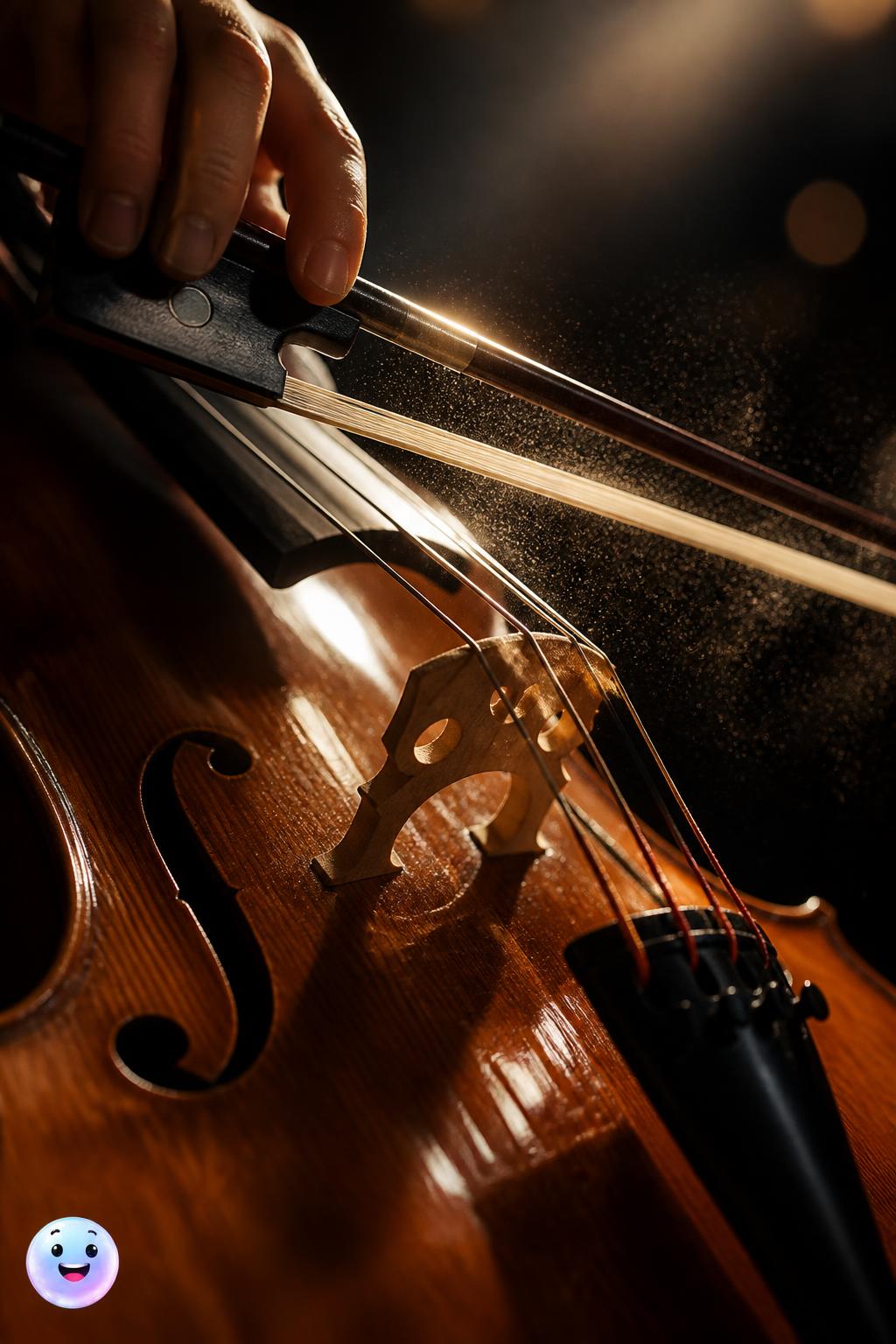
maestro Roughly two hundred Mongolian horsehairs coated in sticky rosin grip and release the cello strings. This continuous slip-stick friction vibrates the strings to produce a warm, steady tone.
maestro A tiny wooden soundpost transfers vibrations between the cello's plates. F-shaped soundholes channel air to amplify rich bass tones between 70 and 250 hertz.
maestro Metal endpins from the late nineteenth century support the heavy cello. This device also channels vibrations directly into the floor, turning the entire stage into a giant soundboard.

maestro Drag the bow and tap notes to discover how the cello creates its rich sound.

브라질 동부 지역에서 주로 자라며 찰현악기의 활 제작에 쓰이는 단단하고 탄성이 뛰어난 콩과의 목재. 18세기 후반 프랑수아 투르트는 이 나무를 사용해 현대적인 첼로 활의 표준을 세웠다.