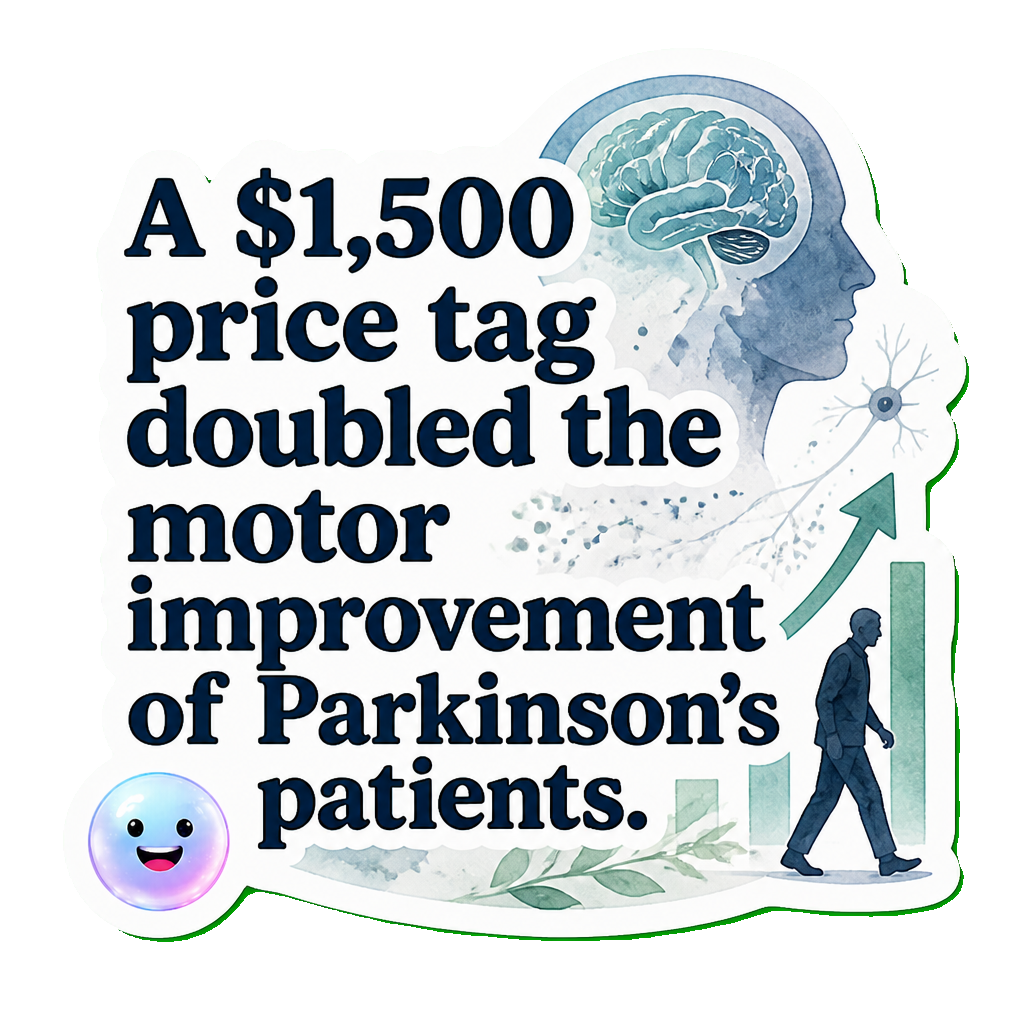
Price Tag Effect on Parkinson's Statement sticker
This ARTi Statement sticker on price tag psychology shows how a $1,500 price doubled Parkinson's improvement. Share this insight like a card!
The allure of the rare
Showing off to survive
How the brain prices luxury
Global cultures of status

louisvuitton During a 2008 Caltech study, participants drank identical wine with different price tags. Functional MRI scans showed the ninety-dollar label triggered more activity in the medial orbitofrontal cortex.
louisvuitton Neuroscientists use brain scans to show how dopamine spikes while browsing luxury items. This chemical high plunges immediately after purchase, causing sudden buyer remorse.
louisvuitton Researchers at MIT in 2005 gave people identical fake painkillers labeled as either $2.50 or $0.10. The higher price tag triggered much stronger pain relief.
louisvuitton Neuroscientists use fMRI machines to show how Apple and Rolex logos light up the same reward pathways as crucifixes. This reveals our deep-seated need for tribal belonging.
louisvuitton The Neuroscience of Luxury Pricing
High price, high pleasure Your brain makes it taste so sweet High price, high pleasure
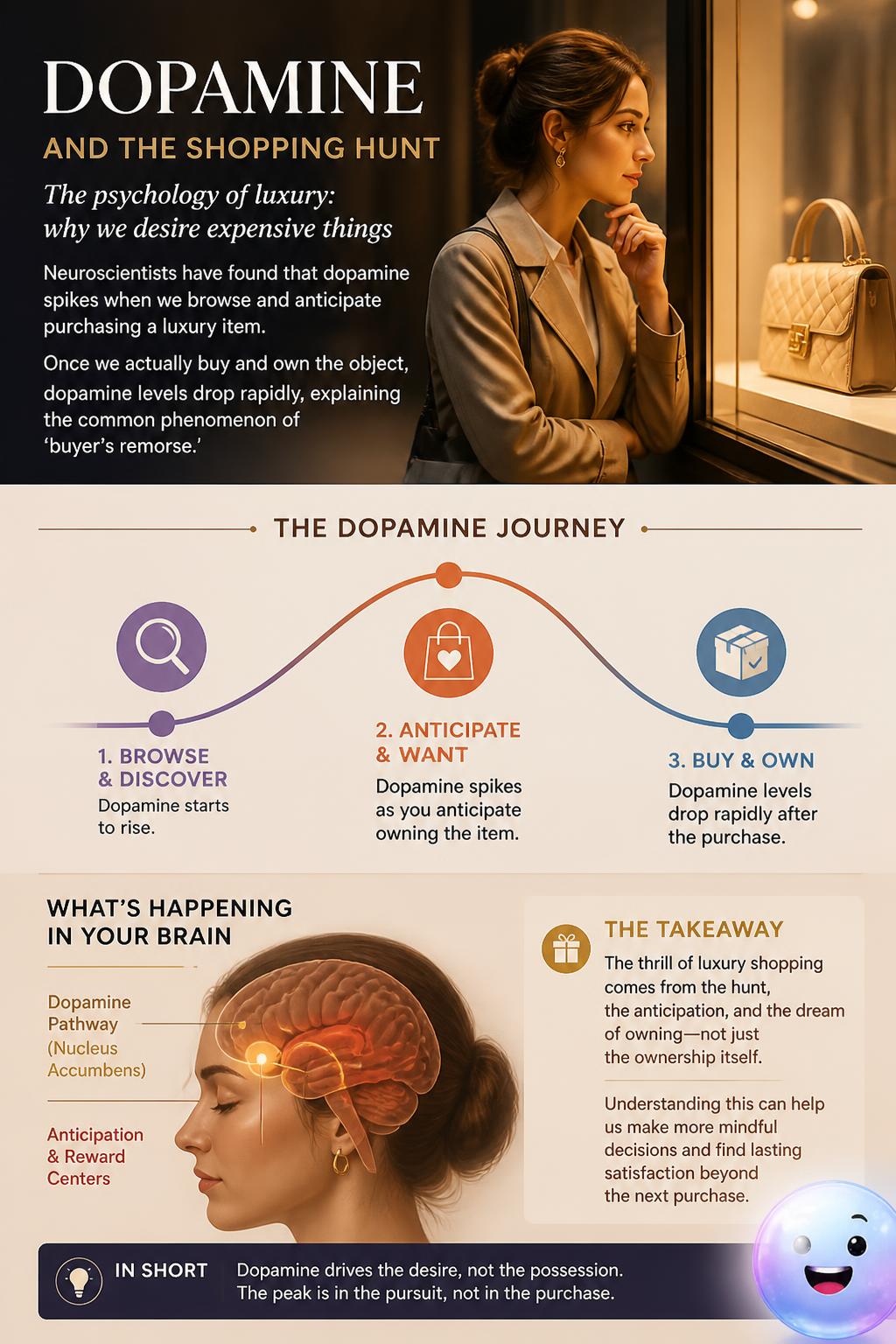
louisvuitton A warm-toned chart displays dopamine levels rising during browsing and falling after purchase.
The price of pain: In clinical trials, patients who were told their Parkinson's medication cost $1,500 saw double the motor improvement of those told it cost $100.
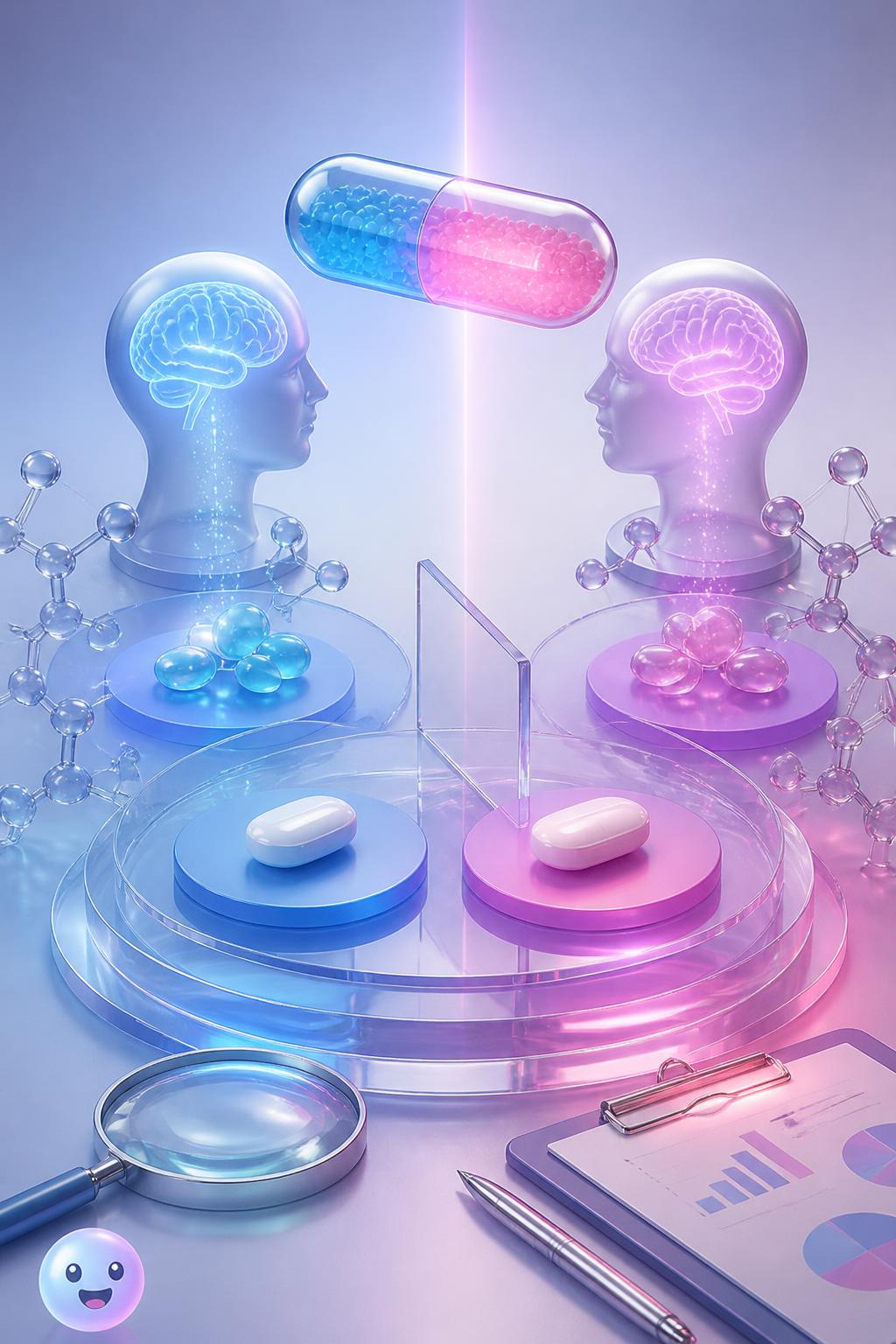
louisvuitton Two glass placebo pills with precise price labels sit on a chrome surface
A region of the prefrontal cortex in the brain that is involved in representing reward and pleasure. During a 2008 study, Hilke Plassmann found that expensive wine labels triggered higher activation in this region.
What is the psychological term for experiencing regret or anxiety after making an expensive purchase?
Brain scans of loyal brand enthusiasts show that their reaction to luxury logos mimics what other human experience?
Which part of the brain, associated with pleasure, showed higher activity when Caltech study participants drank 'expensive' wine?
Which brain chemical spikes during the anticipation of buying a luxury item, rather than after owning it?
In the 2008 Caltech wine study, how many different actual wines were used to test the $10 and $90 price tags?
Which university conducted the famous 2005 study testing how price tags affect the power of placebo painkillers?
In the 2005 MIT placebo study, what difference did participants report between the $2.50 and $0.10 identical pills?
How does the brain's reaction to luxury brands relate to evolutionary tribalism?