
Chapter 1
The art of active listening
Chapter 2
Loyalty and trust across cultures
Chapter 3
The science of constructive feedback
Chapter 4
Wisdom in mentoring and eldership
YOUR GOAL
Master of The art of respectful conversation
Ch 1 · The art of active listening

skittles78 Active Listening
Active listening, focus true, / Understand their message, building trust with you!
skittles78 Active Listening Art
Hear their story, deep inside! / Beyond the words, their feelings guide.
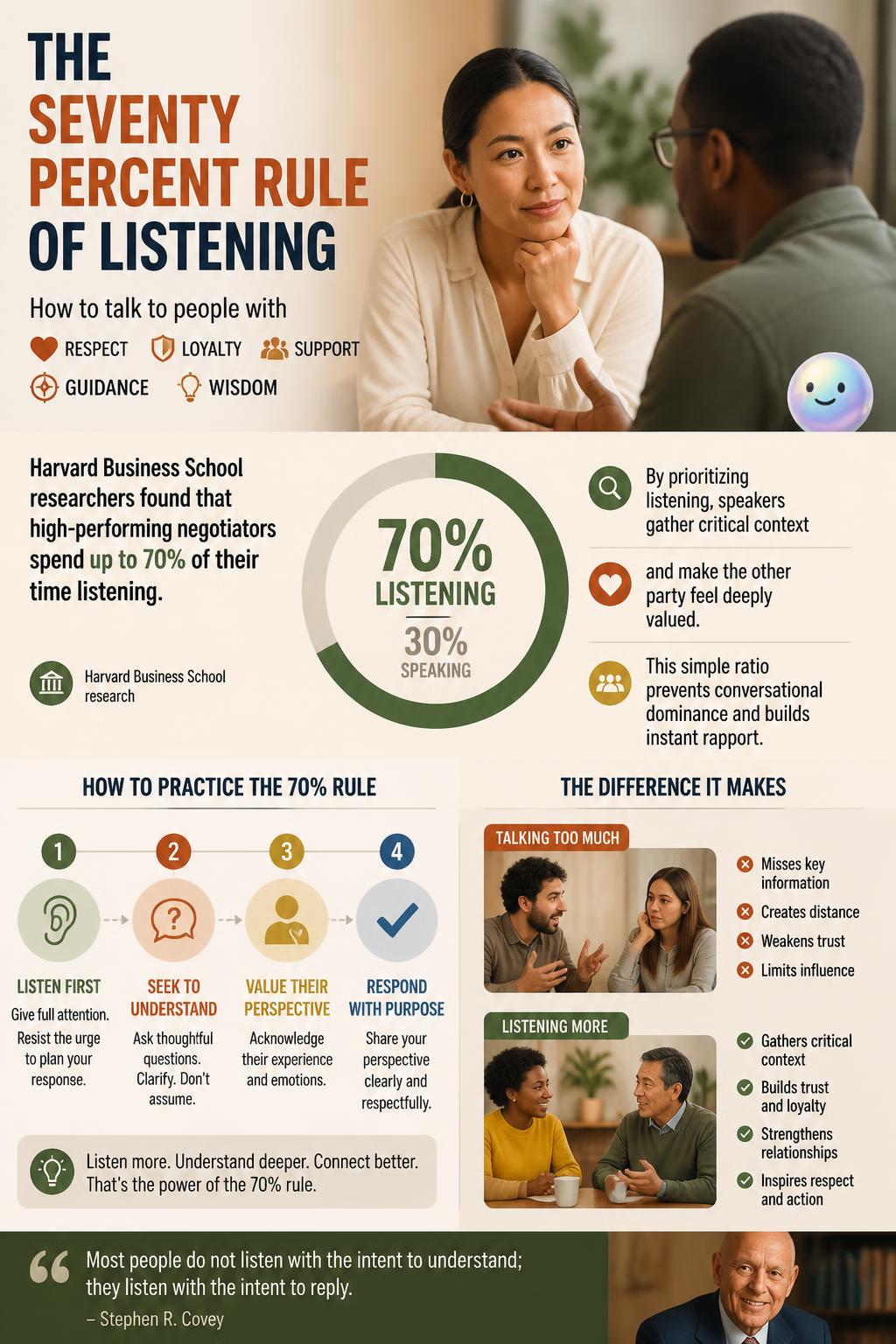
skittles78 Effective communicators practice the 70/30 rule, listening for 70% of a conversation and speaking for only 30%.

skittles78 Psychologist Carl Rogers introduced 'unconditional positive regard' in 1957, proving that non-judgmental acceptance is key to supportive communication.

BETA
skittles78 Match active listening choices to discover how to support others with respect and wisdom.
Fun Fact
The listening brain: Functional MRI scans show that when we actively listen, our brain waves literally synchronize with the speaker's brain waves, a phenomenon called neural coupling.
Glossary
active listening (noun)
A communication technique requiring the listener to fully concentrate, understand, respond, and remember what is being said. Psychologists Carl Rogers and Richard Farson coined the term in 1957 to foster empathetic, respectful communication.
A communication technique requiring the listener to fully concentrate, understand, respond, and remember what is being said. Psychologists Carl Rogers and Richard Farson coined the term in 1957 to foster empathetic, respectful communication.
Quiz
According to communication researchers, what percentage of a conversation should a great listener spend listening?
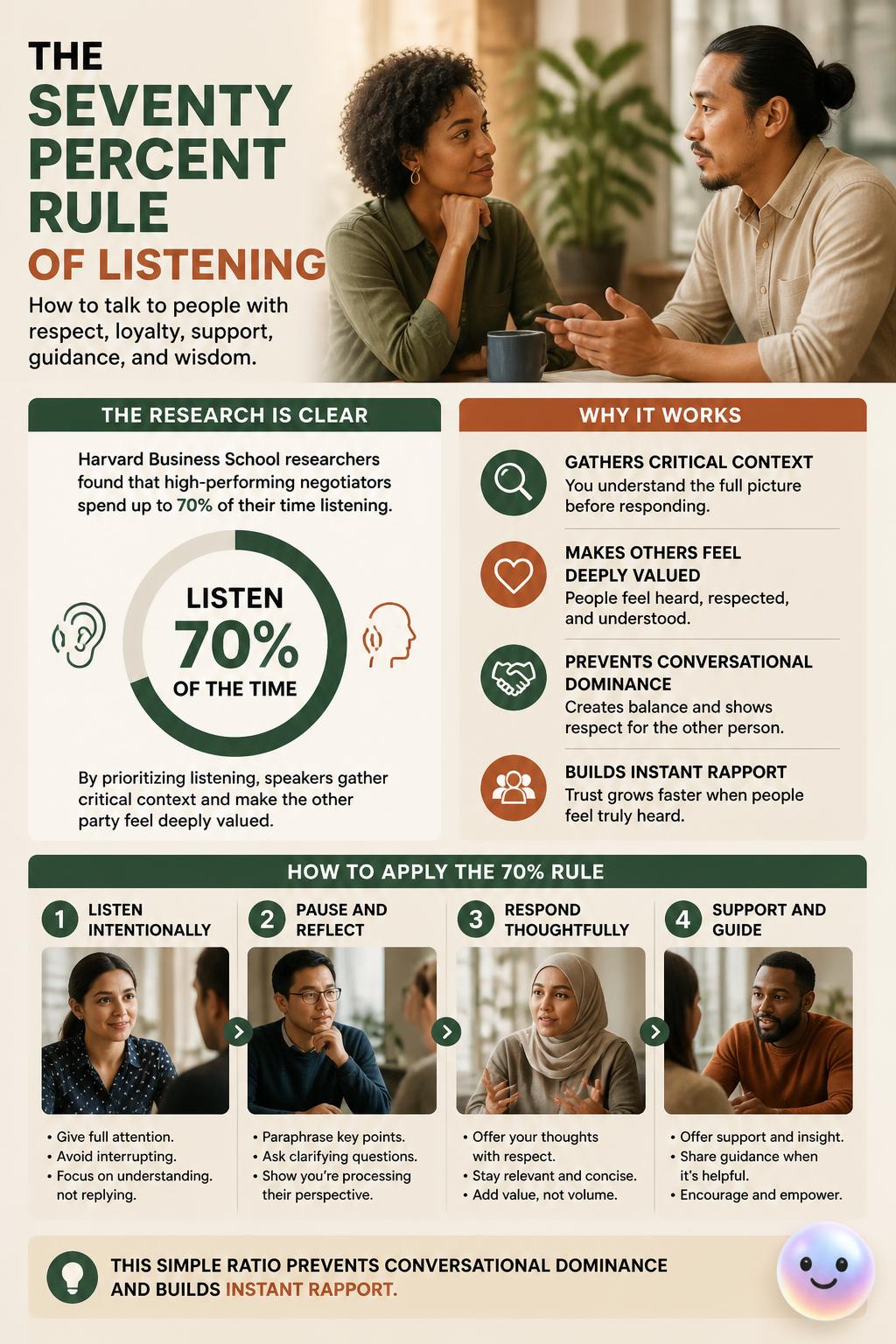
skittles78 Effective communicators practice the 70/30 rule, listening for 70% of a conversation and speaking for only 30%.

skittles78 Psychologist Carl Rogers introduced 'unconditional positive regard' in 1957, proving that non-judgmental acceptance is key to supportive communication.
Fun Fact
The listening brain: Functional MRI scans show that when we actively listen, our brain waves literally synchronize with the speaker's brain waves, a phenomenon called neural coupling.
Glossary
active listening (noun)
A way of listening and responding to another person that improves mutual understanding. Psychologist Carl Rogers coined the term in 1957 to describe empathetic and supportive therapeutic communication.
A way of listening and responding to another person that improves mutual understanding. Psychologist Carl Rogers coined the term in 1957 to describe empathetic and supportive therapeutic communication.
Quiz
Which American psychologist introduced the concept of 'unconditional positive regard' in 1957?
Quiz
Which non-verbal behavior is most widely recognized by psychologists as a sign of active listening?