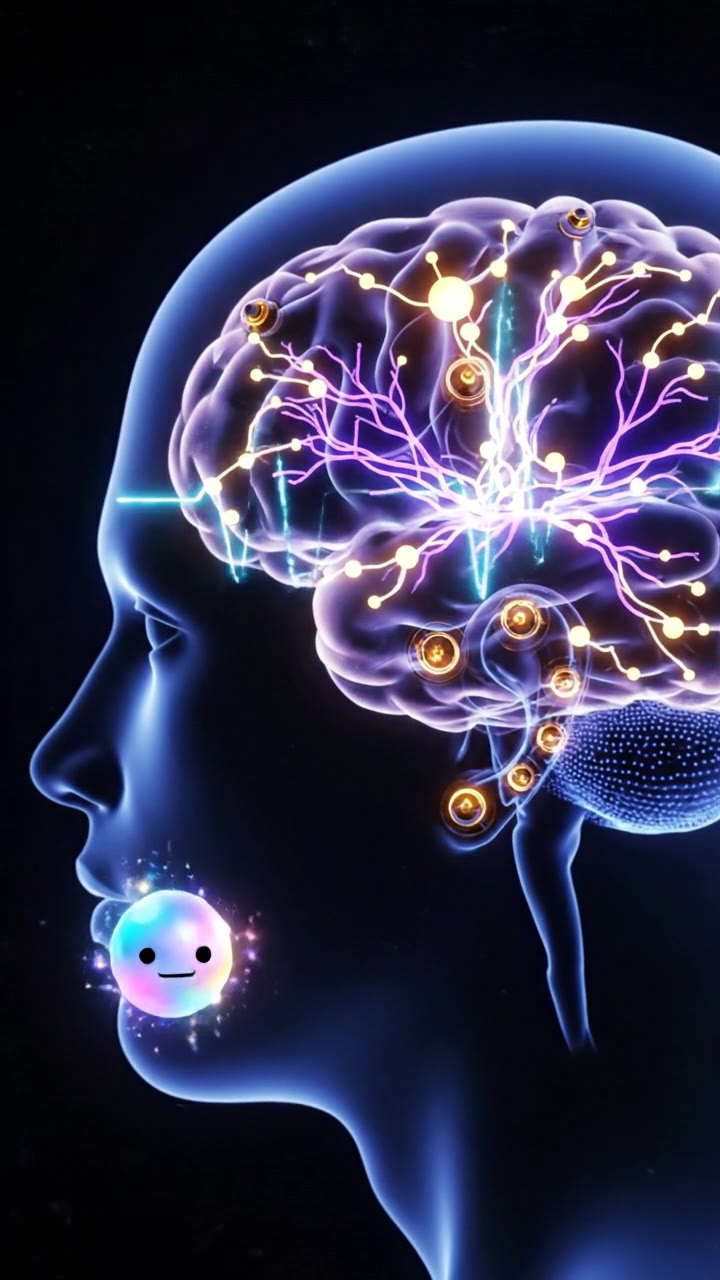
The spark of thought: How neurons generate electricity
The emotional switchboard: Inside the limbic system
Keeping time: The master clock and circadian rhythms

mankai Microscopic ion channels control the electrical signals inside human brain cells.
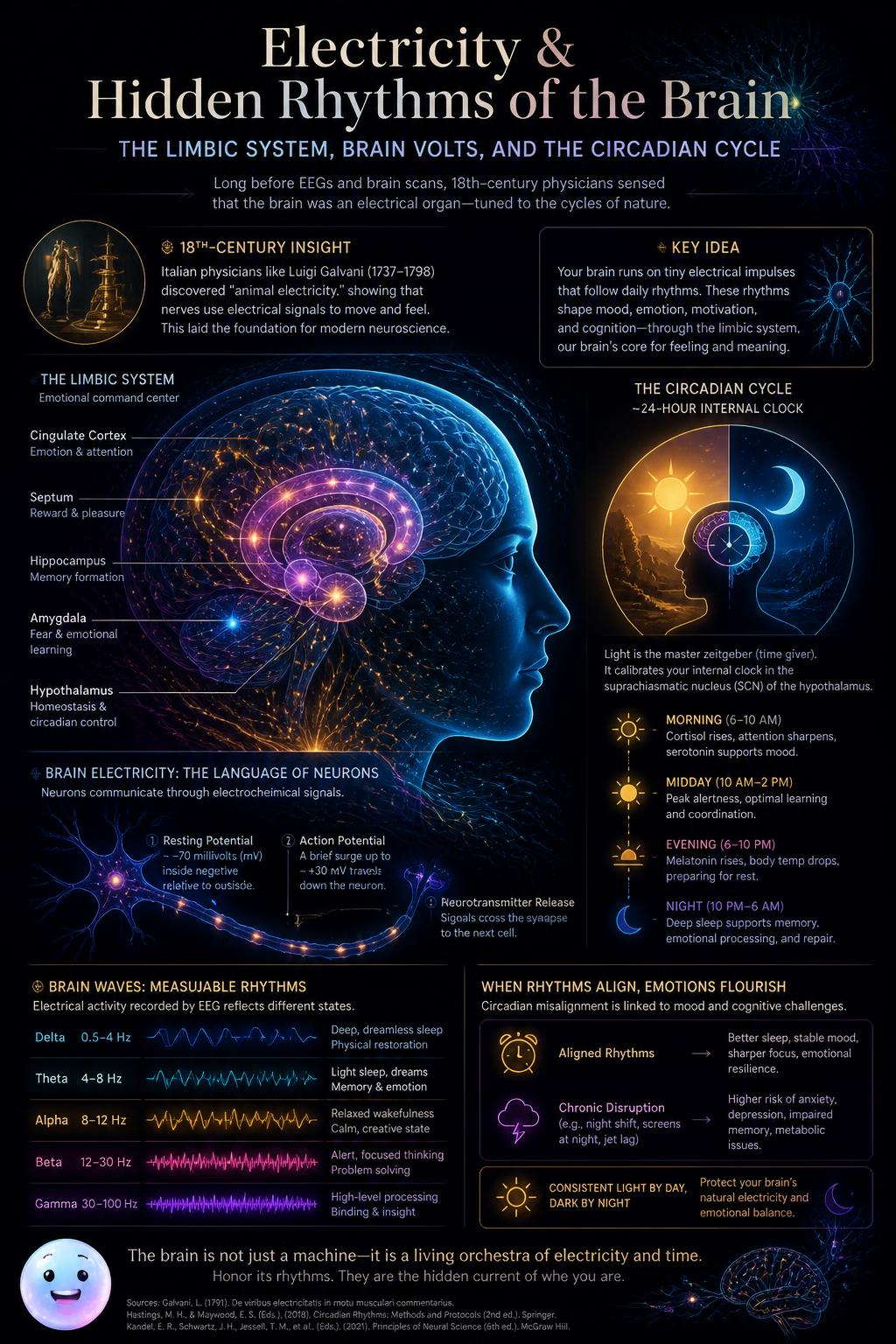
mankai Galvani's work with brass hooks and iron railings founded electrophysiology, proving nerves communicate through electrical impulses instead of mysterious fluids.
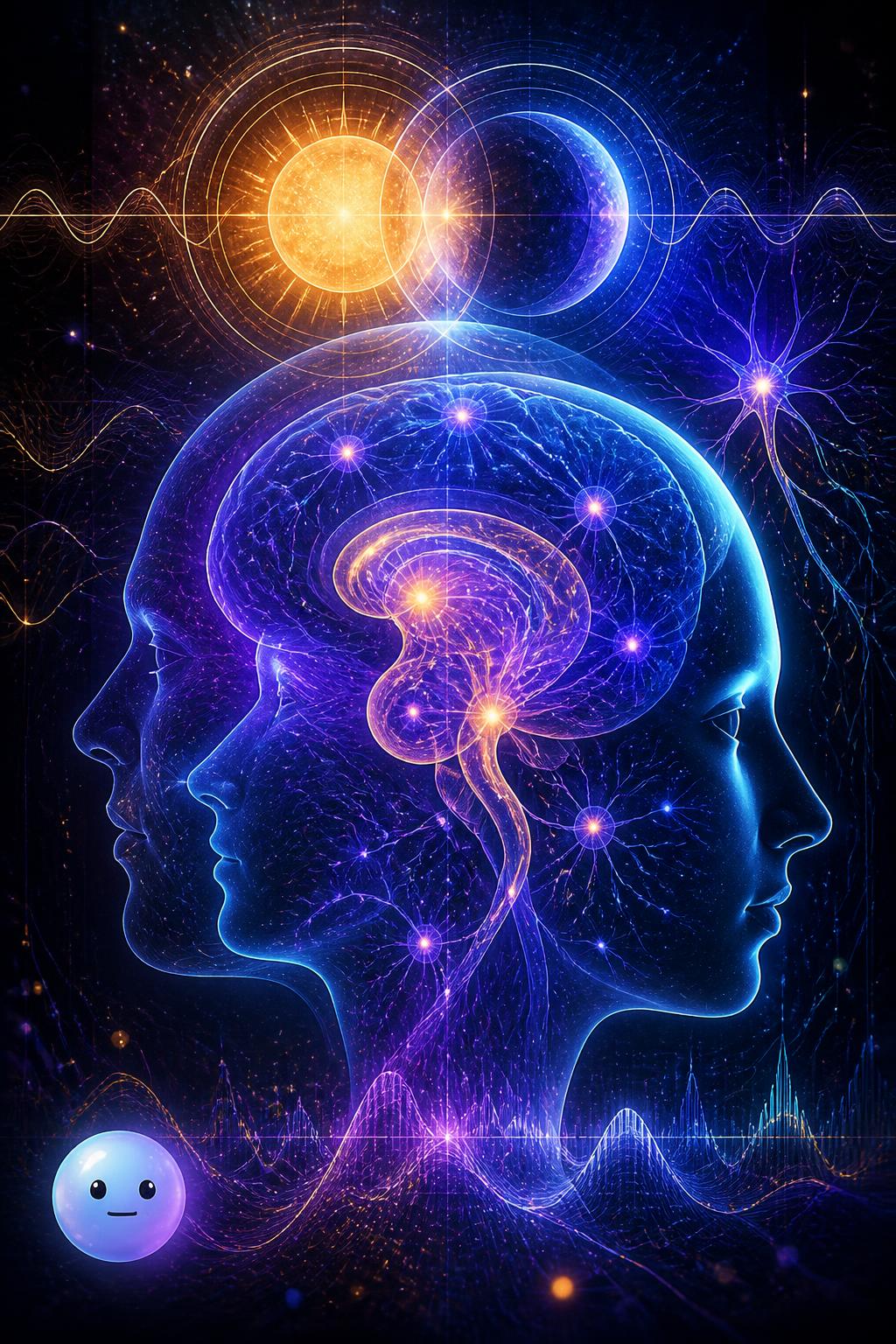
mankai Microscopic membrane gates control the electrical pulses that run our daily circadian cycles
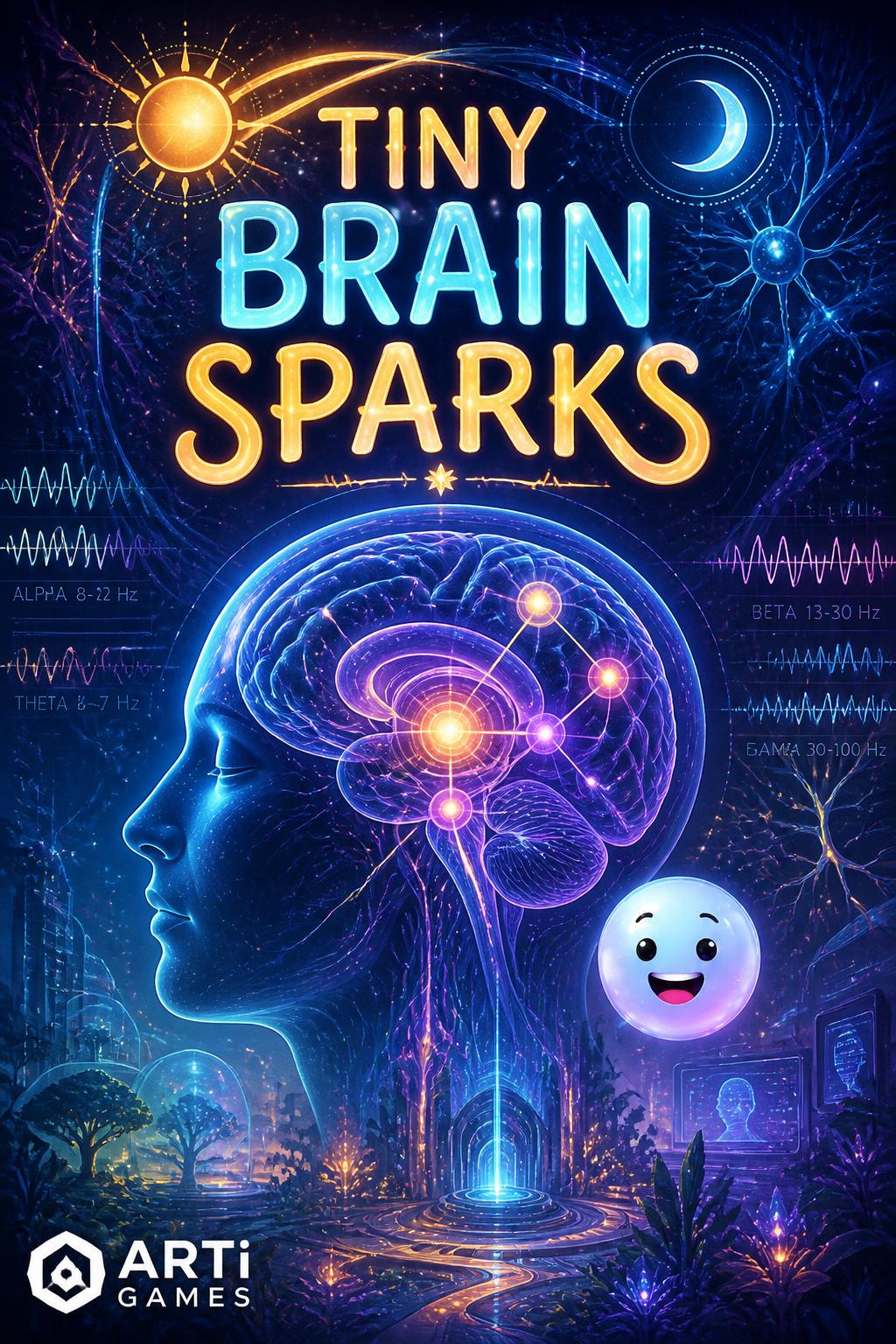
mankai Connect the electrical sparks to learn how brain volts power your circadian cycle.
Brain power: The human brain generates about 20 watts of electricity while awake, enough to power a dim LED light bulb.
A momentary change in electrical potential on the surface of a cell during the transmission of a nerve impulse. This spike occurs when sodium gates open, raising the cell's voltage to positive forty millivolts.
In which century did Luigi Galvani conduct his famous experiments showing that electricity makes frog legs twitch?
mankai An electroencephalogram tracks the continuous electrical activity of the human brain.
What term did Luigi Galvani use to describe the electrical force he observed in living tissues?
Which two primary chemical ions are responsible for generating an electrical action potential in a human neuron?
Approximately how fast can an electrical nerve impulse travel along an insulated neuron in the human body?
What is the name of the microscopic gap across which neurons transmit chemical signals to one another?
Roughly how wide is a typical synaptic cleft through which neurotransmitters must travel?
Who invented the electroencephalogram (EEG) to record the electrical activity of the human brain?