
Chapter 1
Ancient wisdom and ancestral cooling
Chapter 2
Growing our homes from the ground up
Chapter 3
The high-tech skin of modern skyscrapers
Chapter 4
Working with water and waste
Chapter 5
Designing for a changing climate
YOUR GOAL
Master of The secret life of buildings that breathe
Ch 1 · Ancient wisdom and ancestral cooling

007skaty Ancient Persian Windcatchers
The desert winds are pulled down through the clay, And chilled by hidden waters on their way.

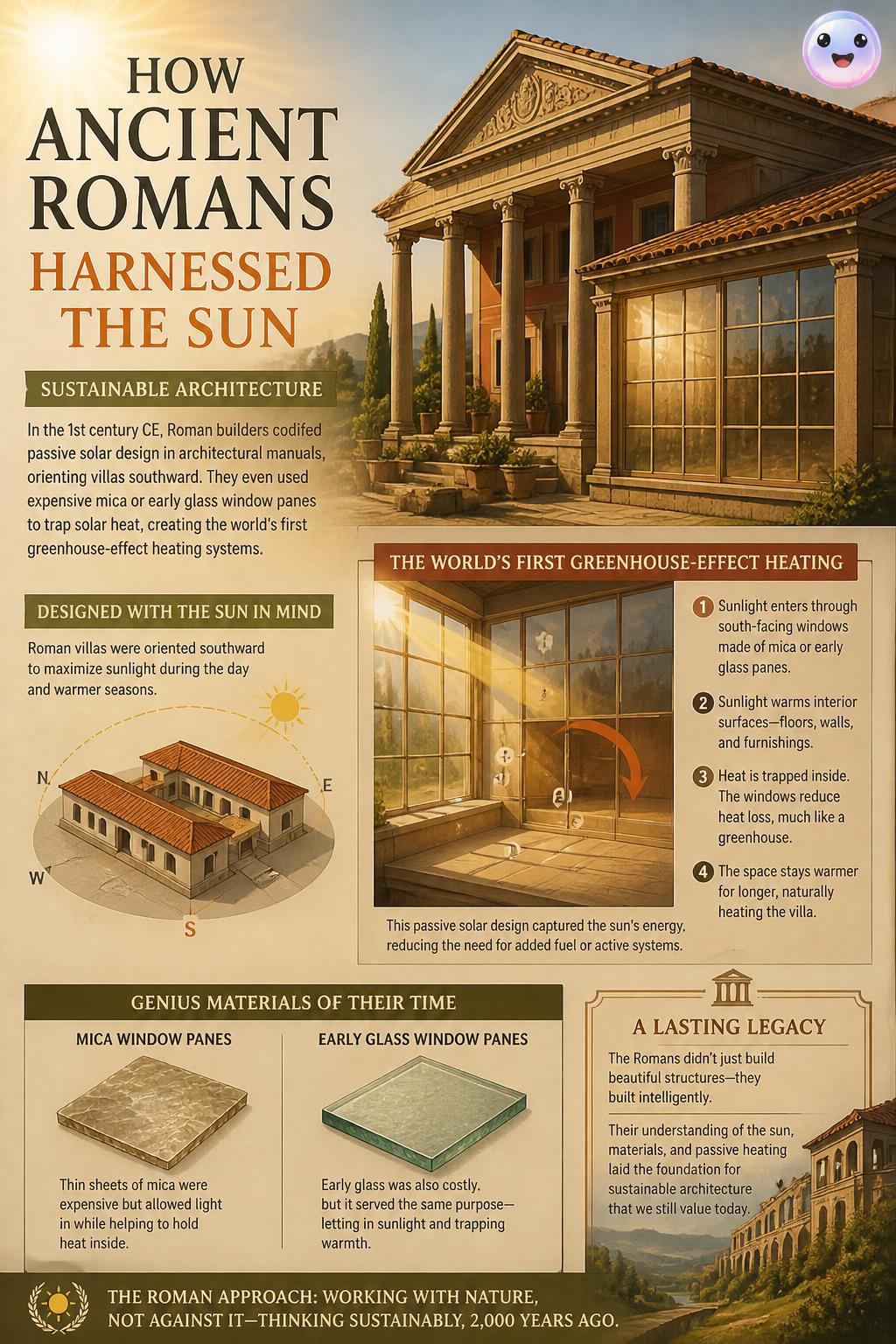
007skaty Architectural manuals from the first century CE directed Romans to orient villas southward and use mica or glass


BETA
007skaty Stack patterned breeze blocks to discover how ancient buildings stay cool without electricity.
Fun Fact
Yazd windcatchers: Yazd, Iran, is home to the world's tallest windcatcher, standing at over 33 meters high and built during the 18th-century Qajar dynasty.
Glossary
windcatcher (noun)
A towering architectural element designed to capture wind and naturally ventilate or cool a building. In Yazd, Iran, these clay structures channel desert breezes over subterranean water channels to lower indoor temperatures.
A towering architectural element designed to capture wind and naturally ventilate or cool a building. In Yazd, Iran, these clay structures channel desert breezes over subterranean water channels to lower indoor temperatures.
Quiz
In what century did the Roman Empire begin using early glass windows for solar heating?
Quiz
Which ancient country invented "badgirs," or windcatchers, to naturally cool homes?