
baobab
baobab: (noun) A large tropical tree native to Africa, known for its exceptionally thick trunk.
The pilot behind the Prince
Asteroids, roses, and baobabs
Decoding the cosmic philosophy
A Little Prince travels the globe
schopenhauer Antoine de Saint-Exupéry kept a pet fennec fox in Cape Juby. This desert animal inspired his famous lesson about how taming creates unique bonds.
schopenhauer Archival sketches and letters reveal how Consuelo's asthma and fiery personality shaped her husband's famous character. Her real-life coughs and protective nature became the Rose's thorns.
schopenhauer This house-sized asteroid requires daily maintenance. The Prince sweeps out three volcanoes and weeds out destructive baobab seeds before their massive roots tear his tiny planet apart.
schopenhauer Readers interpret these destructive fictional plants as a metaphor for fascism in 1940s Europe. The Prince's daily weeding shows the constant effort needed to stop hateful regimes from growing.
schopenhauer B-612 and Asteroid Bésixdouze
B-six-twelve, B-six-twelve! The magic number is shining in space!
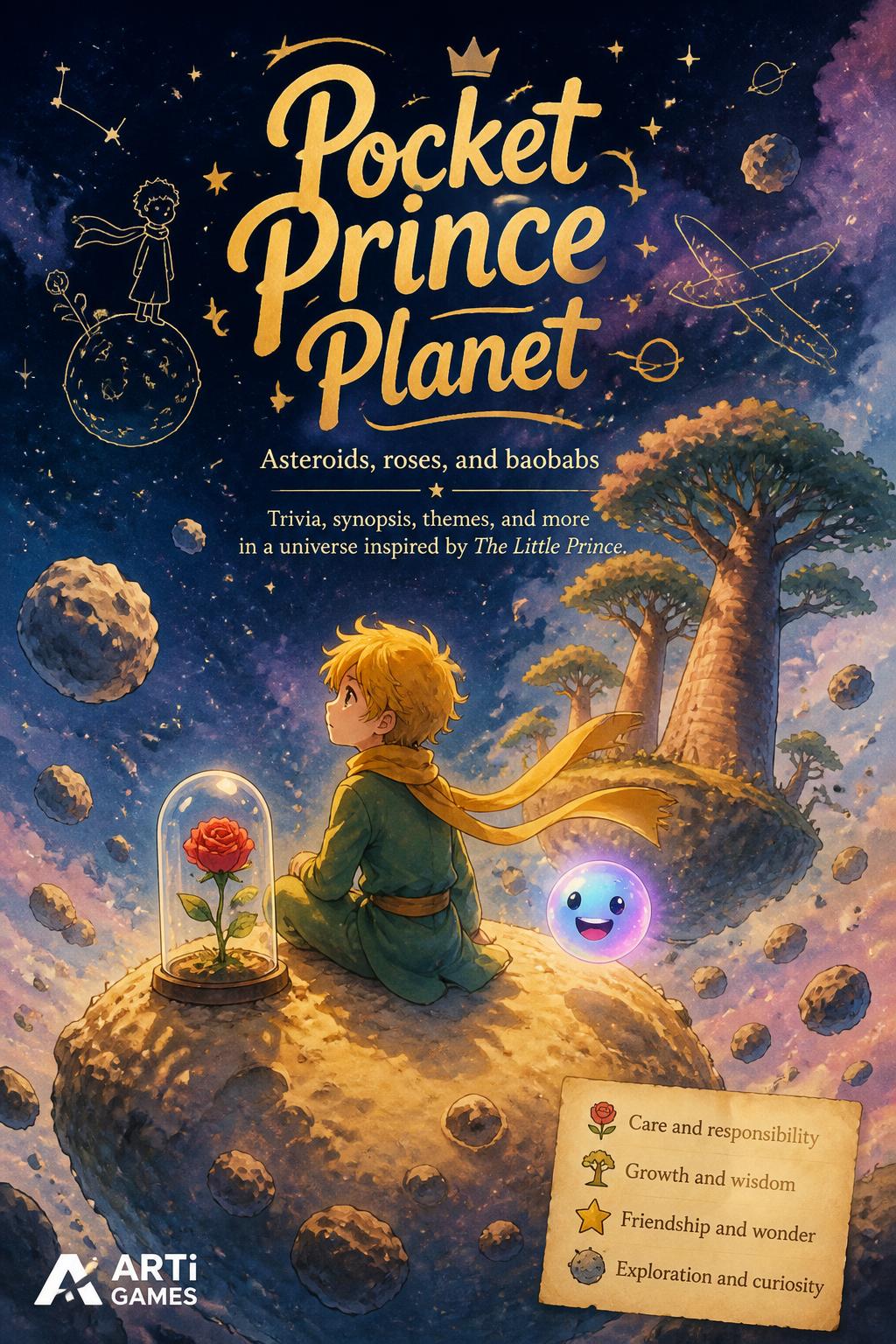
schopenhauer Match trivia clues to each asteroid to discover the story's deepest life lessons.
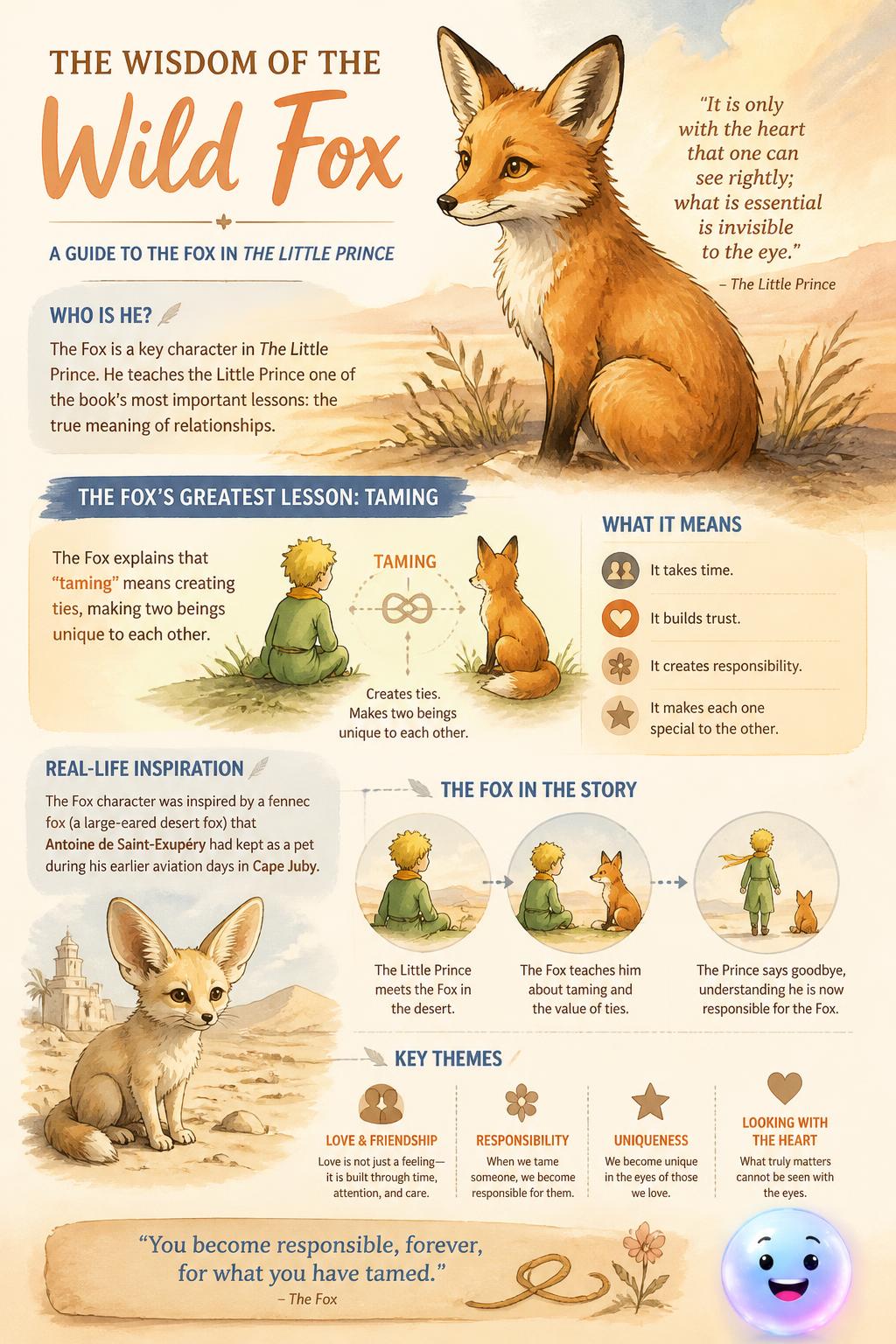
schopenhauer Warm illustrations display the book's famous fox next to a desert fennec
Real asteroid named: In 1993, astronomers officially named a real asteroid '46610 Bésixdouze' in honor of the Little Prince's home.

schopenhauer A delicate red rose with four sharp thorns glows in warm, dramatic light.
A large tropical tree native to Africa, known for its exceptionally thick trunk. To protect his home planet B-612, the little prince must diligently uproot these seedlings.
What task must the Little Prince perform every single morning to protect his tiny asteroid home?
What type of animal was the real-life pet that inspired the character of the wise Fox?
What is the name of the tiny asteroid that the Little Prince calls his home planet?
How many volcanoes does the Little Prince have on his home asteroid, including the dormant one?
What do the destructive baobab trees symbolize in the context of World War II politics?