Chapter 1
Ancient riddles of motion and truth
Chapter 2
Mind-bending loops of mathematics and sets
Chapter 3
Physics and the mysteries of the cosmos
Chapter 4
Time travel and the rules of causality
Chapter 5
Everyday life and psychological traps
YOUR GOAL
Master of The world of paradoxes
Ch 2 · Mind-bending loops of mathematics and sets
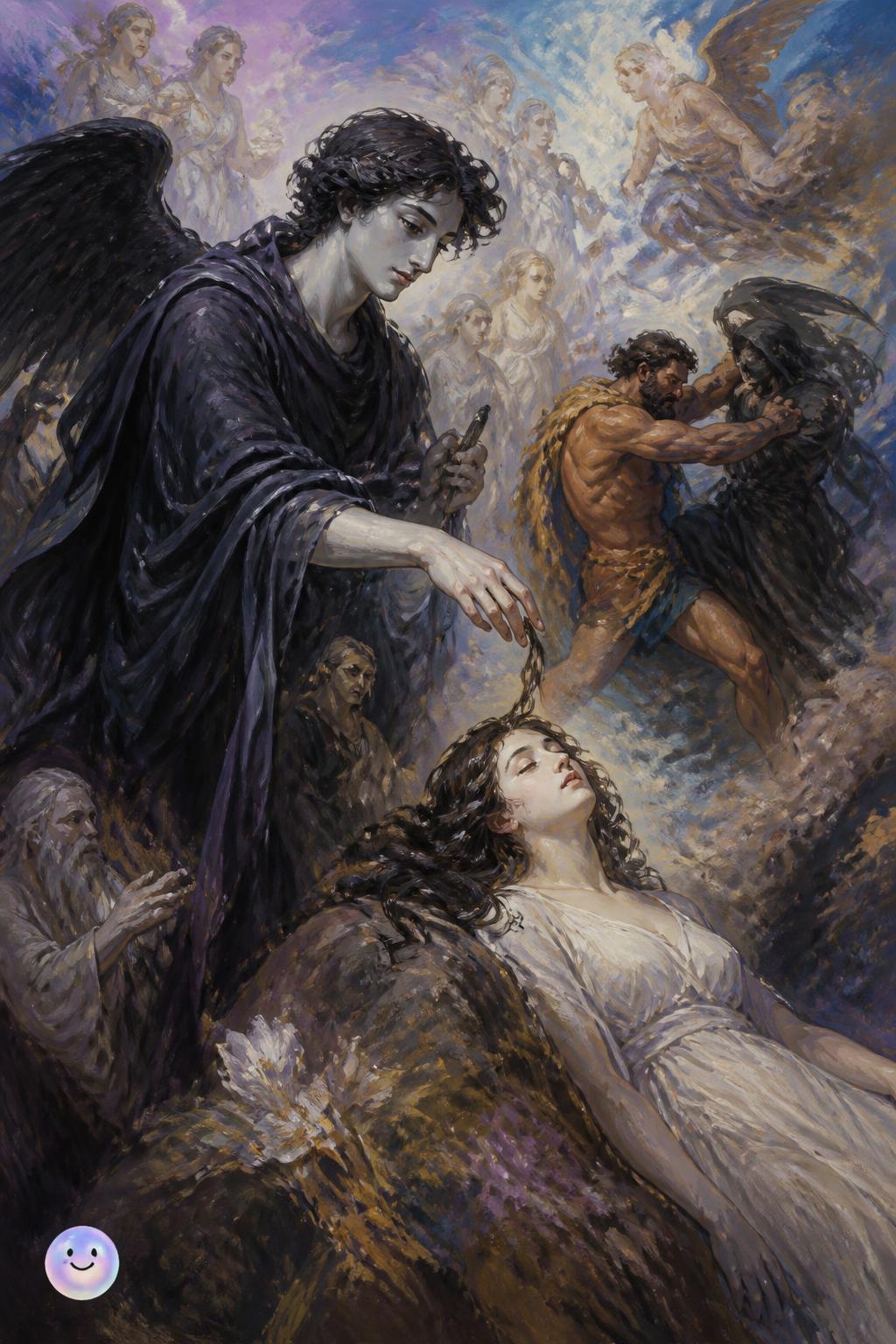
schopenhauer Russell's Paradox
A set of sets / that skips itself / just loops forevermore!
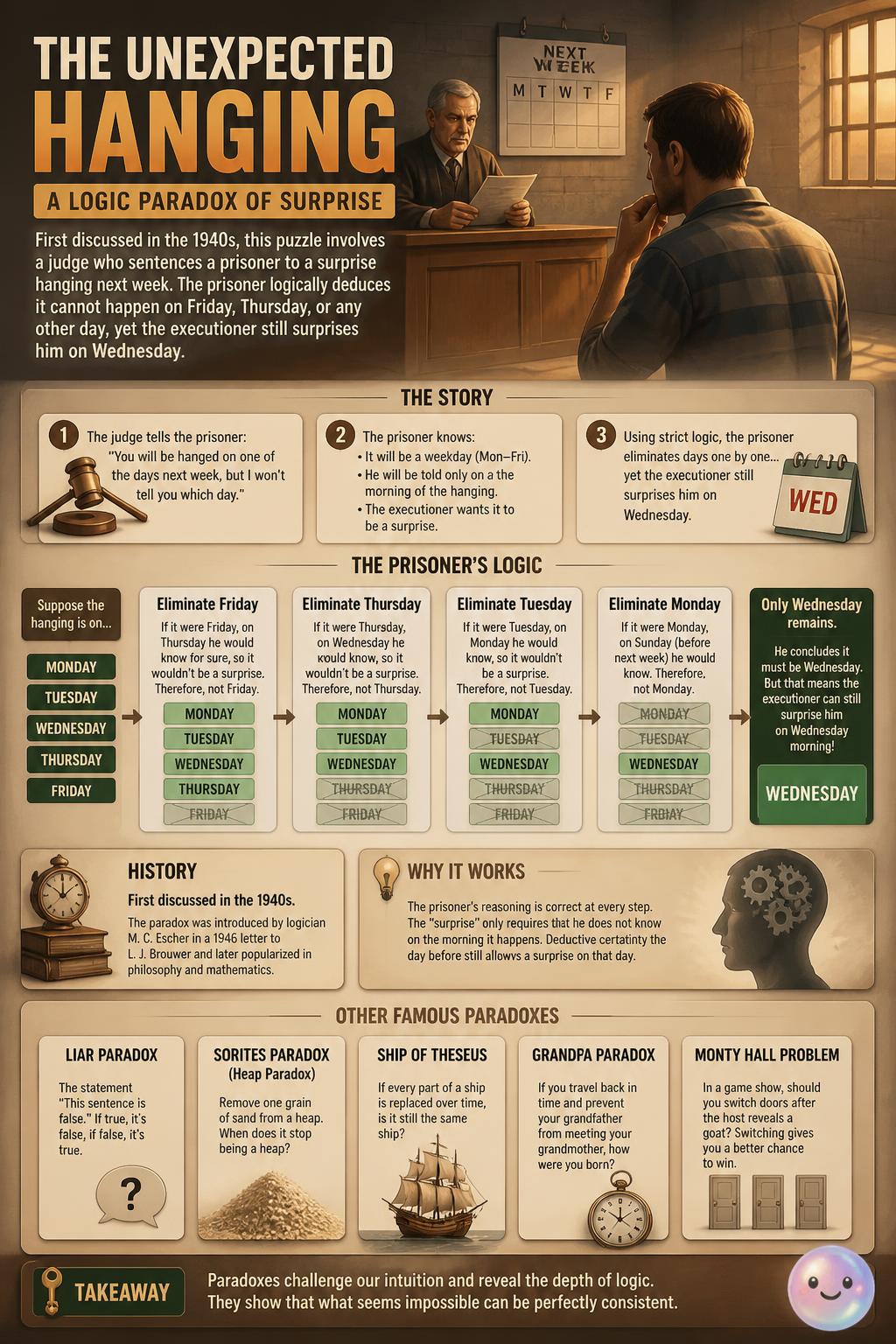
schopenhauer The surprise exam paradox shows how logical deduction can fail to predict a future event.
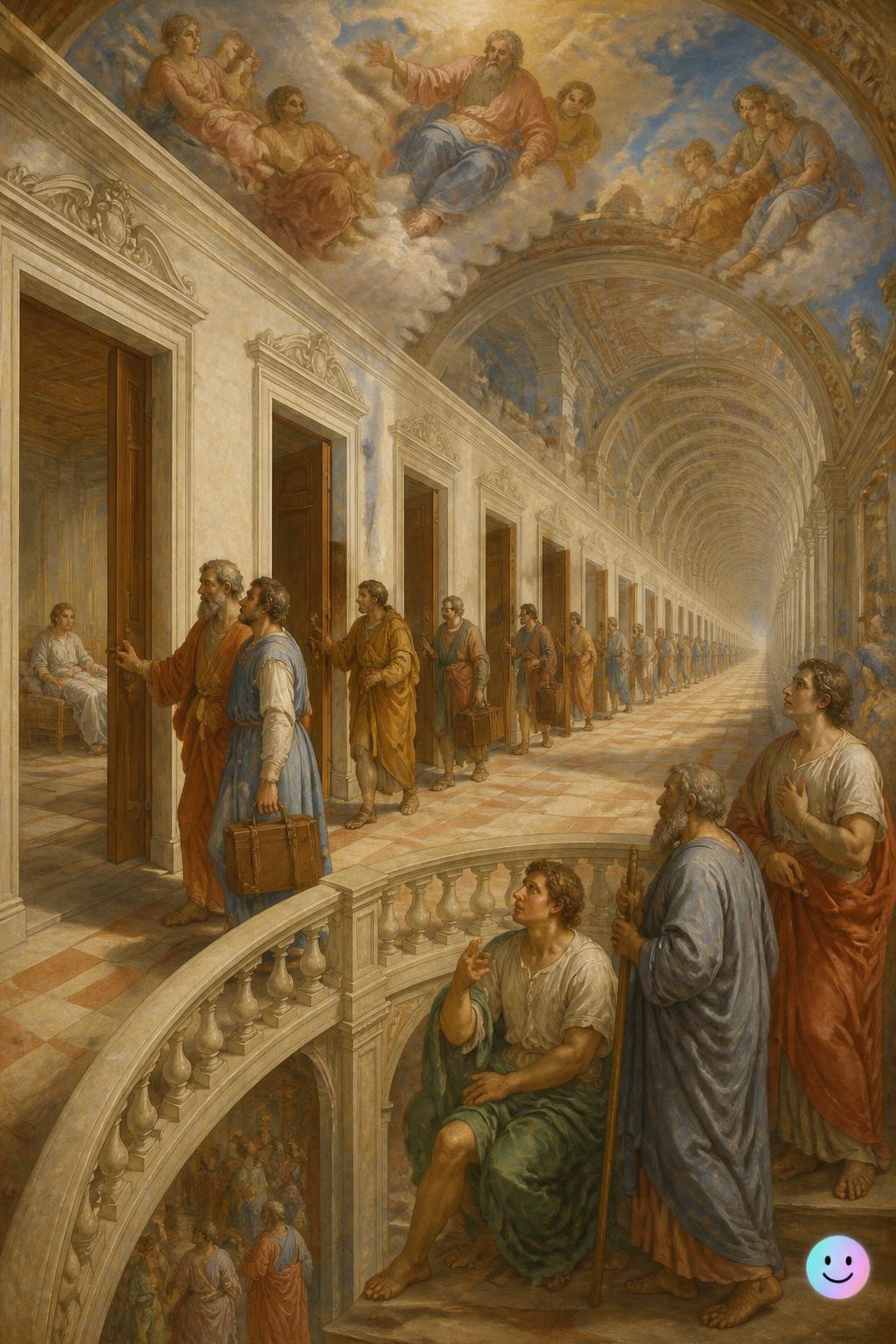
schopenhauer Hilbert's Grand Hotel shows how an infinite number of guests can fit into a full hotel.
BETA
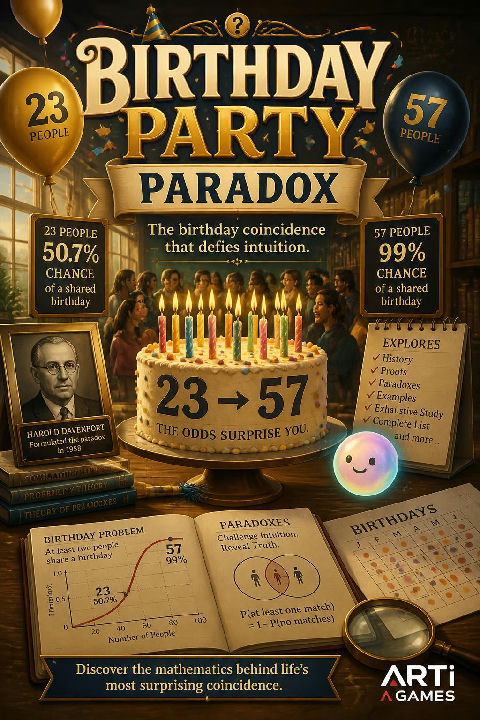
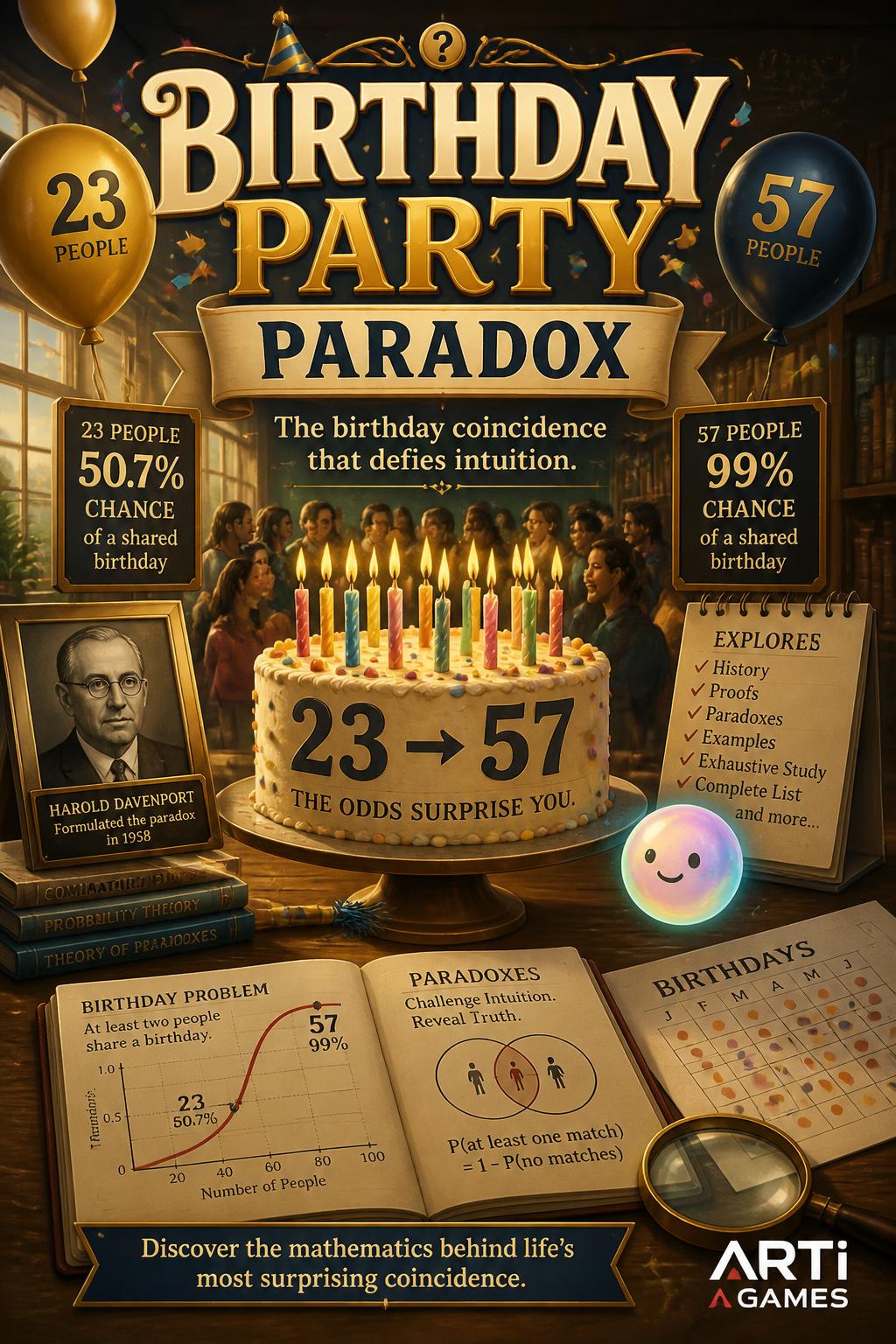
schopenhauer Match party guests to figure out why shared birthdays are surprisingly common.
Fun Fact
Set theory crisis: Bertrand Russell's 1901 paradox was so devastating it completely halted German mathematician Gottlob Frege's lifelong work on the foundations of arithmetic.
Glossary
self-reference (noun)
The act or instance of a statement, formula, or text referring to itself. Bertrand Russell used this concept in 1901 to expose a fundamental contradiction in naive set theory.
The act or instance of a statement, formula, or text referring to itself. Bertrand Russell used this concept in 1901 to expose a fundamental contradiction in naive set theory.
Quiz
What is the minimum number of people needed in a room for a 50.7% chance that two share a birthday?
Quiz
Which British philosopher formulated the paradox of the barber who shaves only those who do not shave themselves?
Quiz
To which German logician did Bertrand Russell send his devastating paradox letter in 1901?
Quiz
The Banach-Tarski paradox relies on which controversial axiom of mathematical set theory?
Quiz
In the Surprise Exam paradox, why does the prisoner believe the execution cannot happen on the final day, Friday?
Quiz
In what year did David Hilbert first present his famous Grand Hotel paradox during a lecture?
Quiz
How many pieces is a solid sphere sliced into before being reassembled into two spheres in the Banach-Tarski paradox?