
The architecture of fat
View / Create
Answer
The sweet science of sugars
View / Create
Answer
Structure, flour, and the chill
View / Create
Answer
The physics of chocolate and heat
View / Create
Answer
YOUR GOAL
Master of Science of the perfect cookie

alicecooks Cookie Sugar Science
White sugar spreads out for a crispy, thin snap, But brown sugar holds all the moisture on tap.
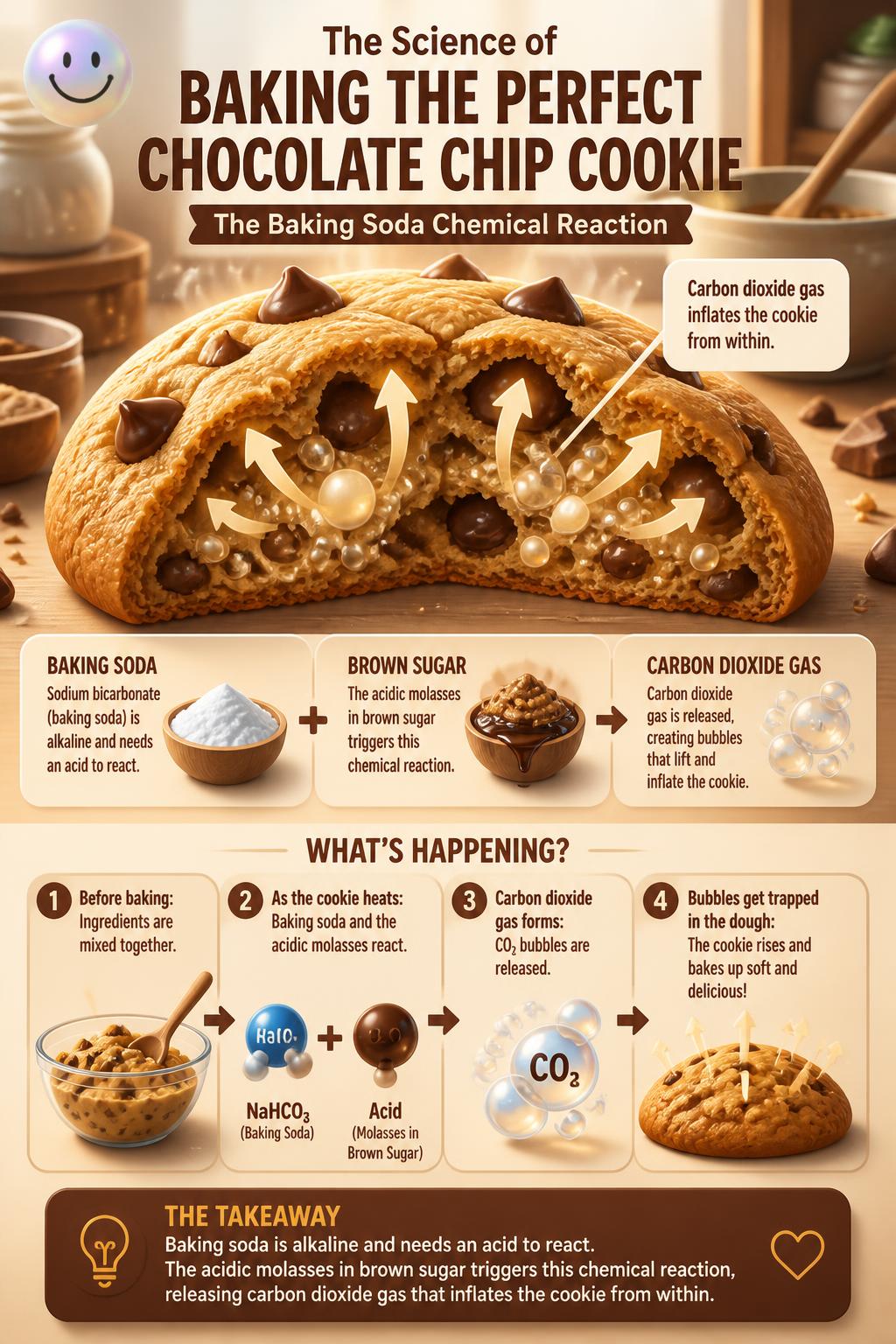
alicecooks Baking soda requires an acidic ingredient like brown sugar to activate and produce rising gases.
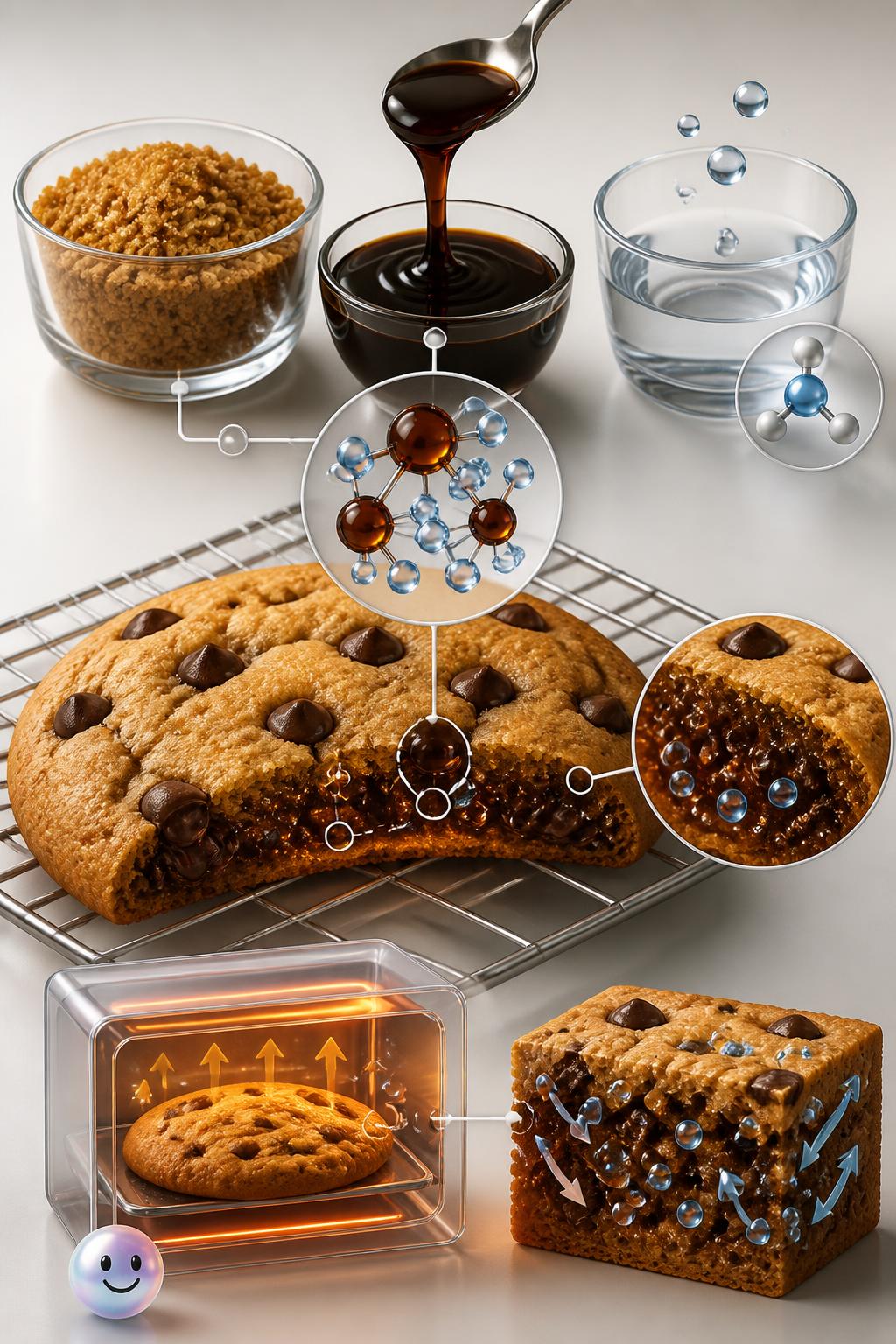
alicecooks Brown sugar contains molasses, which locks in moisture to keep cookies soft and chewy.

alicecooks Adjust ingredient amounts to discover the science of the perfect chocolate chip cookie.
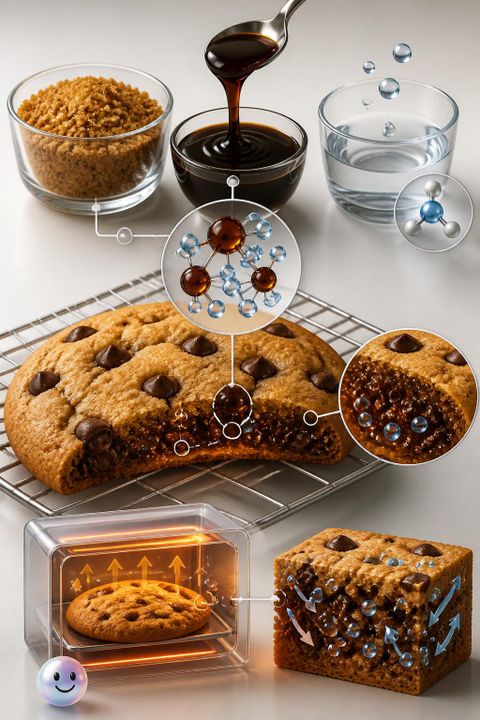
Cookie sugar science: Brown sugar makes cookies soft because its molasses content contains about 3.5% to 6.5% water-attracting molecules that prevent drying in the oven.
A chemical process in which sugars are heated and oxidized, producing a brown color and nutty flavor. During baking, this chemical browning occurs as sugars in the dough reach 356 degrees Fahrenheit.
Why does baking soda fail to activate properly in a cookie made with 100% white granulated sugar?
What is the primary difference between light brown sugar and dark brown sugar in cookie recipes?
What term describes a substance, like brown sugar's molasses in cookie dough, that actively attracts and holds water molecules?
Which type of sugar molecule makes up standard white granulated table sugar used in cookie baking?
At what temperature does the flavor-producing Maillard reaction begin to occur during cookie baking?
At what temperature does the caramelization of sucrose sugar begin to occur during cookie baking?
What gas is released when baking soda reacts with the acidic molasses in brown sugar cookie dough?
How does the pH of brown sugar affect the spread of a chocolate chip cookie in the oven?