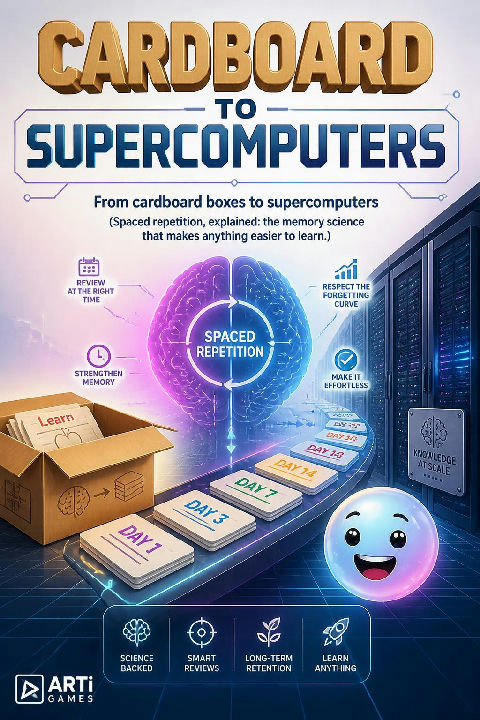
The man who forgot on purpose
The physical brain under construction
From cardboard boxes to supercomputers
Spaced repetition in the wild

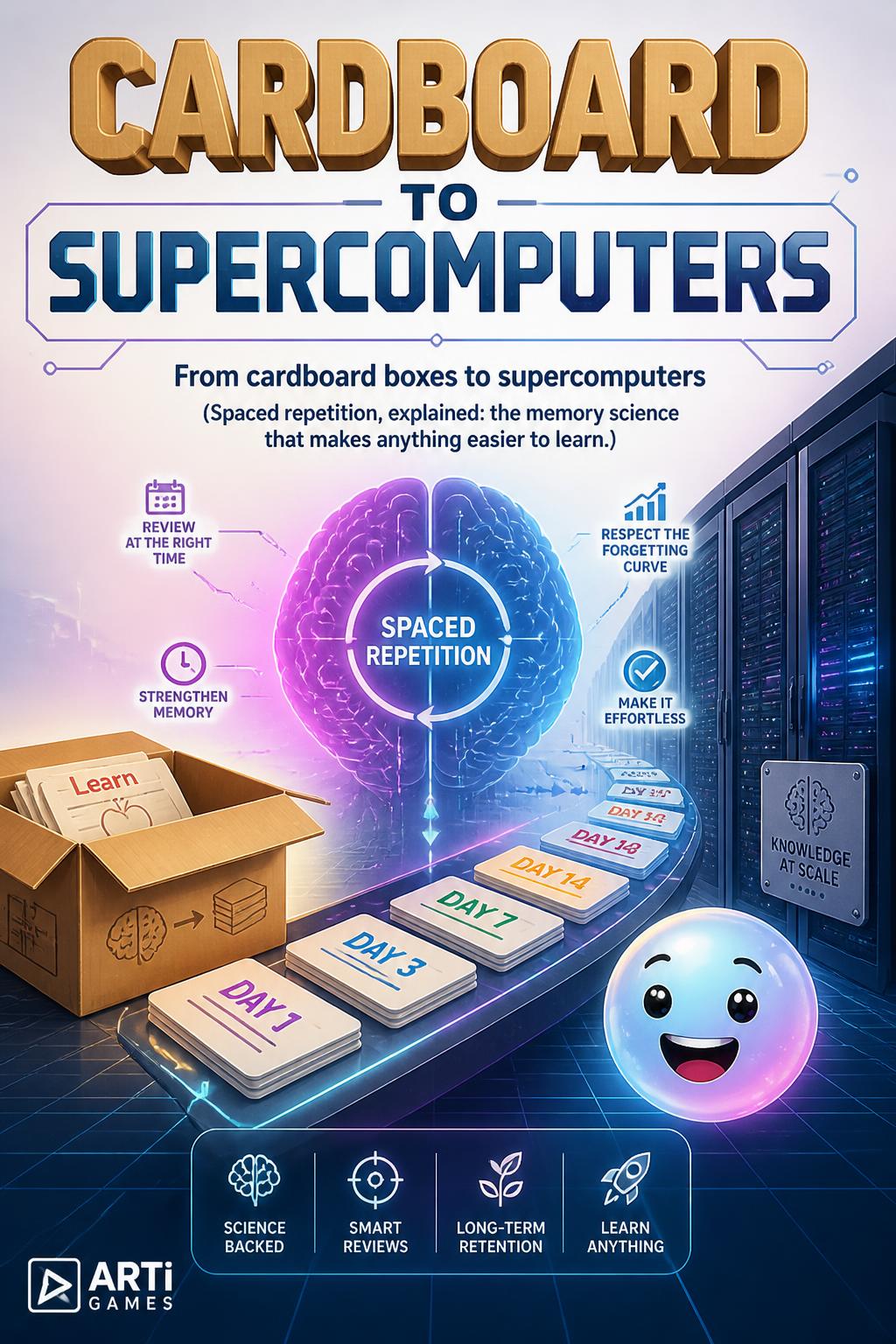
duolingo Sort flashcards from cardboard to supercomputers to learn how spaced repetition boosts memory.
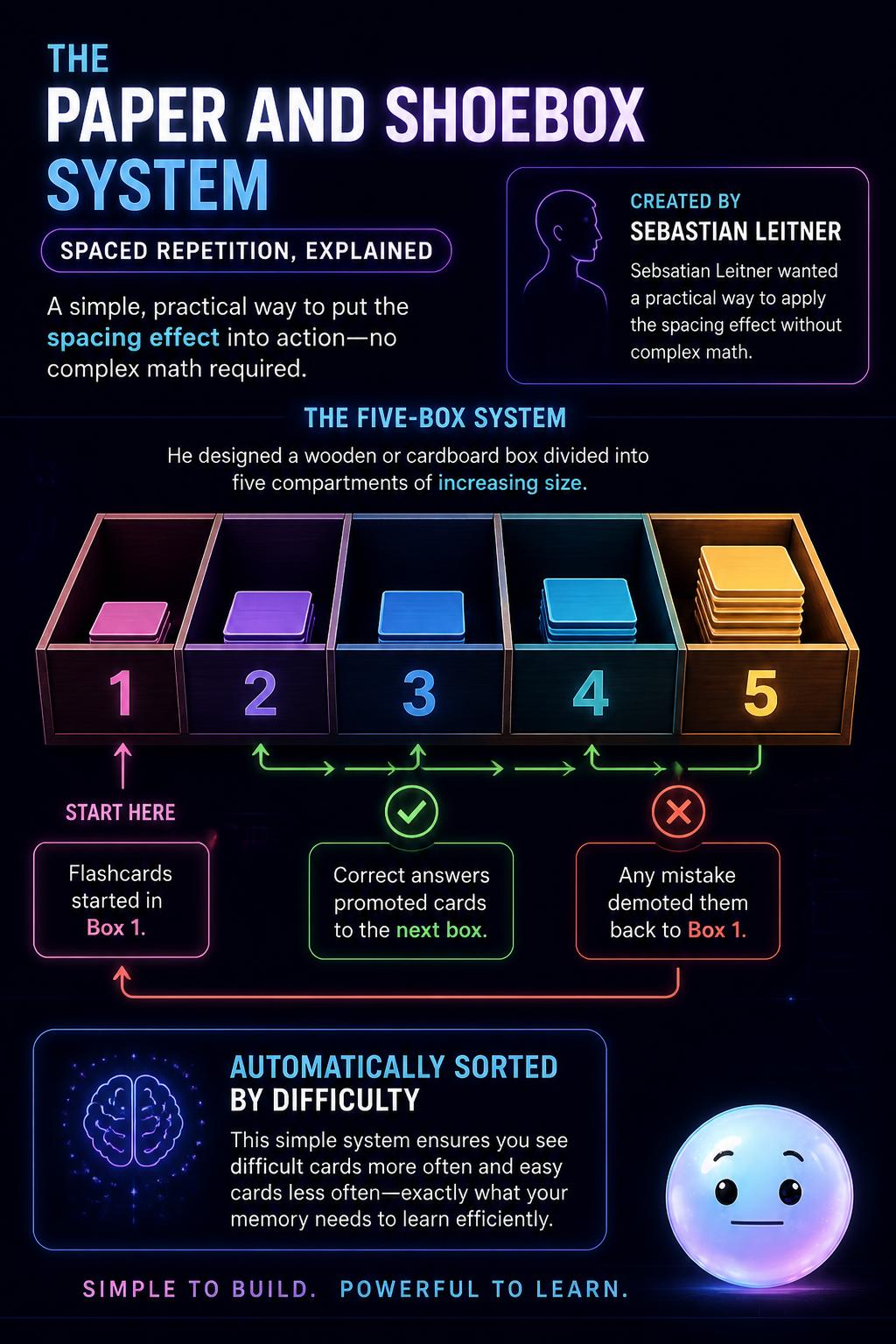
duolingo Flashcards advance through the compartments with correct answers but return to Box 1 after mistakes, automatically sorting them by difficulty.
In which decade did German science journalist Sebastian Leitner popularize his famous cardboard box flashcard system?
In the classic Leitner system, what happens to a card in Box 4 if you answer it incorrectly?
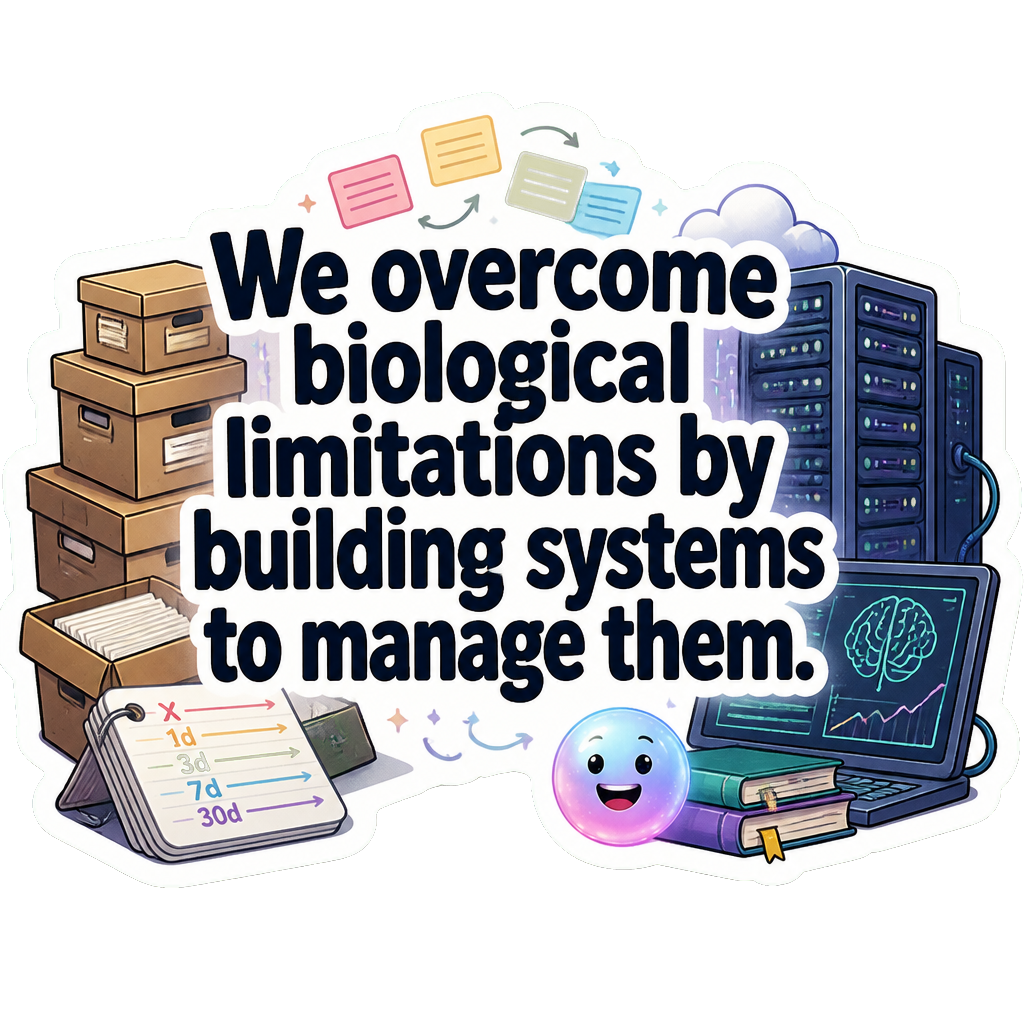

duolingo Paper memory experiments in 1985 laid the foundation for modern digital learning algorithms.
Which classic Woźniak algorithm is still used as the foundational math behind many modern flashcard apps?
What was the name of the pioneering spaced repetition software created by Piotr Woźniak in 1987?
Amstrad PC 1512: Piotr Woźniak coded the very first digital version of SuperMemo on an Amstrad PC 1512, which was quasi-legally imported into Poland from Germany in 1987.
What does the Japanese word Anki, which inspired the name of the popular flashcard software, translate to in English?
Who created the initial version of the open-source flashcard program Anki in 2006?
A study method where flashcards are sorted into physical compartments based on recall accuracy. German journalist Sebastian Leitner introduced this card-sorting technique in 1972 to organize learning schedules.
What does the modern machine-learning-based spaced repetition scheduler FSRS stand for?
Compared to older algorithms like SM-2, what is the primary benefit of using a machine learning model like FSRS?