The Porfirian boom and the ship ballast mystery
The alchemy of the trepa and the hydraulic press
The great mosaiquera crisis and the modern revival
YOUR GOAL
Master of Walking on art with Mexico's historic cement tiles

choko The Trepa and Hydraulic Press
Pour in the trepa, press the layers tight, water cures them strong.
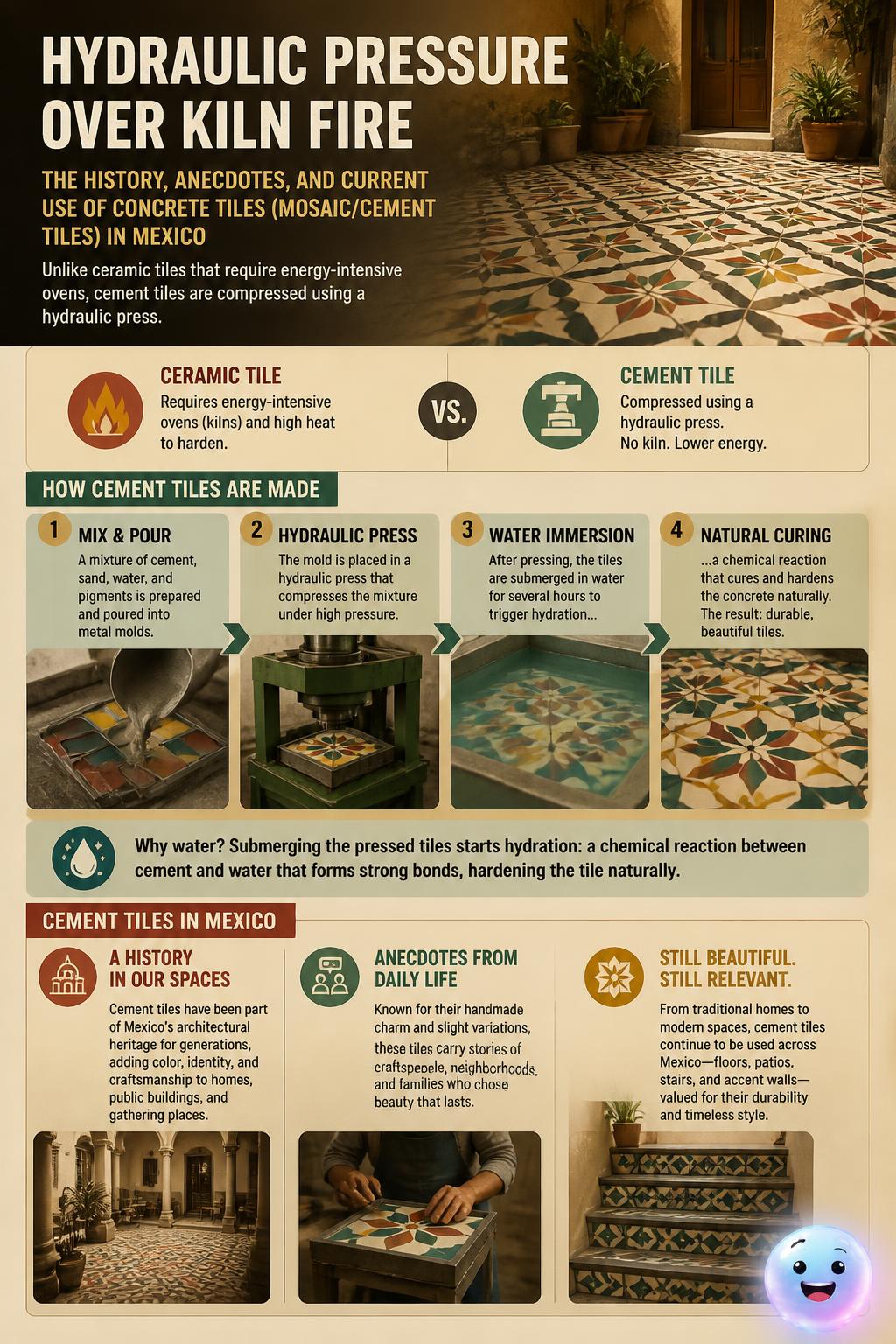
choko Cement tiles are never baked in a kiln, relying instead on high pressure and water curing.
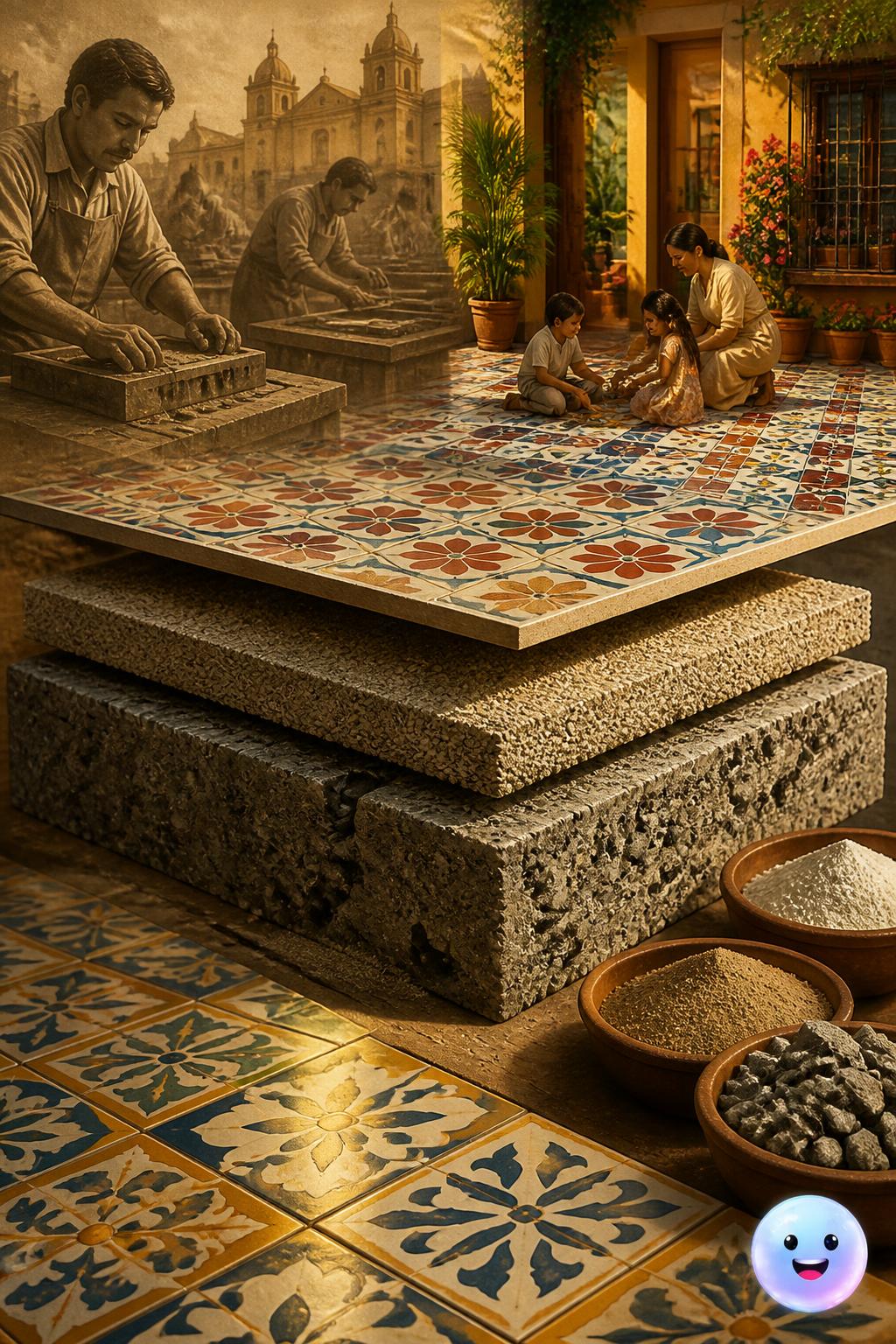
choko Every cement tile is composed of three distinct, carefully poured layers of materials.
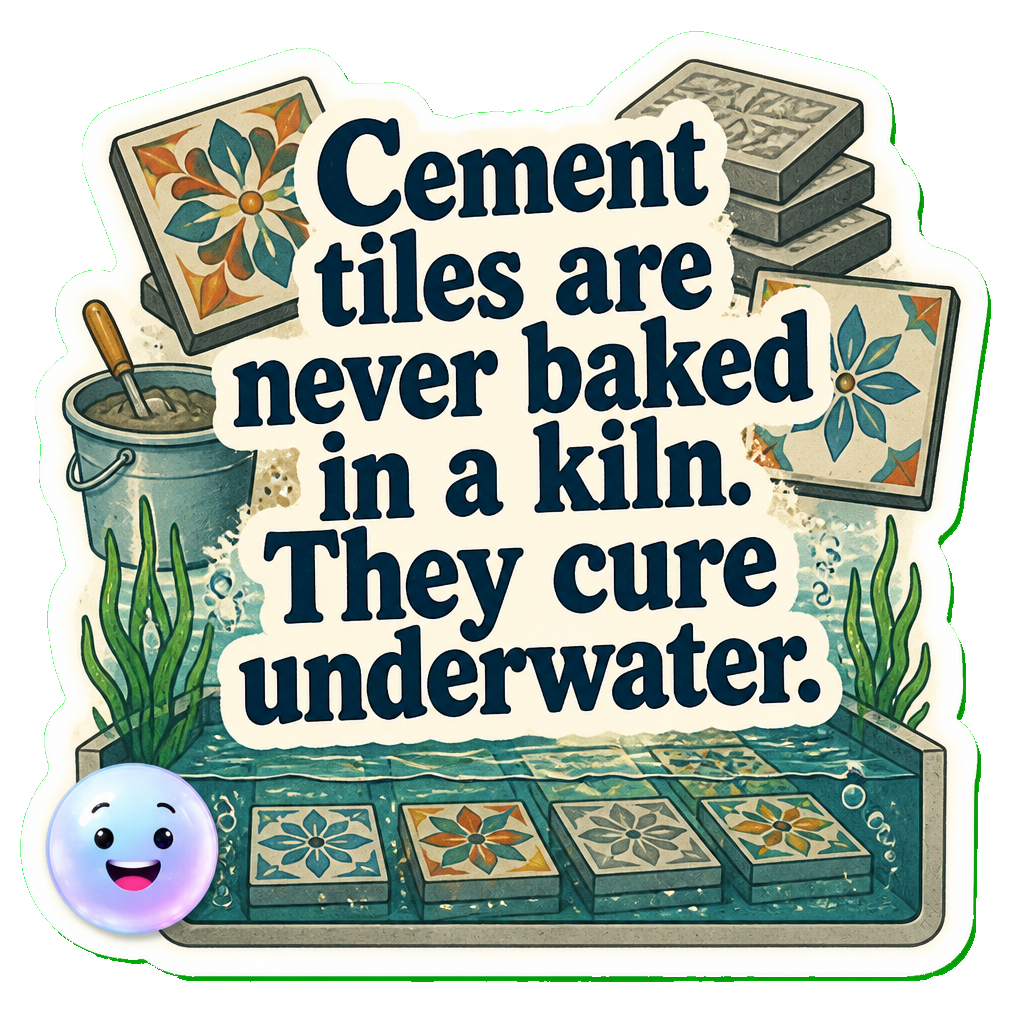
No-heat tiles: Cement tiles are never baked in a kiln; instead, they cure chemically under water using hydraulic pressure.
A stencil or template used to transfer a design or pattern onto a surface. Artisans in Mérida use these brass stencils to separate colored cement pastes when handcrafting traditional tiles.
What material is mixed with cement and pigment in the top layer to give the tile its smooth finish?
What prevents the different liquid colors from mixing together when poured into the tile mold?
What is the name of the hand-soldered metal stencil used to separate colors in cement tile making?
What tool is used to compact the three layers of a cement tile into a single solid piece?
Unlike traditional ceramic tiles, how are Mexican cement tiles cured to make them hard?
How many distinct layers of material are typically pressed together to create a single cement tile?