Tanzanite — the single-source wonder
Alexandrite — the color-shifting chameleon
Painite — once the world's rarest mineral
Larimar — the volcanic sea stone
Black Opal — the dark rainbow

007skaty Giramundo
Giramundo, spin and glow! Giramundo, spin and glow! Sixty stitched faces put on a show!

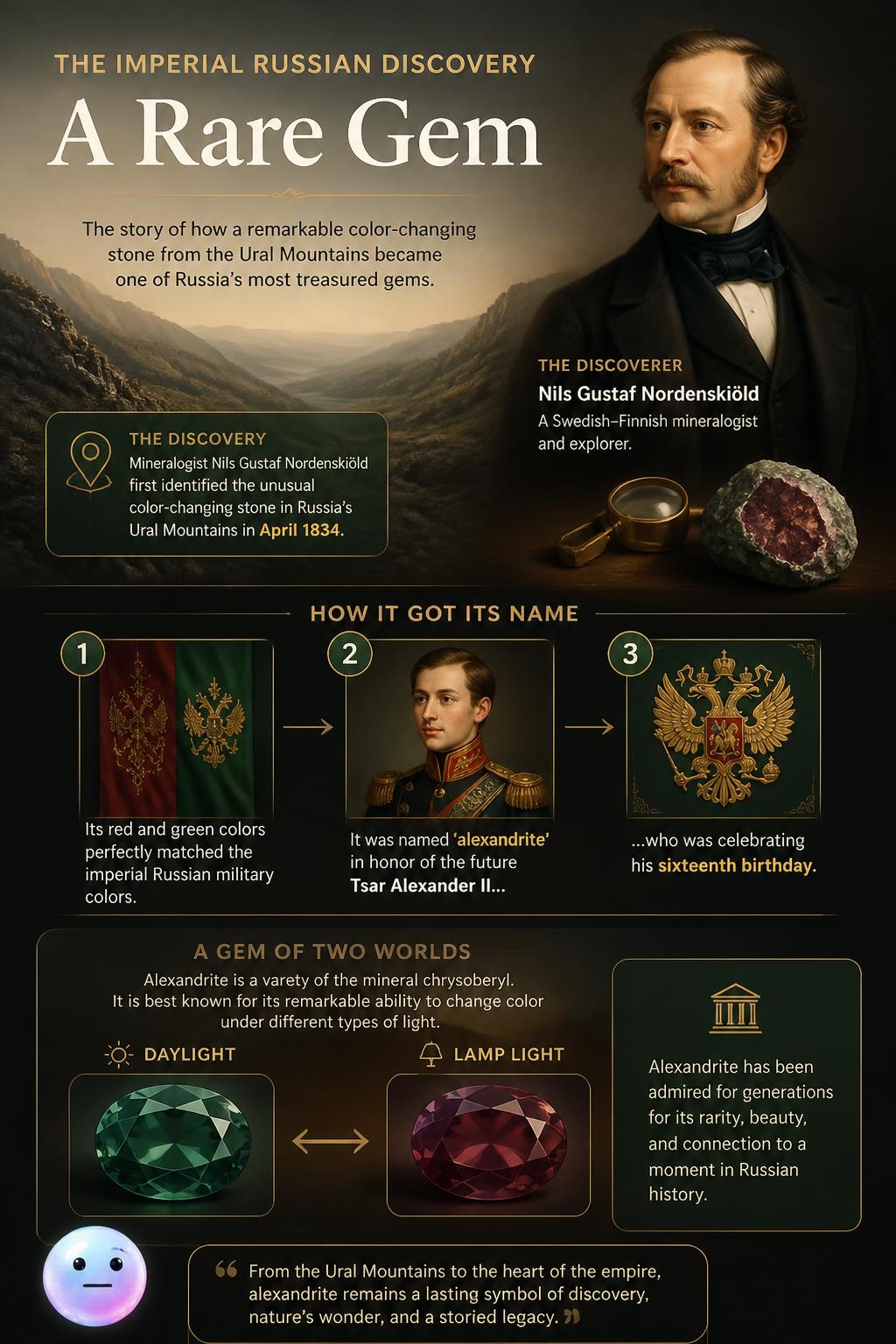
007skaty This rare Ural Mountain stone became alexandrite to honor the future Tsar Alexander II on his sixteenth birthday.

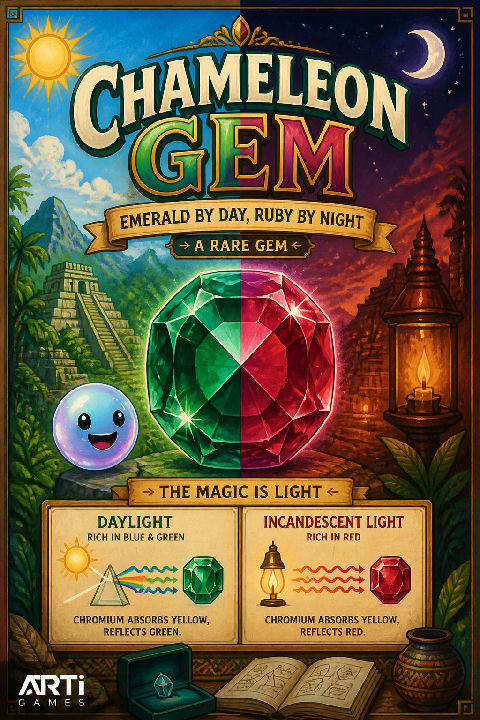
007skaty Alexandrite absorbs yellow light at 580 nanometers to split the visible spectrum
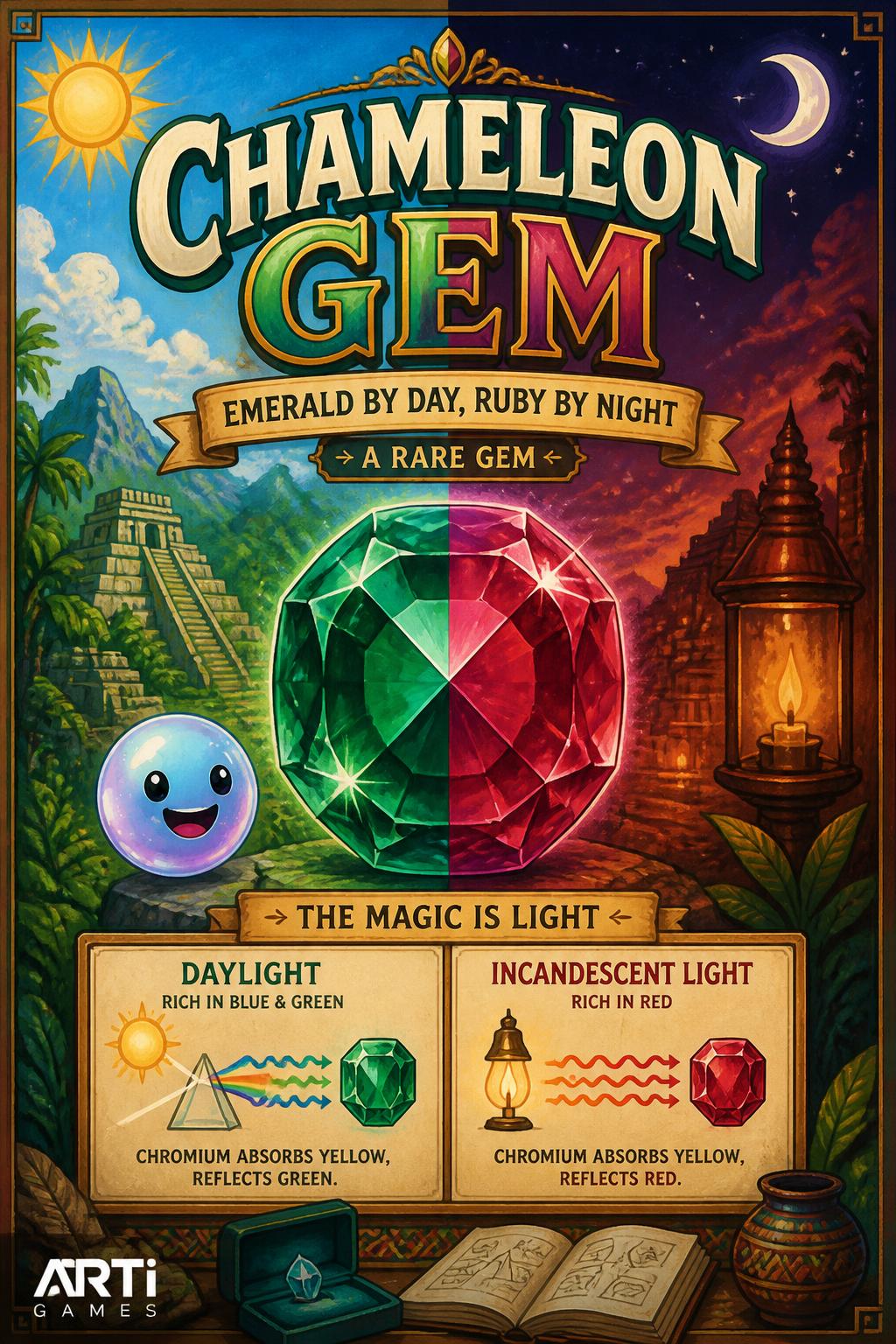
007skaty Shine different light sources on the stone to discover how chameleon gems change color.
Color shift name: The phenomenon of a gemstone changing color under different light sources is officially called the 'alexandrite effect'.
A rare variety of chrysoberyl that exhibits a color change from green in daylight to red in artificial light. Miners first discovered the stone in Russia's Ural Mountains in 1834, naming it after Tsar Alexander II.
For which future Russian ruler was the gemstone alexandrite named after its discovery?
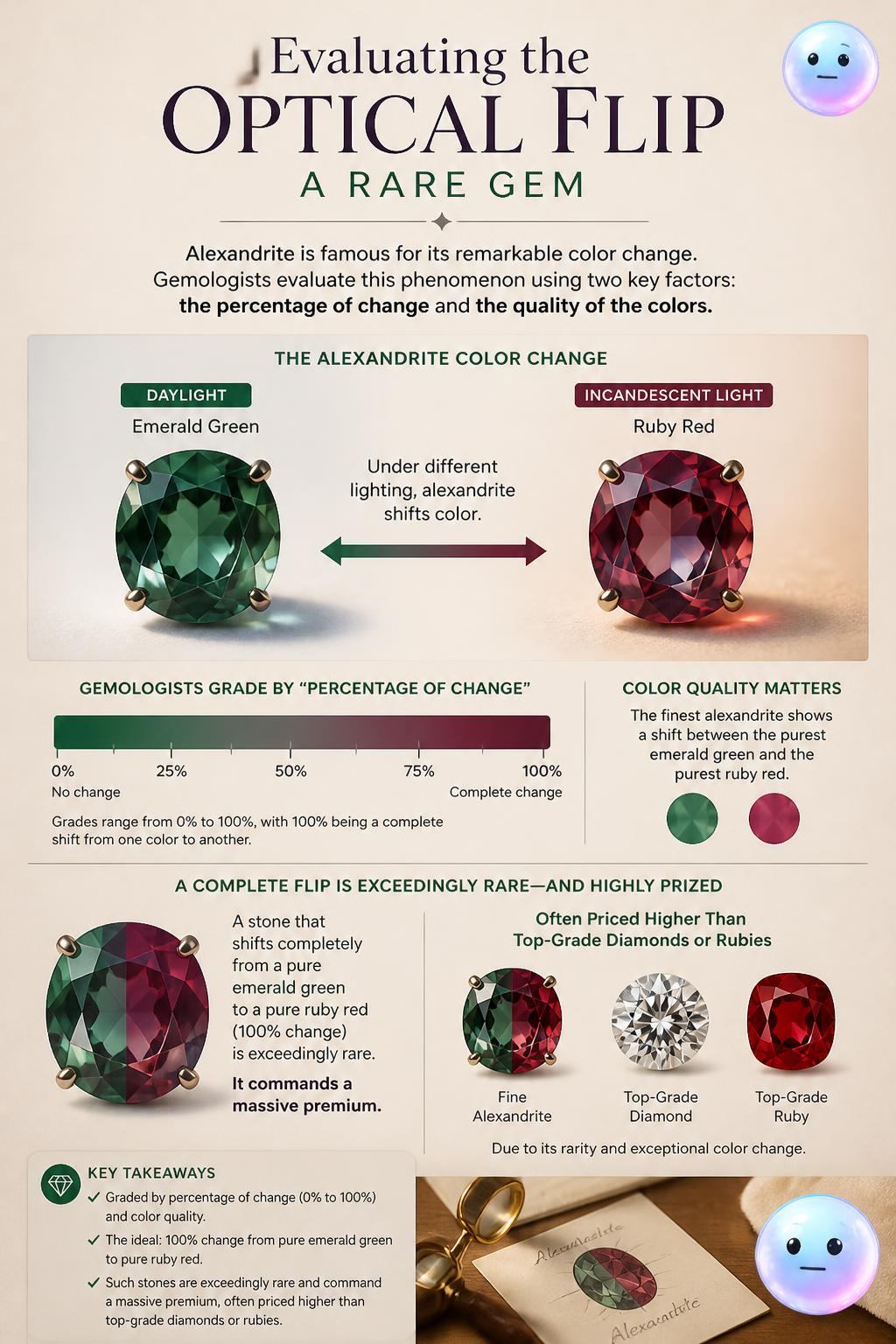
007skaty Gemologists grade alexandrite using color quality and percentage of change, valuing the rare shift from emerald green to ruby red.
In which mountain range was the color-changing gemstone alexandrite first discovered in the 1830s?
Which trace element is chemically responsible for the dramatic color-changing property of alexandrite?
What color does a high-quality alexandrite gemstone typically exhibit when viewed in natural daylight?
Why does alexandrite appear red or purplish-red under warm incandescent light or candlelight?
In which country was a major new deposit of high-quality alexandrite discovered in 1987?