
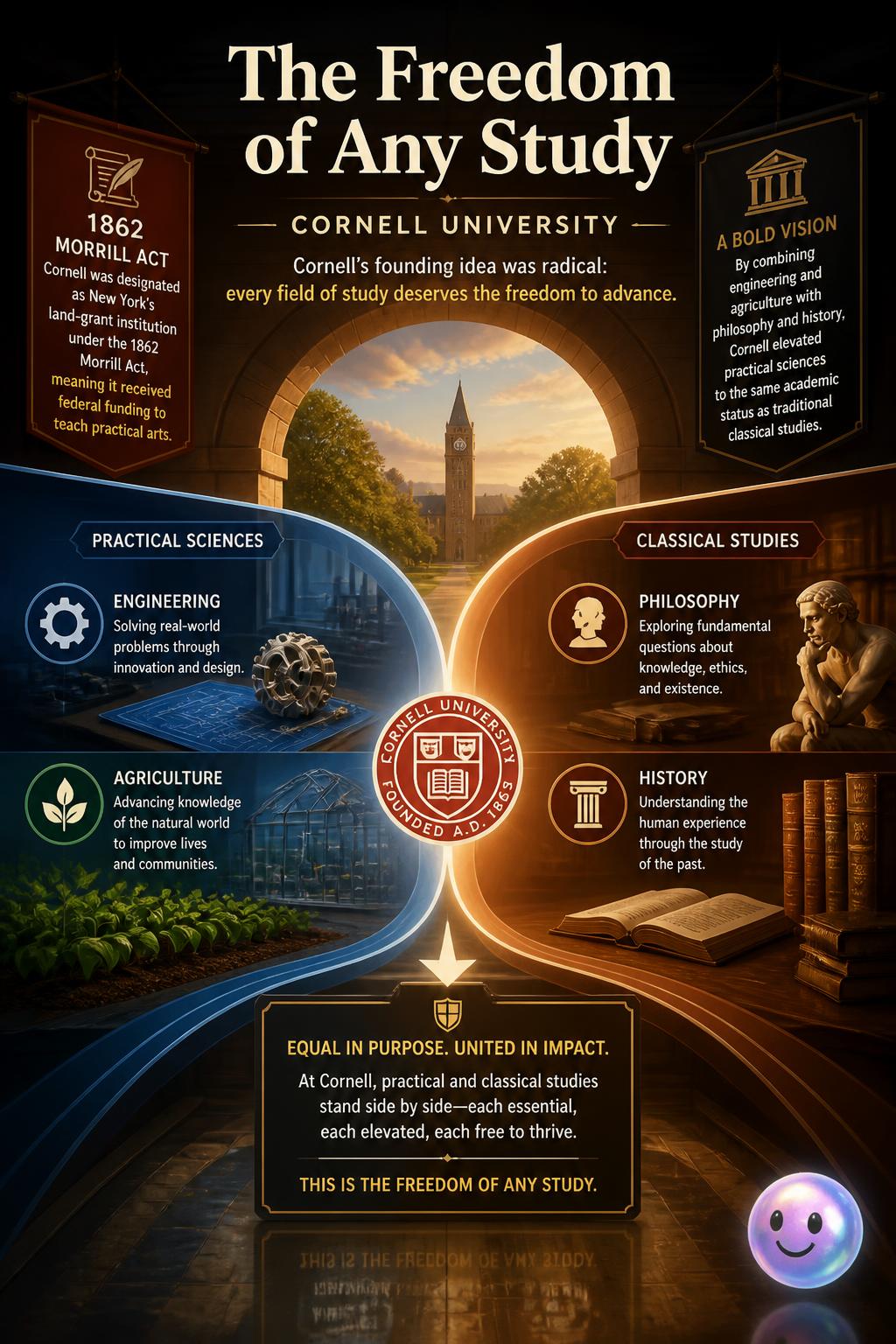
Freedom of Any Study at Cornell University
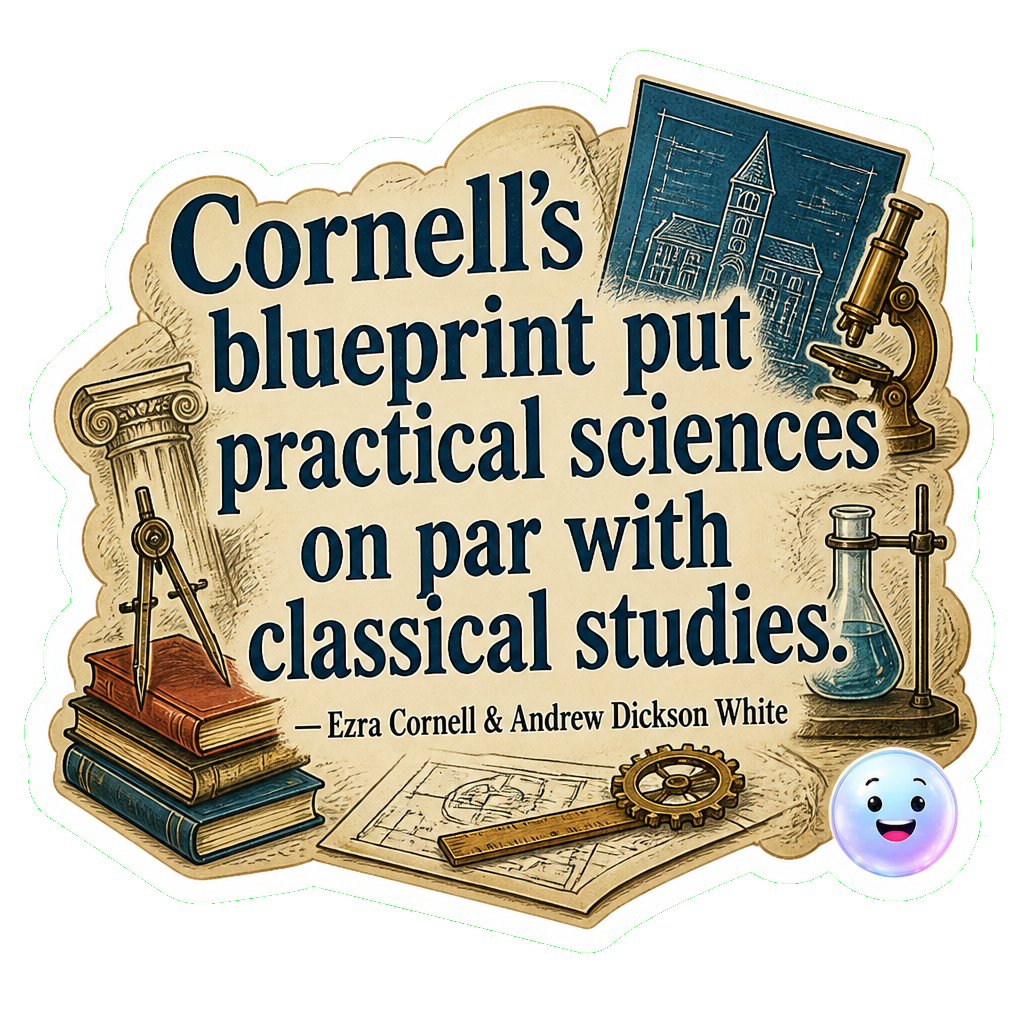
Cornell was designated as New York's land-grant institution under the 1862 Morrill Act, meaning it received federal funding to teach practical arts. By combining engineering and agriculture with philosophy and history, Cornell elevated practical sciences to the same academic status as traditional classical studies.
Chapter 1
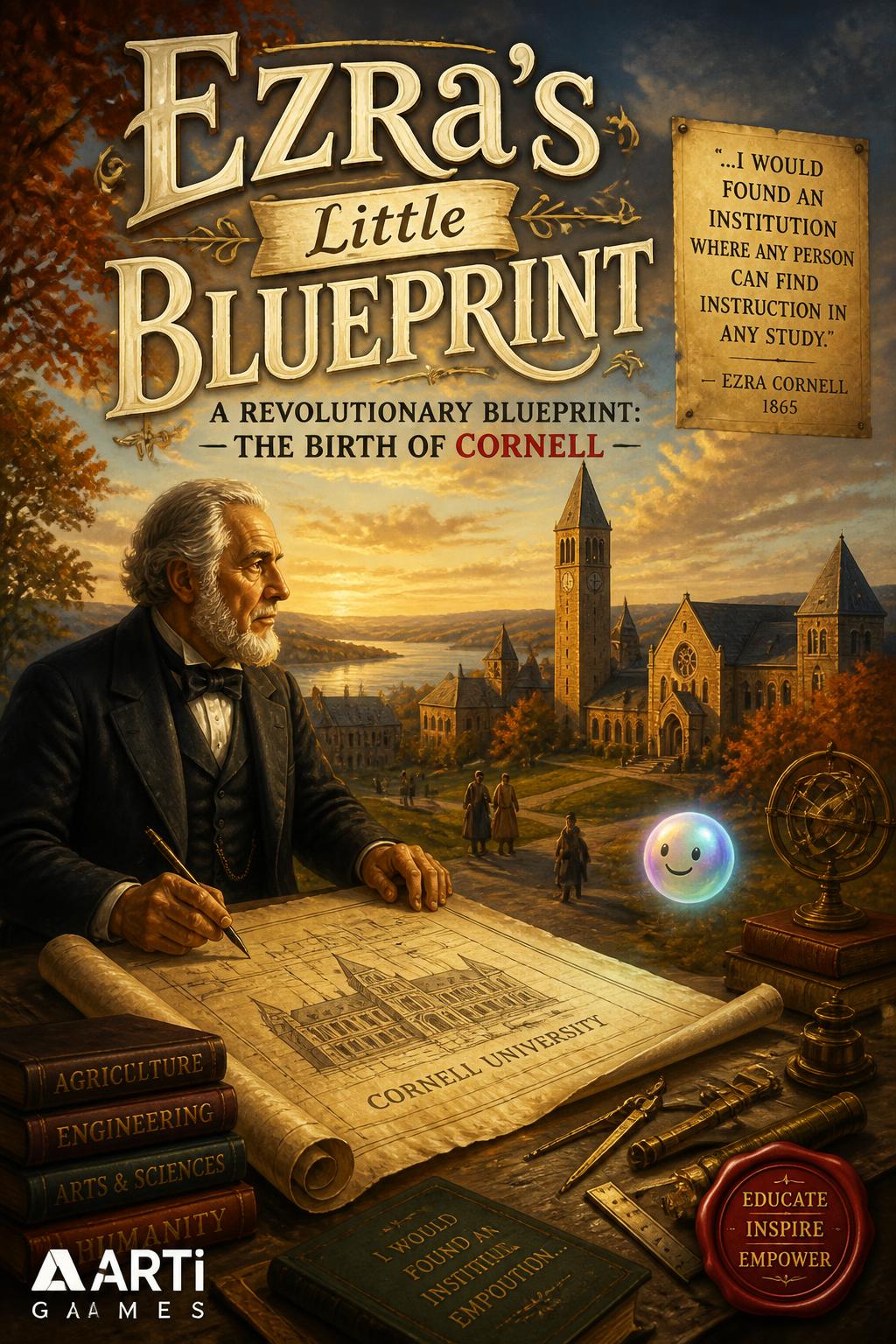
A revolutionary blueprint: the birth of Cornell
Chapter 2
Gorges, chimes, and slopes: the Ithaca campus
Chapter 3
From chicken nuggets to the cosmos: Cornellian innovations
Chapter 4
Dragons, pumpkins, and Slope Day: quirky campus culture
Ch 1 · A revolutionary blueprint: the birth of Cornell

diego By offering both agriculture and classical literature, Cornell pioneered the modern comprehensive university curriculum.
Fun Fact
Telegraph poles: Founder Ezra Cornell made his initial fortune by inventing a plow to lay telegraph wires underground, later moving them to poles.

diego Cornell broke steep barriers by admitting women and students of color right from its very first decade of operation.
Glossary
charter (noun)
A written grant by a country's legislative or sovereign power, by which an institution is created and its rights and privileges defined. On April 27, 1865, Governor Reuben Fenton signed the document officially establishing Cornell University.
A written grant by a country's legislative or sovereign power, by which an institution is created and its rights and privileges defined. On April 27, 1865, Governor Reuben Fenton signed the document officially establishing Cornell University.
BETA
diego Drag historic campus buildings onto the blueprint to discover how Ezra Cornell planned his university.
diego Cornell University revolutionized higher education by welcoming all fields of study.
Quiz
In what year did Cornell University officially open its doors to its first class of students?
Quiz
Why was Cornell's admission policy considered highly progressive in the late 19th century?