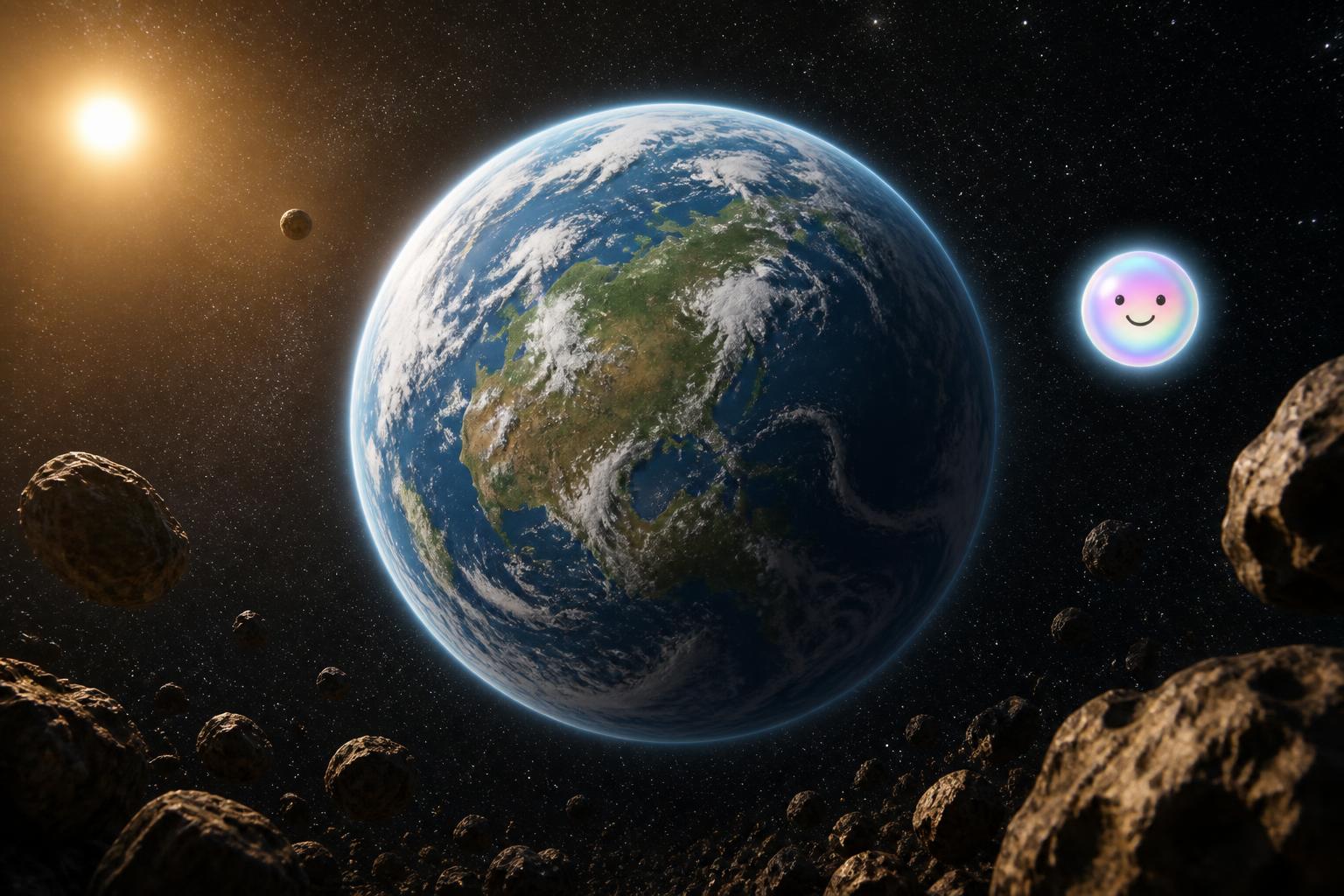
How Scientists Sonify Planetary Orbits
Discover how scientists scale up orbital frequencies by octaves to turn cosmic harmony into sounds the human ear can actually hear.
Meet the cosmic muse
Writing the stellar lyrics
Setting the planetary beat
Composing the cosmic atmosphere
justakid Experience the orbital polyrhythms of five planets translated into music in this video song about the Super Earth L98-59F.
justakid Watch how to turn planetary orbits into musical tempo to create a unique song about the Super Earth exoplanet L98-59F.
justakid Discover the science of sonification. Watch how data from the Super Earth L98-59F is translated into a unique astronomical song.
justakid Super Earth L 98-59 f
Just thirty-five light-years away, L ninety-eight fifty-nine f spins her twenty-three day beat!
justakid Learn how to select the perfect time signature when writing a song about the Super Earth exoplanet L98-59F in this music video guide.

justakid Play Super Earth Jam to create a planetary beat for the exoplanet L98-59F. Mix music and science in this educational space game.
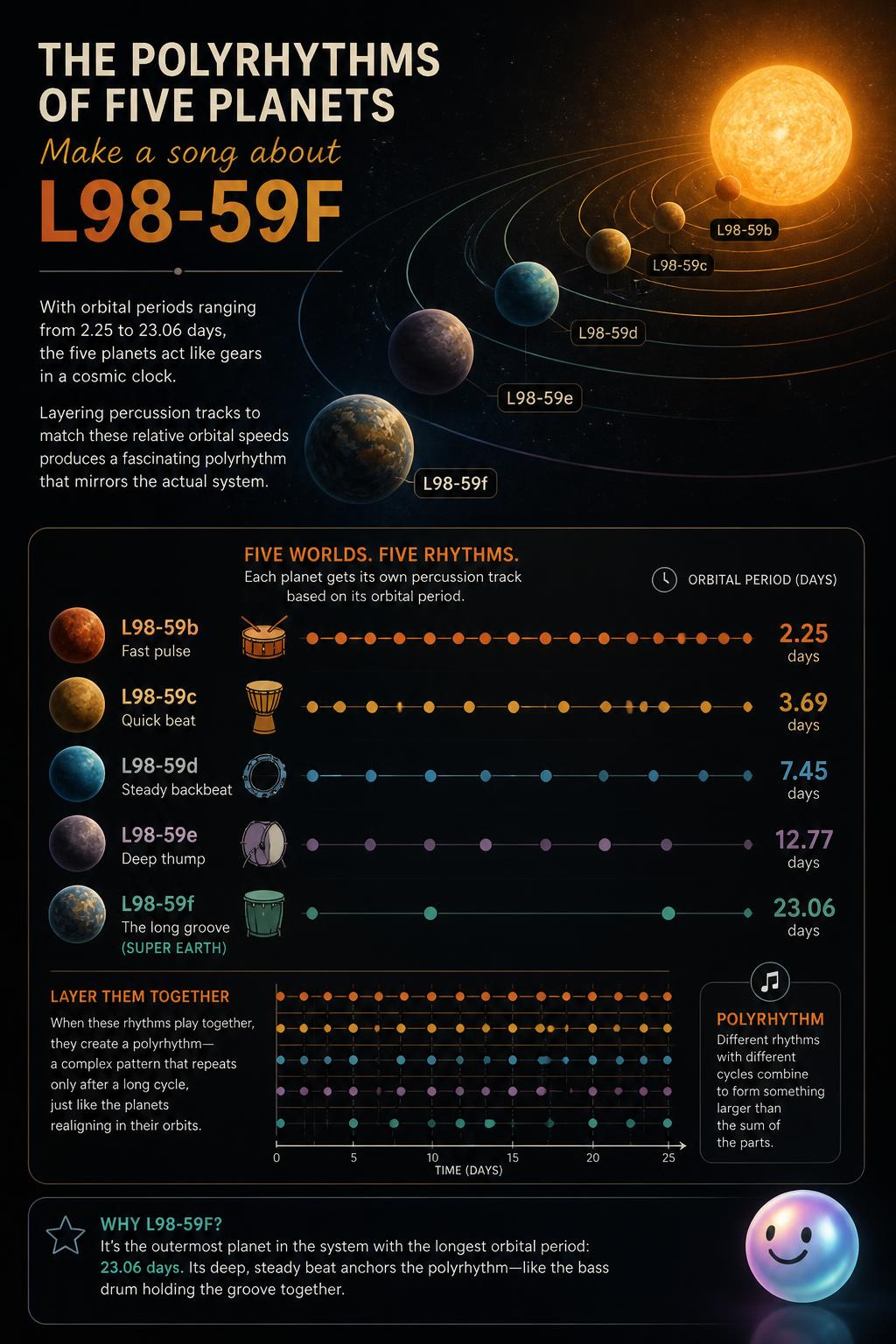
justakid The overlapping orbits of the L 98-59 system create complex, natural mathematical rhythms.
Cosmic harmony: When scientists sonify planetary orbits, they often scale up the frequencies by octaves so the human ear can actually hear the orbital harmony.
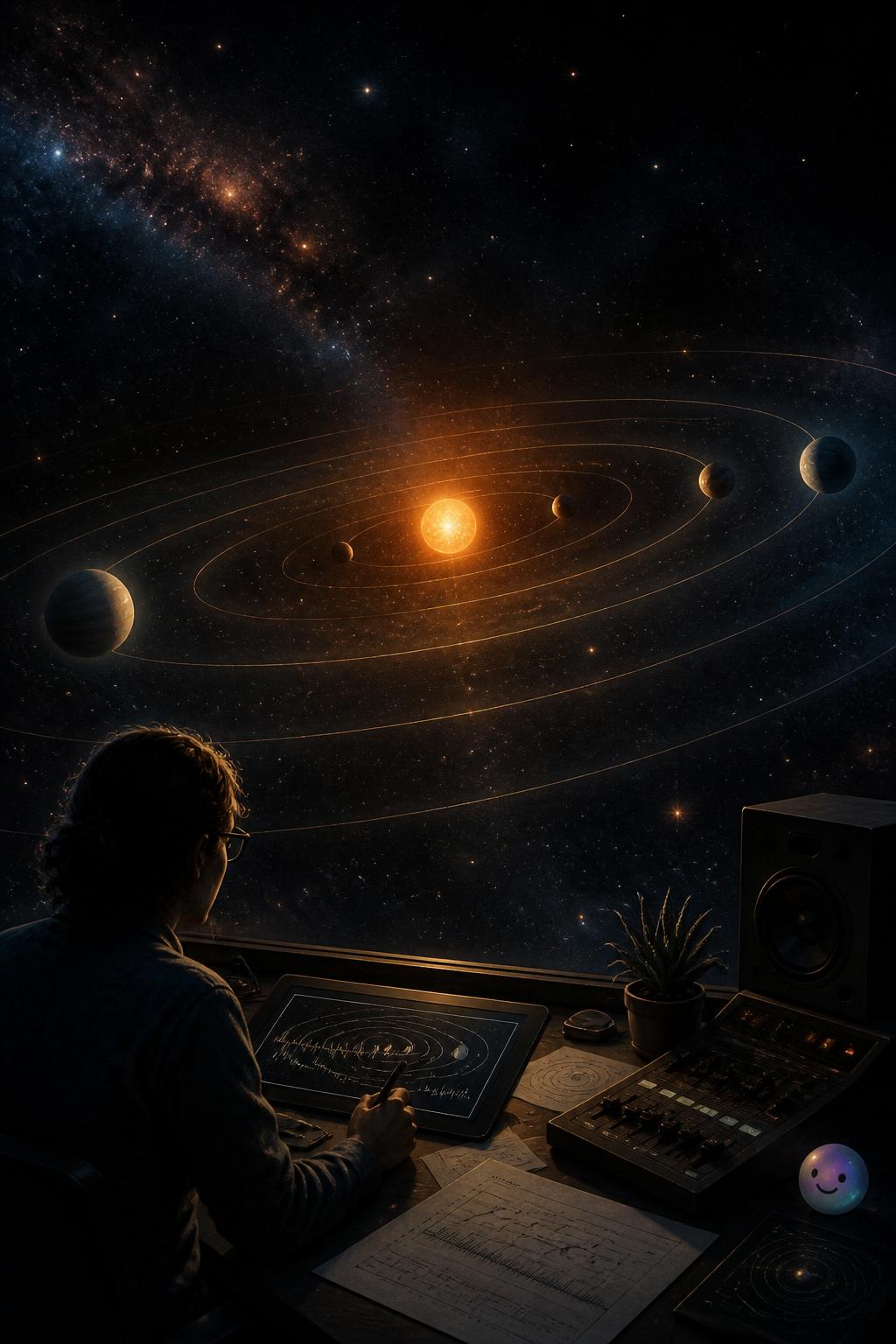
justakid You can use the 23-day orbit of L 98-59 f to calculate a custom tempo for your track.
The speed or pace at which a piece of music is played. Astronomers confirmed the 23-day orbit of super-Earth L98-59f in 2025, establishing the song's musical pace.
What is a polyrhythm in music, such as one representing the five L 98-59 planets?
Which of these is the most common time signature in Western music, often challenged by space-themed songs?
Which instrument would best represent the slow, heavy gravity of a super-Earth like L 98-59 f?
If we scale L 98-59 f's 23-day orbit directly to beats per minute (BPM), what is the resulting base tempo?
What is the scientific term for translating data from planets like L 98-59 f into sound?
How do the planets in the L 98-59 system avoid colliding despite their close orbits?