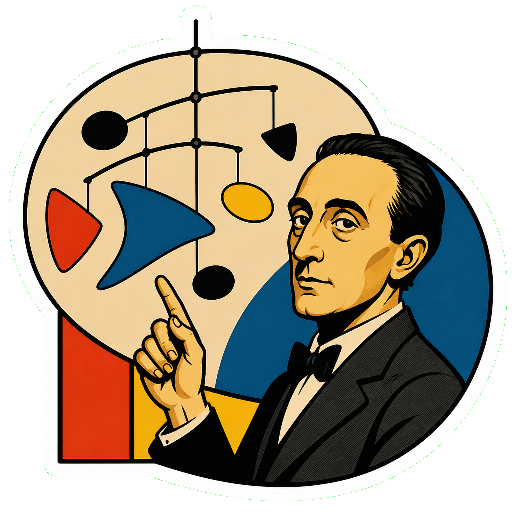


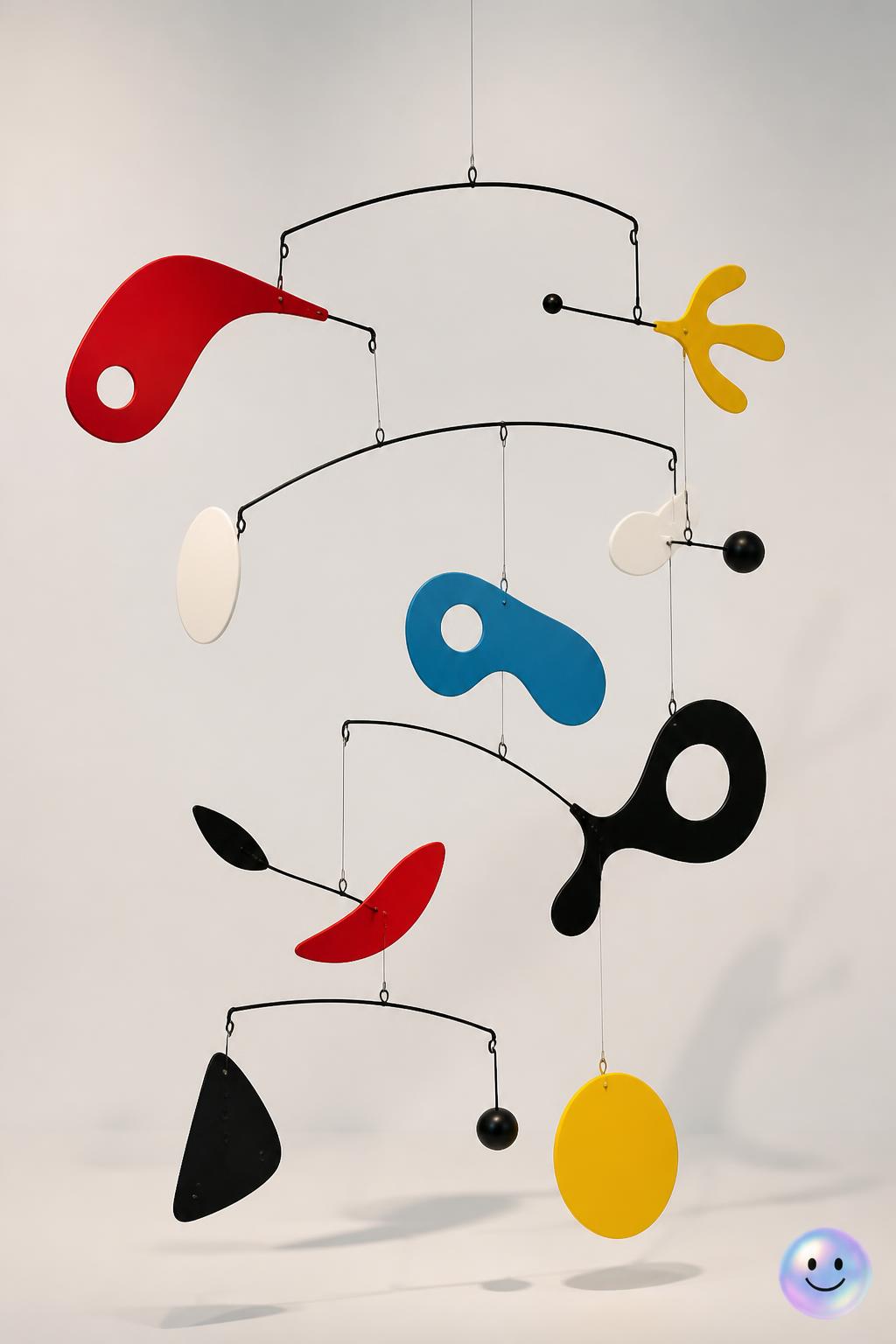
Tonos puros (rojo, amarillo, azul) con los que Calder pintaba las placas de sus móviles. El rojo era su favorito; estos colores actúan como un faro que guía el ojo a través del movimiento.
YOUR GOAL
Master of Making art move: Alexander Calder


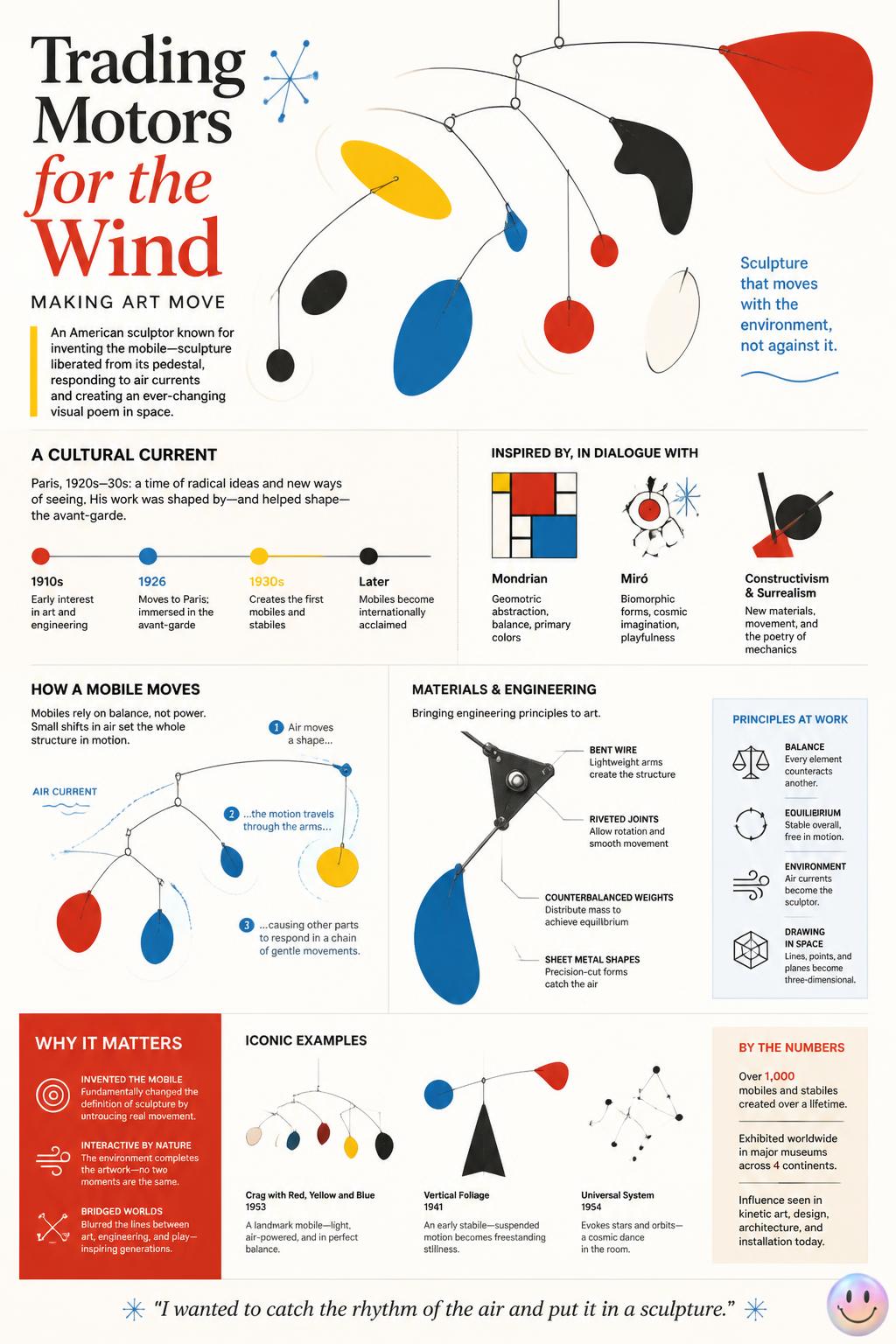
choko See how Alexander Calder moved from motorized sculptures to wind-powered kinetic art in this educational infographic.

choko Discover how Alexander Calder's moving art came to be called a mobile in this educational image from the Making Art Move series.

choko Play the Dancing Shapes game to explore kinetic sculptures. Balance shapes and colors to create your own moving art inspired by Alexander Calder.
Naming the mobile: The word "mobile" was suggested by artist Marcel Duchamp in 1931 because the French word double-means both "motion" and "motive."

In what year did Alexander Calder exhibit his first wind-driven, non-motorized hanging mobiles?
Who coined the term "mobile" to describe Alexander Calder's moving wire and metal sculptures?
Which famous abstract painter's studio did Alexander Calder visit in 1930, inspiring him to create abstract art?
What primary colors did Alexander Calder use most frequently to paint the flat metal plates of his mobiles?
What powered Alexander Calder's very first kinetic sculptures before he switched to natural air currents?
What did artist Jean Arp call Alexander Calder's non-moving, stationary abstract sculptures to contrast with "mobiles"?