The Imp of the Perverse: Edgar Allan Poe Video
In his 1845 essay-story "The Imp of the Perverse," Poe argues that humans possess an innate impulse to act against their own best interests. This concept predates Sigmund Freud's psychological theories of the "death drive" by several decades.
The birth of the detective story
Inside the unstable mind
Gothic doom and decaying castles
The music of grief and the raven's shadow


Early publication: Poe's 'The Tell-Tale Heart' was first published in 1843 in a short-lived pioneer magazine edited by the famous poet James Russell Lowell.

A storyteller whose credibility is significantly compromised due to bias, ignorance, or mental instability. Edgar Allan Poe famously utilized this technique in his 1843 tale about a paranoid, guilt-ridden narrator.
Which famous psychologist's theories on the subconscious did Edgar Allan Poe's 'The Imp of the Perverse' anticipate?
What sound ultimately drives the narrator to confess his crime in Edgar Allan Poe's 'The Tell-Tale Heart'?
What specific physical feature of the old man terrifies the narrator in 'The Tell-Tale Heart'?
What is the name of the first black cat in Edgar Allan Poe's 1843 story 'The Black Cat'?
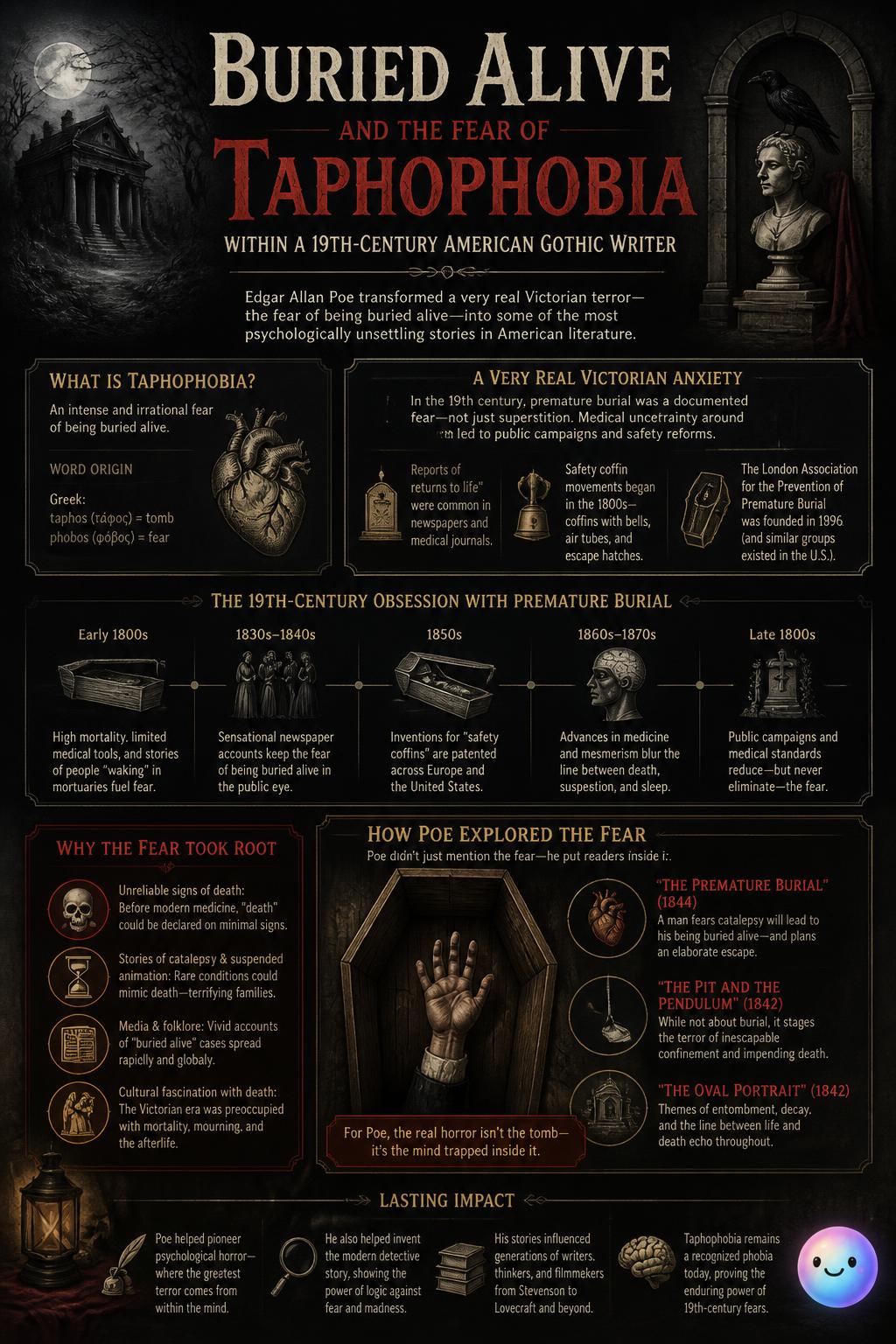
In 'The Premature Burial', what safety device does the narrator install in his family tomb?
What scientific term describes the intense, Victorian-era fear of being buried alive?
What did Edgar Allan Poe call the innate human urge to do wrong simply because it is forbidden?