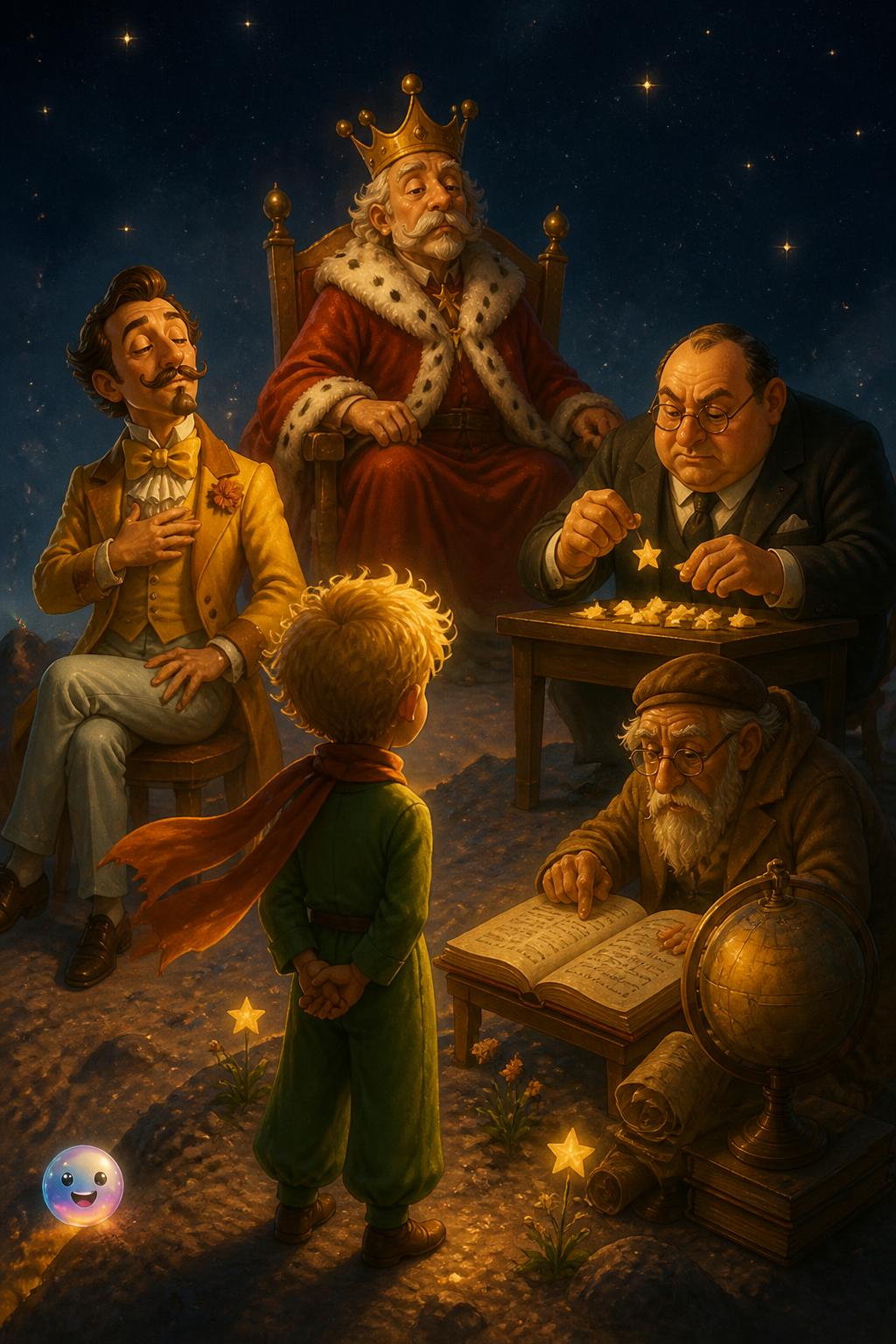
In Antoine de Saint-Exupéry's classic novella 'The Little Prince', what central philosophical critique is illustrated through the prince's encounters with the parade of foolish asteroid-dwelling adults, such as the King who rules over nothing and the Businessman who claims to own the stars?
The pilot behind the Prince
Asteroids, roses, and baobabs
Decoding the cosmic philosophy
A Little Prince travels the globe
YOUR GOAL
Master of The starlit wisdom of the Little Prince
schopenhauer Cosmic Philosophy
A pilot's lonely crash in the desert sand brought a quiet prince down from the stars.
schopenhauer Saint-Exupéry satirizes adult society in his 1943 novel The Little Prince.

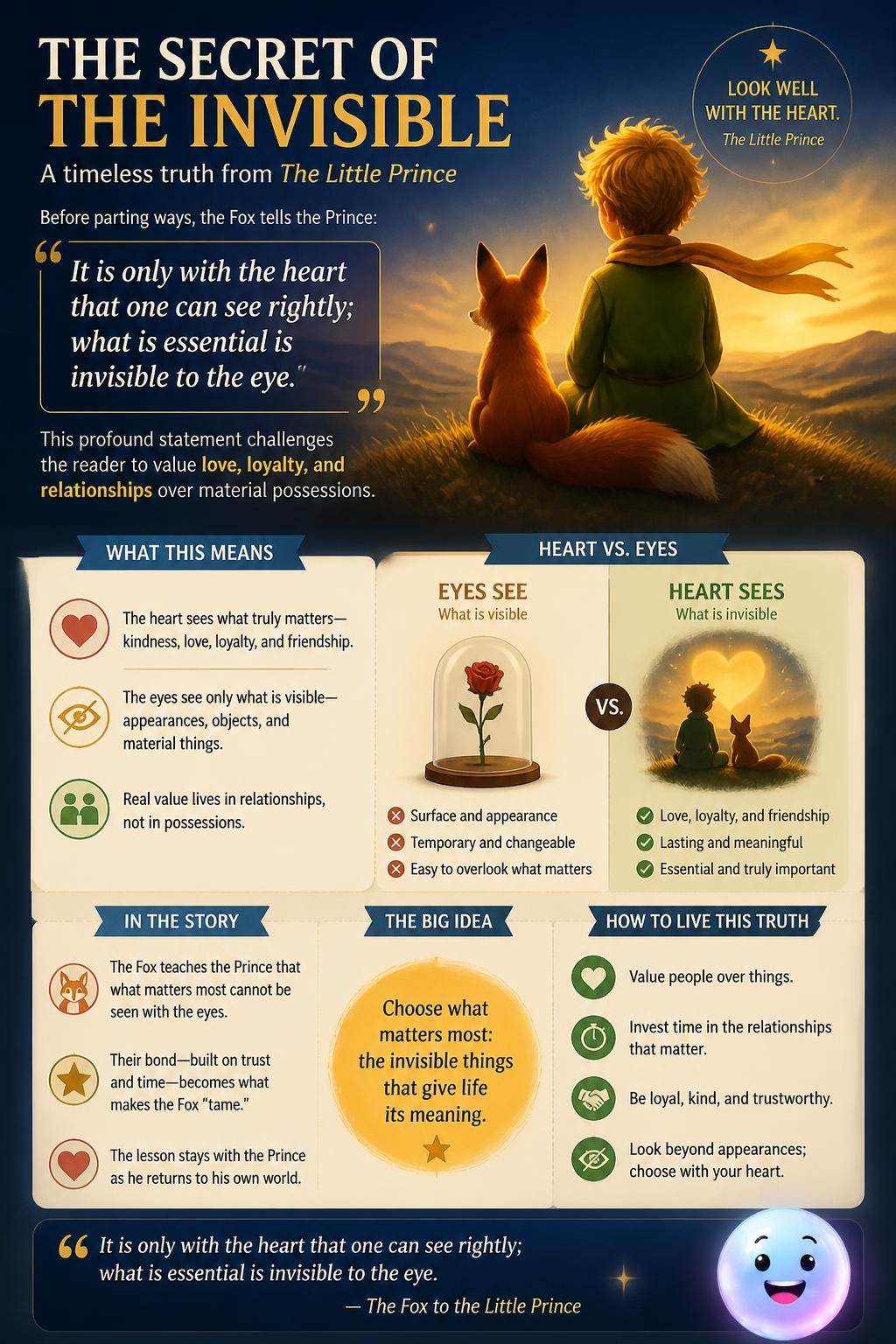
schopenhauer A colorful infographic card displays the famous parting words of the Fox.

schopenhauer A parade of eccentric kings and businessmen stands before the small prince

schopenhauer Sort the prince's asteroid encounters to discover the core themes of the classic story.
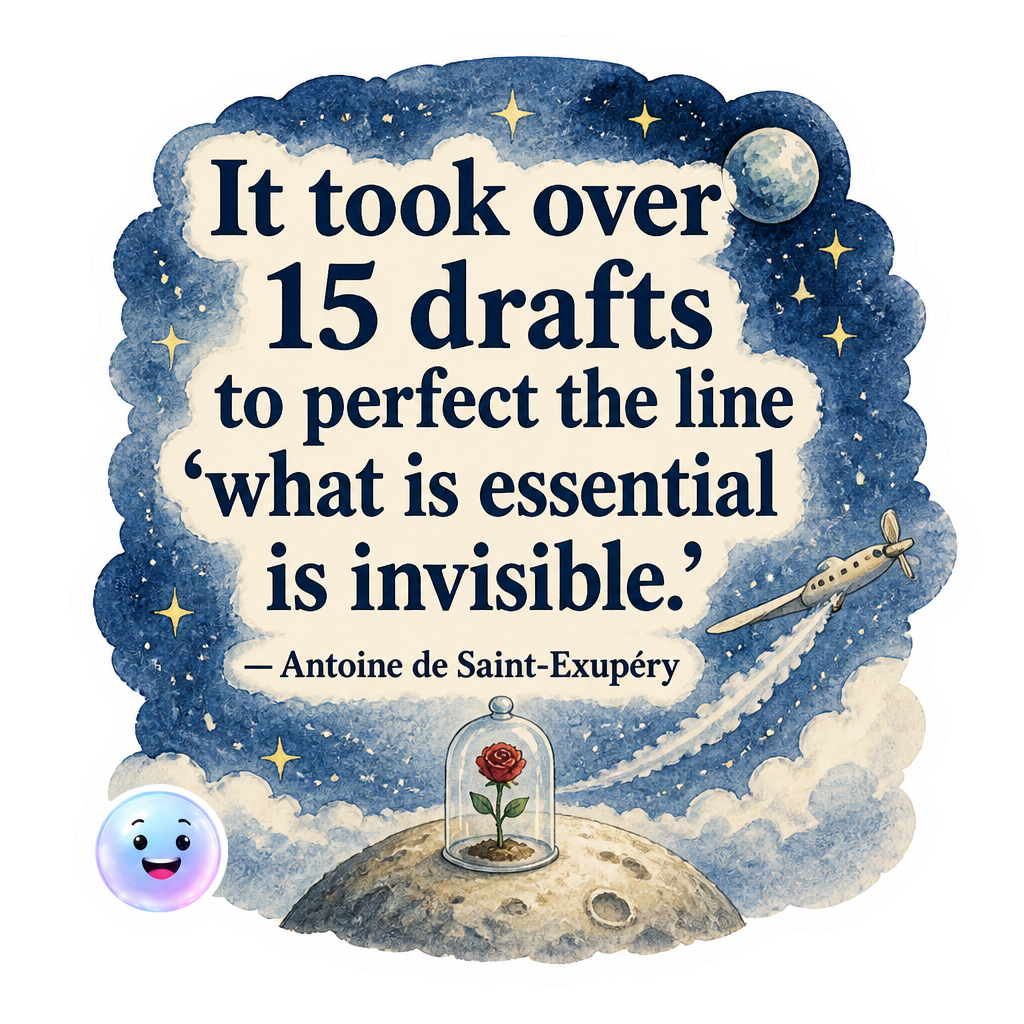
Invisible to eyes: Saint-Exupéry wrote the famous 'essential is invisible' line in over fifteen different drafts before perfecting it.
Lasting for a very short time. A geographer uses this word to describe flowers, prompting the little prince to regret abandoning his rose.
Which creature helps the Little Prince 'return' to his home planet at the end of the book?
Why is the Lamplighter the only adult whom the Little Prince actually respects?
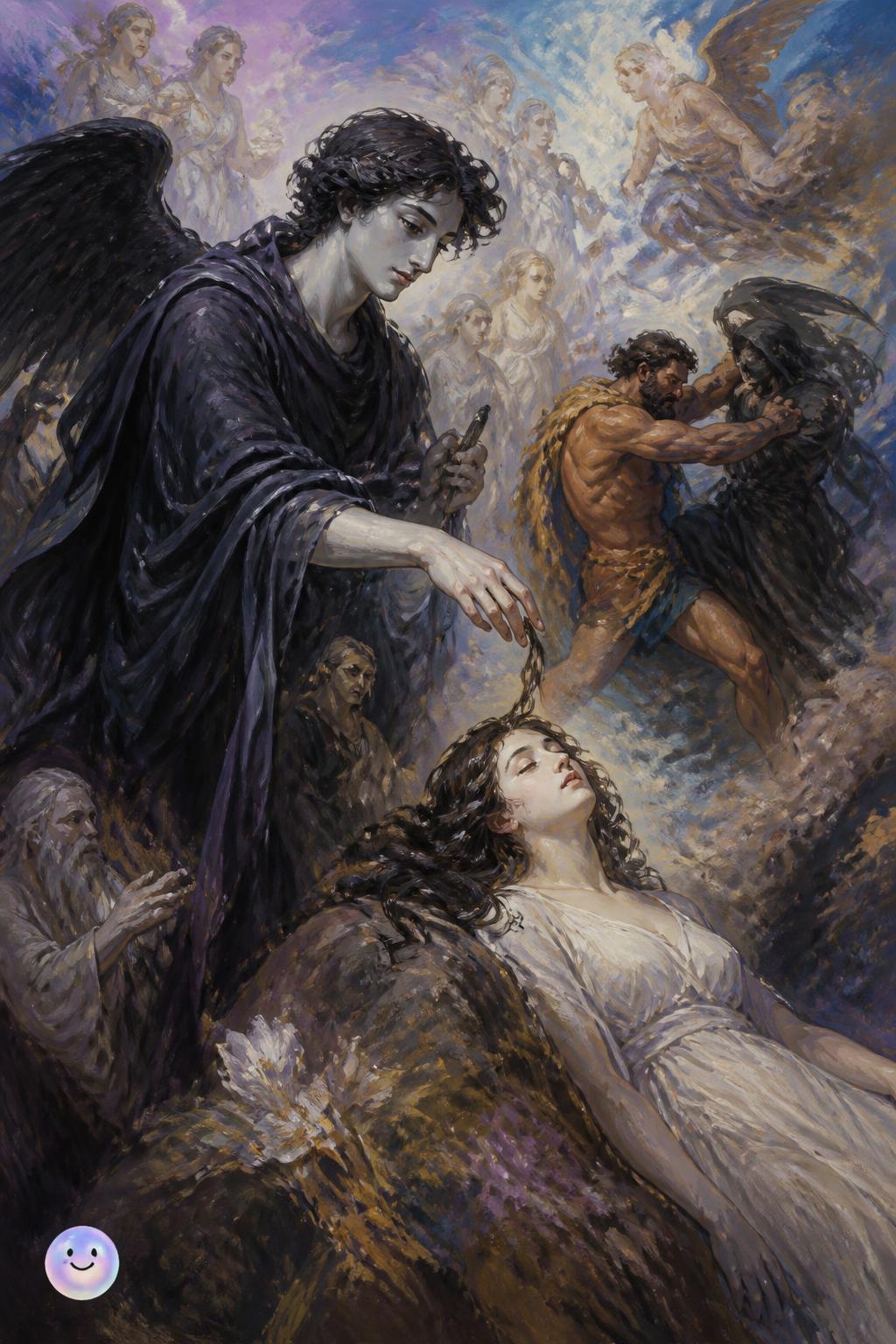
schopenhauer A golden snake bites the Little Prince in Antoine de Saint-Exupéry's tale.
What is actually inside the boa constrictor in the narrator's childhood drawing?
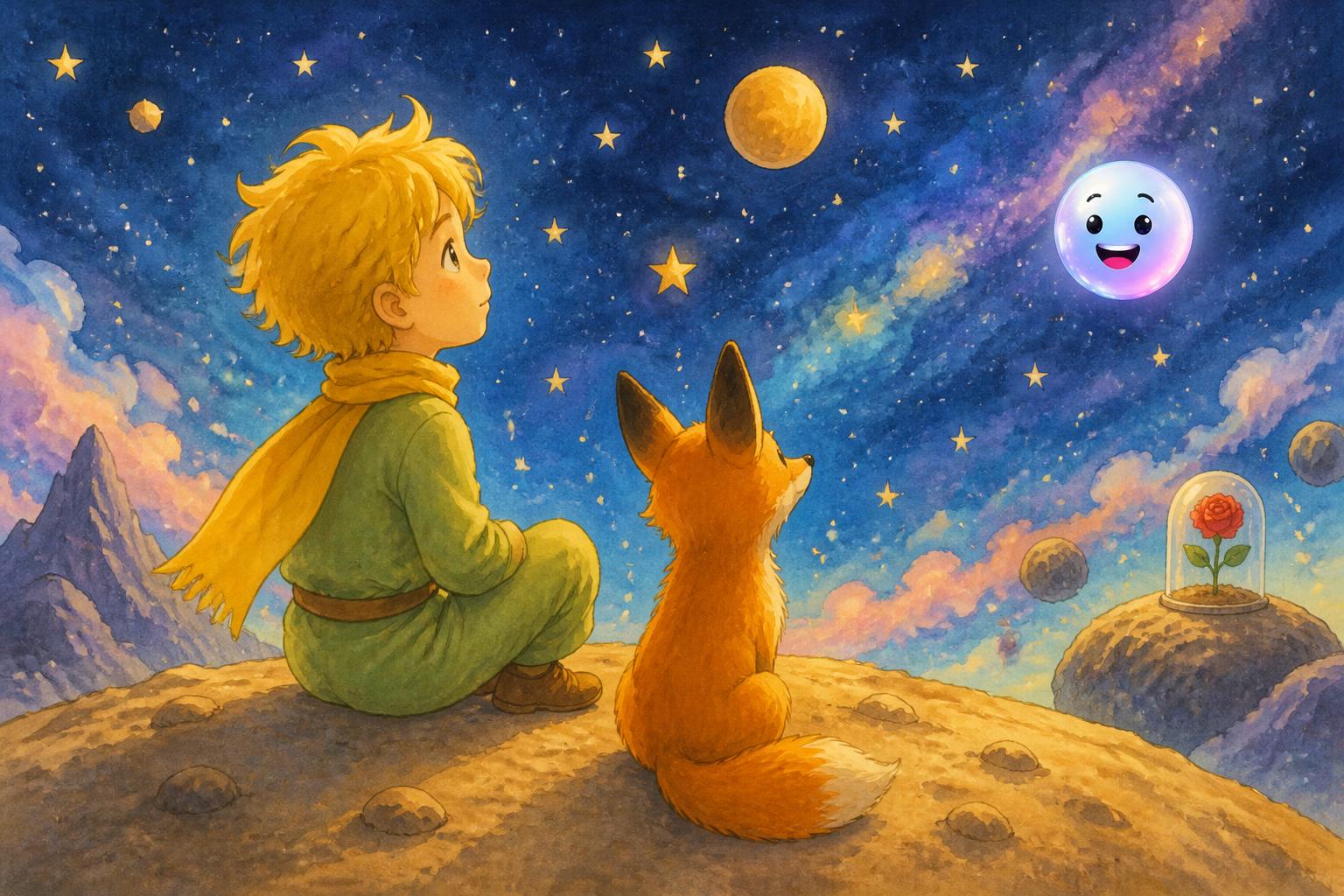
Complete the Fox's famous secret: 'It is only with the heart that one can see rightly; what is essential is...'
Why does the Geographer on the sixth asteroid refuse to map the planets himself?