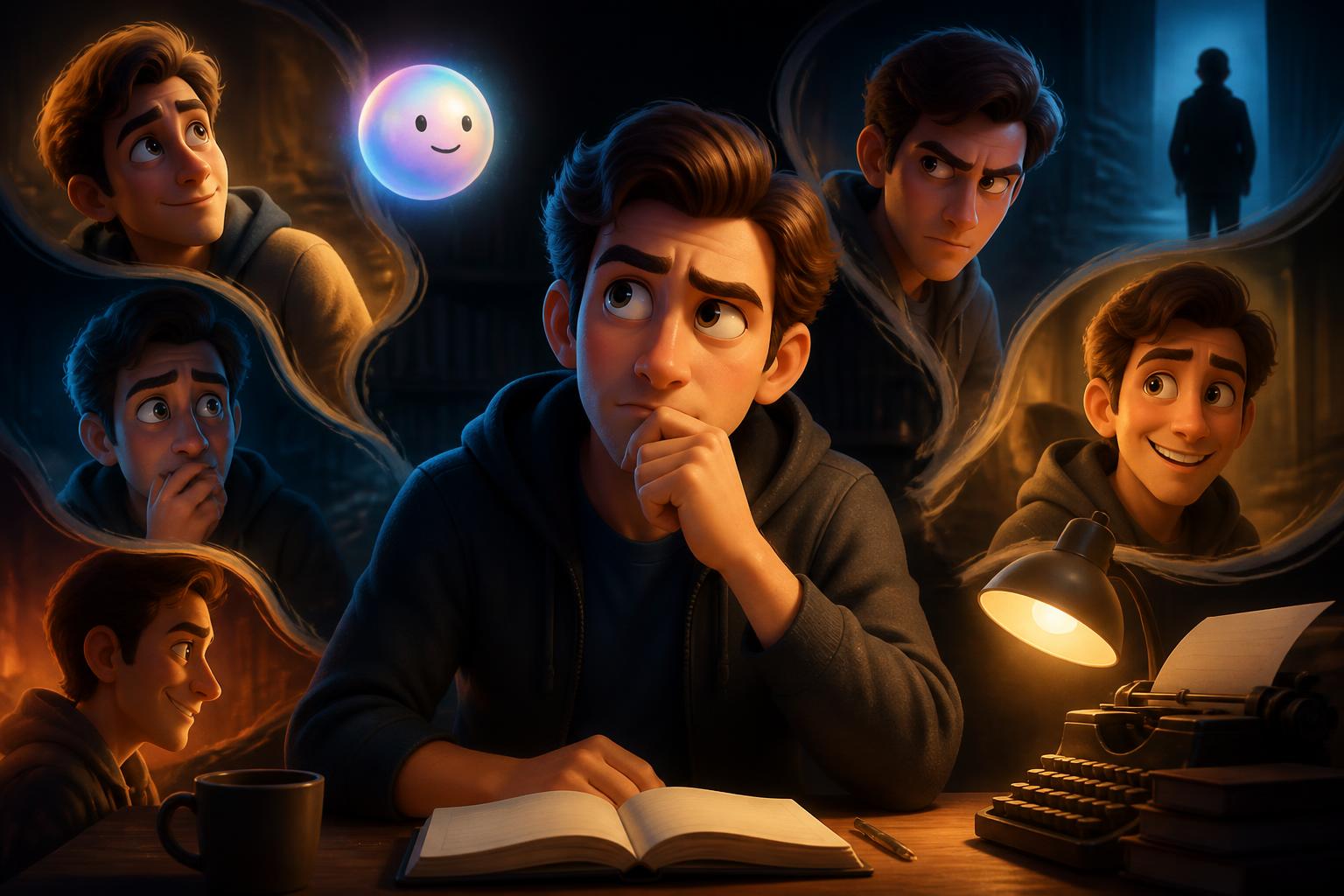
Origin of the Term Red Herring
Discover the 1807 story behind the term 'red herring' and how smoked fish were used to distract hunting hounds from a scent trail.
The psychology of the lie
Masterpieces of the page
Screen-tested deception
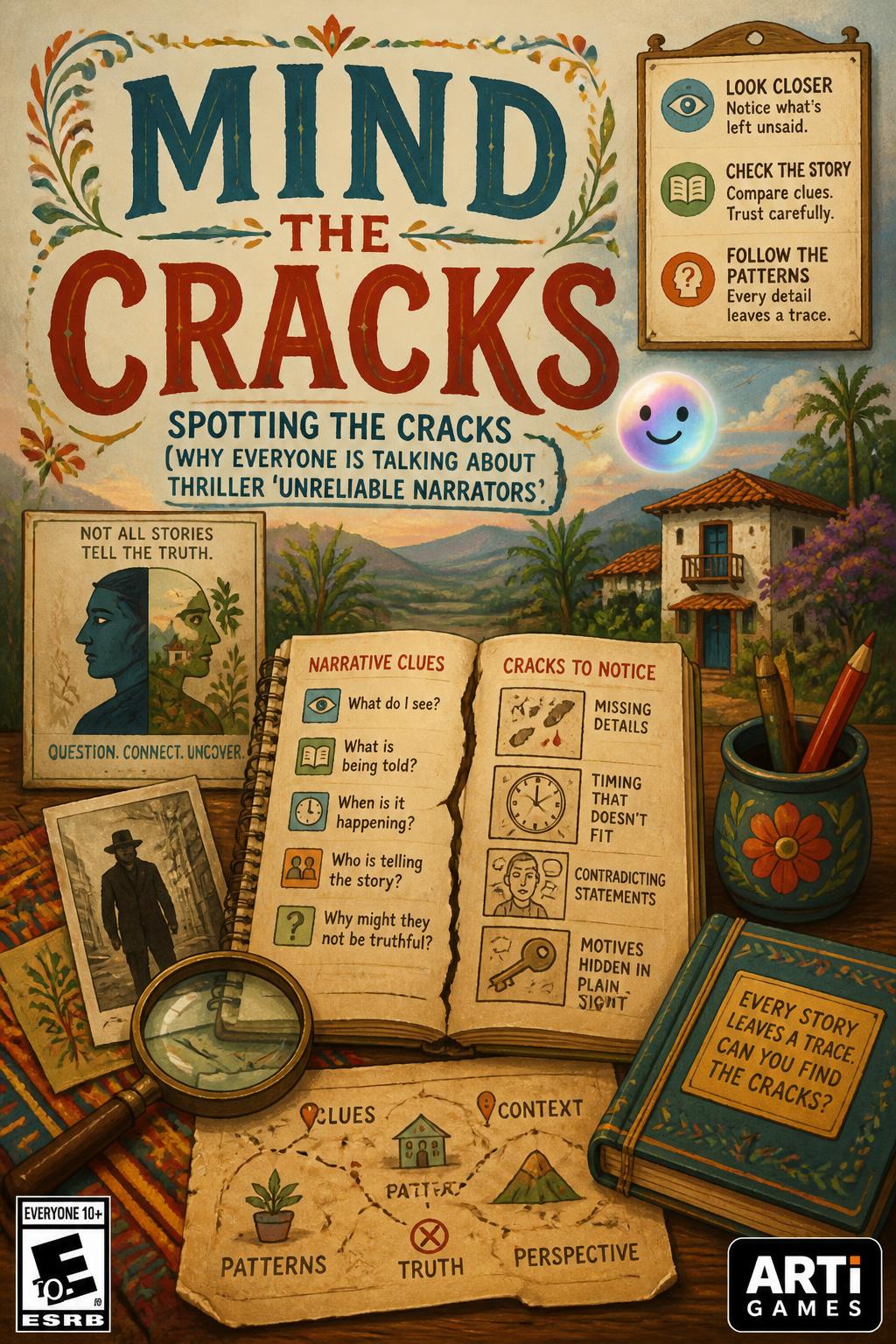
Spotting the cracks
elmo Writers use red herrings to distract readers while hiding the real clues in plain sight. This fair play technique builds a satisfying twist for your unreliable narrator.
elmo Animation shows how a second reading alters a story. Knowing the plot twist beforehand makes hidden clues stand out as obvious warnings.
elmo Readers expose dishonest characters by tracking clues of contradiction where actions mismatch words. Spotting over-explained innocence and extreme bias reveals the dark truths characters try to hide.
elmo Fictional liars turn stories into mental training grounds. Solving these narrative puzzles sharpens the critical thinking skills needed to spot digital manipulation and fake news in daily life.
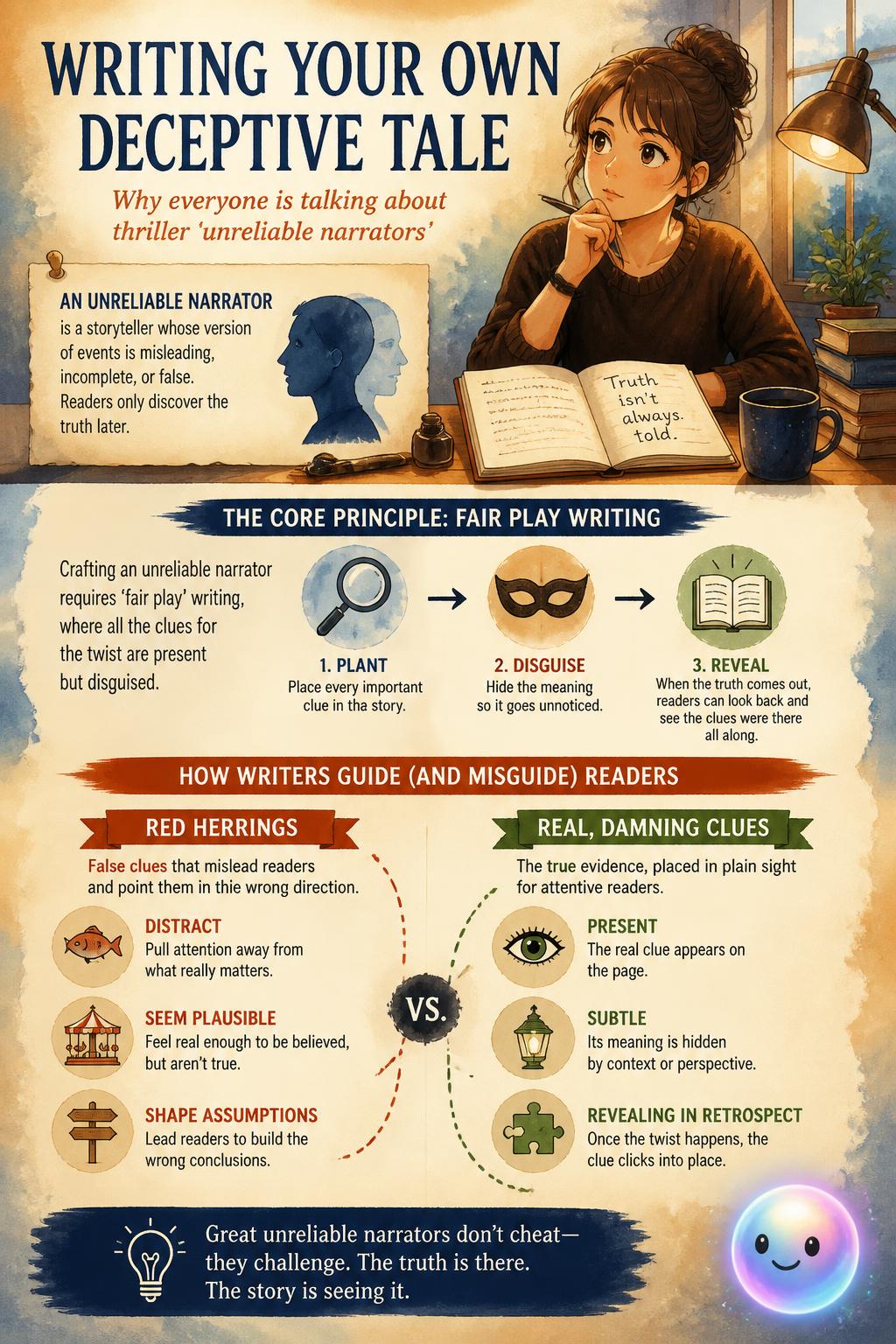
elmo Authors must carefully balance giving clues to the reader without spoiling the big reveal.
Fishy origins: The term 'red herring' comes from an 1807 story about using smelly, smoked fish to distract hunting hounds from a scent trail.
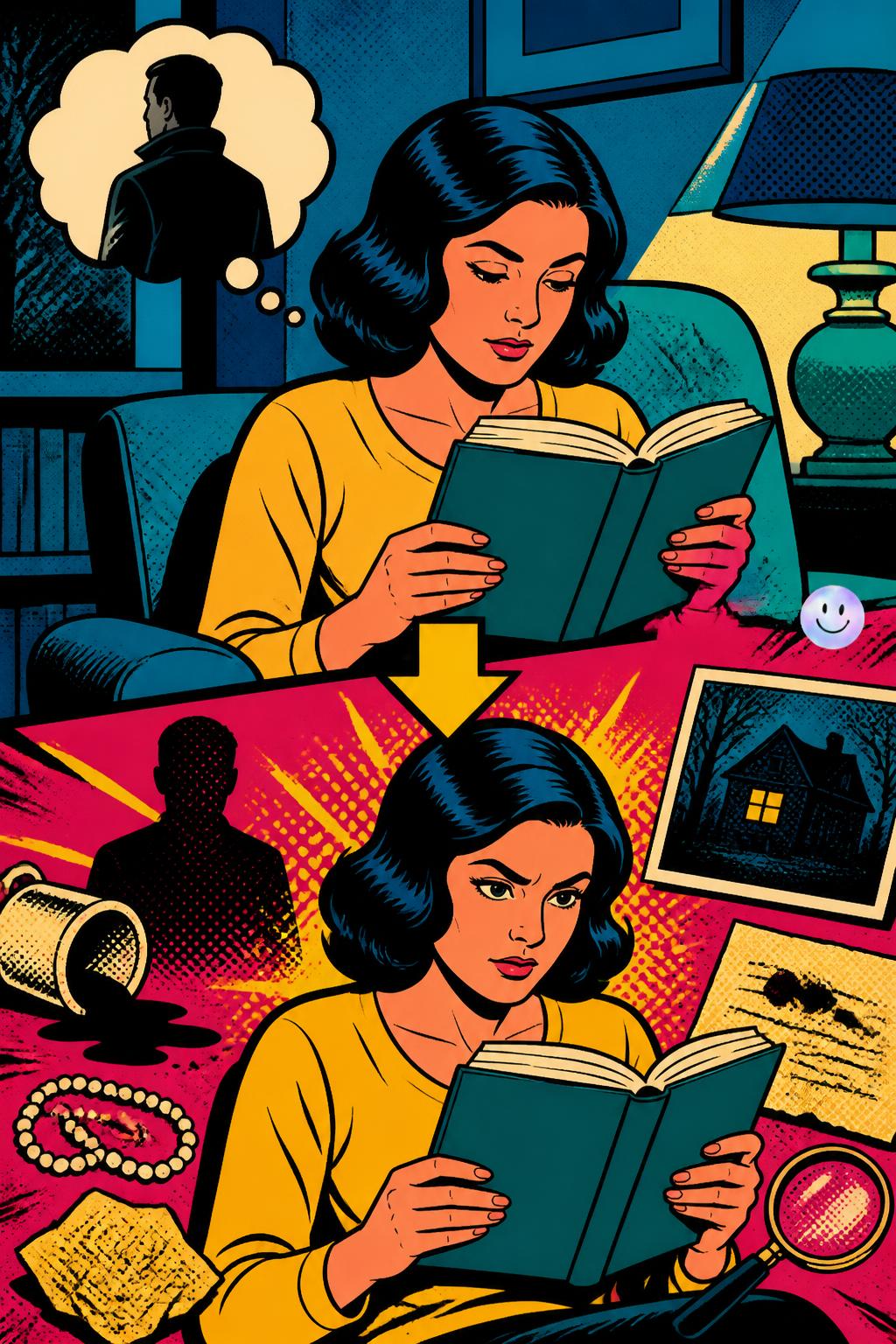
elmo Re-reading a thriller with an unreliable narrator reveals a completely different, hidden story.
A literary character whose credibility is compromised, making their account of events untrustworthy. Readers uncover these deceptive figures by tracking subtle contradictions, like those in Paula Hawkins's 2015 psychological thriller.
Why do psychologists believe unreliable narrators help improve real-world critical thinking?
What is the literary term for a false clue designed to distract the reader from the actual culprit or truth?
What is the process of re-reading a story with full knowledge of the twist called in literary theory?
Which of the following is a key sign that a narrator might be hiding something from the reader?
What is the term for a situation where the audience knows a vital piece of information that the characters do not?