Sparking the big idea
Structuring the skeleton
Breathing life into characters
Building the world
melodiccitron A character's external goals often conflict with their deep internal needs.
melodiccitron Want Versus Need
They'll chase what they want to the end of the line, to find what they really need.
melodiccitron Storytellers distinguish between deep psychological archetypes and flat character stereotypes.
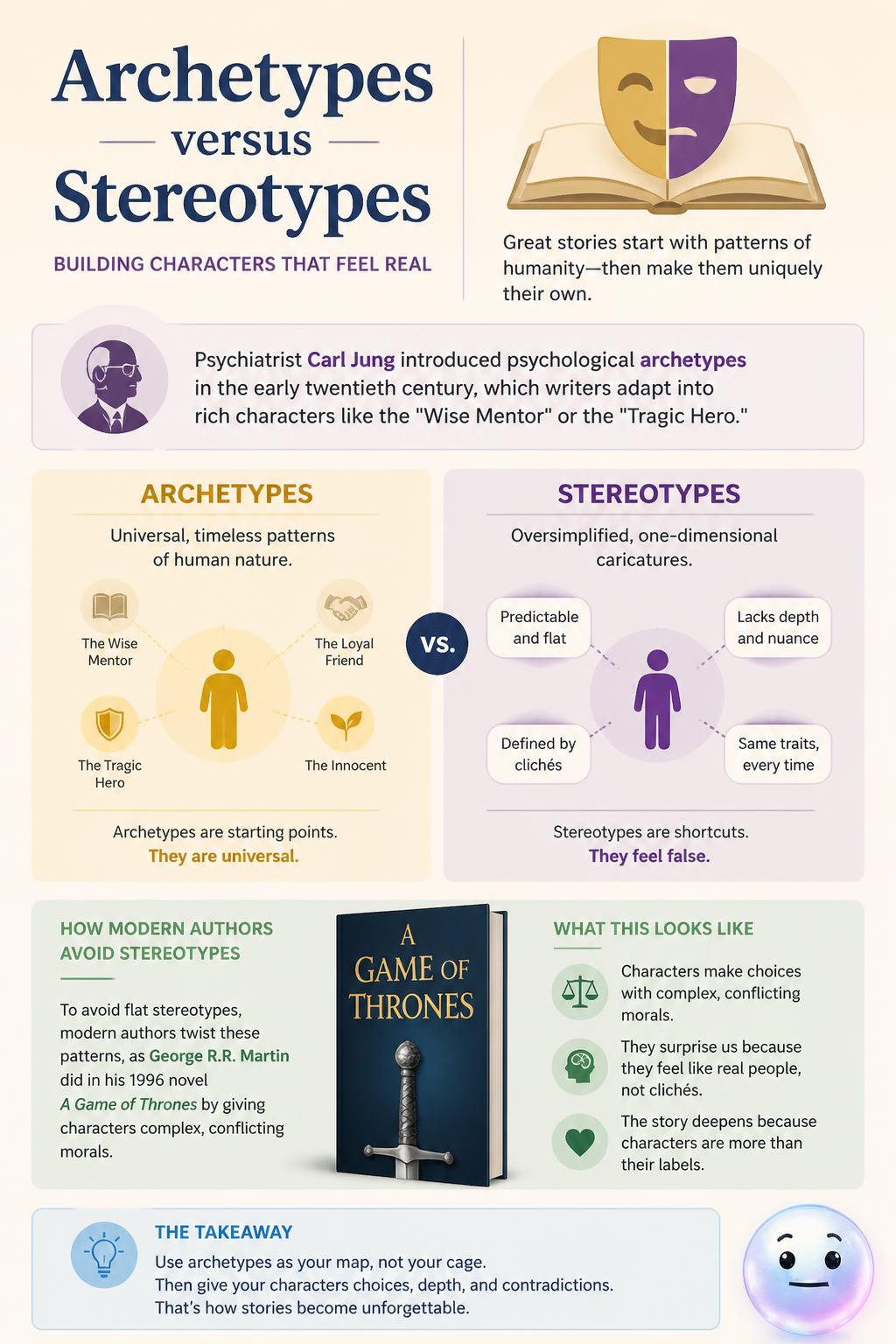
melodiccitron George R.R. Martin's 1996 novel A Game of Thrones twisted Carl Jung's archetypes to create characters with conflicting morals.

melodiccitron Greek drama introduced hamartia to show how internal weaknesses drive a story forward.
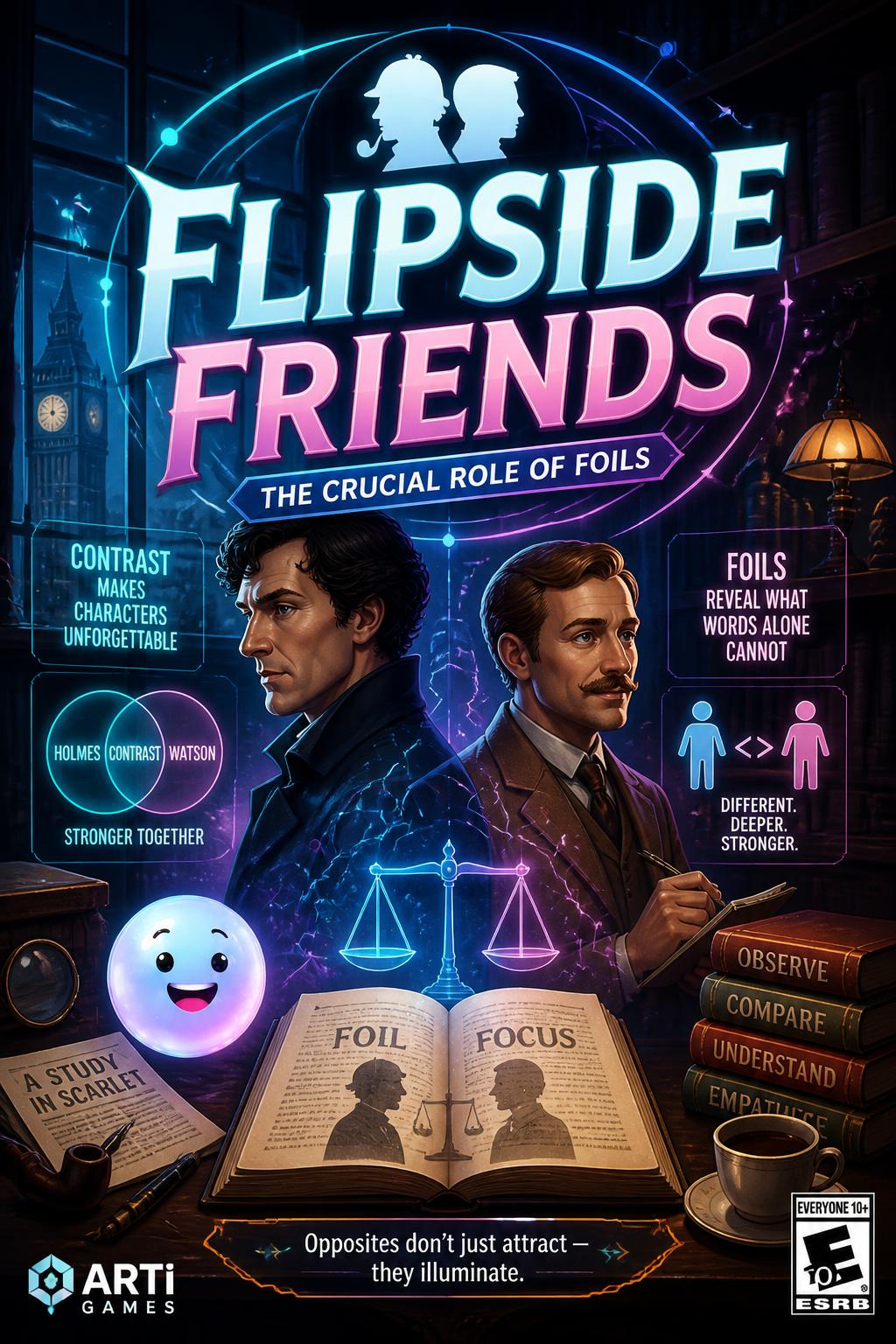
melodiccitron Flip the character cards to discover how seeing both sides builds stronger friendships.
Sherlock's real inspiration: Arthur Conan Doyle based Sherlock Holmes on his university professor, Dr. Joseph Bell, who could diagnose patients instantly.
The artistic representation or creation of a fictional character's traits, personality, and physical appearance. Mary Shelley's 1816 novel Frankenstein remains a landmark study in the psychological characterization of a tragic monster.
Which early twentieth-century Swiss psychiatrist introduced the concept of psychological archetypes that writers use to build characters?
How do modern authors successfully prevent their archetypal characters from becoming flat, boring stereotypes?
Why are character flaws considered essential tools for writers when developing a protagonist?
What ancient Greek theatrical term refers to a protagonist's tragic or fatal flaw, such as excessive pride?
Which character serves as the practical, grounded foil to the eccentric Sherlock Holmes in Arthur Conan Doyle's detective stories?
What is the primary literary purpose of using a "foil" character in a story?
In F. Scott Fitzgerald's 1925 novel The Great Gatsby, what is Jay Gatsby's primary external goal?
What is the difference between a character's "want" and their "need" in creative writing?