Aizome and the deep secrets of Japanese indigo
Sashiko and stitching strength from scraps
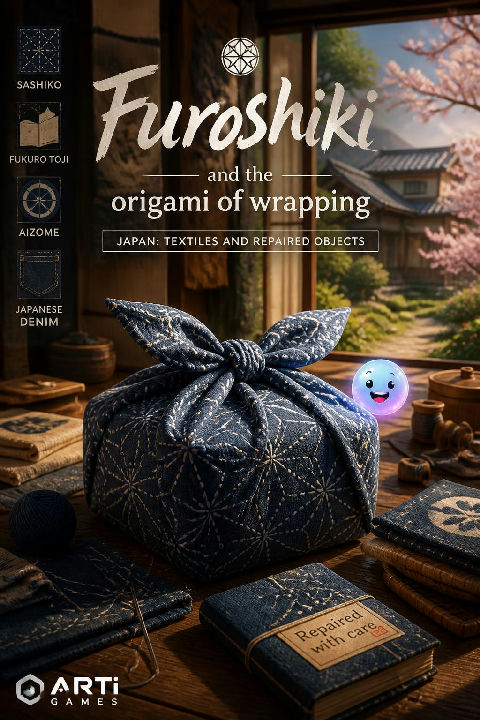
Furoshiki and the origami of wrapping
Fukuro toji and the art of the bound book
Japanese denim and the vintage obsession
YOUR GOAL
Master of How Japan mends wraps and dyes the world

매운김치 Furoshiki Wrapping Cloth
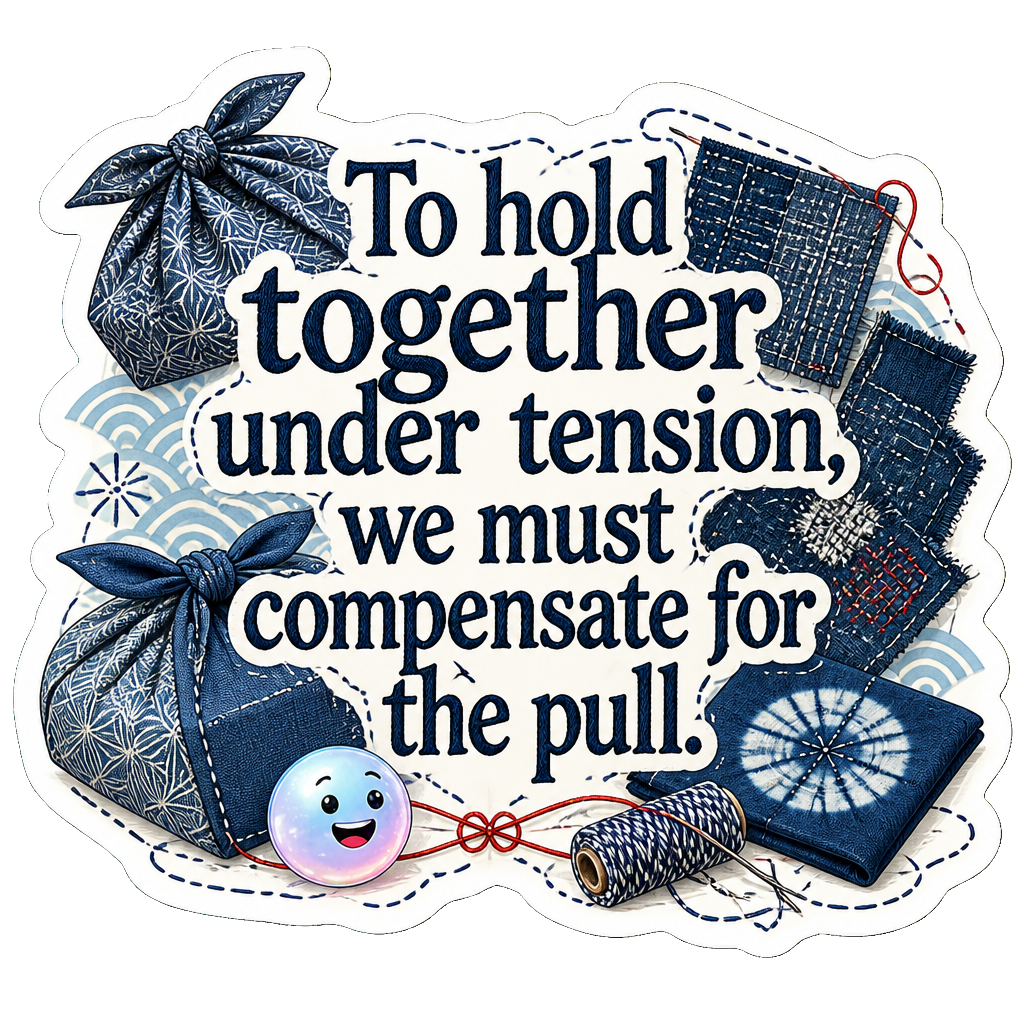
One simple square of cloth folds fourteen different ways, holding sake bottles with a double-knot, or a heavy melon safe without a rip
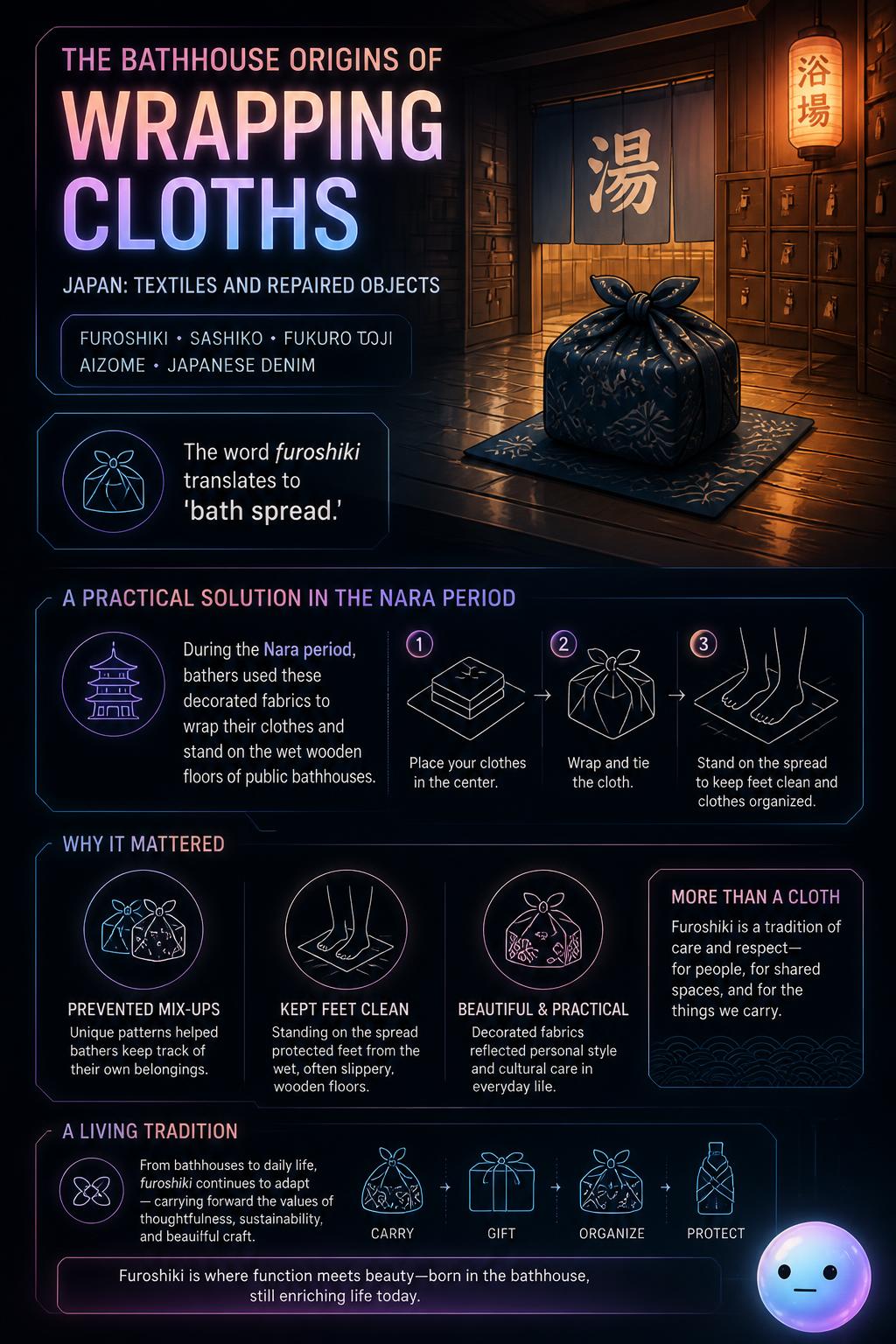
매운김치 Nara period bathers used decorated cloths to wrap their clothes and stand on wet wooden floors, preventing public bathhouse mix-ups
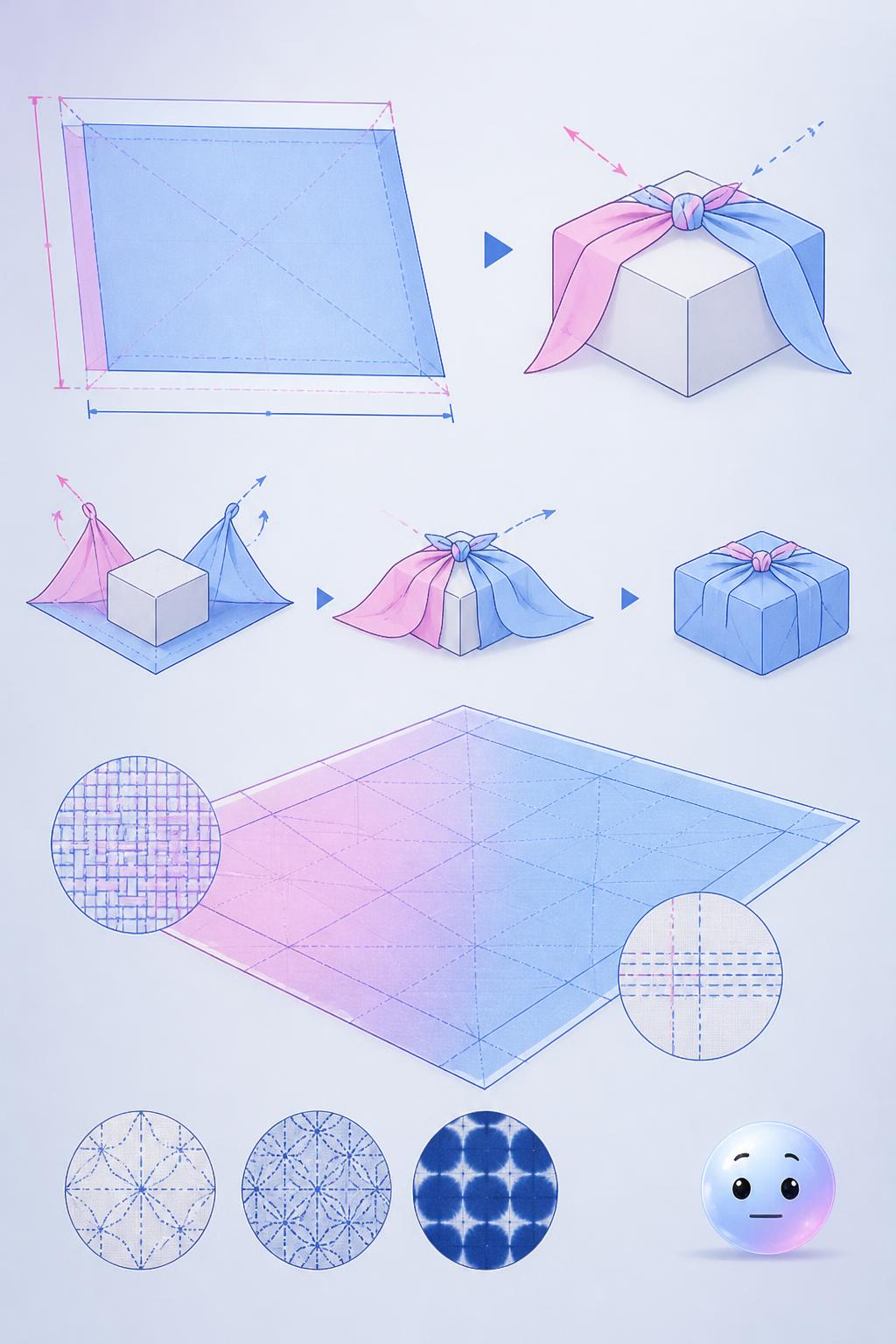

매운김치 Fold the cloth corners to master the traditional Japanese art of furoshiki wrapping.
Furoshiki sizes: Furoshiki cloths range from small handkerchief sizes for wrapping money envelopes to massive bedsheet-sized cloths used for packing futons.
A square piece of traditional Japanese wrapping cloth used to transport, protect, or decorate goods. Originating during the Nara period, these versatile cloths were later used in bathhouses to protect belongings.
In which historical Japanese capital did the practice of using furoshiki first become popular?
What is the traditional woven ratio of a furoshiki called, where the length is slightly longer than the width?
Why are traditional furoshiki cloths woven to be slightly rectangular instead of perfect squares?
How many wine bottles can be securely carried together using a single standard furoshiki wrap?
Which Japanese government agency launched a major campaign to revive furoshiki in 2006?