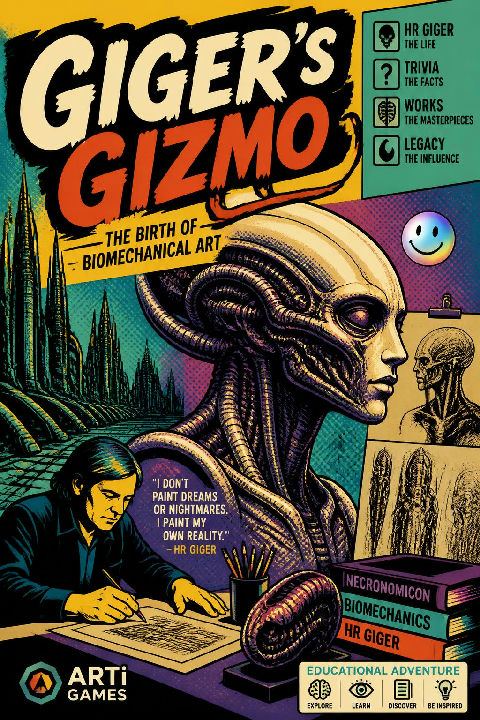
The birth of biomechanical art
The creation of a cinematic nightmare
Beyond the movie screen
Walking inside the nightmare
YOUR GOAL
Master of The biomechanical world of H.R. Giger

schopenhauer Biomechanical Art
I fuse the cold machine with bones to soothe my midnight fear, And paint a biomechanical world where nightmares disappear.
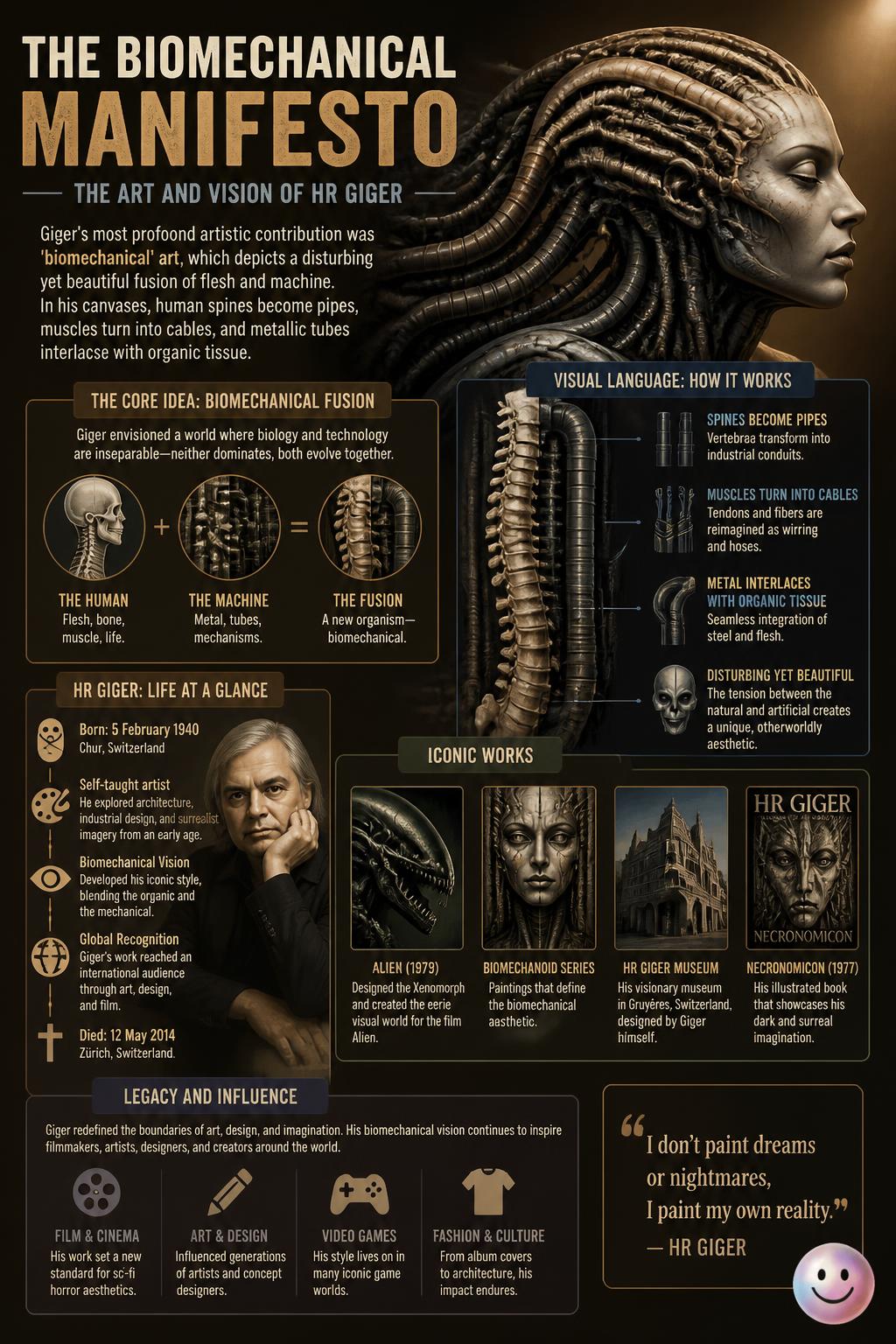
schopenhauer Giger pioneered 'biomechanical' art, a surreal genre where human anatomy seamlessly fuses with cold, metallic machinery.

schopenhauer Giger's discovery of the airbrush allowed him to create the incredibly smooth, metallic, and unsettling textures that defined his style.
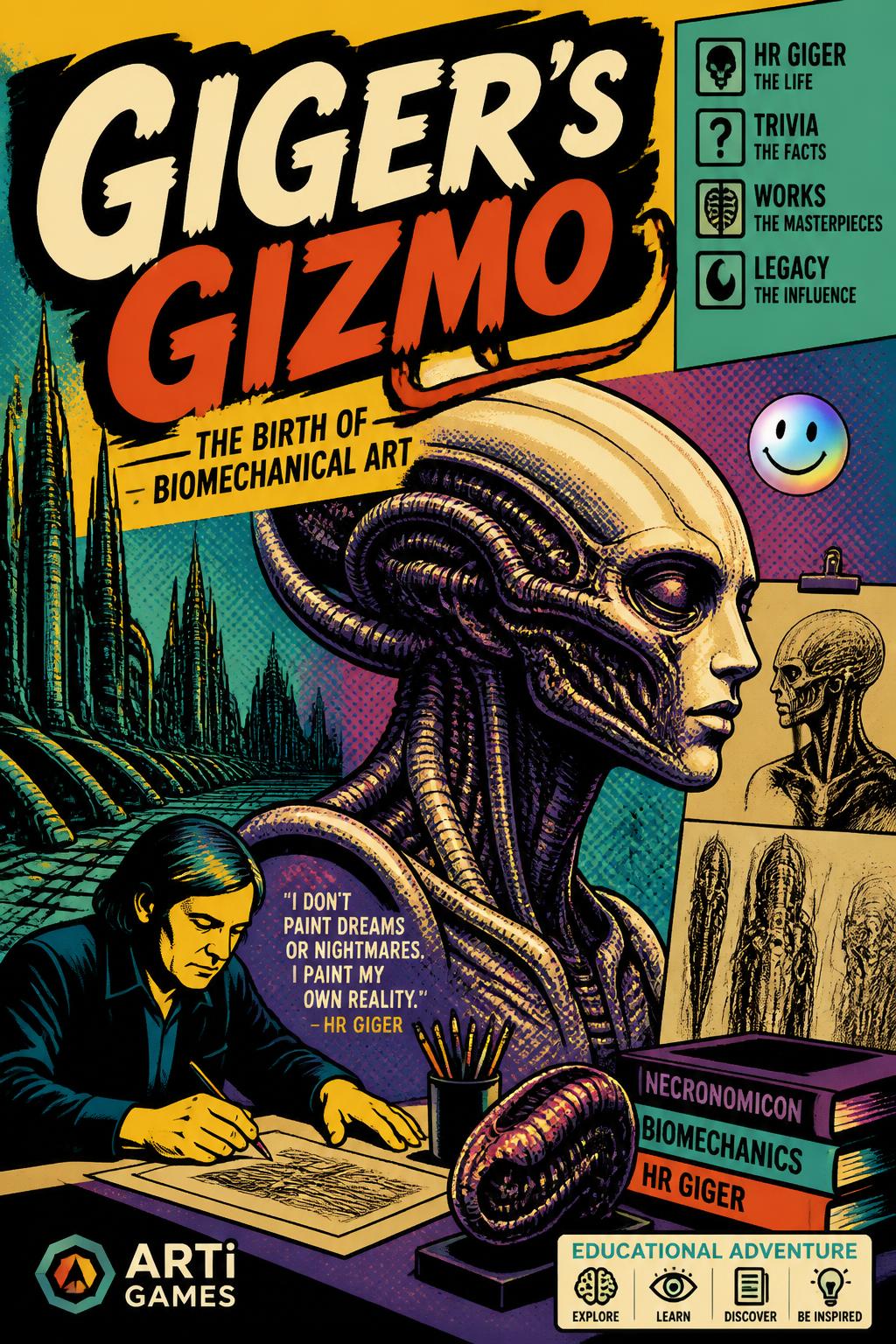
schopenhauer Sort Giger's iconic creations to learn the secrets of his biomechanical art style.
Early art criticism: When H.R. Giger first displayed his dark, biomechanical artwork in a Swiss gallery, outraged neighbors actually spit on the gallery's windows.
Relating to the mechanical laws concerning the movement or structure of living organisms. Swiss artist H.R. Giger popularized this aesthetic in 1969 with his surreal Biomechanoiden print series.
What did H.R. Giger study at the School of Applied Arts in Zurich starting in 1962?
schopenhauer The early life and nightmare-inspired art of Swiss creator Hans Ruedi Giger.
What psychological experience did H.R. Giger credit as the primary inspiration for his dark art?
How did neighbors react to H.R. Giger's early, unsettling art exhibitions in Switzerland?
What is the name of the art style pioneered by H.R. Giger that fuses organic bodies with machines?
Who was H.R. Giger's longtime partner, muse, and model who tragically passed away in 1975?
Which painting tool did H.R. Giger adopt in the 1970s to achieve his signature smooth, metallic look?