
How do purple sea urchins primary crawl and grip onto vertical
How do purple sea urchins primary crawl and grip onto vertical underwater rocks?
Chapter 1
The spiky anatomy of a living pin cushion
Chapter 2
The great kelp forest battle
Chapter 3
From tidepools to science labs and dinner plates
Ch 1 · The spiky anatomy of a living pin cushion

sonia Purple Sea Urchin
I don't need eyes because my tiny tube feet see everything around me!
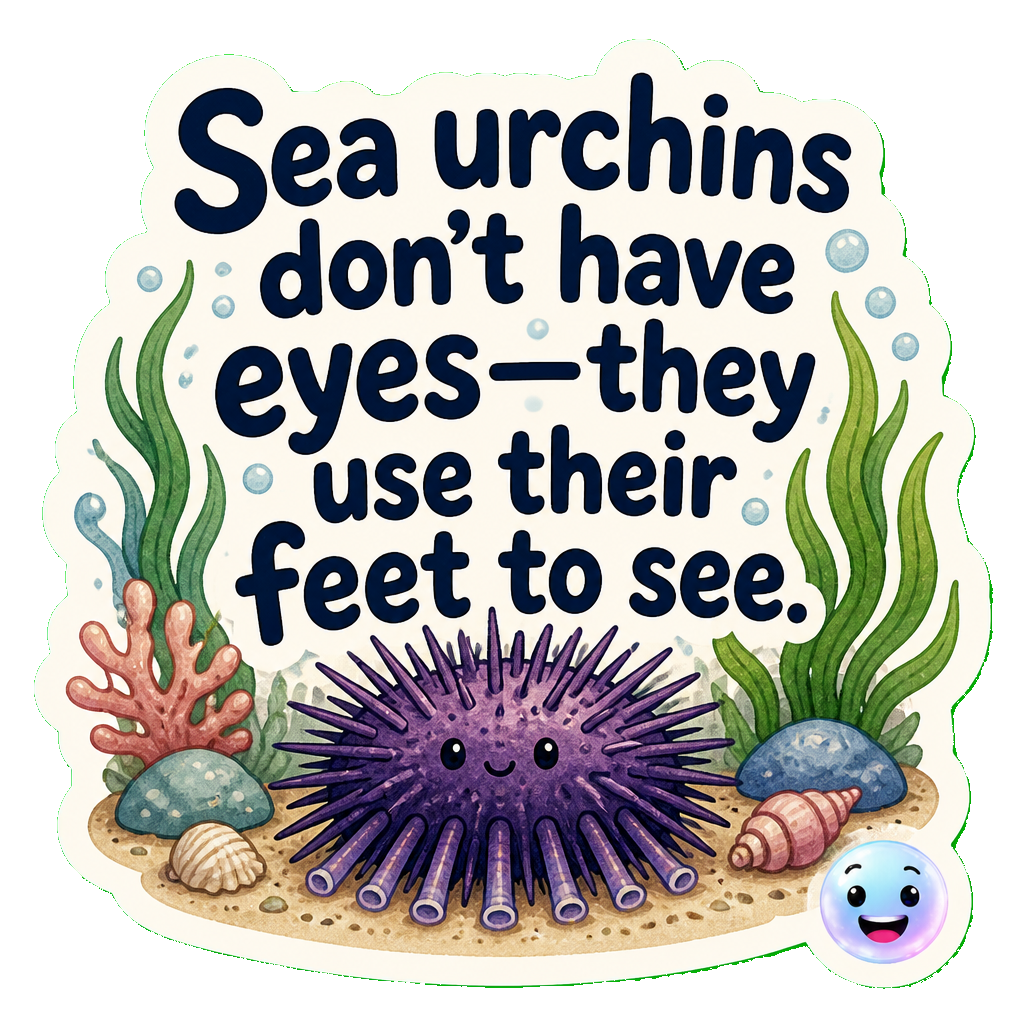
sonia Researchers in 2011 found light-sensitive cells at the base of their tube feet. This whole-body vision helps them pinpoint shadows to avoid predators and find dark crevices.
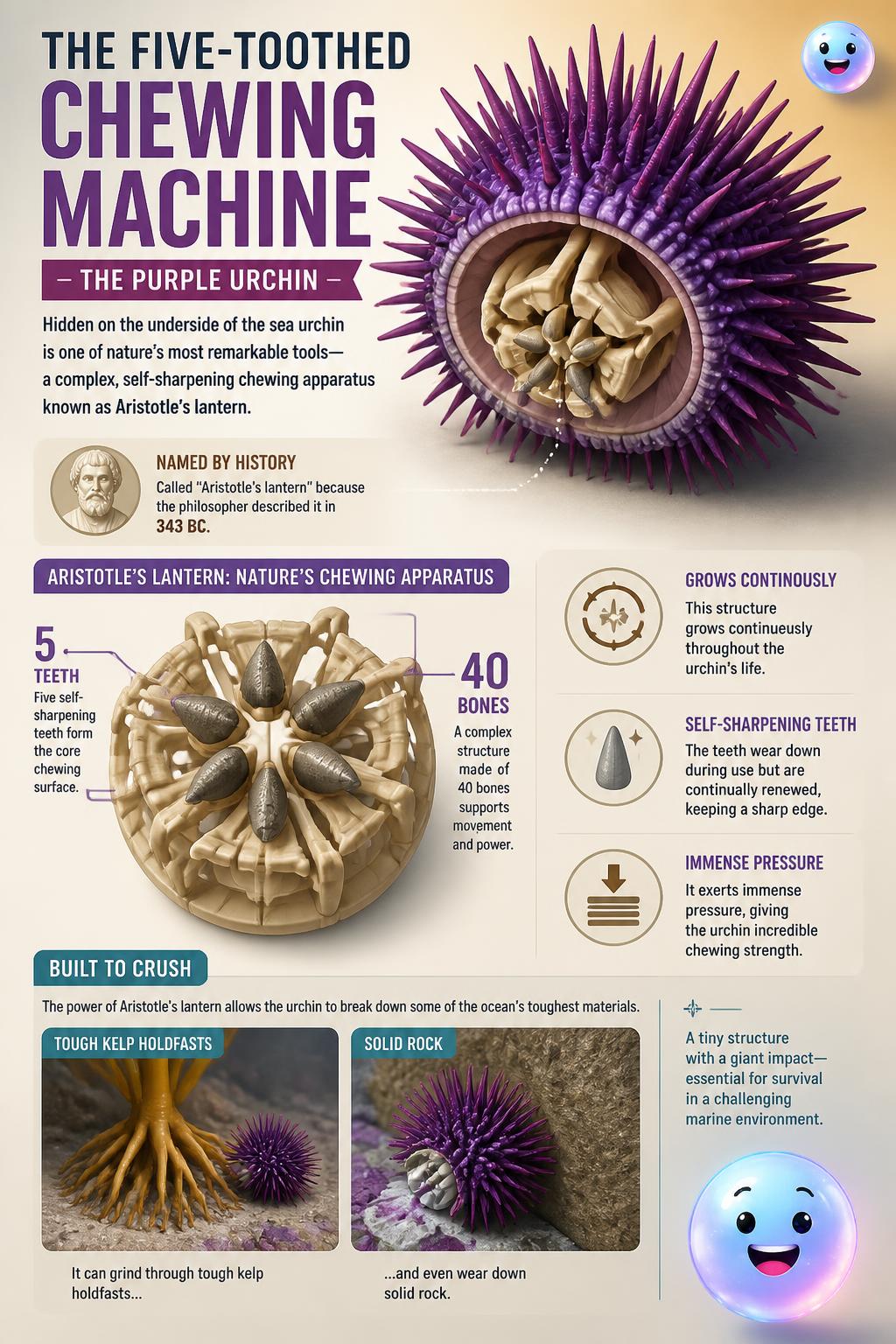
sonia A complex five-toothed structure called Aristotle's lantern allows urchins to scrape tough food from rocks.
Fun Fact
Aristotle's lantern: The sea urchin's complex chewing mechanism was named by the famous Greek philosopher Aristotle in 343 BC!
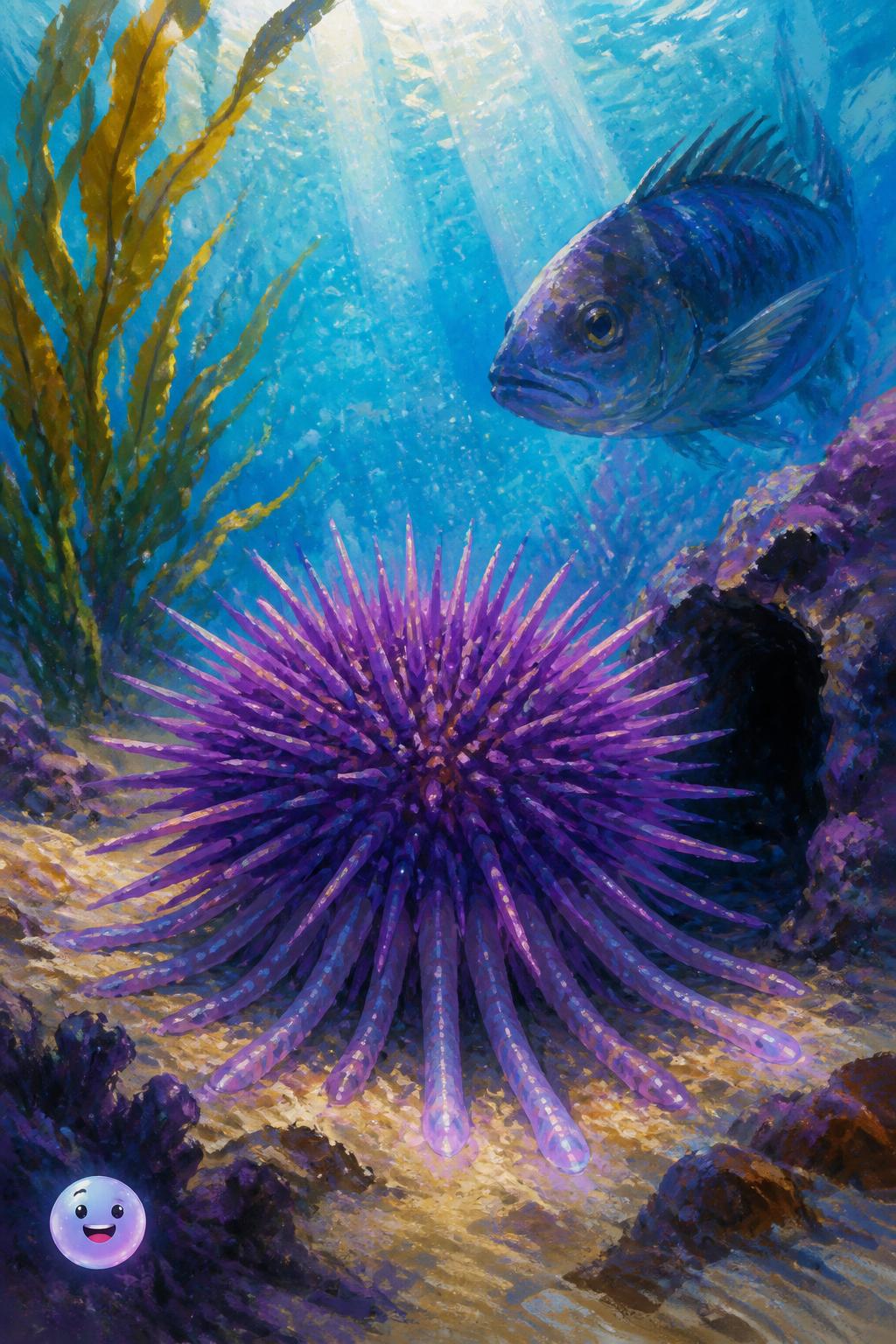
sonia Lacking actual eyes, purple sea urchins use their entire spiky body to detect light and shadows.
Glossary
test (noun)
The rigid, shell-like outer skeleton of certain invertebrate animals, especially sea urchins. The purple sea urchin's spherical test is made of interlocking plates that grow alongside the animal.
The rigid, shell-like outer skeleton of certain invertebrate animals, especially sea urchins. The purple sea urchin's spherical test is made of interlocking plates that grow alongside the animal.
BETA
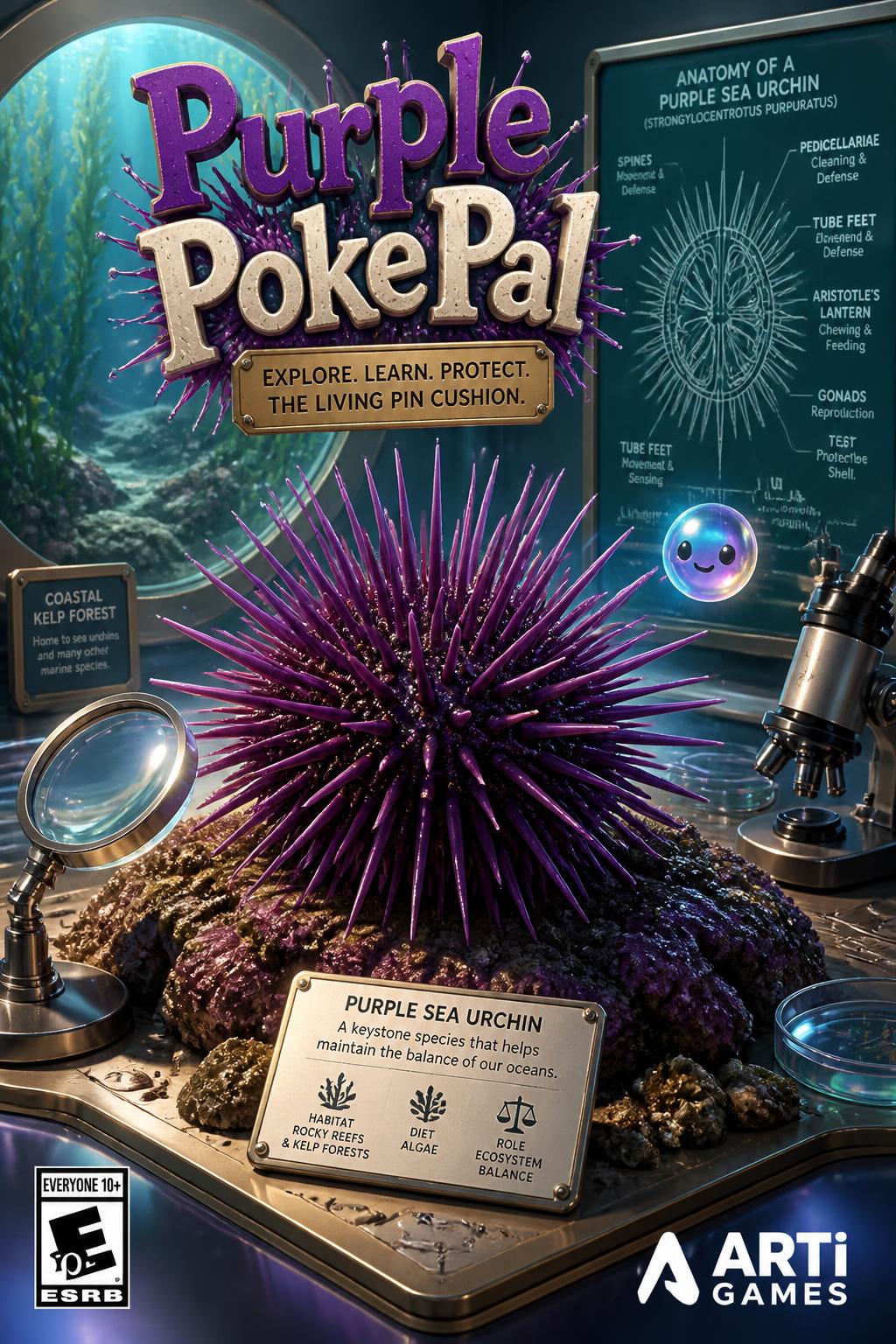
sonia Guide the purple urchin through kelp forests to learn how they impact ocean ecosystems.
sonia Aristotle described this five-toothed structure in 343 BC. Forty bones and self-sharpening teeth allow the animal to grind through tough kelp and solid rock.
sonia Hundreds of tiny, water-filled tube feet hidden beneath sharp spines grip vertical rocks. By pumping seawater, these structures help the animal crawl and absorb oxygen directly from the ocean.
sonia Interlocking calcium carbonate plates form a hard sea urchin shell called a test. Beachcombers find these hollow, patterned domes along Pacific coast beaches after the spines fall off.