
The paper trail of a polite machine
The glitch in the canvas
The echoes of synthetic life
Walking through the uncanny valley

007skaty Decode the widget's subtle signals to learn how A.I. communicates behind the scenes.
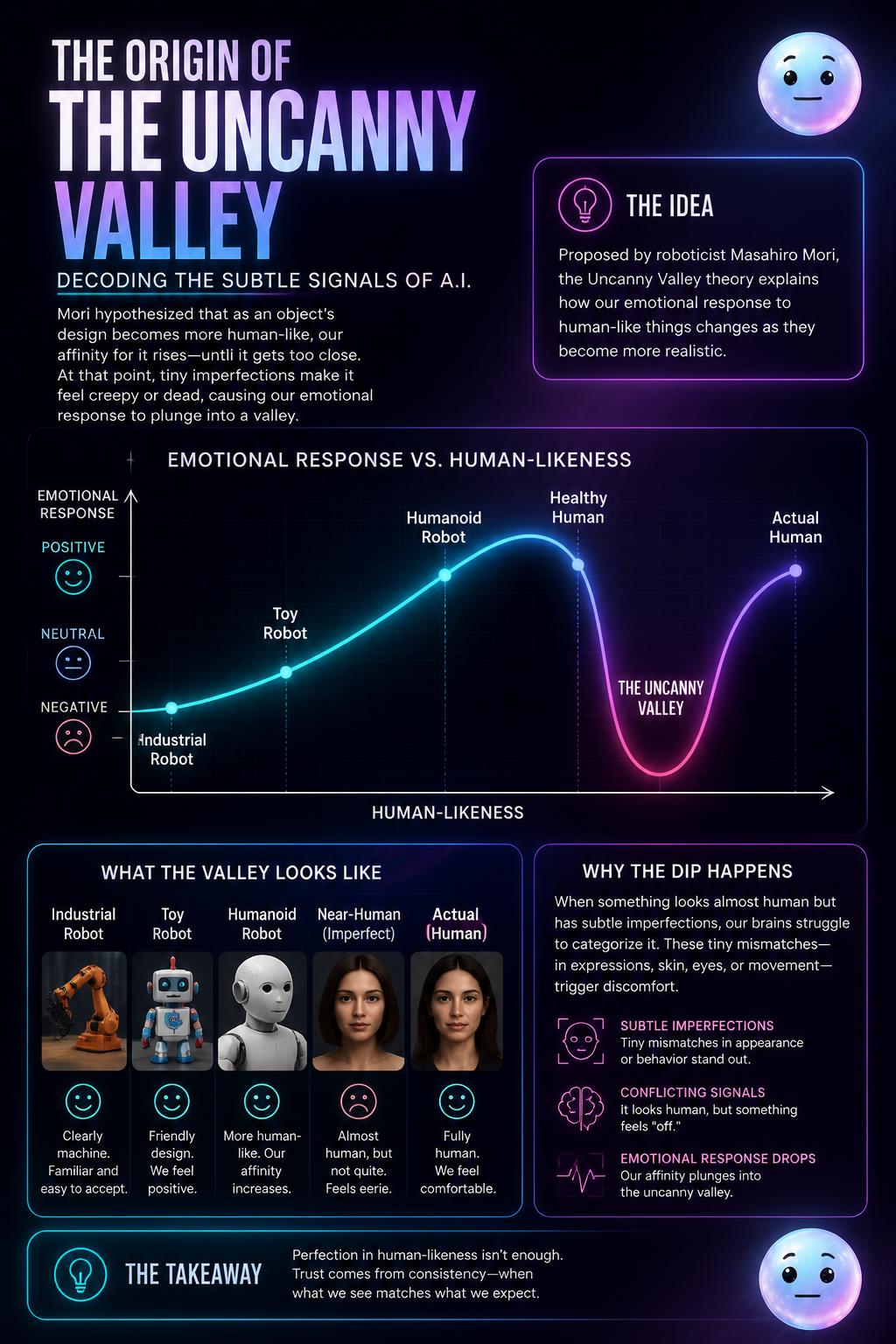
007skaty Our affinity rises as objects look more human, but tiny imperfections in nearly perfect designs trigger a creepy, dead feeling.
According to the uncanny valley theory, what happens to our emotional response when a robot's likeness is nearly, but not quite, perfect?
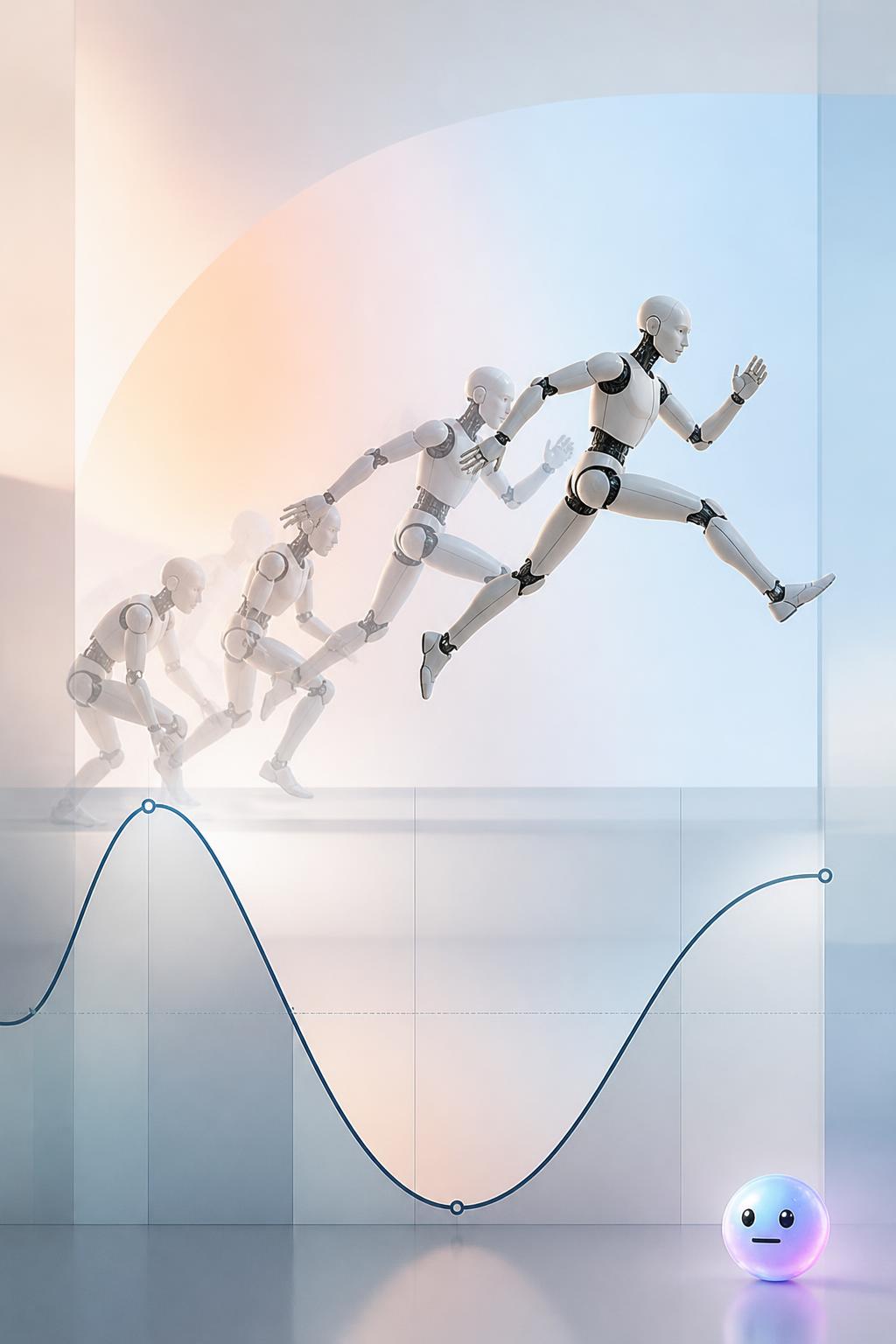
007skaty Moving humanoid robots trigger a deeper evolutionary alarm than still, lifelike dolls
Which of the following did Masahiro Mori use as an example of a moving object that triggers a deep uncanny valley reaction?
How does movement affect our psychological reaction to a near-human object, according to Mori's theory?
The uncanny valley: Roboticist Masahiro Mori believed robots have 'buddha-nature' and can potentially attain buddhahood.
Which part of our brain is highly active when processing these subtle, creepy facial anomalies?
What evolutionary purpose do psychologists believe the uncanny valley response serves?
A psychological concept describing the feeling of unease or revulsion evoked by humanlike objects that closely but imperfectly resemble real human beings. Japanese roboticist Masahiro Mori first identified this phenomenon in 1970 to describe human reactions to humanoid robots.
What simple mental habit is the best defense against being fooled by highly realistic AI media?
What cognitive bias makes us less likely to check an image for AI glitches if it matches our personal beliefs?