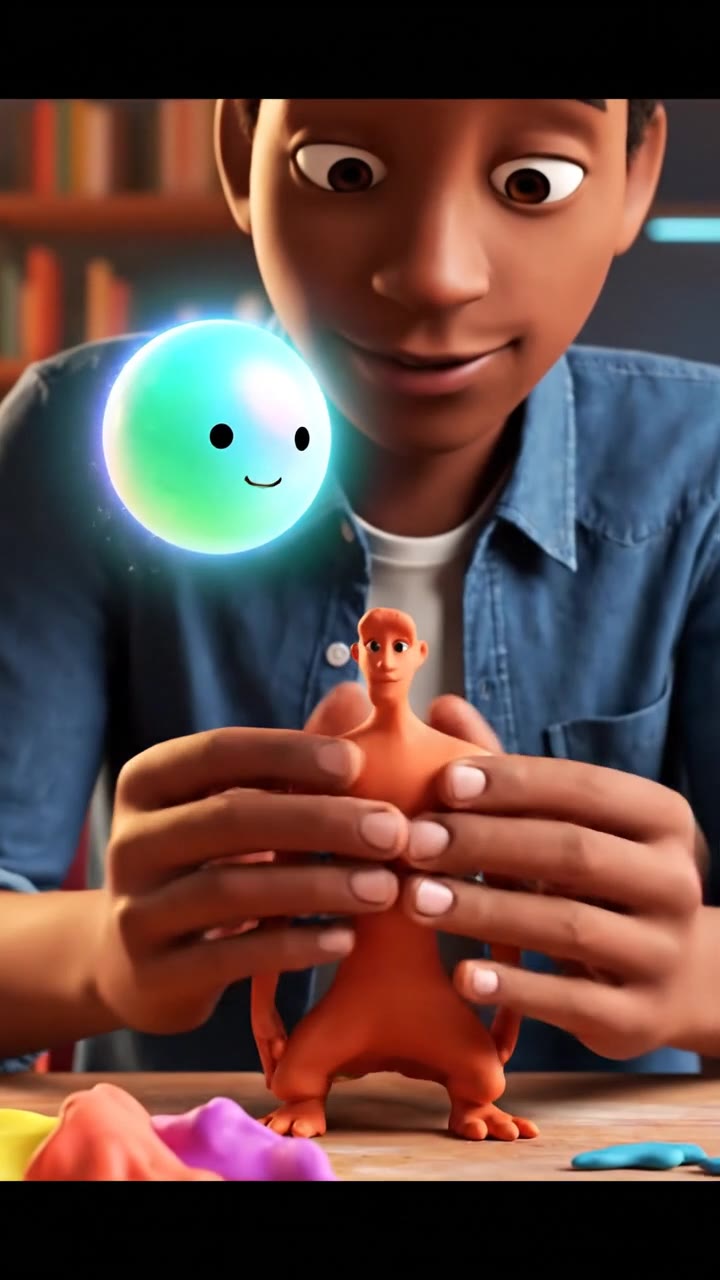
The anatomy of a clay character
The global pioneers of clay
The physics of the frame
The modern hybrid revolution
YOUR GOAL
Master of The secret life of claymation
007skaty Silicone Puppet Skin
While old latex shrinks and starts to tear, This silicone bends without a care.

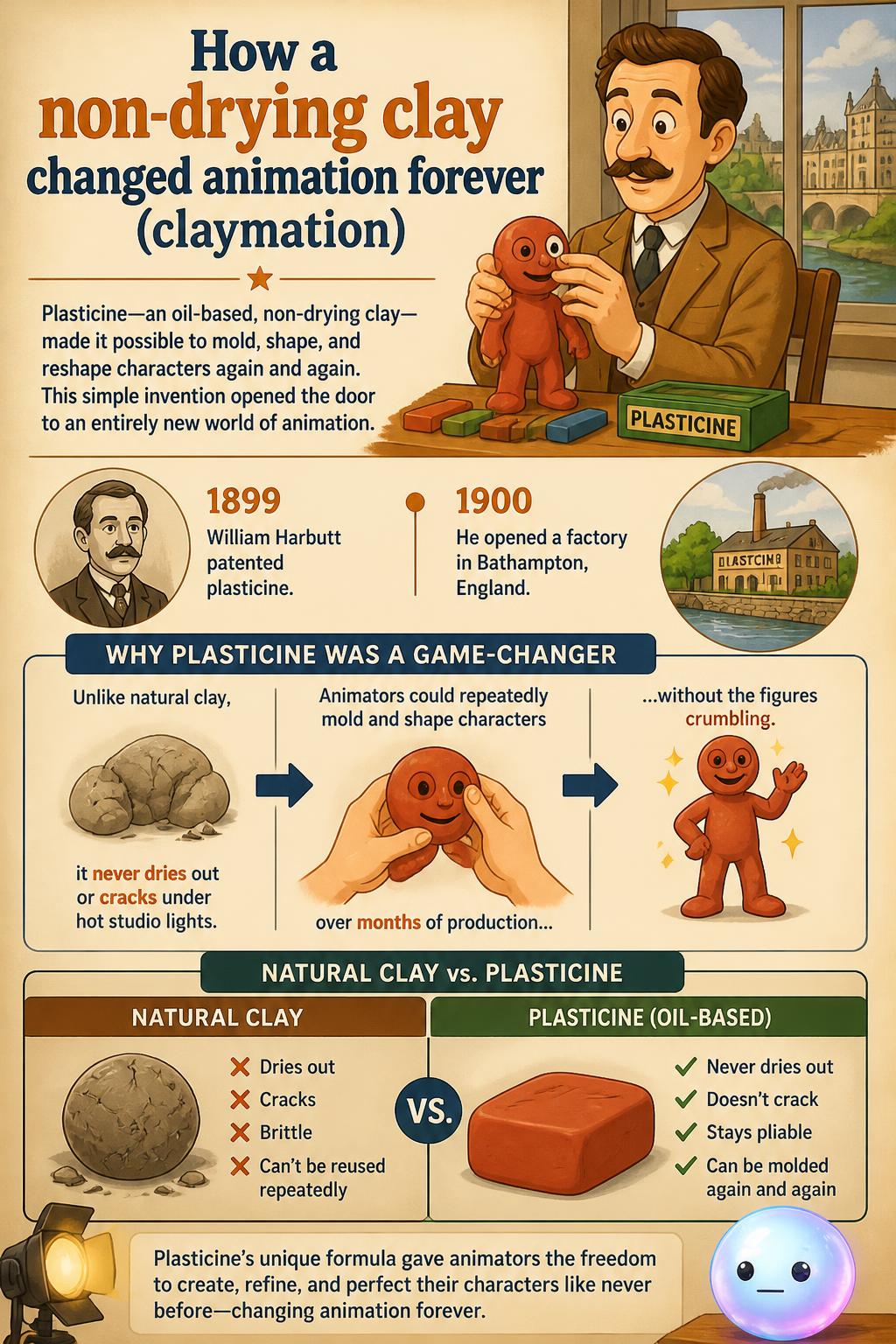
007skaty Harbutt's 1900 Bathampton factory produced oil-based plasticine, a non-drying formula that let animators mold characters for months without cracking.
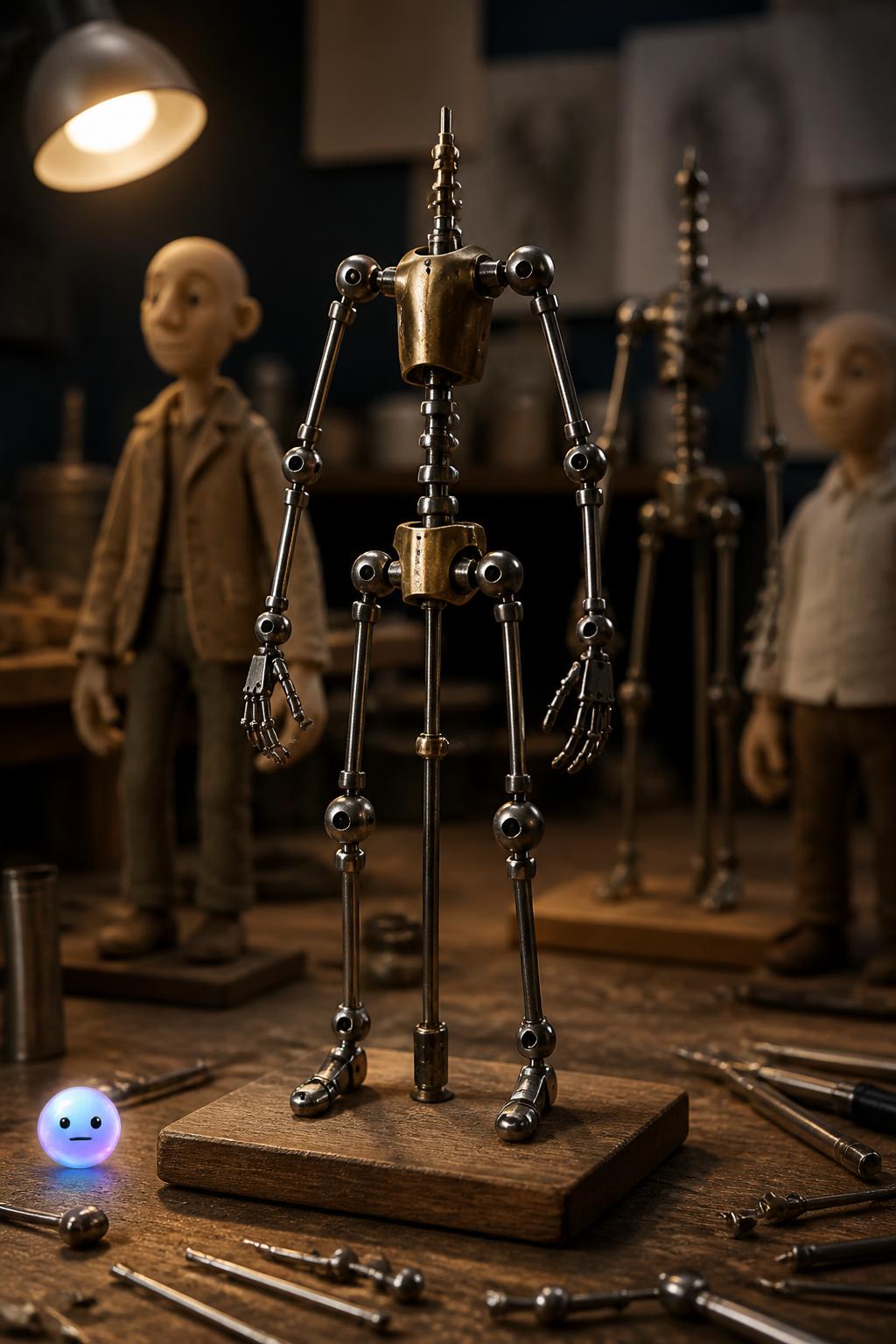
007skaty Ball-and-socket metal joints allow stop-motion puppets to hold precise poses between frames.

007skaty Sync clay mouth shapes with voice tracks to learn how stop-motion characters speak.
Plasticine in war: During World War II, British bomb disposal officers used plasticine to build mini dams around bomb fuzes, pouring liquid oxygen inside to freeze and disarm them.
A supportive framework or skeleton upon which a sculpture is molded. Artisans at Aardman Animations famously build these metal skeletons to keep characters stable during stop-motion filming.
Why is plasticine preferred over traditional water-based clay for stop-motion animation?
Which English art teacher invented the non-drying modeling clay known as plasticine in 1897?
Which materials are most commonly used to build the ball-and-socket joints of a professional animation armature?
What is the stop-motion technique of swapping pre-made mouth and eye pieces to animate dialogue called?
What term describes the unwanted, shaky flickering effect that occurs when a clay puppet's surface is accidentally altered between frames?
Why do modern feature-length stop-motion films often avoid using pure clay for entire puppet bodies?