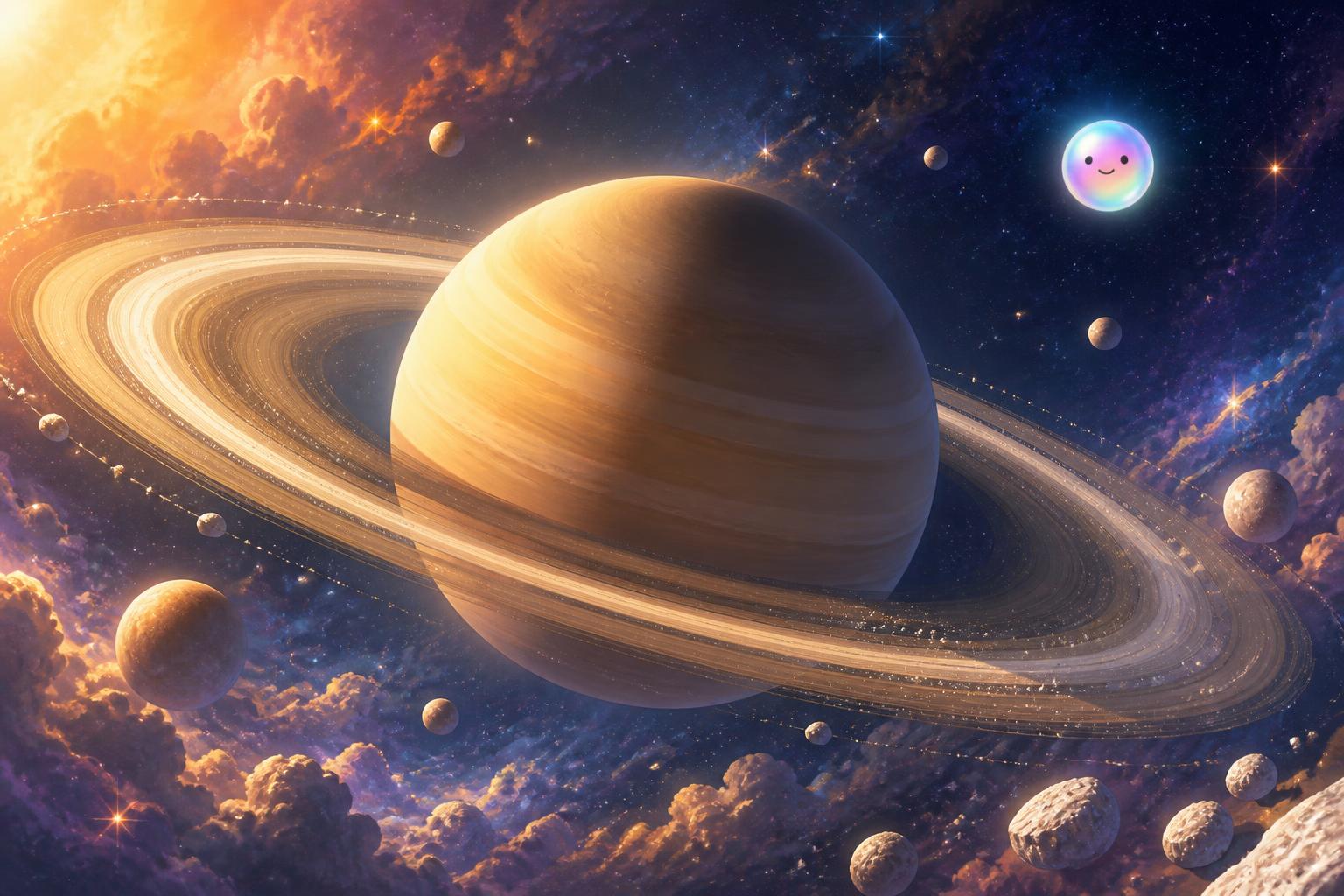
How wide do Saturn's main rings stretch across space?
The anatomy of a gas giant
Rings of ice and dust
The wild worlds of Saturn's moons
Humanity's eyes on the giant

sonia Astronomer Giovanni Domenico Cassini found this 4,800-kilometer-wide gap in 1675. Saturn's moon Mimas uses gravity to clear debris out of this orbital lane.
sonia Galileo Galilei first saw Saturn's rings disappear in 1612 because they are ten thousand times thinner than a razor blade when scaled to a basketball.
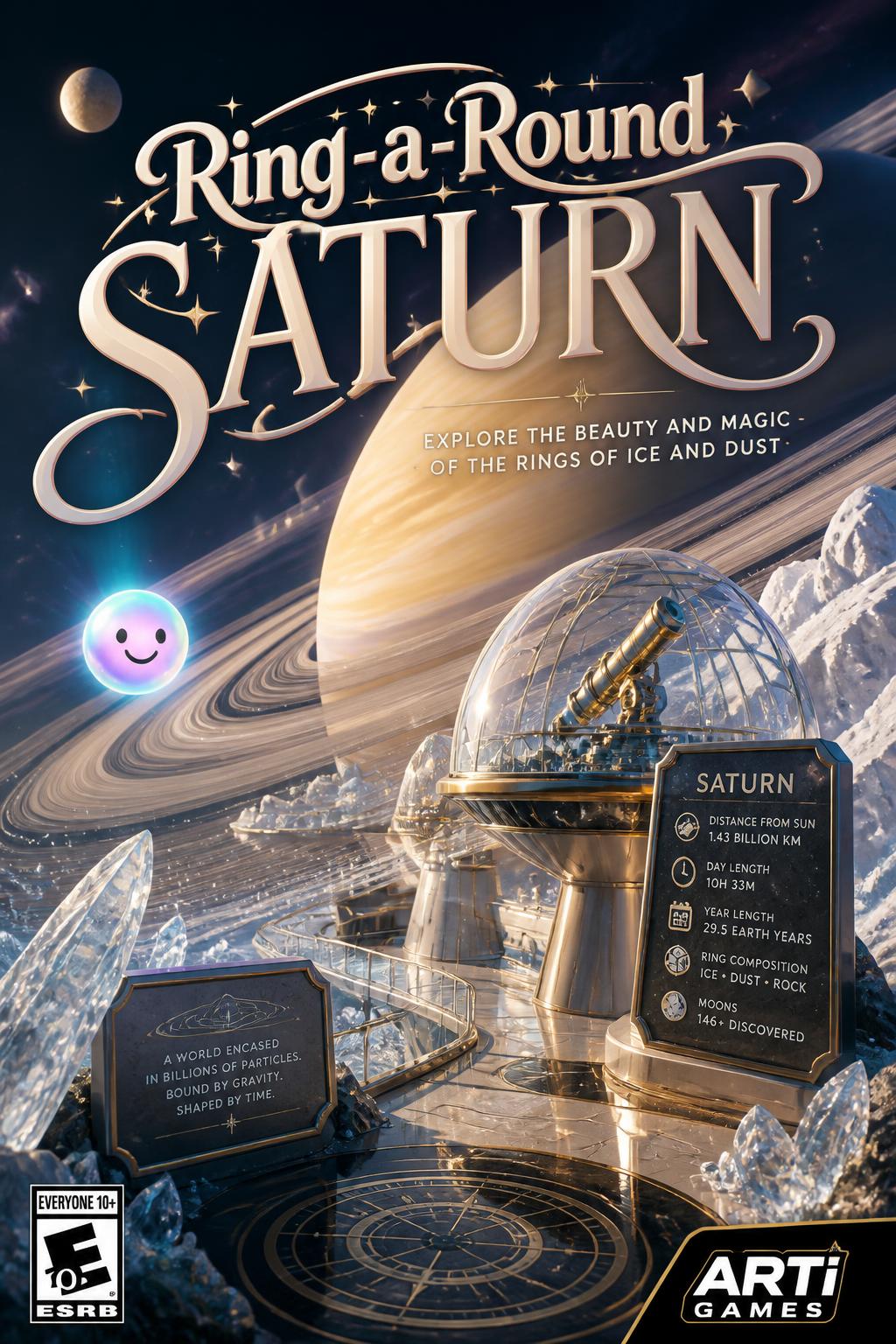
sonia Billions of pure water ice chunks range from tiny dust grains to mountain-sized peaks. This bright material reflects sunlight, making the structures highly visible to telescopes on Earth.
sonia Gravity and magnetic fields pull water ice into Saturn's atmosphere. This rain drains an Olympic swimming pool every thirty minutes, destroying the rings in three hundred million years.
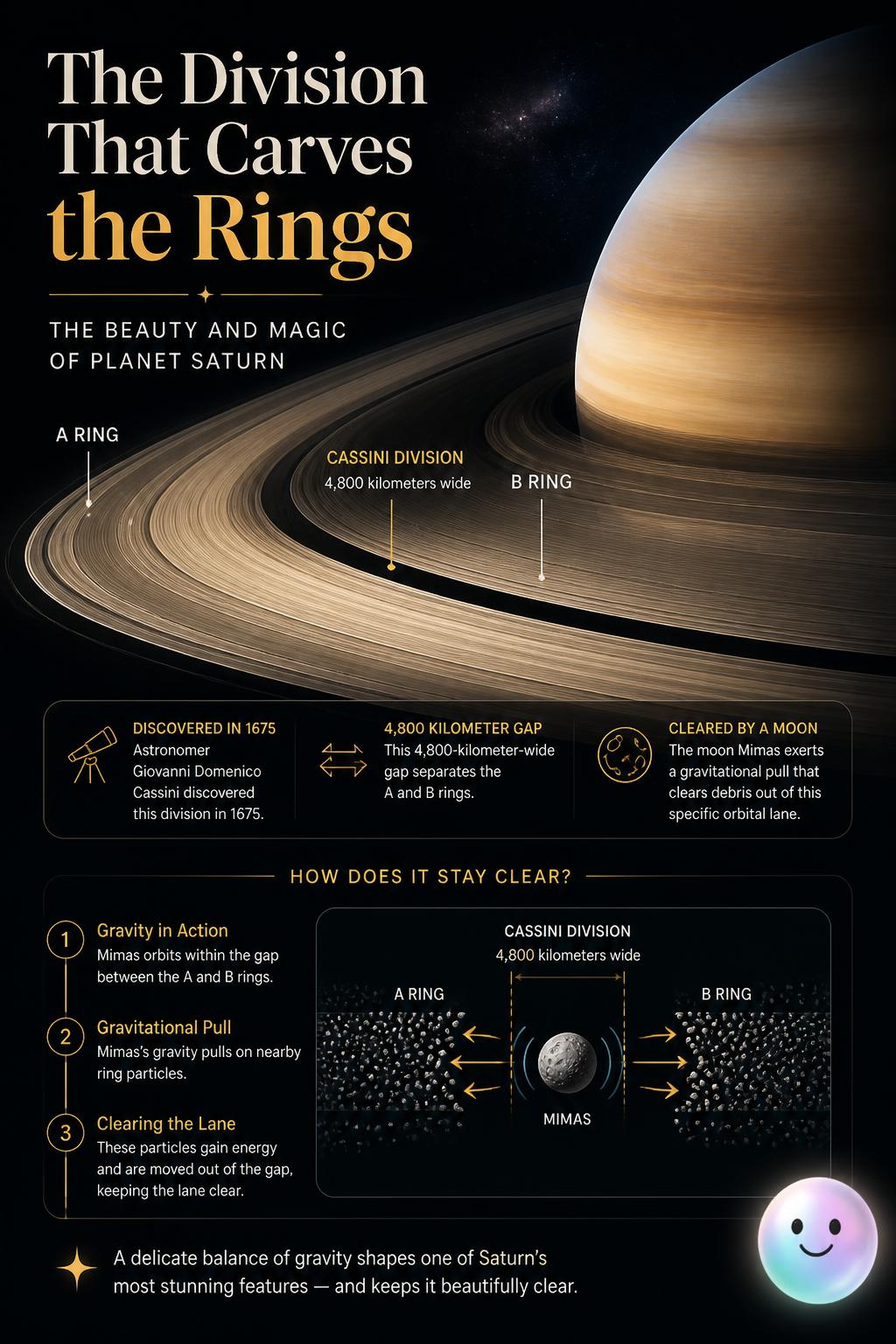
sonia The prominent dark gap in Saturn's rings, known as the Cassini Division, is cleared out by gravitational tugs from a moon.
Ring age: Saturn's rings are relatively young, likely forming 10 to 100 million years ago, meaning dinosaurs might have looked up at a ringless Saturn.
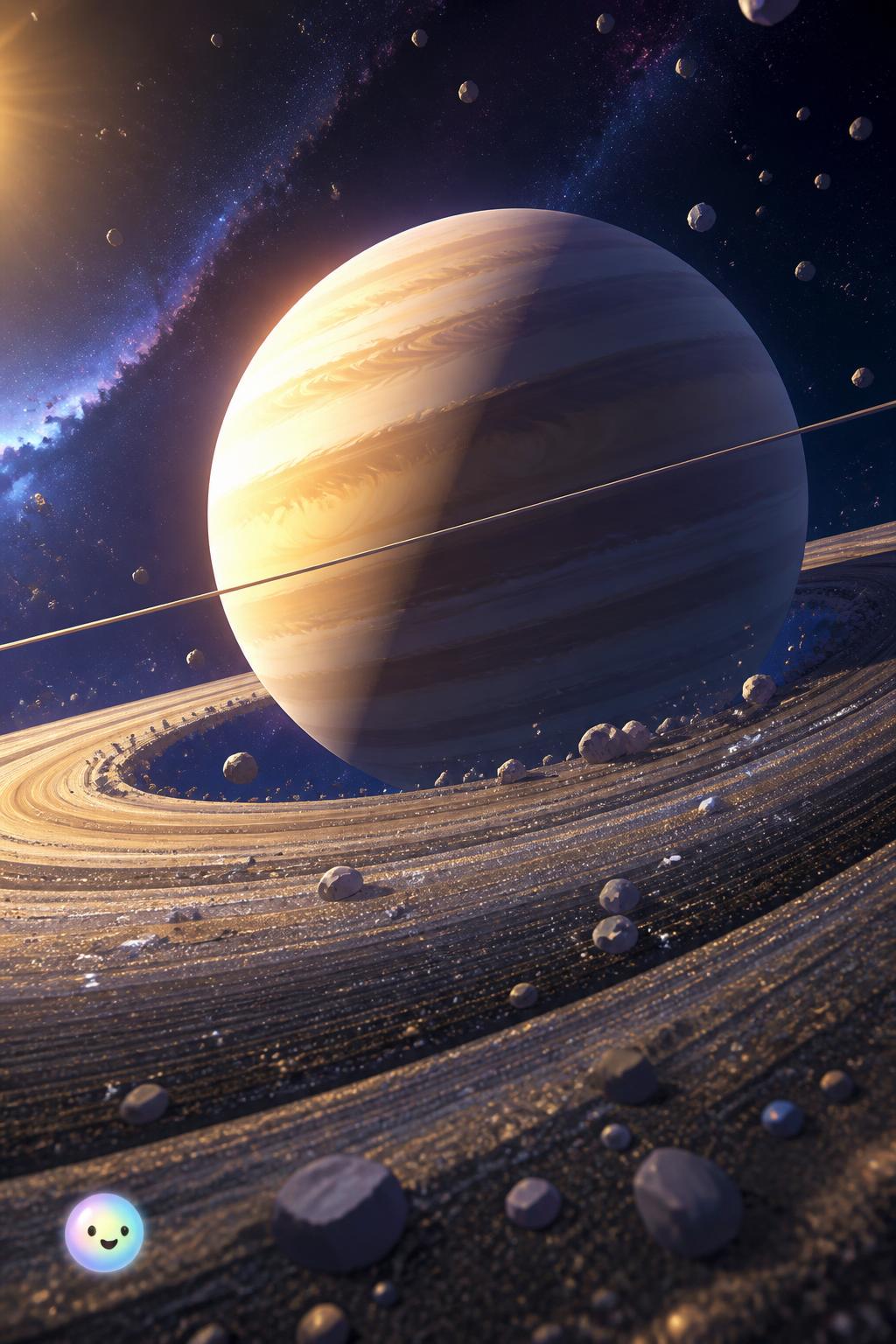
sonia Despite stretching over 282,000 kilometers wide, Saturn's rings are incredibly thin, averaging only about 10 meters in depth.
A circular band of metal, wood, or other material. In 1659, Christiaan Huygens discovered that Saturn is encircled by a giant, unattached ring of cosmic debris.
Which moon's gravitational pull is primarily responsible for clearing the Cassini Division gap?
What is the phenomenon called where Saturn's gravity pulls ring material into its atmosphere?
In approximately how many years could Saturn's rings completely disappear due to ring rain?