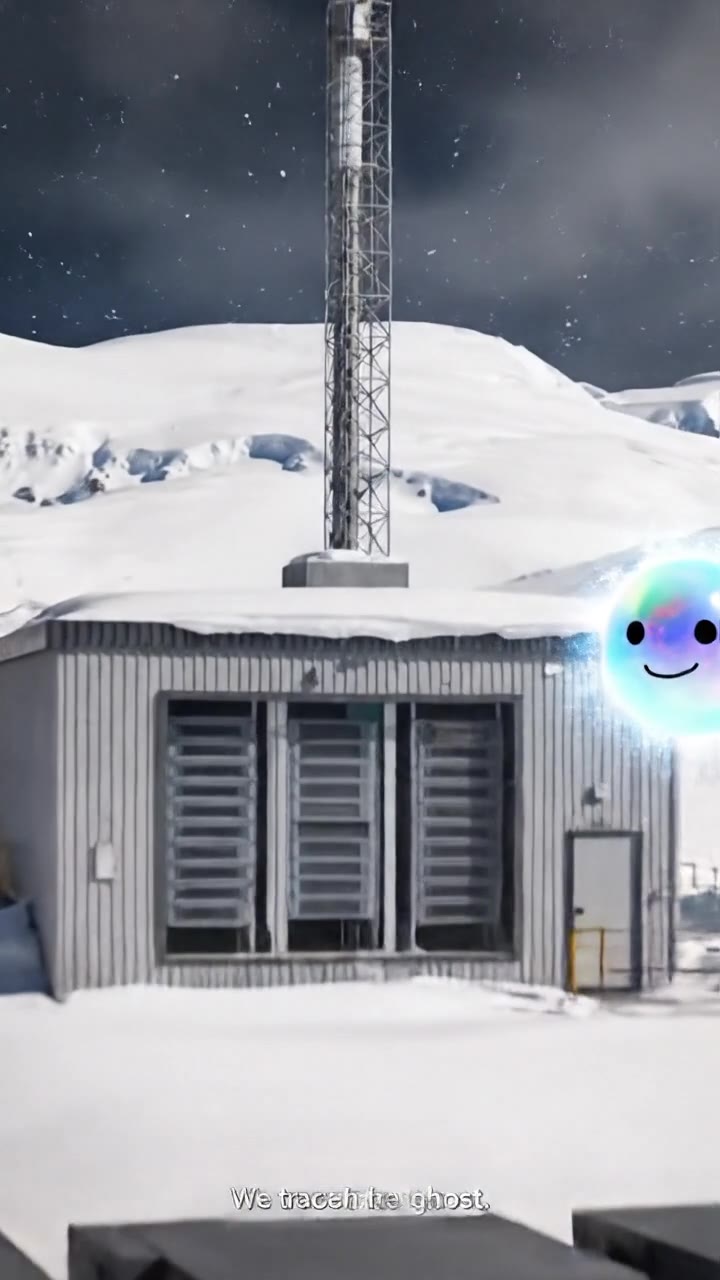
Detecting Ghostly Neutrinos in South Pole Ice
When a cosmic neutrino collides with an atom deep in the Antarctic ice sheet, it produces a particle moving faster than light in ice, emitting a blue Cherenkov radiation flash caught by frozen sensors.
Meet the cosmic ghost
Building in the deep freeze
How ice catches a ghost
Messengers from the edge of time

diego Extreme pressure below 1,400 meters squeezes air bubbles out of South Pole ice. This ultra-clear medium lets light travel 100 meters without scattering to detect cosmic particles.
diego Deep in the Antarctic ice, light slows down by twenty-five percent. This slowdown allows high-speed muons from neutrino collisions to easily outrun light waves.
diego Pavel Cherenkov documented this optical sonic boom in 1934. It occurs when charged particles travel faster than light through a medium.
diego Deep in South Pole ice, digital optical modules capture blue Cherenkov light. Computers analyze billionth-of-a-second timing differences between sensors to pinpoint the neutrino's cosmic source.

diego Catch cosmic ghosts in the South Pole ice to learn how neutrinos reveal the universe.

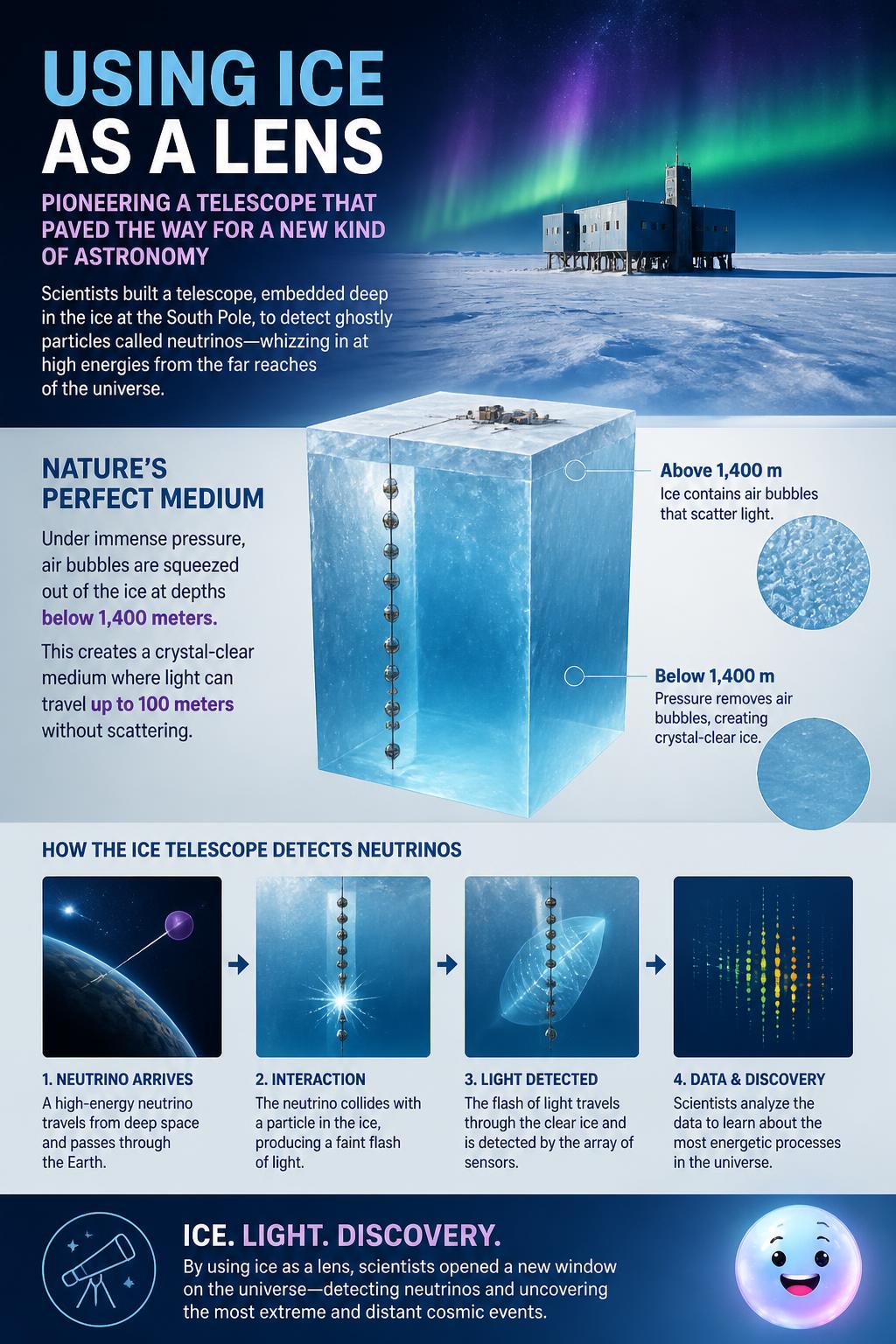
diego Deep Antarctic ice is so highly compressed and pure that it is clearer than any industrial glass.
Sonic boom of light: Cherenkov radiation is the visual equivalent of a sonic boom, glowing with a beautiful, eerie blue light often seen in nuclear reactors.

diego While nothing can travel faster than light in a vacuum, particles can travel faster than light travels through ice.
An electrically neutral subatomic particle with a mass close to zero that rarely interacts with normal matter. In 1988, Francis Halzen proposed tracking these elusive particles using light sensors buried deep in Antarctic ice.
What secondary particle is often produced when a neutrino collides with an oxygen atom in ice?
What is the name of the faint blue light produced by particles traveling faster than light in a medium?