Quiz
In the culture of the nomadic Tuareg people (often called the 'lords of the blue veil'), why is the iconic Agadez cross talisman traditionally crafted from silver rather than gold?

YOUR GOAL
Master of Secrets of the blue veil
In the culture of the nomadic Tuareg people (often called the 'lords of the blue veil'), why is the iconic Agadez cross talisman traditionally crafted from silver rather than gold?
schopenhauer Lords of the Blue Veil
This indigo veil leaves a beautiful blue stain on my skin
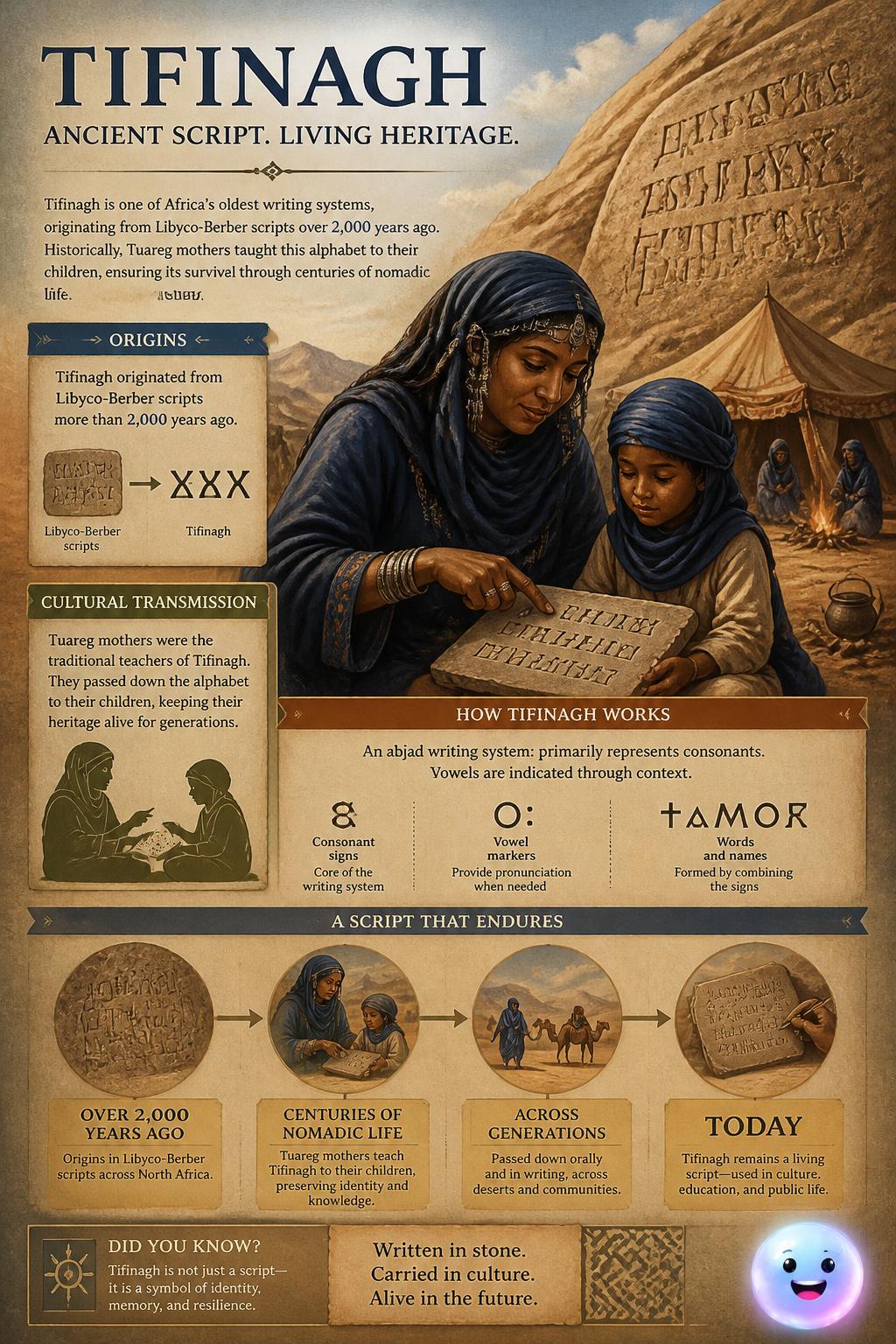
schopenhauer Historically taught by Tuareg mothers to their children, this ancient Libyco-Berber script survived through centuries of nomadic life.
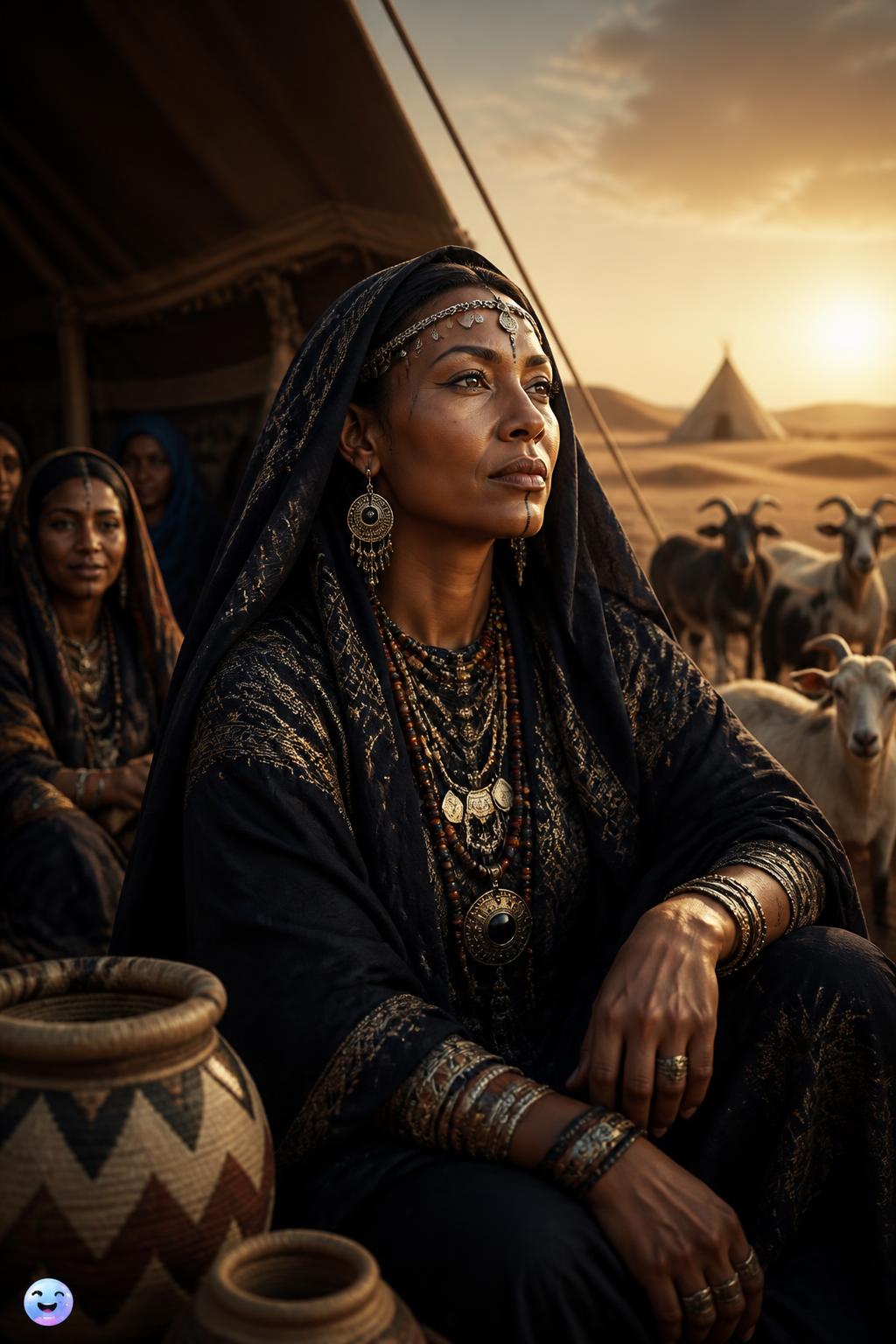
schopenhauer A dramatic studio portrait captures a charismatic Tuareg woman wearing traditional indigo garments.
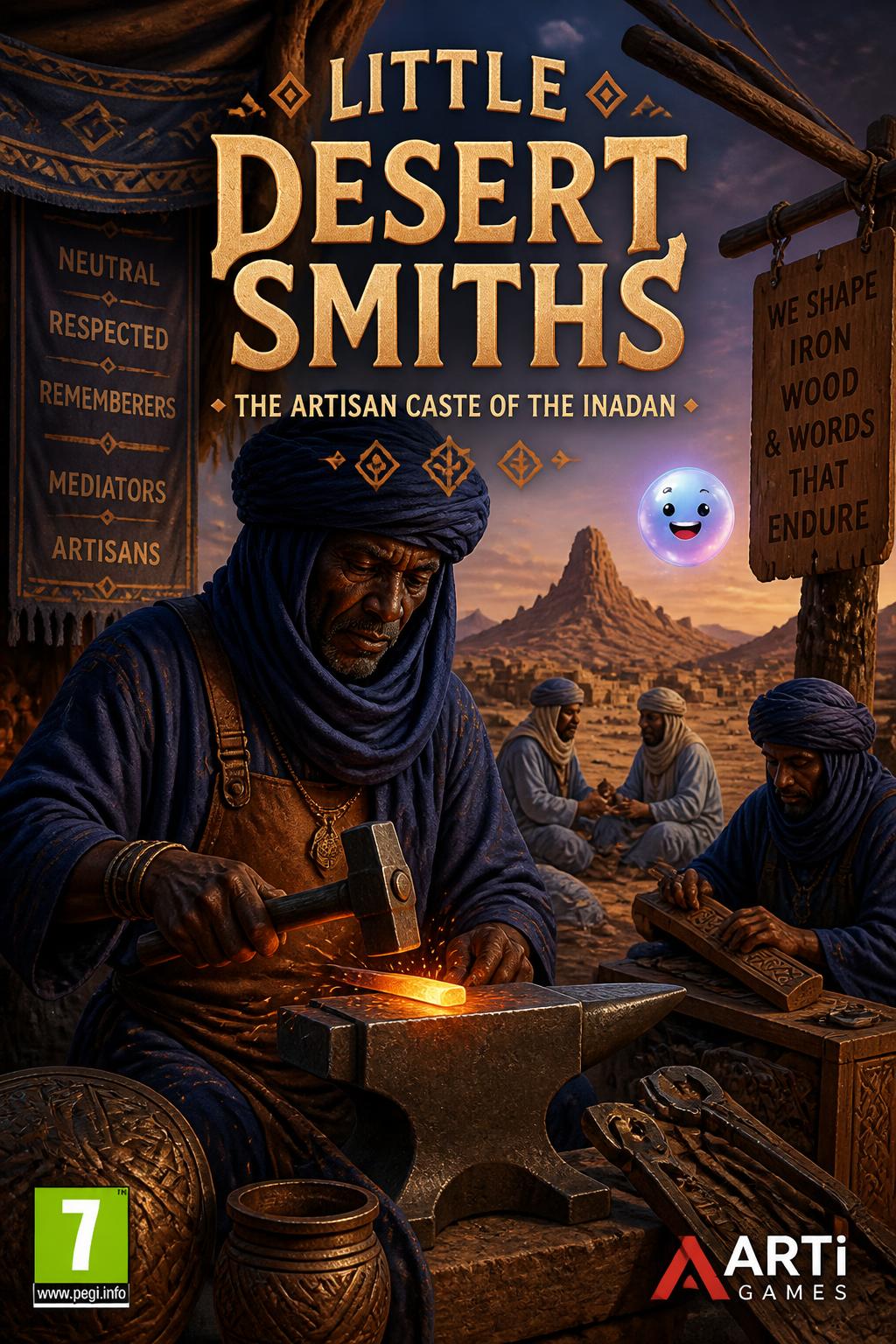
schopenhauer Forge traditional silver jewelry to master the symbols and stories of Tuareg culture.
Indigo dye: The indigo dye used for the tagelmust is pounded dry into the fabric instead of boiled, which is why it easily rubs off onto the skin.
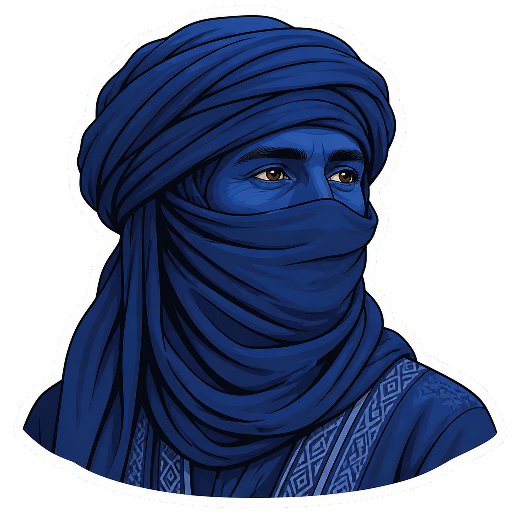
Why are the Tuareg historically referred to as the 'Blue People' of the Sahara?
Which group traditionally wears the protective veil, or tagelmust, in Tuareg culture?
What is the name of the ancient geometric alphabet preserved and used by the Tuareg?
Which specialized Tuareg caste is responsible for metalworking, woodworking, and oral storytelling?
What metal is traditionally used by Tuareg artisans to craft the protective Agadez cross?
What does a Tuareg father traditionally say when passing an Agadez cross pendant to his son?
Who is celebrated as the legendary 4th-century founding mother and queen of the Tuareg people?