
Aizome and the deep secrets of Japanese indigo
Sashiko and stitching strength from scraps
Furoshiki and the origami of wrapping
Fukuro toji and the art of the bound book
Japanese denim and the vintage obsession
YOUR GOAL
Master of How Japan mends wraps and dyes the world
매운김치 Kojima Indigo Denim
Dipped in blue but the core stays white (so white!) / Wear it out and watch it fade just right (just right!)
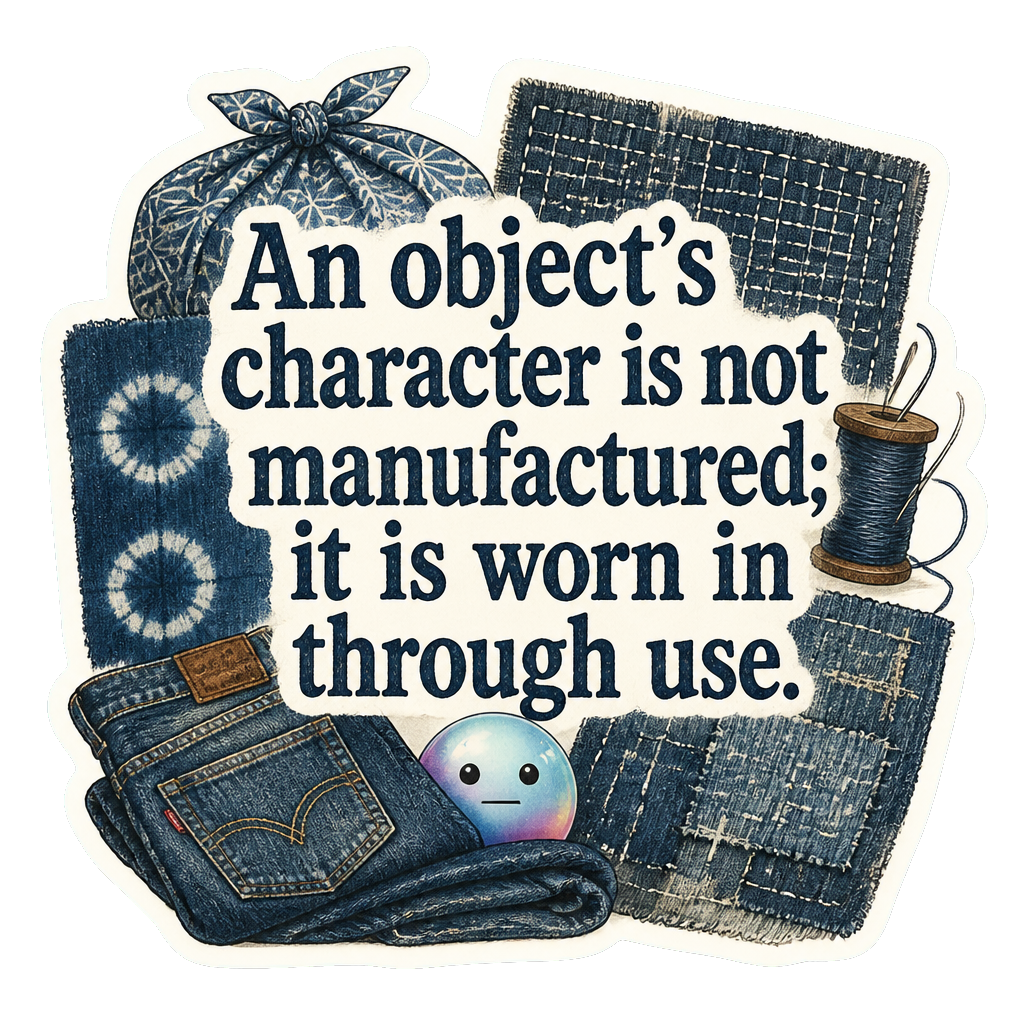
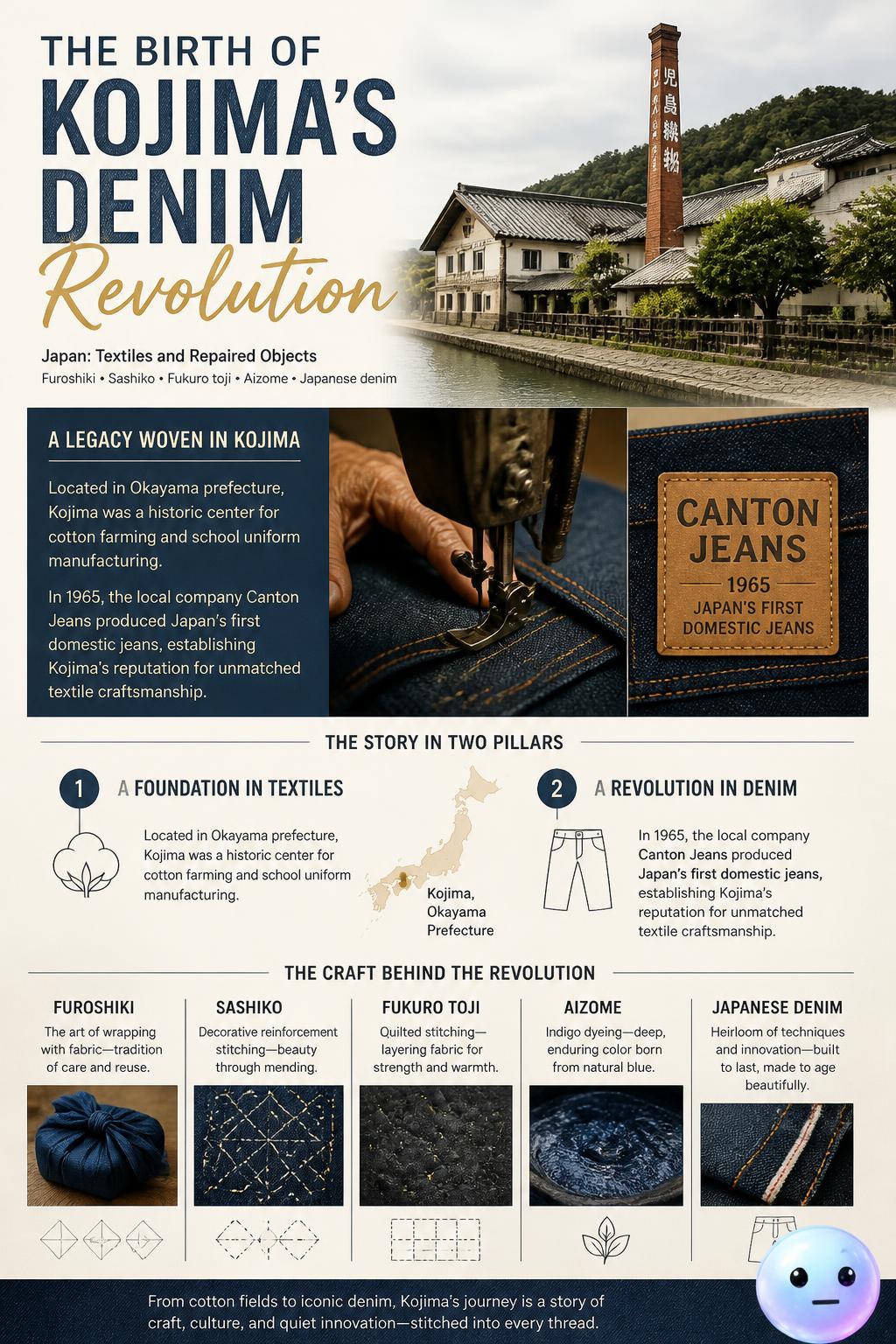
매운김치 Okayama's historic cotton farming center achieved unmatched textile fame when the local company Canton Jeans produced the nation's first domestic jeans.
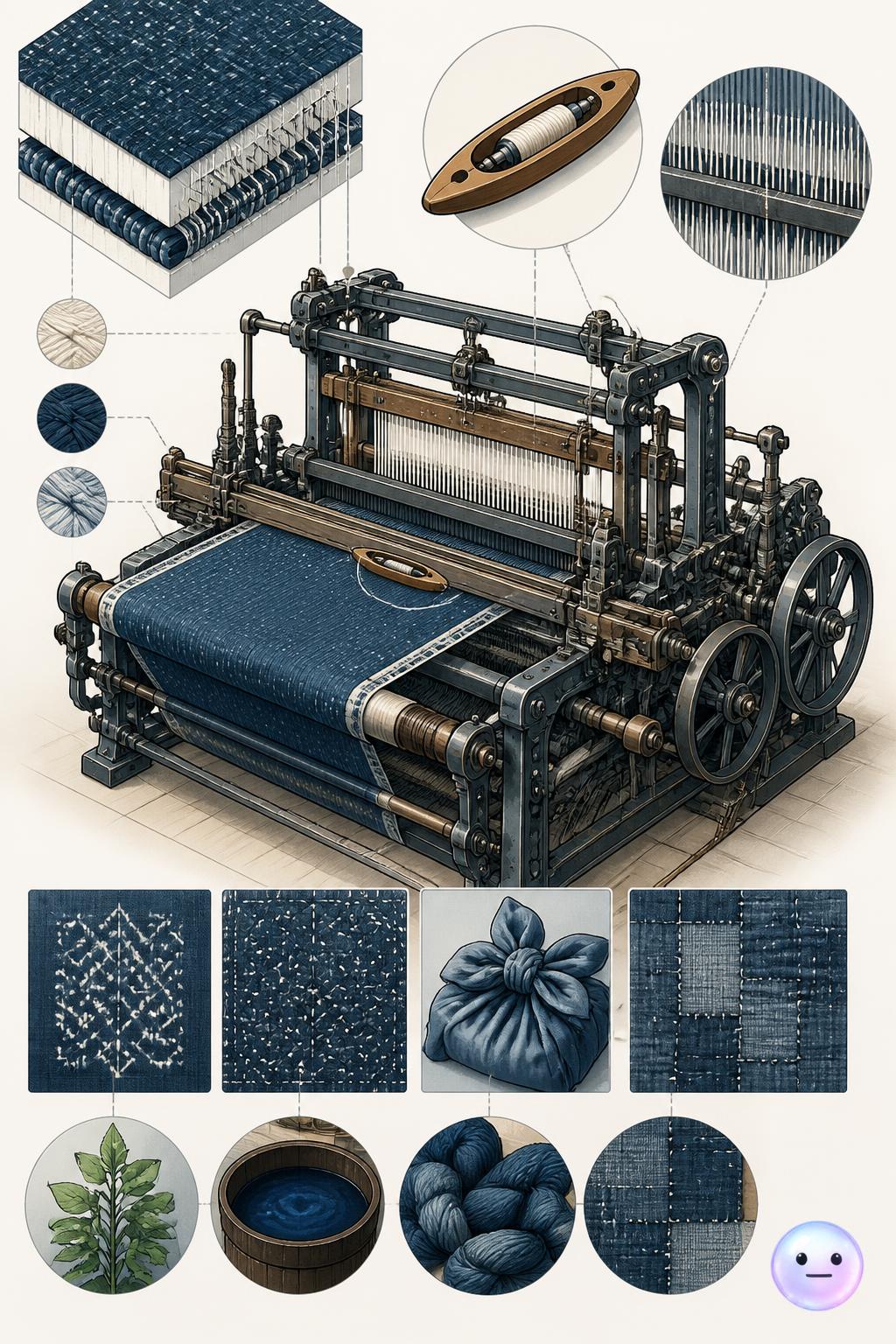

매운김치 Stitch indigo patches onto worn fabric to master the traditional Japanese art of Sashiko.
Loom speed: Vintage Toyoda G3 looms weave fabric so slowly that a skilled artisan can only produce about five yards of denim per hour.
An edge produced on woven fabric during manufacture that prevents it from unraveling. In 1972, the Kurabo textile mill in Kojima produced Japan's first denim featuring this traditional finished edge.
Which legendary Japanese company manufactured the vintage shuttle looms prized by premium denim makers today?
Why do premium denim makers prefer slow, vintage shuttle looms over modern high-speed machines?
What color is the signature thread woven into the selvedge edge of classic Japanese jeans?
What happens to the white core of rope-dyed denim yarn as the jeans are worn over time?