Quiz
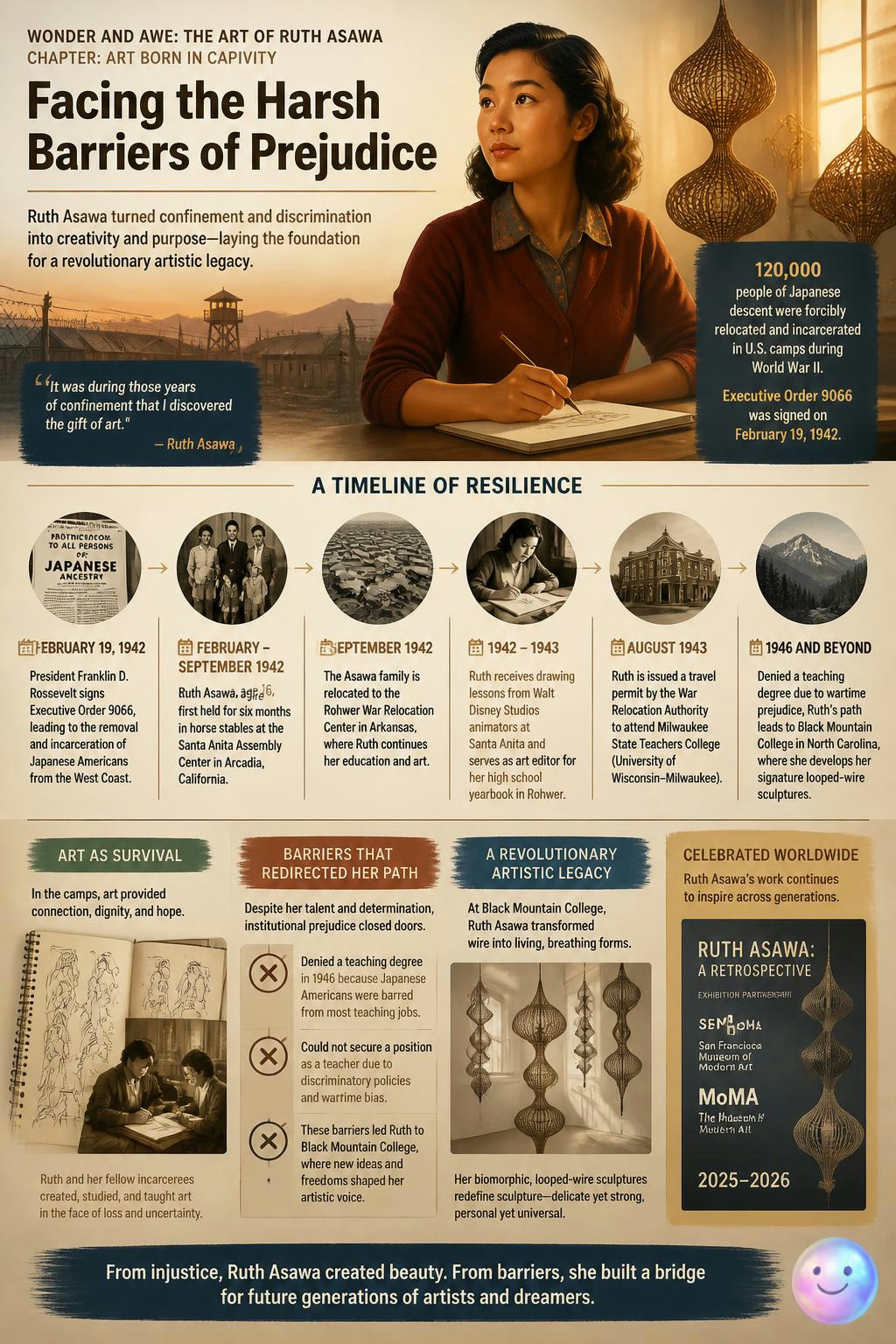
Despite the harsh barriers of racial prejudice that led to her forced incarceration during World War II, how did Ruth Asawa first receive formal art instruction while held in captivity?
YOUR GOAL
Master of The art of Ruth Asawa
Despite the harsh barriers of racial prejudice that led to her forced incarceration during World War II, how did Ruth Asawa first receive formal art instruction while held in captivity?
choko The Art of Ruth Asawa
Behind the barbed wire, we learned to draw, tracing our freedom on a concrete floor.
esmeraldabts A silhouette faces the harsh, towering barriers of the Santa Anita stables.
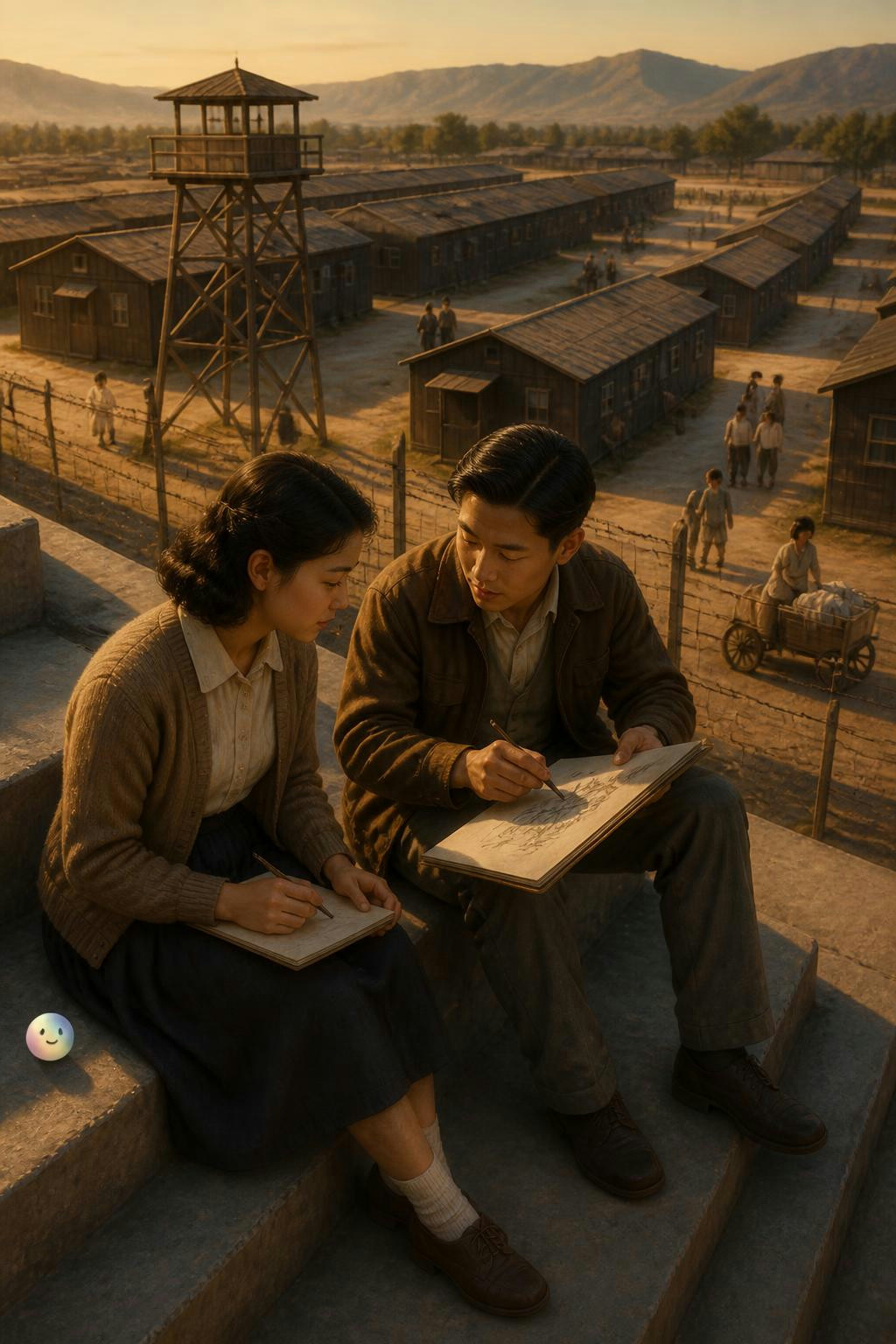
esmeraldabts Ruth Asawa watches an animator draw with charcoal on Santa Anita Racetrack steps.

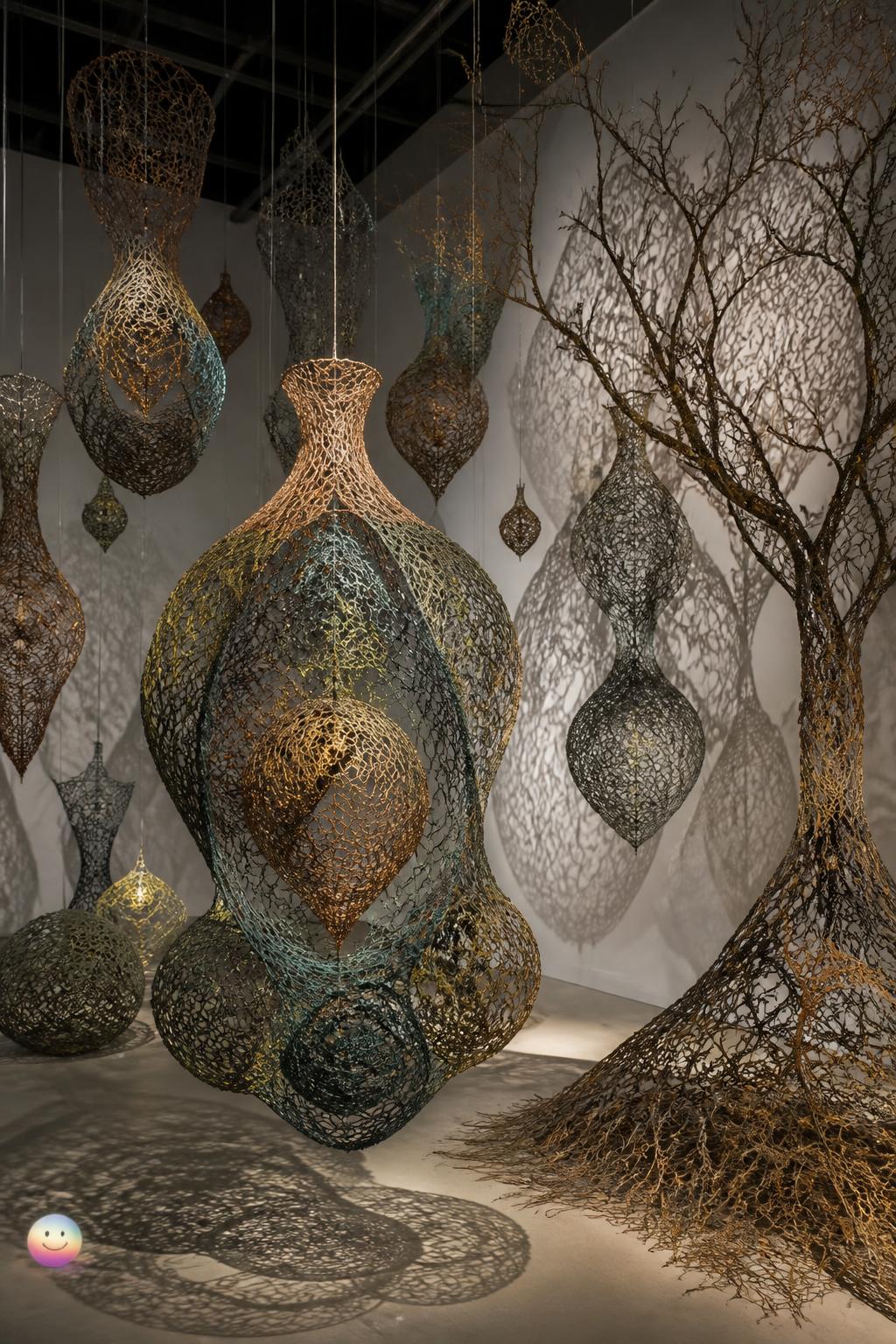
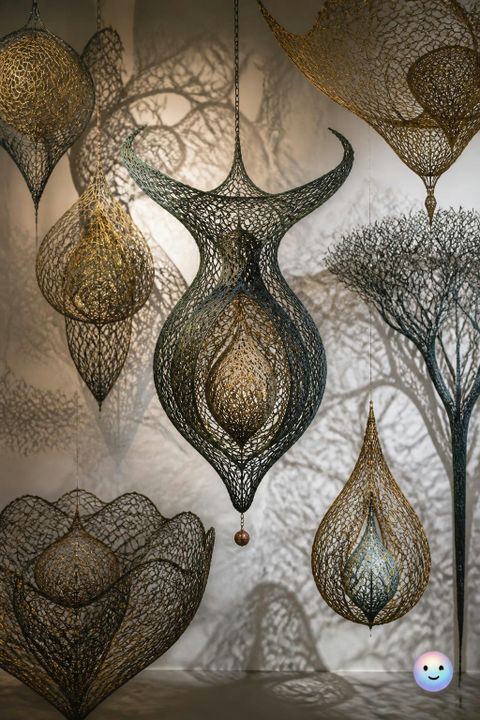
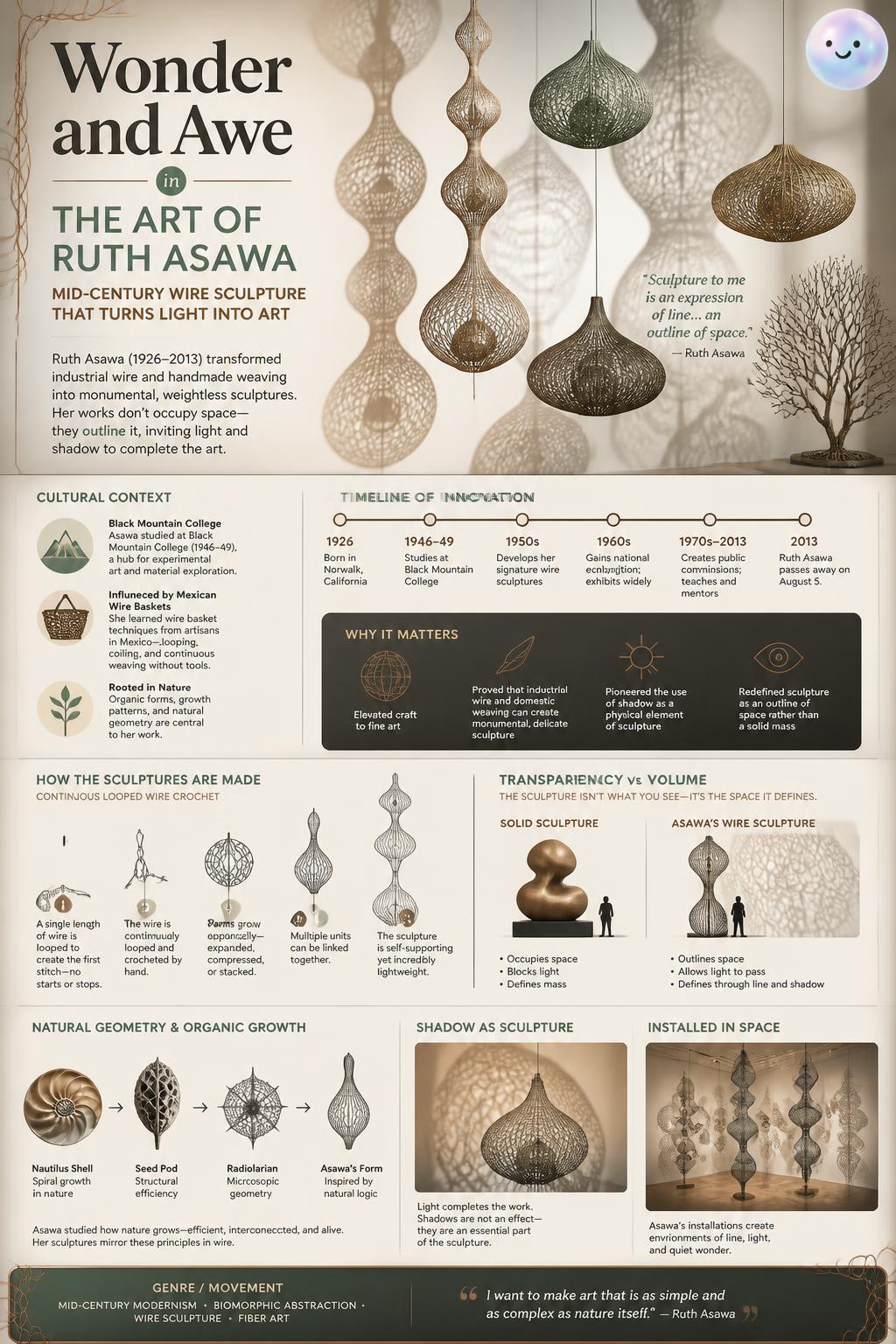
choko Loop the wire to discover how Ruth Asawa turned simple lines into hanging sculptures.
Rohwer Relocation Center: In this Arkansas internment camp, Ruth Asawa began her formal art training, learning from other interned Japanese-American artists.
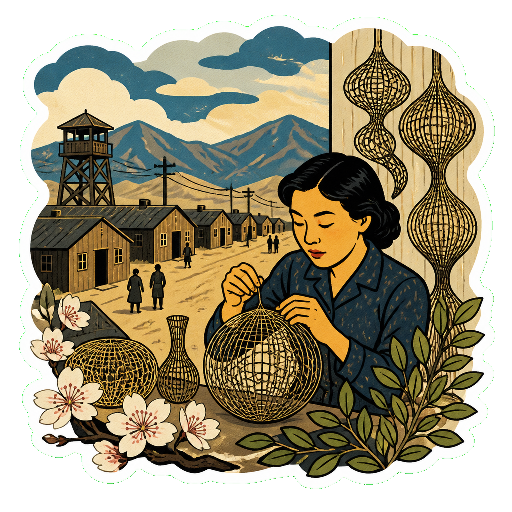

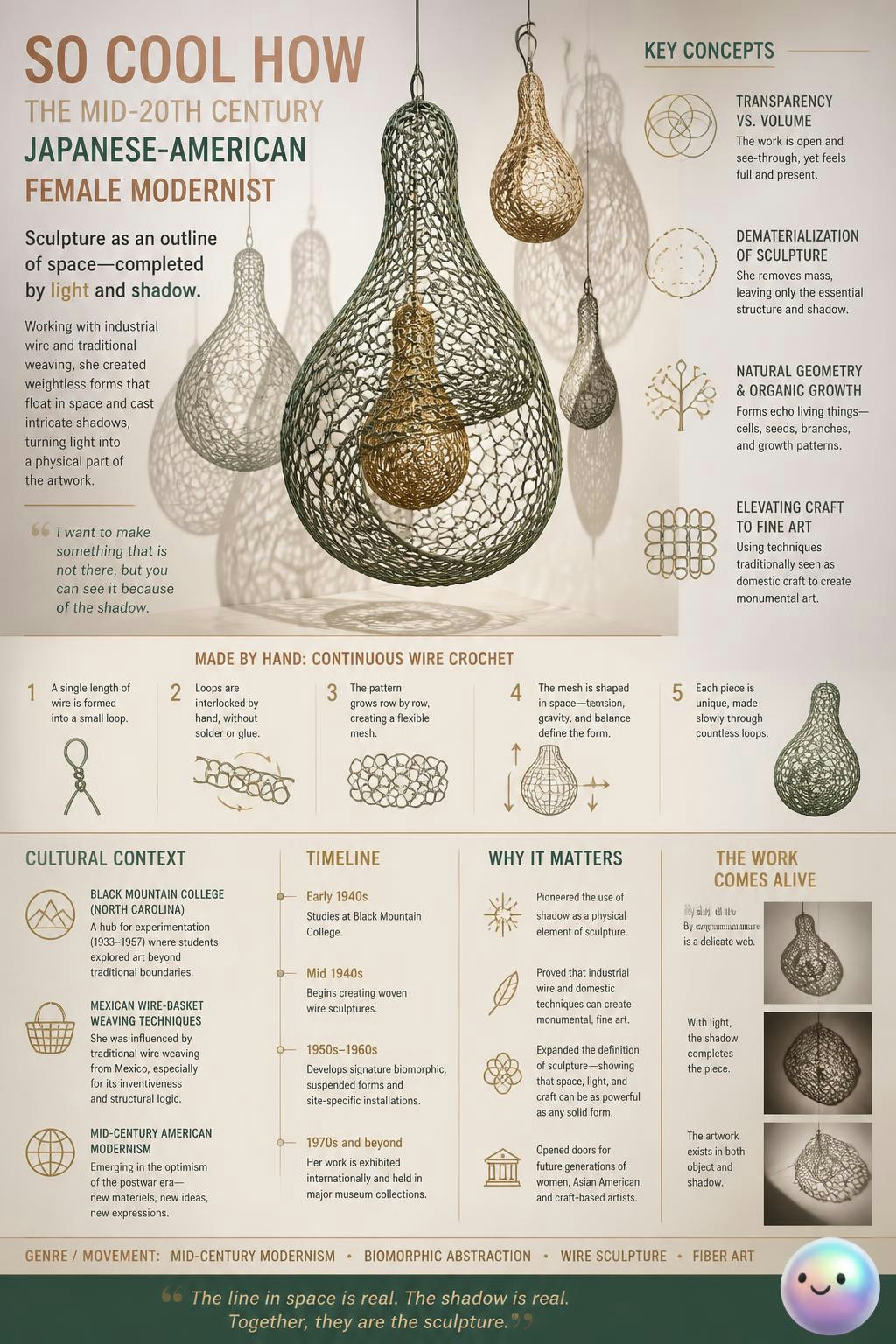
galleta Learn about Ruth Asawa's family history as truck farmers in California and how working on the vegetable farm influenced her famous art.
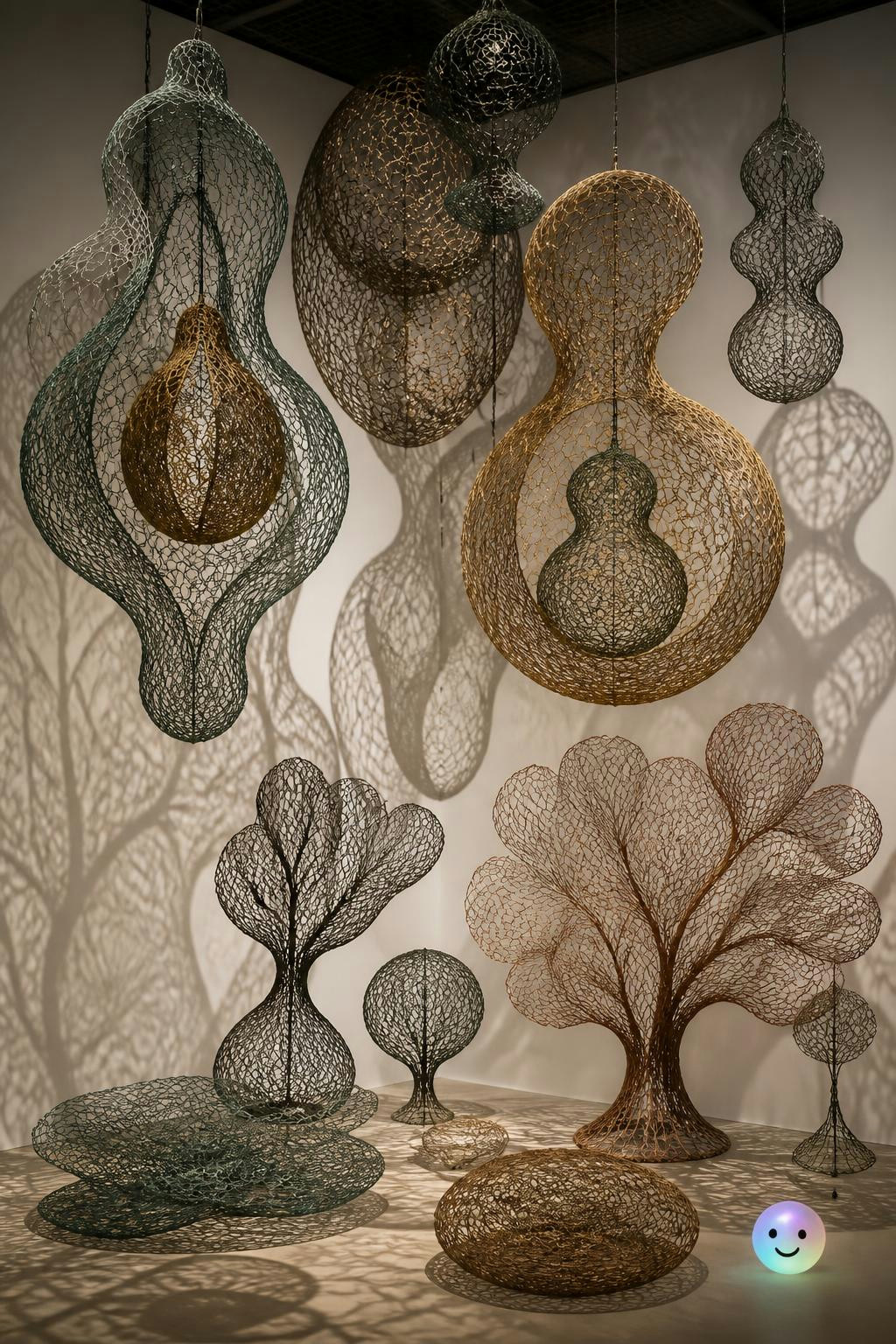
galleta A child's toe drawings in farm dirt inspired these famous woven wire sculptures.
Internment camp art: Asawa first practiced professional drawing inside a converted horse stall at the Santa Anita racetrack during her World War II internment.


choko In the internment camps, professional artists taught Asawa advanced drawing techniques.

galleta Discover the visual history of the letter A and how its shape traces back to an ancient ox head with horns.
What was the name of the Arkansas internment camp where Ruth Asawa was held during World War II?