
Fiber optic light guides in brain research
Learn about the incredibly thin fiber optic cables used in optogenetics and brain research to guide light directly into the brain.
The pond scum that changed neuroscience
Splicing the switch into the brain
Turning neurons on and off
Healing minds and mapping thoughts

diego Thick skull bone and brain tissue block external light. Researchers bypass this barrier by connecting hair-thin glass threads to external LEDs, delivering precise pulses to targeted cells.
diego Researchers hollow out a virus, pack it with light-sensitive channelrhodopsin DNA, and inject this microscopic vehicle into specific brain regions.
diego Scientists attach specific DNA sequences to genes to isolate dopamine-producing neurons. This technique reveals how individual cell types function among the brain's 86 billion interconnected neurons.
diego Optogenetics
We put the algal gene inside the brain (turn it on) / Now blue light makes the neuron fire again (fire again)
diego In 2013, researchers created ultra-thin LED implants powered by radio waves. This technology lets animals behave naturally while scientists remotely control their brain circuits.
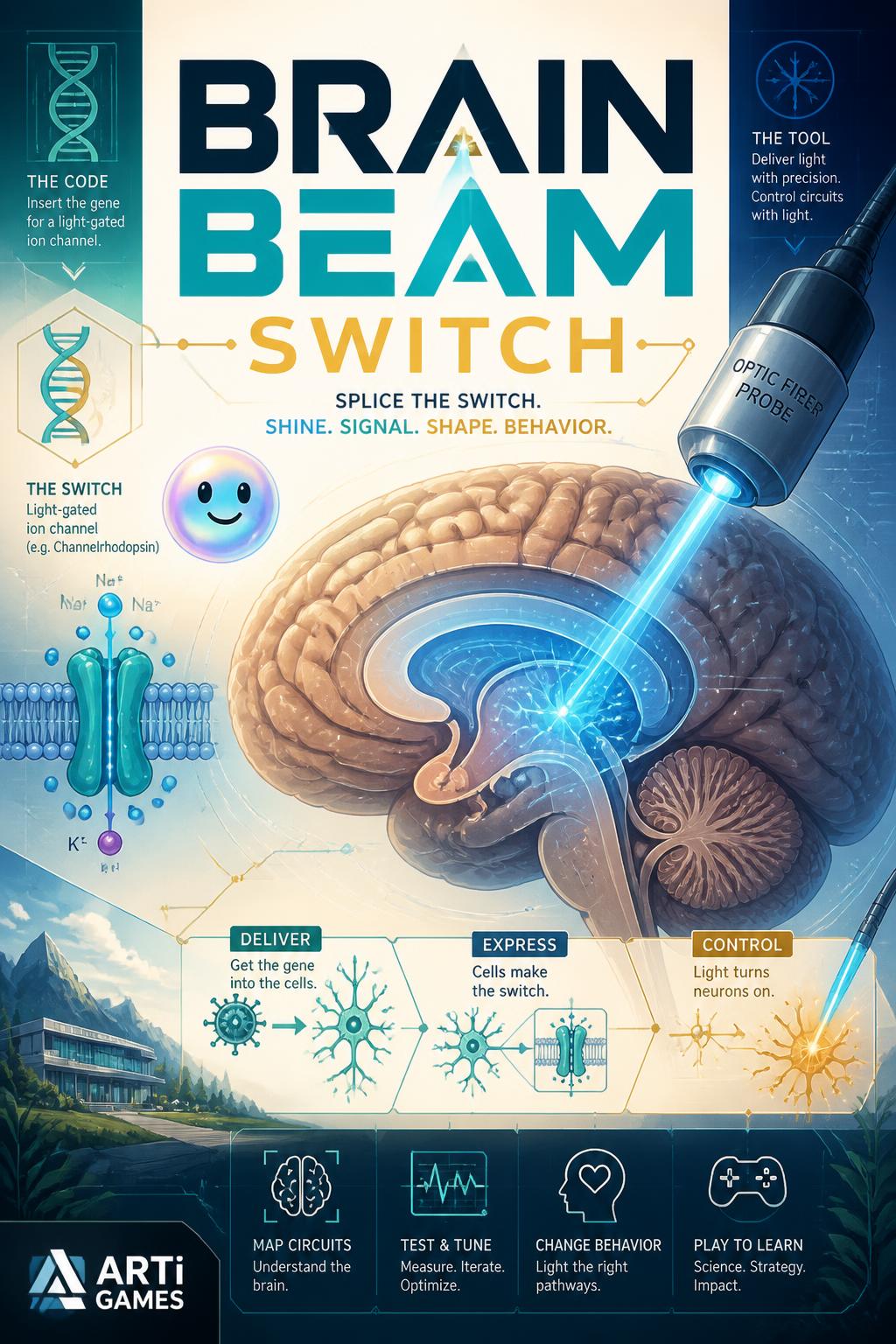
diego Switch colored light beams to discover how scientists control brain cells with light.
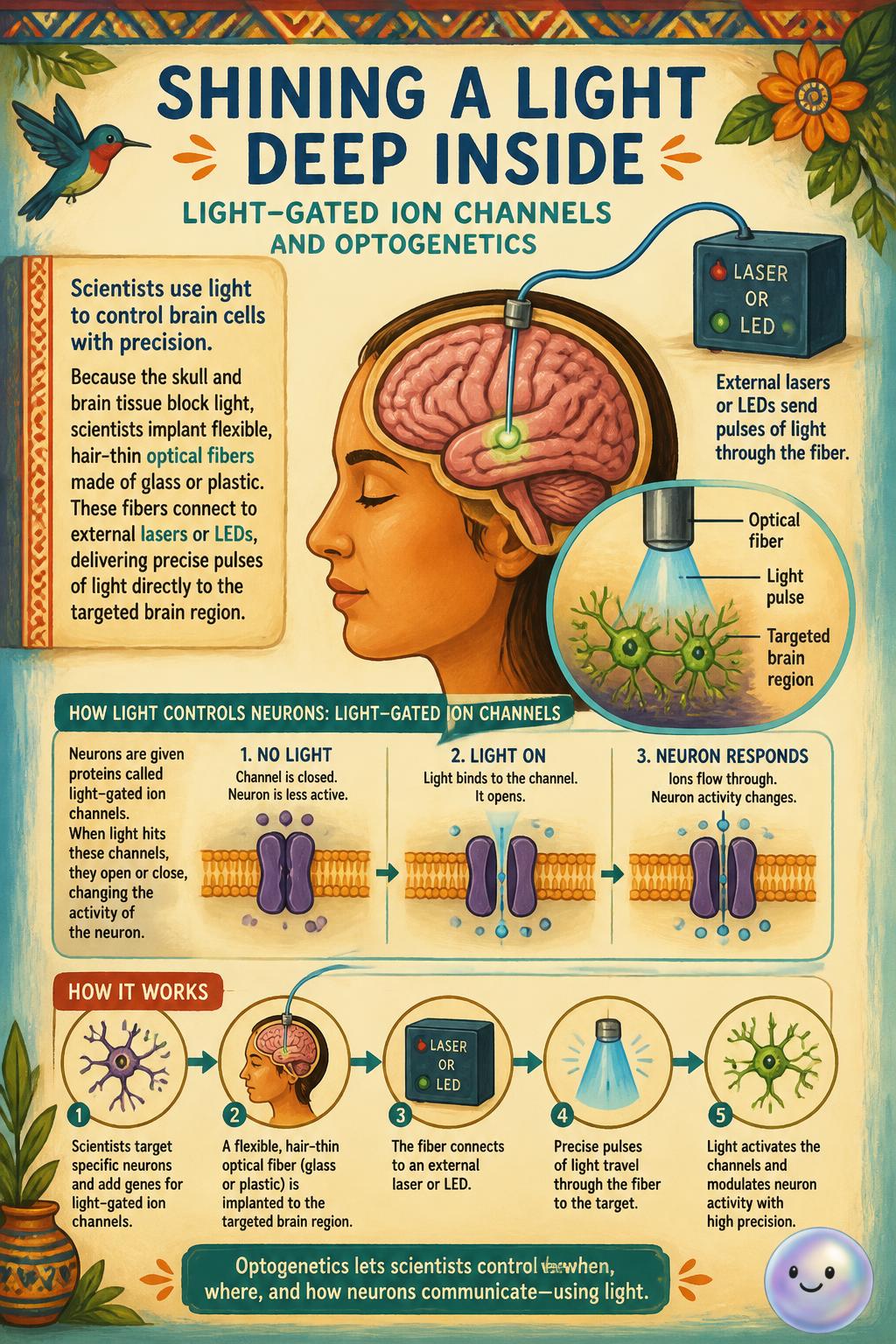
diego Tiny fiber-optic cables are implanted to deliver light directly to the modified brain cells.
Light guides: Fiber optic cables used in brain research can be as thin as a single human hair.
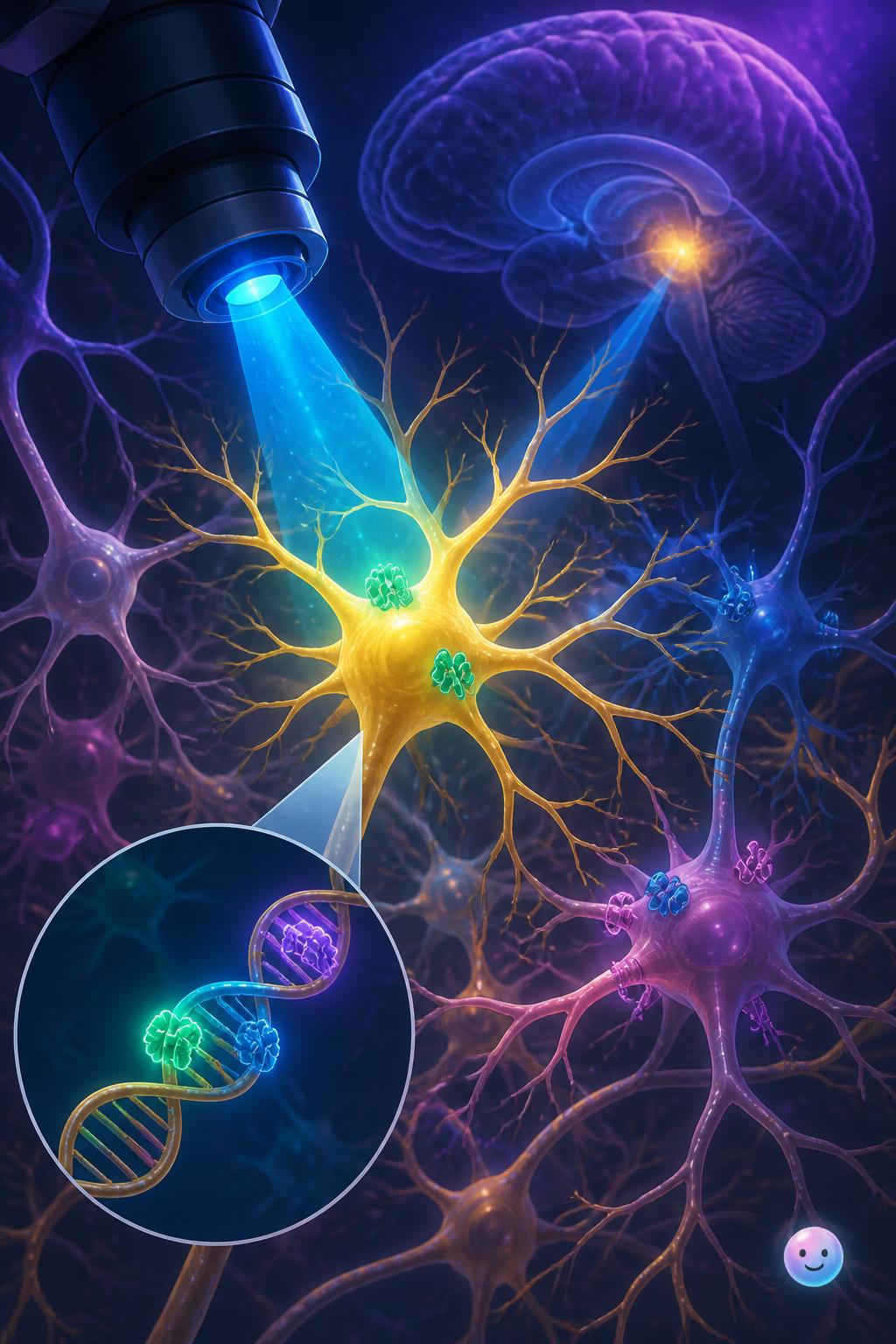
diego Genetic zip codes ensure that only specific types of neurons build the light-sensitive channels.
A region of DNA that initiates the transcription of a particular gene. In 2005, Stanford researchers used these genetic switches to target light-sensitive proteins to specific mammalian neurons.
Which field of science combines genetic engineering with light-based control of cellular activity?
Why do scientists need to implant fiber-optic cables to use optogenetics in deep brain structures?
What material is most commonly used to make the flexible, hair-thin light guides for brains?
Approximately how many neurons are in the human brain, making precise targeting so important?
What biological tool is used to carry the channelrhodopsin gene into animal brain cells?