How Hot Water Melted Holes for a Neutrino Telescope
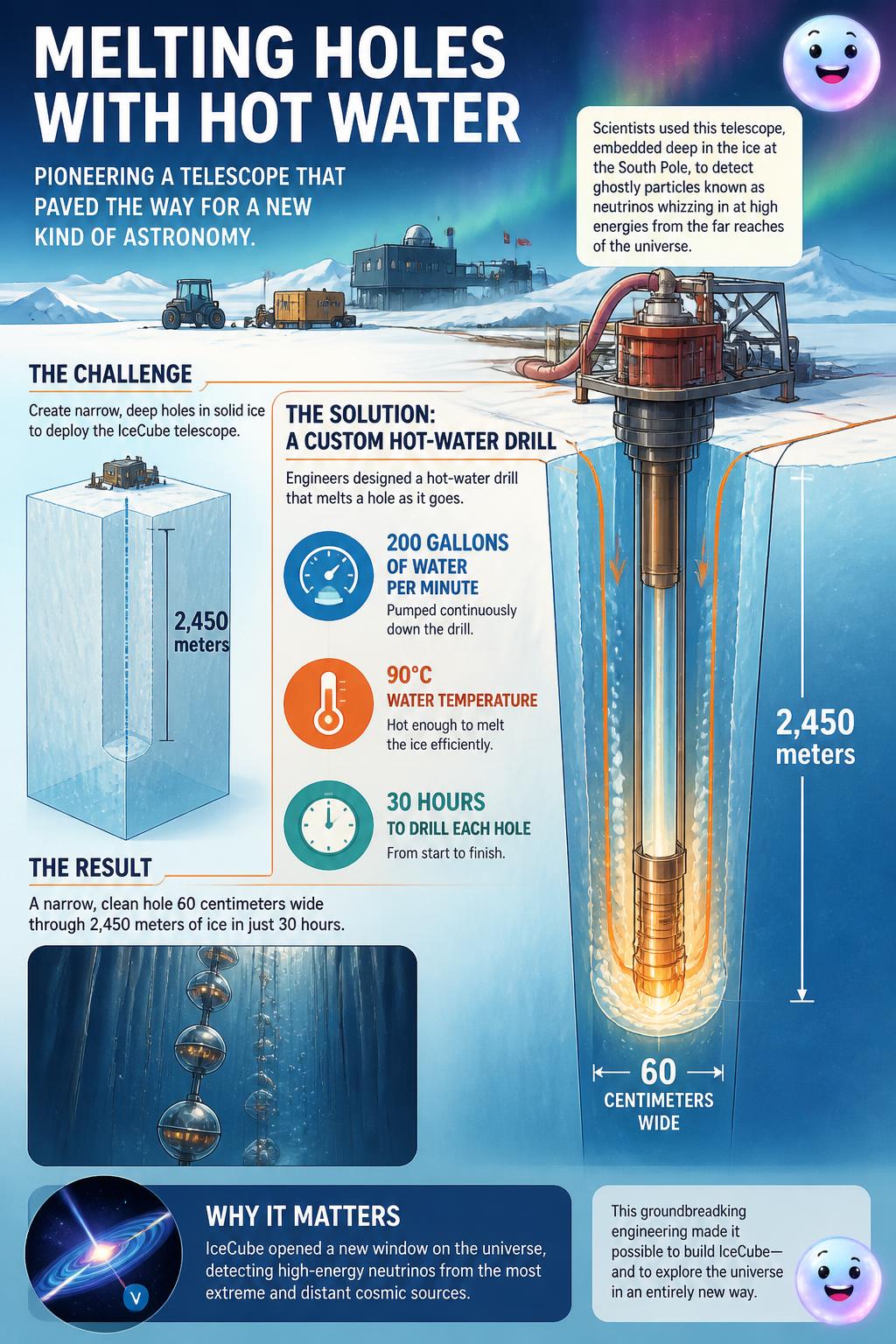
Engineers used high-pressure hot water drills to melt shafts nearly two and a half kilometers deep into the polar ice.
Meet the cosmic ghost
Building in the deep freeze
How ice catches a ghost
Messengers from the edge of time

diego This custom drill pumps 200 gallons of 90°C water per minute. It melts a 2,450-meter-deep hole through the Antarctic ice sheet in just 30 hours.
diego From 1997 to 2009, this buried instrument proved that crystal-clear South Pole ice could track the exact paths of ghost-like neutrinos
diego Ice reaching 2.8 kilometers deep contains no air bubbles or surface light pollution. This exceptionally clear environment allows sensitive scientific instruments to operate without any distractions.
diego Exactly 5,160 frozen glass spheres contain sensitive light sensors and mini-computers. These custom devices record faint flashes deep in the ice and transmit data to the surface.
diego Deep Ice Telescope Construction
We melt the ice with scalding streams to sink our sensors deep.

diego Decode signals in the Antarctic ice to learn how telescopes detect ghostly cosmic neutrinos.

diego Engineers used high-pressure hot water drills to melt shafts nearly two and a half kilometers deep into the polar ice.
Ice refreezing: Once the hot-water drill finished a hole, scientists had only a few hours to lower the sensors before the Antarctic ice refroze them forever.
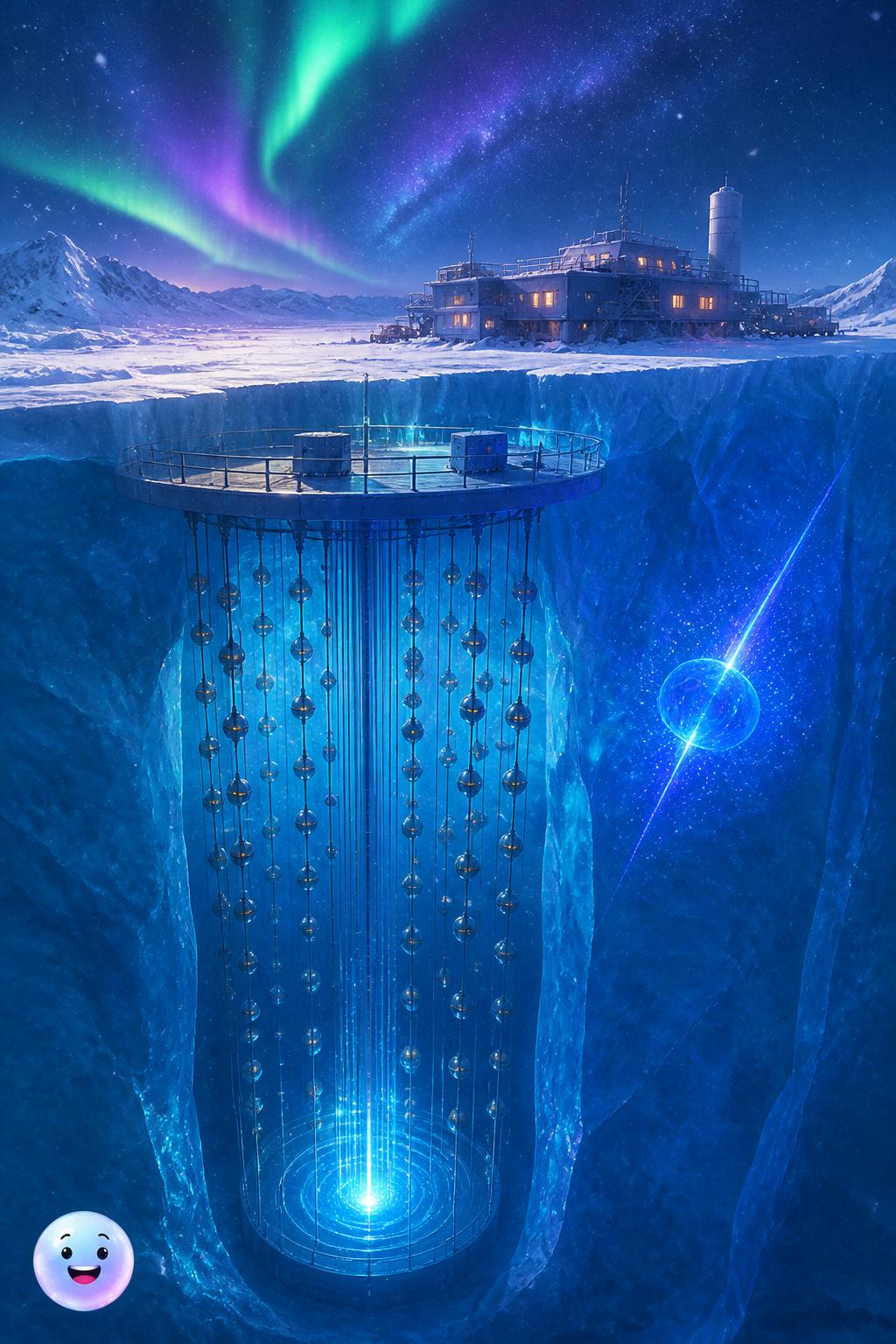
diego Before IceCube, scientists built the AMANDA prototype in the 1990s to prove that ice could work as a telescope.
A neutral subatomic particle with an extremely small mass and no electric charge. By December 2010, workers had melted pristine Antarctic ice to embed sensors designed to detect these particles.
What was the name of the prototype neutrino detector built at the South Pole in the 1990s?