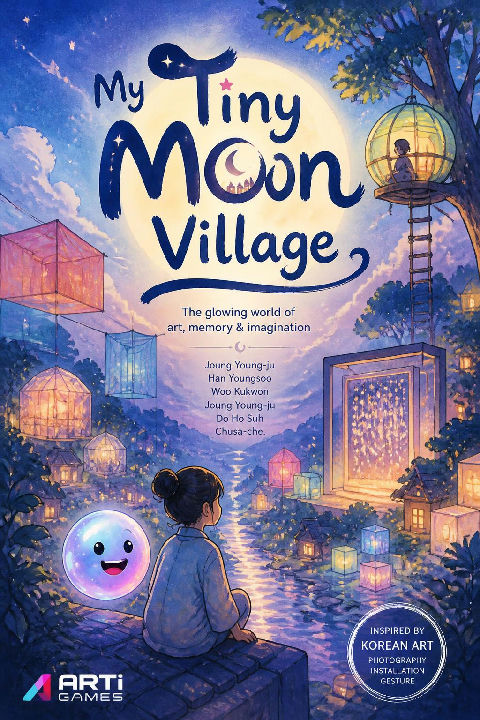
Chapter 1
Han Youngsoo and the camera of hope
Chapter 2
The bold strokes of Chusa-che
Chapter 3
Do Ho Suh and the portable home
Chapter 4
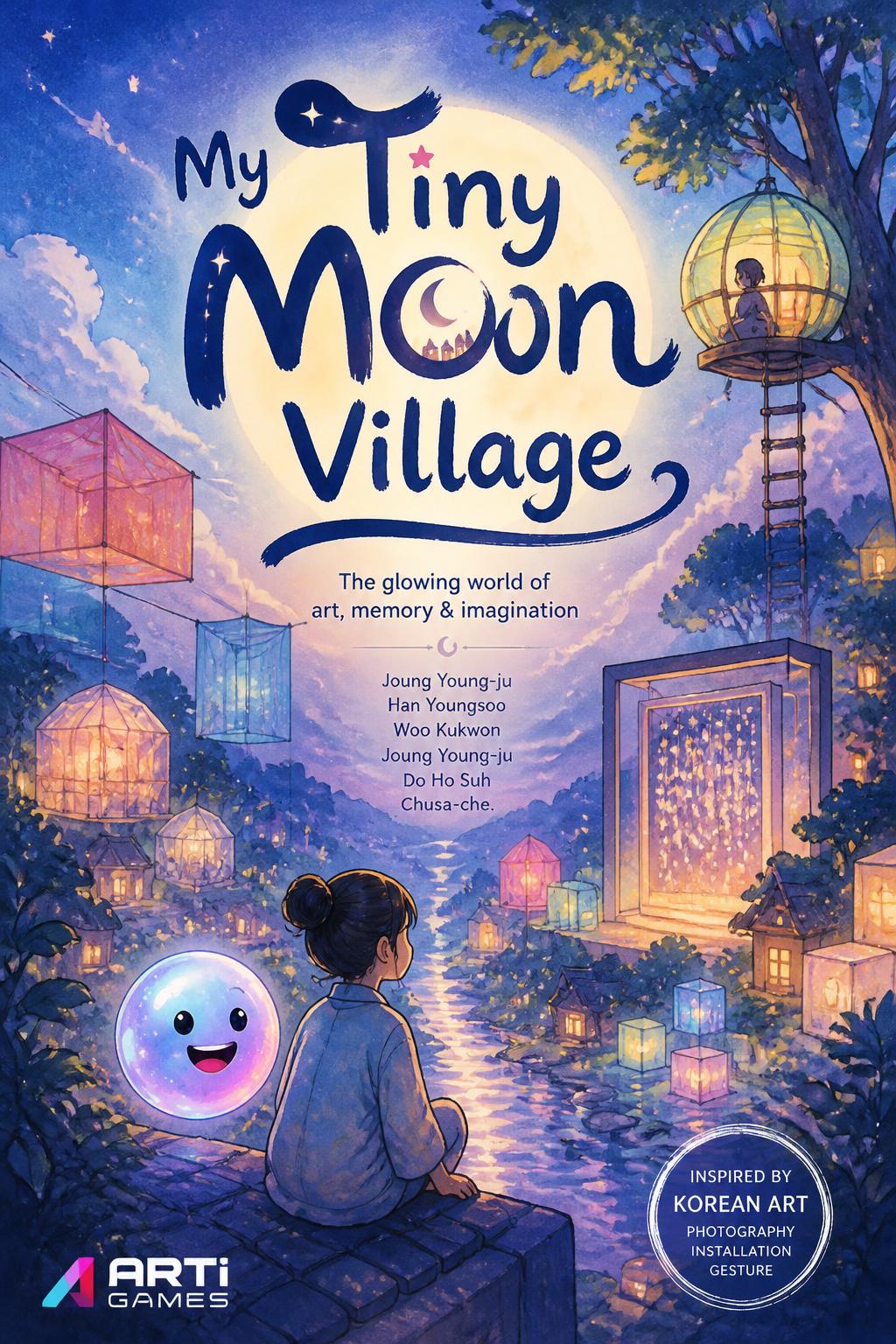
Joung Young-ju and the glowing moon villages
Chapter 5
Woo Kukwon and the playful impasto
YOUR GOAL
Master of Stitching space and brushing ink in Korean art
Ch 4 · Joung Young-ju and the glowing moon villages
매운김치 Joung Young-ju's Moon Villages
Fold the hanji, build the village, watch the windows glow.
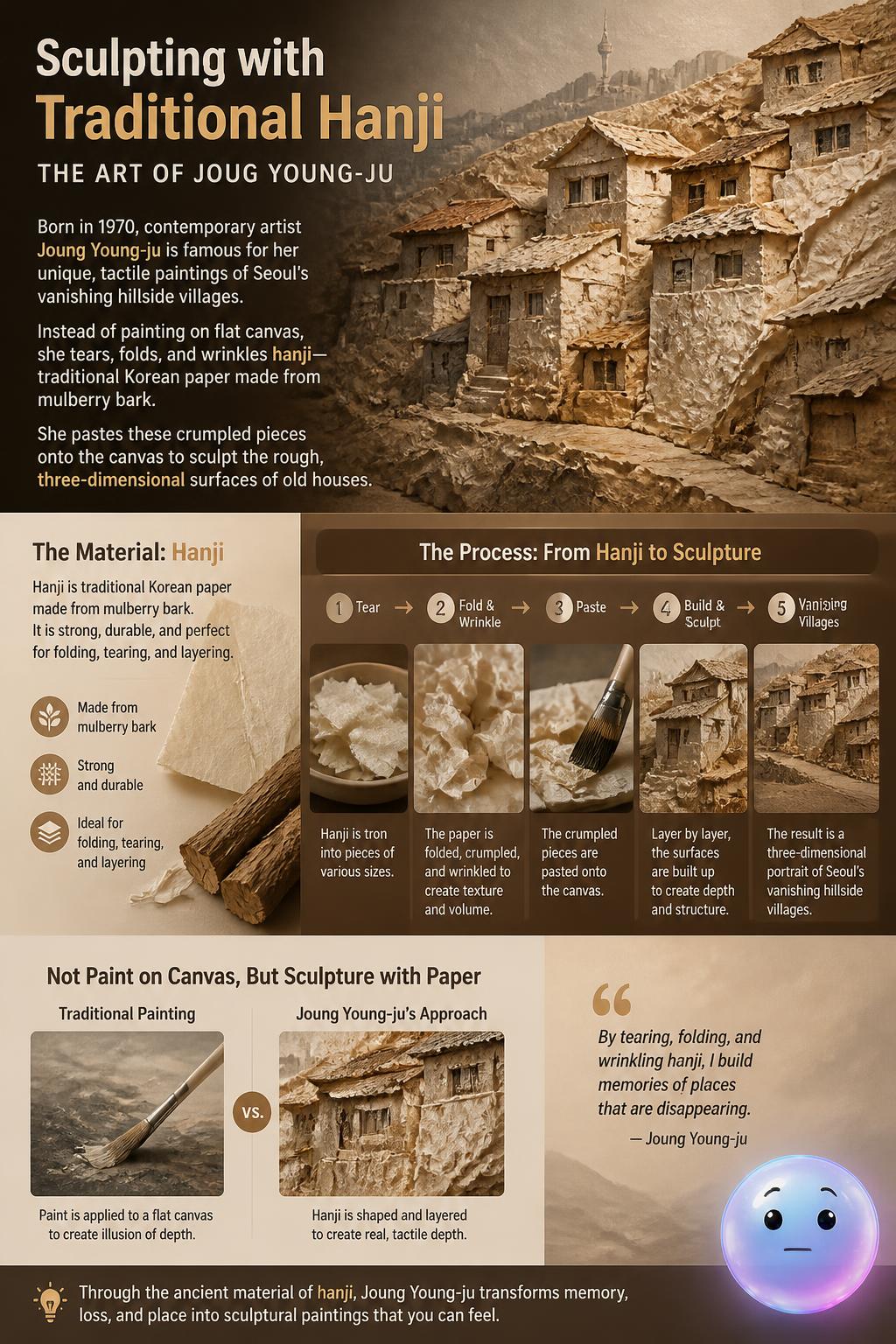
매운김치 Born in 1970, contemporary artist Joung Young-ju tears, folds, and wrinkles traditional mulberry bark paper to build tactile canvas paintings
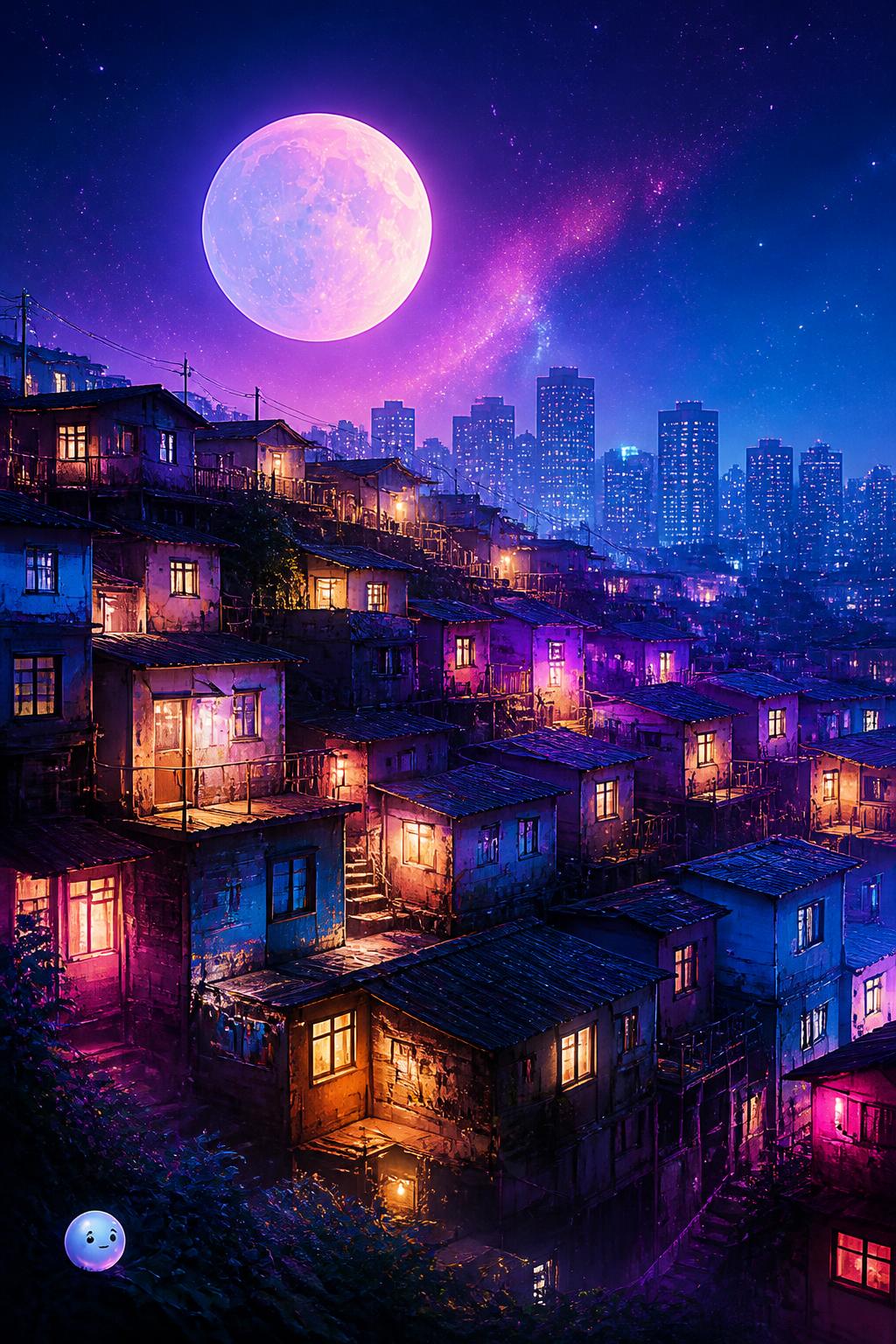
매운김치 Modern high-rise developments are rapidly replacing these historic post-war shantytowns.
BETA
매운김치 Arrange glowing paper houses to discover how Joung Young-ju creates her nostalgic moon villages.
Fun Fact
Moon village origin: Hillside slums were called moon villages because residents had a clear, beautiful view of the moon.
Glossary
daldongne (noun)
An impoverished hillside residential area or shantytown in South Korea. Artist Joung Young-ju recreates these fading communities on canvas using crumpled hanji paper.
An impoverished hillside residential area or shantytown in South Korea. Artist Joung Young-ju recreates these fading communities on canvas using crumpled hanji paper.
매운김치 Artists use traditional Korean hanji paper to create textured, three-dimensional paintings.
Quiz
What traditional Korean material does Joung Young-ju crumple and paste to create the texture of her paintings?
Quiz
What color palette does Joung Young-ju use to paint the glowing windows of her hillside villages?
Quiz
What medium does Joung Young-ju apply over her sculpted hanji paper to color her cityscapes?
Quiz
What Korean cultural concept of deep warmth, attachment, and mutual bond do Joung's paintings evoke?