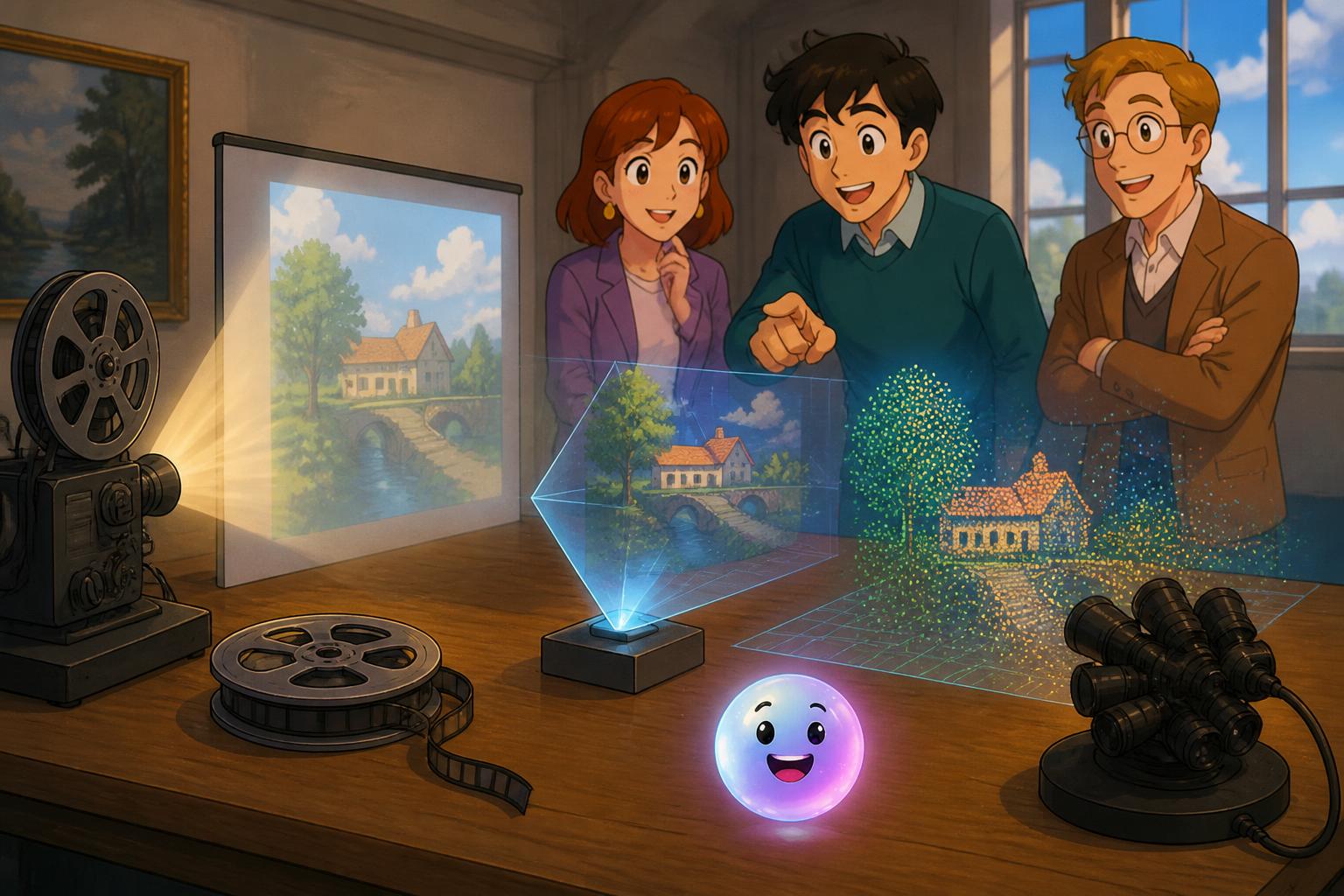
The illusion of depth before computers
True holograms and the physics of light
Digital light fields and volumetric displays
Gaussian splatting and the future of 3D capture
YOUR GOAL
Master of Chasing ghosts and splats in the world of 3D light
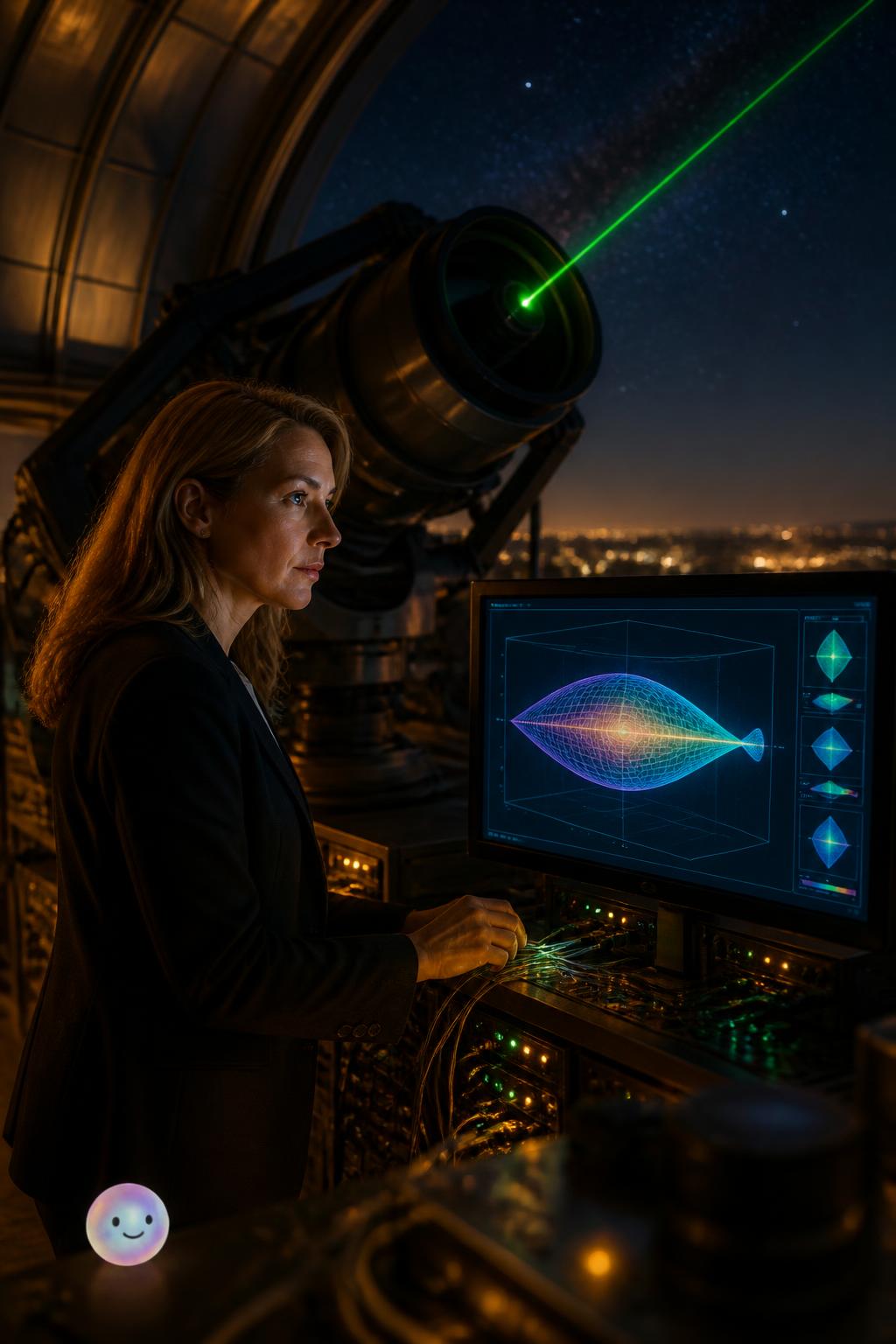
007skaty Pepper's Ghost Illusion
Just a reflection, just a reflection, Angled glass makes the magic real.
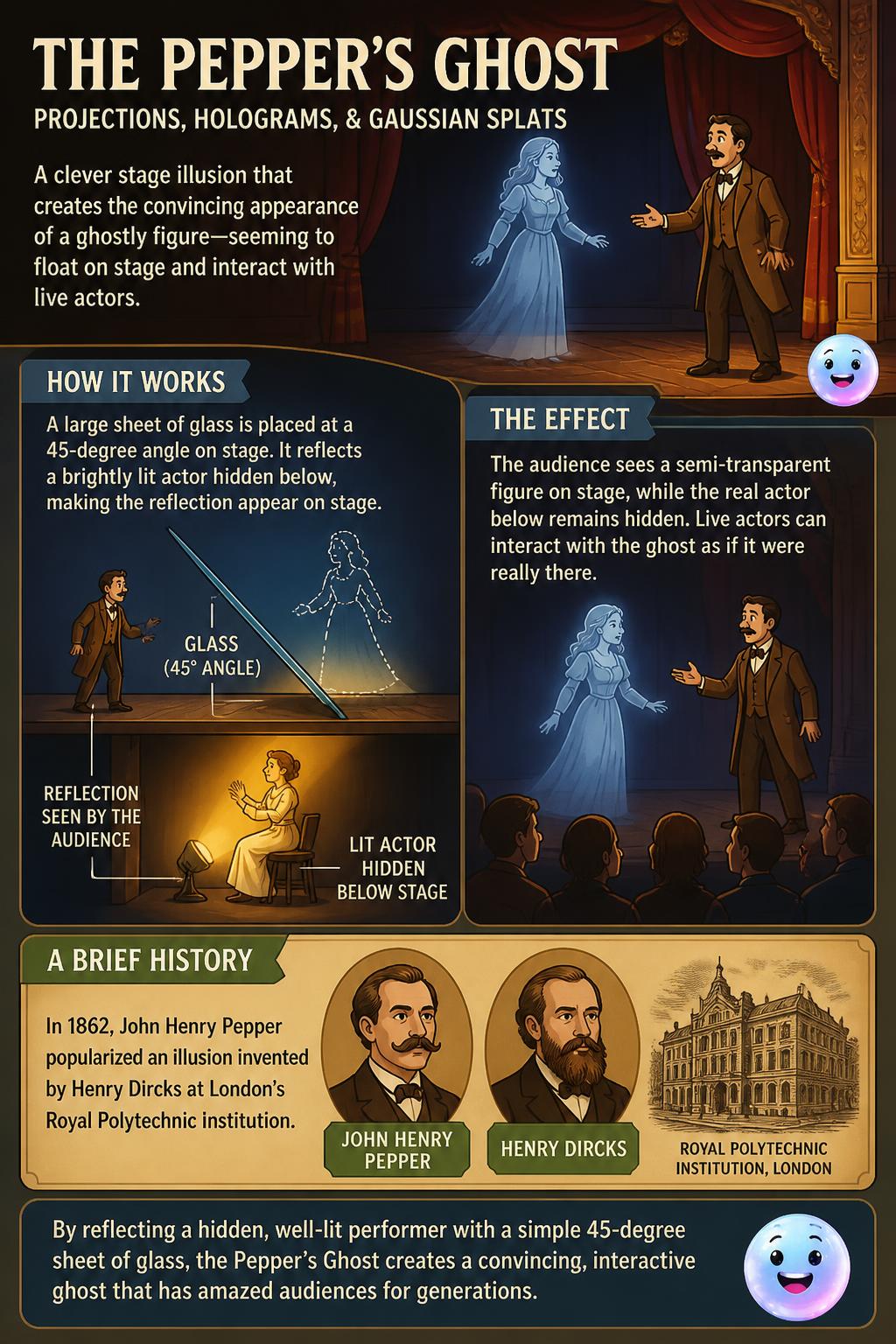
007skaty At London's Royal Polytechnic Institution, Henry Dircks's illusion used a 45-degree glass sheet to reflect hidden actors as
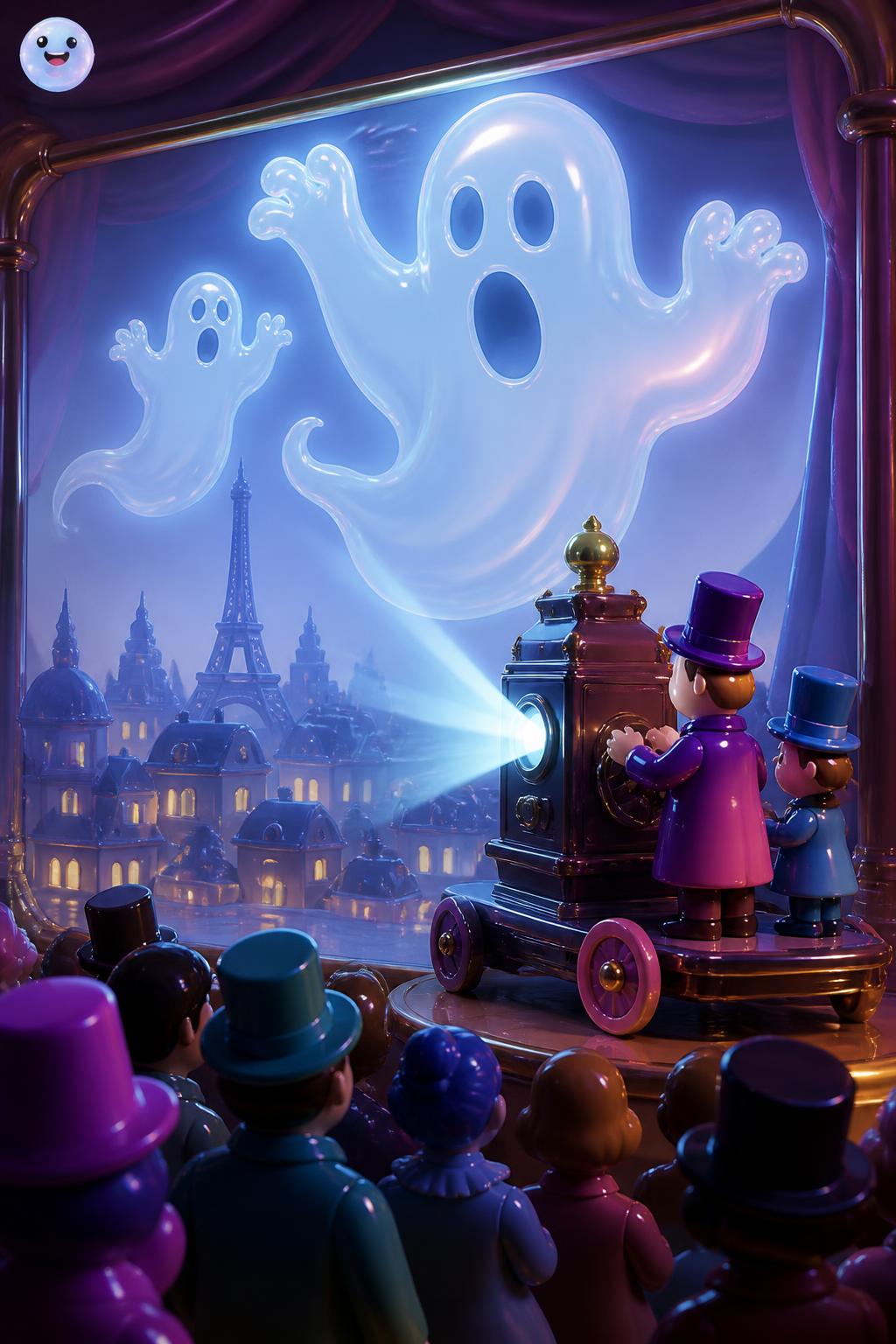
007skaty Glossy holographic ghosts and colorful 3D projections recreate a terrifying Parisian phantasmagoria.
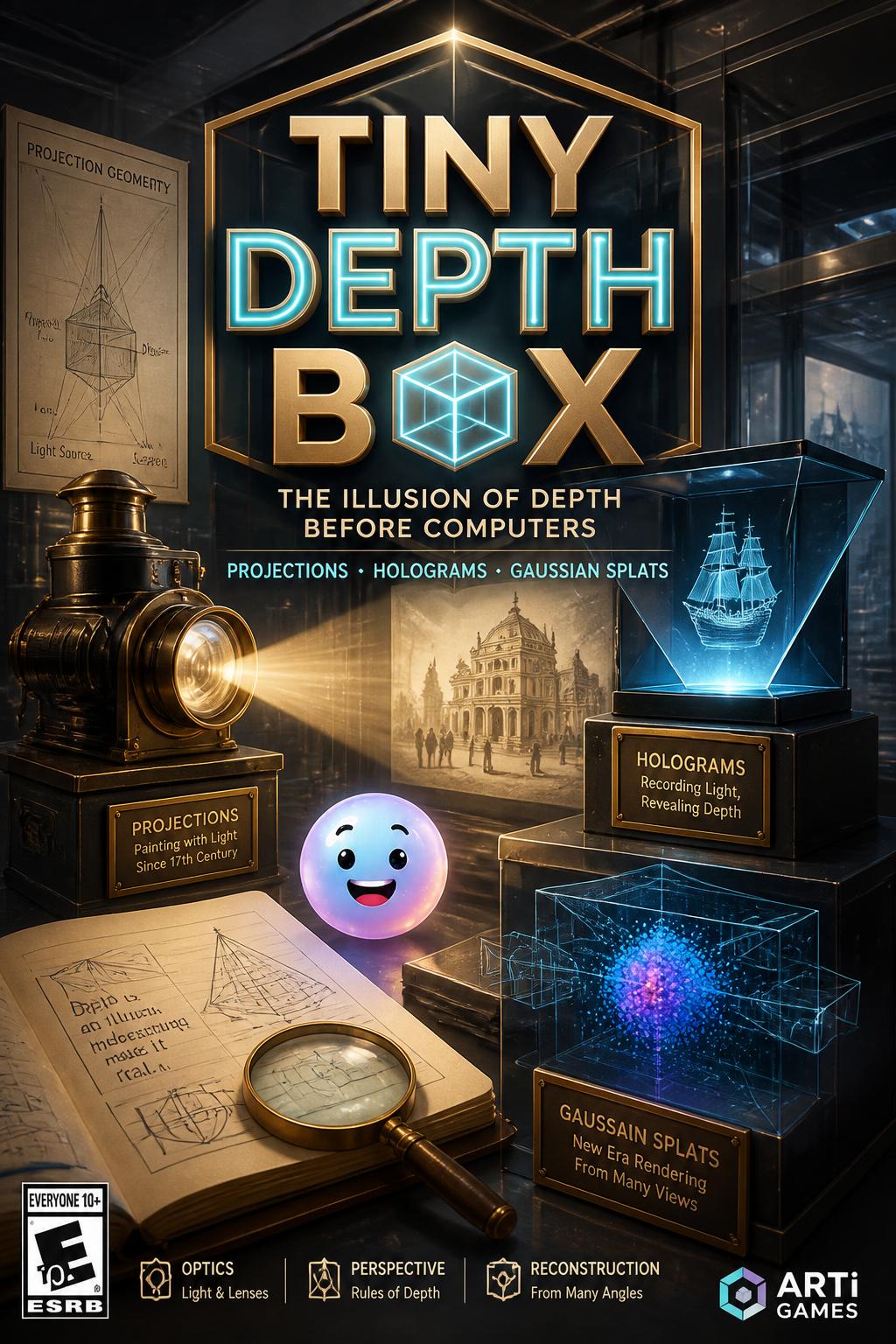
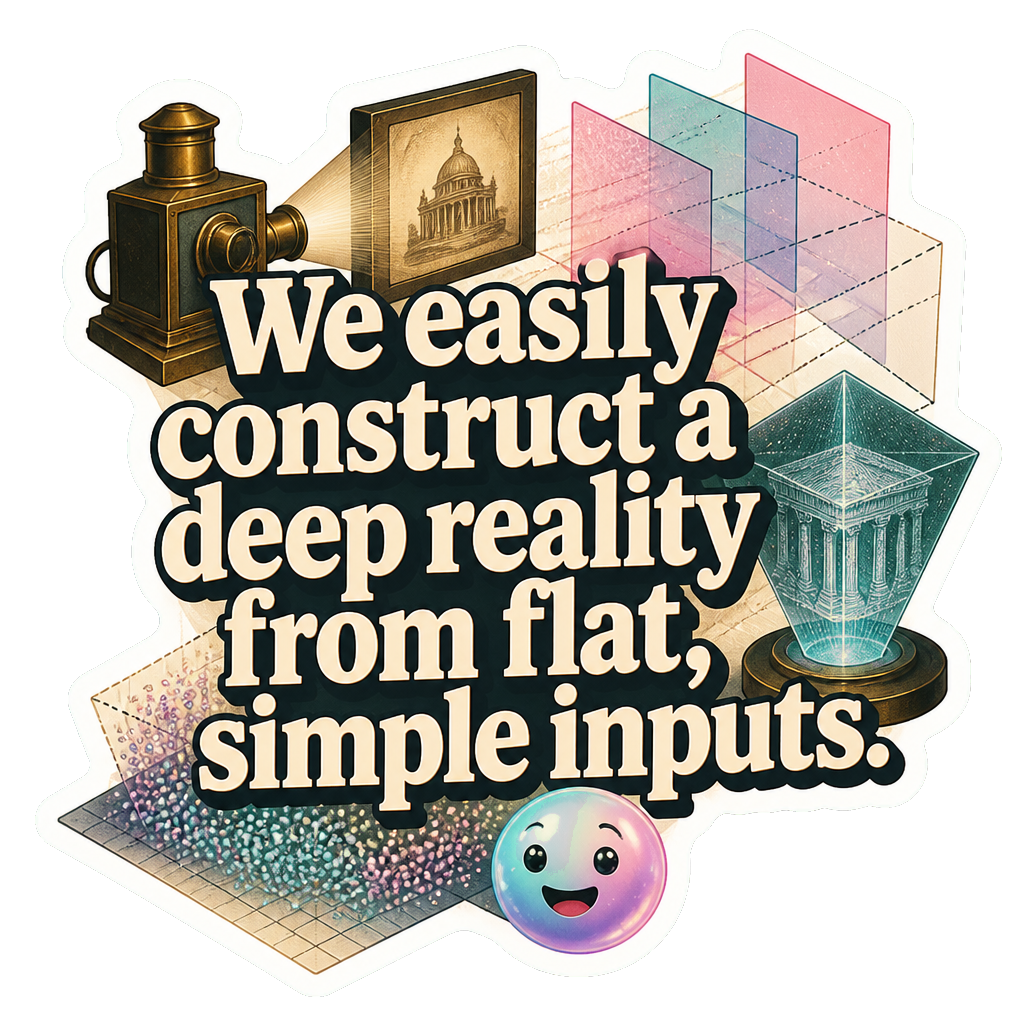
007skaty Align the light slices inside the box to discover how flat projections create 3D depth.
Pepper's Ghost: The famous stage illusion does not use mirrors, but a single sheet of glass to reflect light.
An optical instrument that combines two flat, slightly different images to create a three-dimensional perspective. Sir Charles Wheatstone invented the mirror-based device in 1838 to demonstrate binocular depth perception.
007skaty Sir Charles Wheatstone designed a stereoscope to explain human depth perception.
What device did Christiaan Huygens invent in 1659 that used glass slides to project images?
At what angle is the glass pane positioned in a classic Pepper's Ghost stage illusion?