
Chapter 1
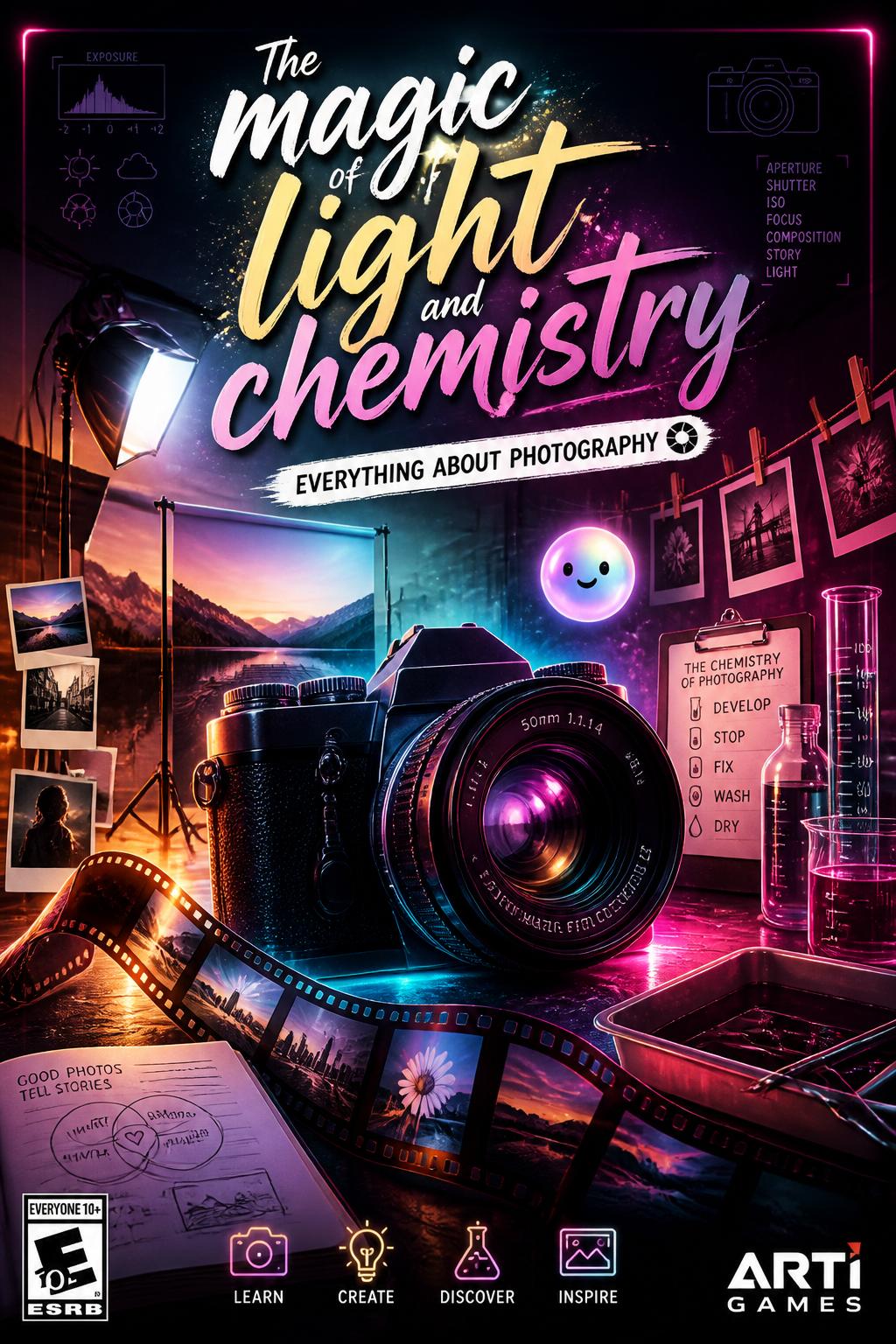
The magic of light and chemistry
Chapter 2
Cameras for the masses
Chapter 3
Mastering light, time, and focus
Chapter 4
The camera as a witness
Chapter 5
The digital revolution
YOUR GOAL
Master of How photography captured the world
Ch 1 · The magic of light and chemistry
schott Photography's Light and Chemistry
Light touches a surface, a moment defined, Chemistry's magic then leaves it behind.
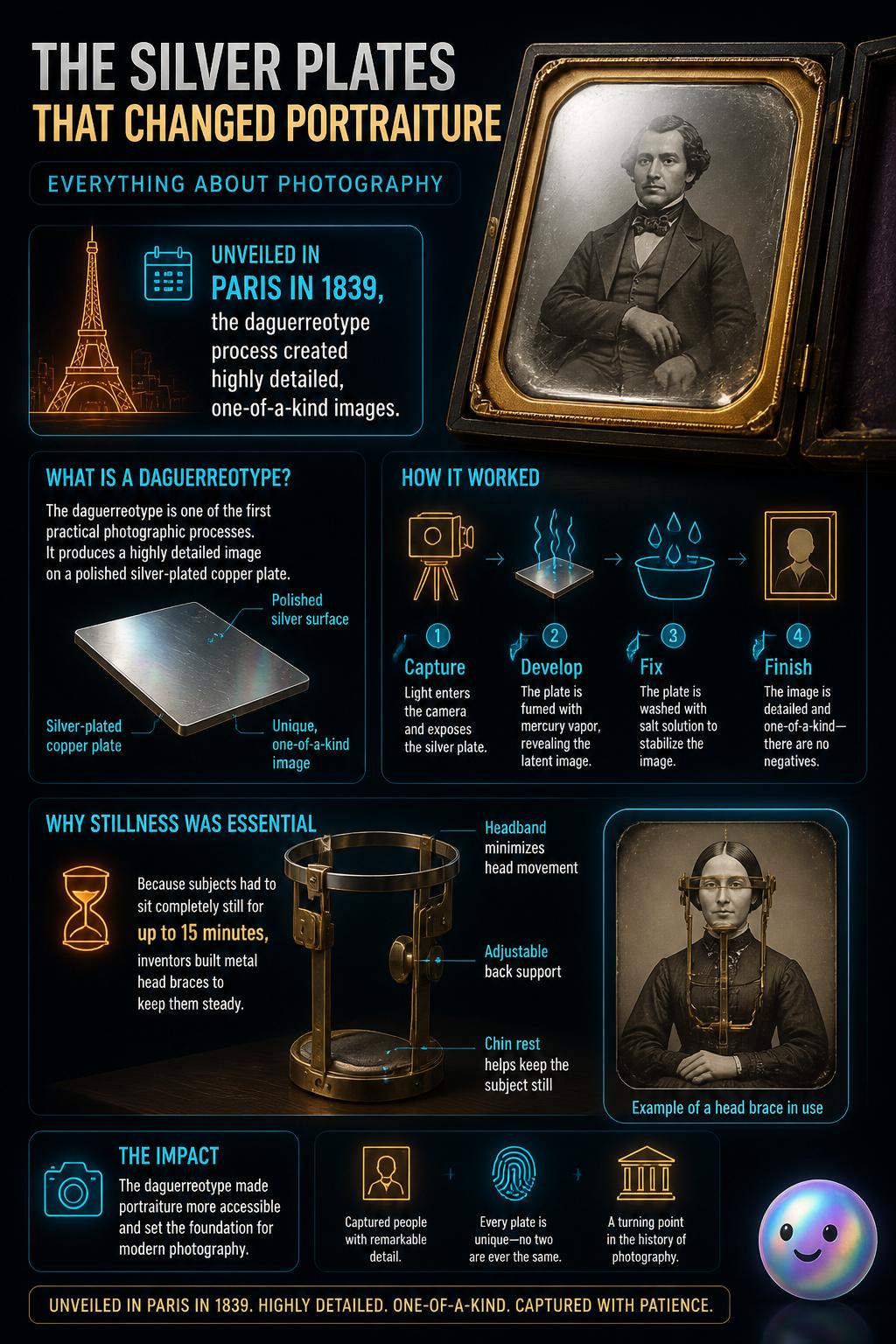
schott Louis Daguerre shortened exposure times from hours to minutes using silver-plated copper sheets and toxic mercury vapor.
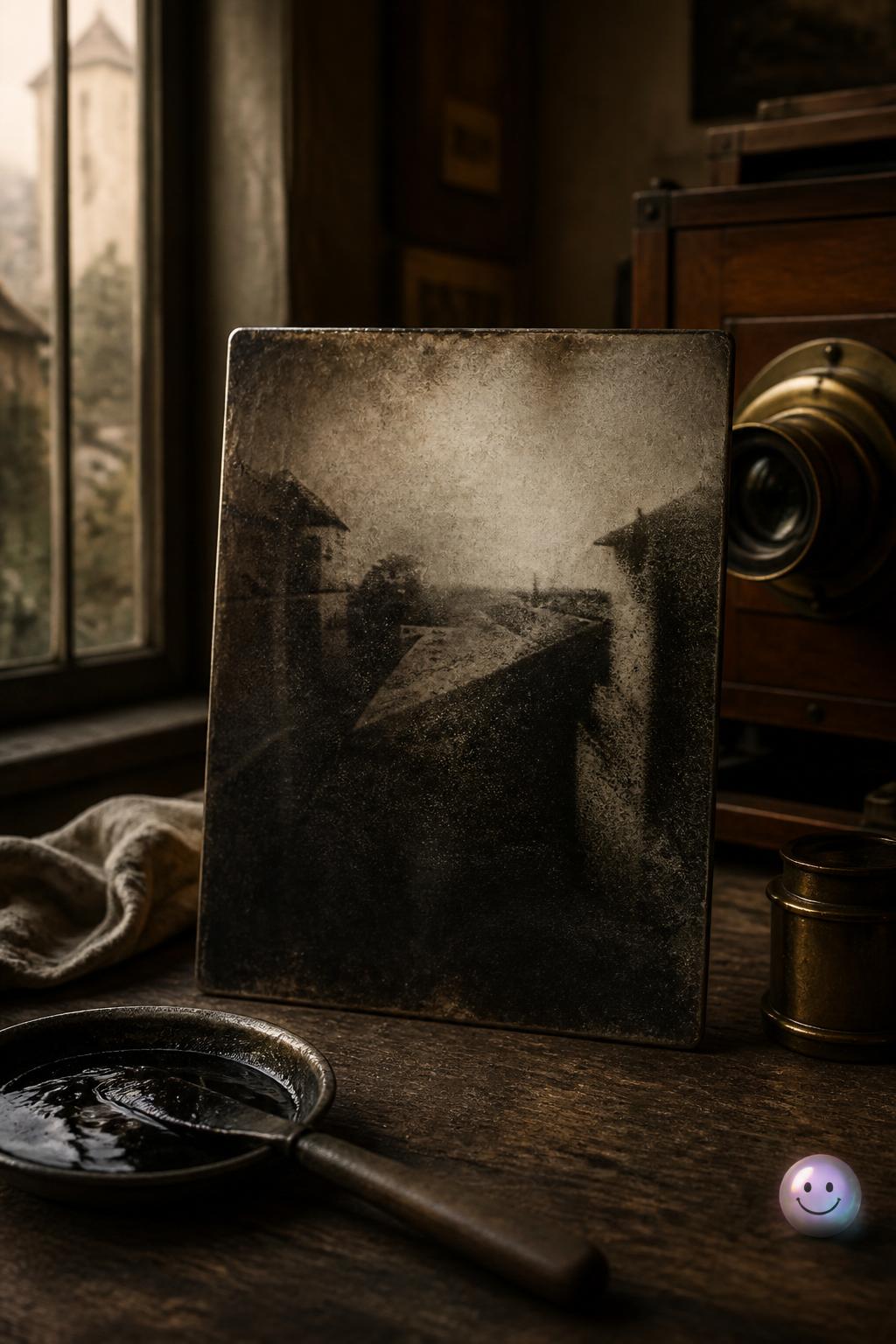
schott The very first photograph took eight hours to expose and was captured on a metal plate coated with asphalt.
Fun Fact
The first photo: The oldest surviving photograph, taken in 1826, required an exposure time of at least eight hours to capture.
Glossary
daguerreotype (noun)
An early photographic process employing an iodine-sensitized silver plate and mercury vapor. Louis Daguerre used light-sensitive chemistry to develop the first practical photographic method in 1839.
An early photographic process employing an iodine-sensitized silver plate and mercury vapor. Louis Daguerre used light-sensitive chemistry to develop the first practical photographic method in 1839.
Quiz
What material did Joseph Nicéphore Niépce use to coat the pewter plate for the first photograph in 1826?
Quiz
Which inventor patented the calotype photographic process in 1841, introducing the concept of paper negatives?
Quiz
In what year was the highly detailed daguerreotype photography process publicly unveiled in Paris?
Quiz
How long did the exposure for the world's first permanent photograph, 'View from the Window at Le Gras', take in 1826?
Quiz
Why did early photographic portrait studios in the 1800s use metal clamps and braces behind their subjects' heads?
Quiz
Who wrote the 'Book of Optics' in 1021, detailing how light behaves in a camera obscura?